Business.com aims to help business owners make informed decisions to support and grow their companies. We research and recommend products and services suitable for various business types, investing thousands of hours each year in this process.
As a business, we need to generate revenue to sustain our content. We have financial relationships with some companies we cover, earning commissions when readers purchase from our partners or share information about their needs. These relationships do not dictate our advice and recommendations. Our editorial team independently evaluates and recommends products and services based on their research and expertise. Learn more about our process and partners here.
(Just without video.)


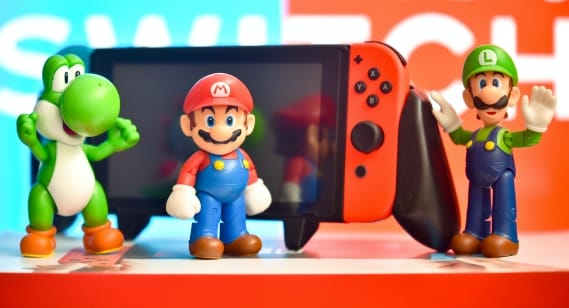
While today’s Nintendo is synonymous with video games, the company started with a different kind of gaming: traditional Japanese playing cards. This was back in 1889 — and nope, that’s not a typo.
In the 1950s, new firebrand president Hiroshi Yamauchi’s desire to innovate exploded, seeing the company dip into everything from instant rice to taxi services and knockoff Xerox machines. (It’s rumored that by the 1970s, Yamauchi was even running an hourly “love hotel.”)
Not one of these ideas stuck … until Yamauchi returned Nintendo to the gaming market in 1980 with a series of “Game & Watch” handheld devices, a precursor to the Game Boy. They featured extremely simple graphics and gameplay on a tiny LCD screen but sold millions of units.
Yamauchi then recruited young artist Shigeru Miyamoto, who’d never designed a game before — yet soon delivered Donkey Kong, an arcade title featuring a tiny mustachioed plumber with a red hat and a penchant for jumping. And you know how the story goes from there.
It took Nintendo a century to become a household name, and it only happened when they stopped chasing trends, embraced their roots, and trusted a designer to dream.
This article first appeared in the b. Newsletter. Subscribe now!
