Business.com aims to help business owners make informed decisions to support and grow their companies. We research and recommend products and services suitable for various business types, investing thousands of hours each year in this process.
As a business, we need to generate revenue to sustain our content. We have financial relationships with some companies we cover, earning commissions when readers purchase from our partners or share information about their needs. These relationships do not dictate our advice and recommendations. Our editorial team independently evaluates and recommends products and services based on their research and expertise. Learn more about our process and partners here.


Access to HR services and payroll management tools allows expanding businesses to better support their employees and manage complex everyday human resources (HR) workflows. As a payroll service provider, ADP works equally well for startups and established companies. On top of automating payroll processing and tax filings, ADP enhances hiring, the onboarding process and attendance tracking. Its customizable, multijurisdictional payroll plans scale with your organization, making ADP our pick for the best full-service payroll software for growing businesses. The platform’s intuitive mobile app simplifies self-service for workers and employers alike.
ADP brings more than 75 years of experience to the table. Its cloud-based human capital management (HCM) solutions unify payroll software, attendance tracking, employee benefits, and HR tools like learning management and administration. This makes it a top choice for businesses in highly regulated industries and those operating in multiple states.
ADP works for companies of all sizes, from payroll for one employee to enterprise services for 1,000-plus. It offers seven service plans: four through Run Powered by ADP (for one to 49 employees) and three through ADP Workforce Now (for 50 or more). If you start with a small business tier and your company grows, you can easily upgrade to Workforce Now, which is why ADP is our pick for the best online payroll service for growing businesses. Since ADP is designed to work for businesses in multiple states, it’s also a great choice for organizations that plan to expand in new regions.
ADP’s flexibility extends to payroll processing, which you can run from a mobile device or desktop. As your needs expand, you can add features like an applicant tracking system. ADP also incorporates digital recordkeeping and workforce management tools to help scale your company while controlling costs
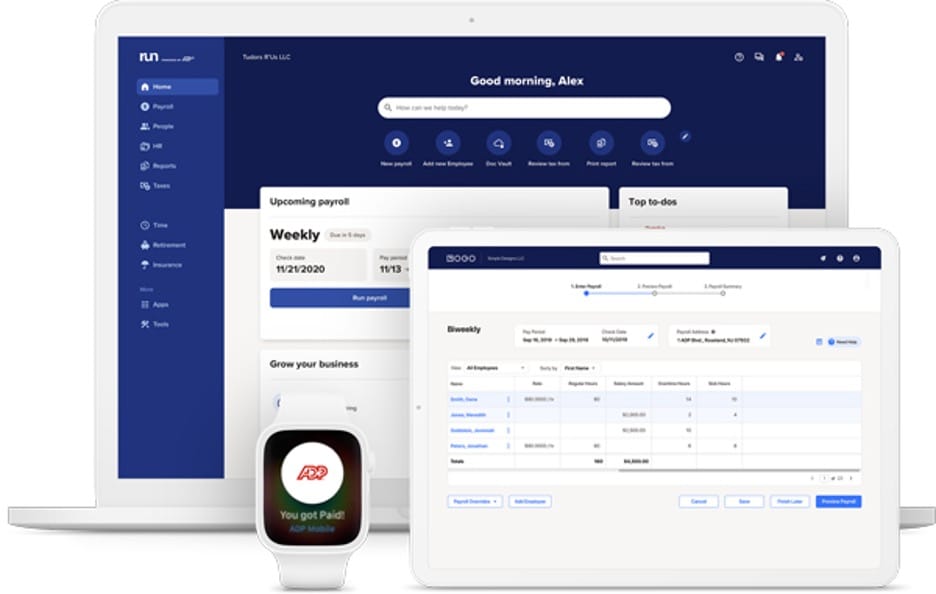
When we tested the system, ADP’s intuitive dashboard made it simple to find important payroll data in just a few clicks, and we liked the customizable shortcuts at the top and a left sidebar for payroll, taxes and HR functions. Similar to competitors, the system lets you preview account debits before running payroll. And unlike most other providers, ADP’s payroll software lets you add contractor pay alongside salaried or hourly employees — a real time-saver.

Upon logging in, we immediately saw when the next payroll was due, along with the most urgent tasks highlighted. If any employee record requires immediate attention, users will see it listed under Top Things To Do. Notably, businesses can also connect the platform to their accounting software and set up automated payroll cycles with both ADP systems.
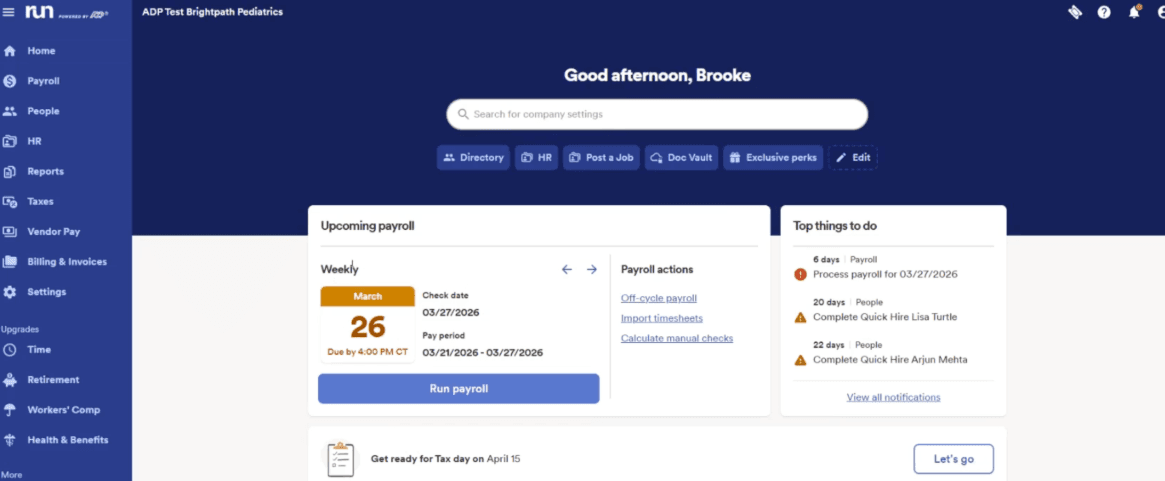
If there was data we couldn’t find through our own navigation, ADP’s significantly enhanced search tool could fill in the gaps. Instead of needing to navigate multiple pages in for information, such as a specific IRS tax code, the search tool instantly provides relevant quick links to any query. Even when we entered search terms with typos, ADP’s search tool correctly understood the intent.
We also explored how easy it is to generate reports directly from the search bar. We simply typed in “payroll report,” and within seconds could see a list of links to common reports, along with the option to download a report directly from the search tool.
ADP is a complete payroll solution with basic and advanced services. With seven service plans and the capacity to handle one to 1,000-plus employees, most businesses can take advantage of the vendor’s paperless payroll capabilities, which streamline payment processing and reduce administrative tasks. Below are the features that stood out to us during our in-depth examination of ADP’s payroll services.
Like most competitors, ADP calculates payroll taxes and remits payments to federal, state and local agencies. ADP guarantees it will pay any fines or penalties if it makes a tax filing error, which is especially important for small businesses operating on a tight budget. The company’s SmartCompliance tools can help streamline tax filing and manage HR compliance requirements, making it easier to stay on top of regulations as your business grows.
In addition, ADP can communicate with government agencies on your behalf and offers expert regulatory and compliance support. As your business expands, you can use built-in, AI-powered error detection and alerts to ensure your payroll and HR practices meet current standards.
We were impressed with ADP’s efforts to streamline payroll processing for all types of businesses. For instance, the AI-enhanced Timesheet Import feature is able to extract data from multiple file formats. After navigating to the import feature, a drop down appeared asking us to select payroll frequency, such as bi-weekly, before we could upload a timesheet file.
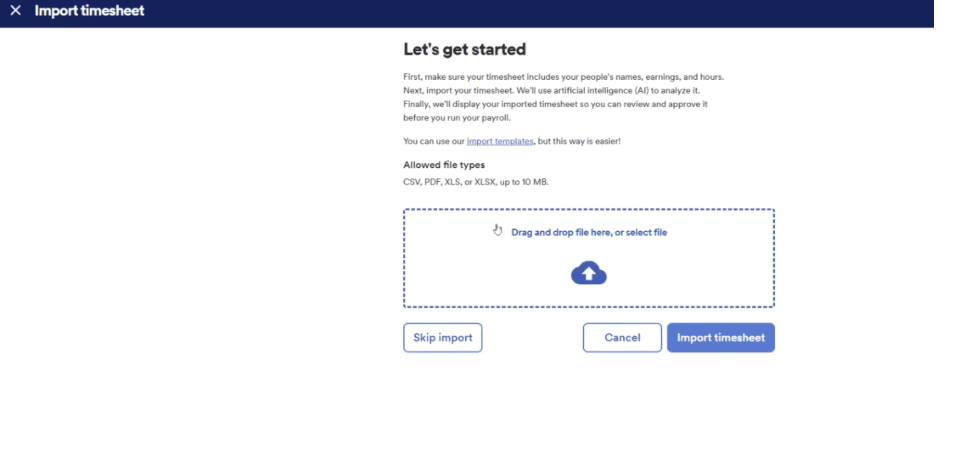
After uploading a timesheet file, ADP’s system maps the data based on three categories: people, pay and department data. The system was also able to recognize a range of payroll data categories, such as unpaid breaks, which it flagged as a potential deduction. During an exclusive demo, we also saw that ADP’s import tool recognizes multiple languages and was able to accurately parse information in both Spanish and English.
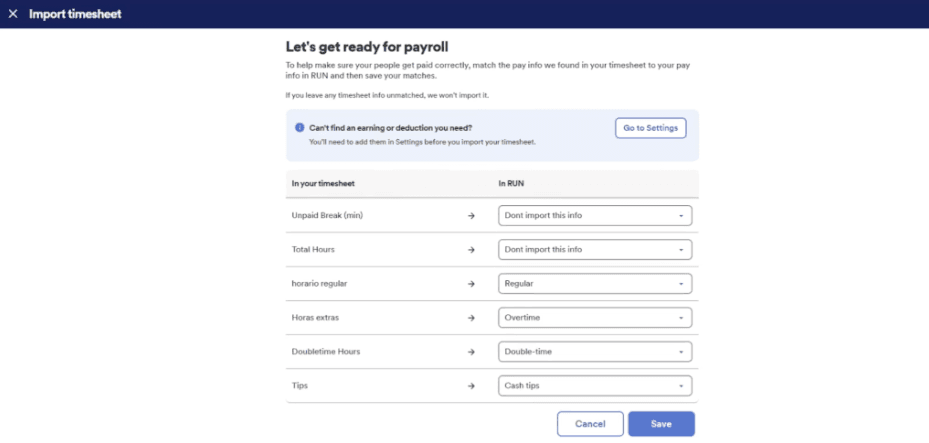
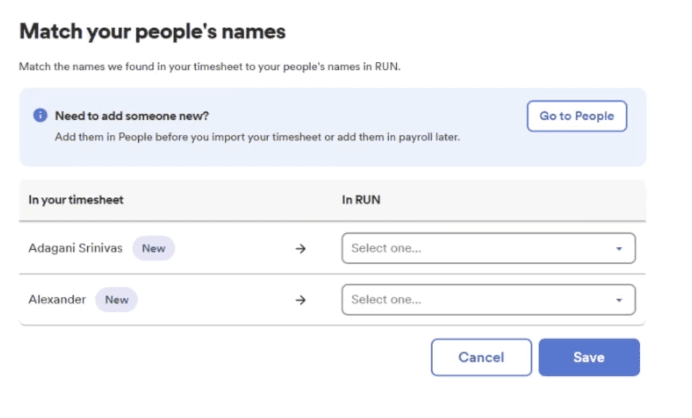
We also appreciate that in addition to recognizing previously entered payroll data, ADP will flag new data not included in past payroll runs. For instance, when we added new employees to a timesheet, ADP flagged these individuals for mapping under the People module. We could see the option to match these names to a drop down list. If those individuals couldn’t be found, there was a button front and center that would take us directly to the People module to add these individuals.
Businesses can pay employees via direct deposit or by printing paper checks using most payroll software. With ADP, companies must use pre-printed check stock, or the vendor can deliver checks directly to your office, saving you the hassle of printing them yourself. As a direct deposit alternative, ADP offers payroll cards to employees through Wisely. The platform also integrates with enterprise resource planning (ERP) systems, providing a flexible, streamlined payment solution for growing organizations.
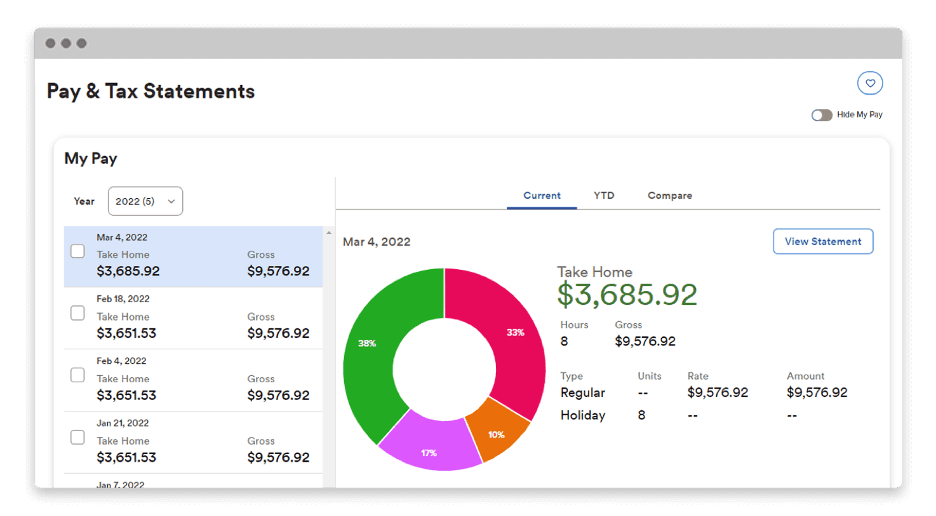
ADP offers a range of basic and advanced data analytics tools. Small businesses that use Run Powered by ADP can view and customize compensation and tax information. As your business expands, you can leverage several unique payroll reporting features, including the Turnover Probability Explorer, compensation and workforce benchmarks, and the Pay Equity Explorer.
ADP offers several standard payroll report formats, including payroll summary, tax withholdings and benefit deductions, along with the ability to easily customize your own. After selecting the type of report, ADP makes it easy to drag and drop the fields you need. Users also have the ability to share and view payroll reports via the mobile app and download them into their accounting system.
In 2024, ADP partnered with Fiserv to bring CashFlow Central, a tool to manage accounts payable and receivable, to ADP customers. In addition to extensive resources and tips on better cash flow management practices for small businesses, CashFlow Central simplifies accounting for invoice creation and vendor payment.
We reviewed options for scheduling both one time and recurring vendor payments, as well as multiple payment methods, from ACH and wire transfers to paper checks. We could also select international or domestic payments, which is encouraging to see for businesses that may want to expand globally in the future.
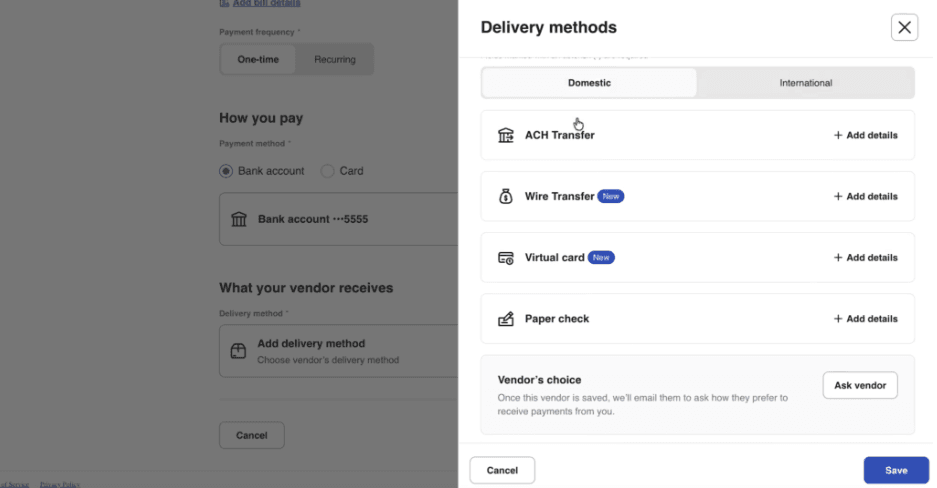
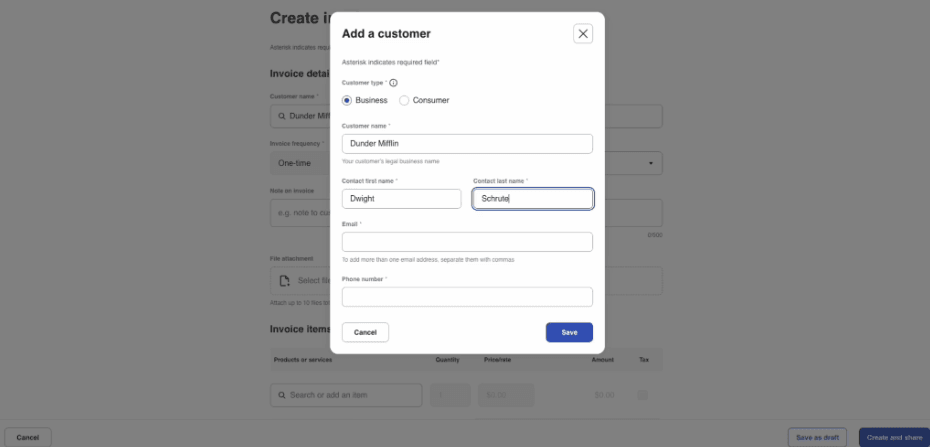
Like with other ADP RUN features, CashFlow Central makes it easy to take care of multiple tasks within the same page. For instance, when creating an invoice for a first time customer in testing, we saw a prompt pop-up allowing us to add a company without having to leave the invoice page. For busy small business owners, these little time savers add up.
ADP goes beyond the basic payroll-accounting integrations that many rivals offer. In addition to working with small business staples like QuickBooks Online and Wave, it connects with enterprise-level systems such as Sage 50 and NetSuite, plus hundreds of third-party apps for POS, time and attendance, benefits, productivity, collaboration, recruiting and onboarding through the ADP Marketplace. (Learn more about these top accounting programs ADP works with in our detailed review of Sage 50, our NetSuite review and our review of QuickBooks Online.)
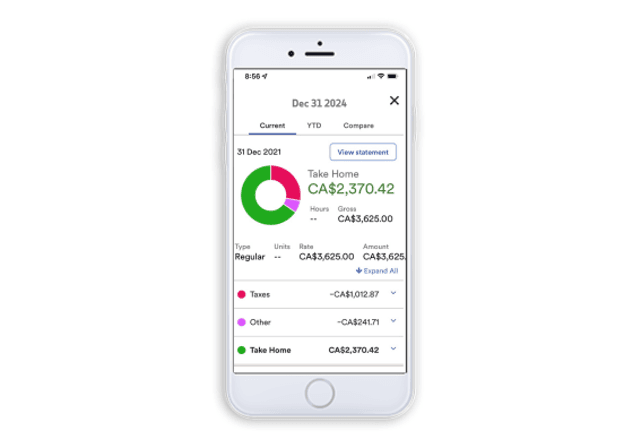
ADP’s Mobile Solutions app offers excellent functions for both employees and employers.
Small businesses can also get support managing their people and processes as they grow with the help of ADP’s extensive offerings of optional HR and payroll services. These include HR management, benefits administration and retirement and business insurance services.
During testing, we found that ADP offers extensive flexibility to a range of business types for onboarding new employees. For instance, custom tasks were available so that administrators could require new hires to complete specific actions related to their business. This can range from requiring employees to read and acknowledge your code of conduct to having new servers review your restaurant menu.
Notably, background checks are available with every plan — a perk many competitors reserve for higher tiers. All plans also include new hire onboarding, employee discounts and ADP Employee Access, a self-service portal for workers.
Higher-tier plans include even more helpful services and functions, including:
These resources allow businesses to streamline hiring, personalize onboarding experiences, store records digitally and track employee development within ADP’s platform.
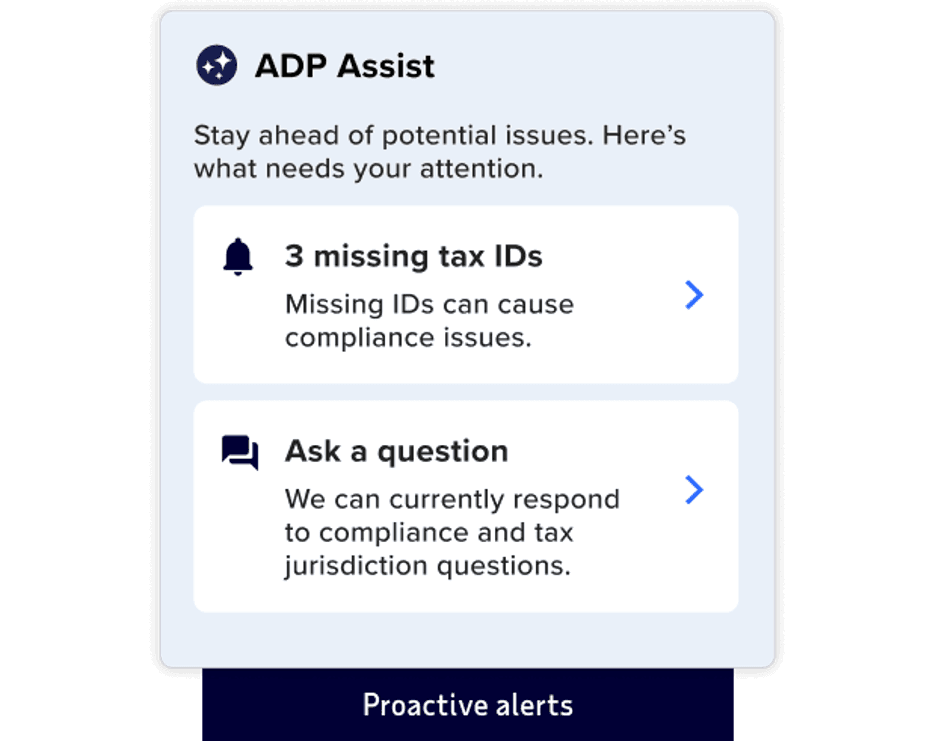
ADP’s HR Pro plan also provides access to Upnetic legal services, a valuable resource during rapid expansion. ADP Workforce Now subscribers gain even more capabilities, including HR compliance reporting, employee survey tools and ADP Assist, an AI-powered virtual assistant that uses real-time insights to help quickly resolve HR, payroll and benefits issues.
Processing payroll requires working with a range of personally identifiable information (PII), such as bank accounts and social security numbers. In addition to multi-factor authentication and requiring periodic password updates, ADP ensures that users are only permitted to see features and information relevant to their role.
ADP Workforce Now integrates with more than 900 insurance carriers and offers extra benefits connections for larger businesses. Advanced perks include benefits analytics, a plan creation wizard, an AI-powered decision support tool, automated compliance tracking and mobile open enrollment for employees. You’ll also have access to dedicated support staff to guide your open enrollment and benefits strategy.
However, it’s worth noting that time and attendance tools are included only with the Complete and HR Pro plans. Small business users on the Essential and Enhanced plans will need to upgrade for access to time and attendance functionality, or add on administration for health insurance, retirement and workers’ compensation plans.
ADP’s Essential plan starts at $79, plus $4 per employee, per month. However, pricing is personalized for most ADP plans, so businesses can customize which features make most sense for them.
This can depend on several factors, including payroll frequency, number of employees and selected features. Because of this, businesses must contact ADP for a custom quote. While that’s not unusual in the payroll industry, the lack of upfront pricing can make it harder to compare ADP’s costs with competitors.
Below is an overview of the available plans for Run Powered by ADP and ADP Workforce Now, along with key features in each tier.
Run Powered by ADP is primarily designed for organizations with one to 49 employees. All plans include automated payroll processing, multiple ways to run payroll (online, by phone or mobile app) and employee self-service tools. Higher tiers add more HR and compliance support.
Plan | Features |
|---|---|
Essential Payroll |
|
Enhanced Payroll | Everything in Essential Payroll, plus:
|
Complete Payroll & HR Plus | Everything in Enhanced Payroll, plus:
|
HR Pro Payroll | Everything in Complete, plus:
|
Paid add-ons include retirement plans, workers’ compensation management and health insurance. Certain services, like W-2 filing on your behalf, may incur extra fees.
ADP Workforce Now is well-suited to midsize companies, though it can handle organizations with 1,000-plus workers. All tiers come with payroll integrations, background checks, new hire reporting, automated payroll and full federal, state and local tax filing.
Plan | Features |
|---|---|
Select |
|
Plus | Everything in Select, plus:
|
Premium | Everything in Plus, plus:
|
Paid add-on options include performance management, HR assistance, talent acquisition tools, advanced data analytics and compensation management.
In general, we found that ADP offers a more hands-on onboarding experience than other online payroll service providers. For starters, the ADP implementation team and service representatives consider your unique needs and goals to ensure the system is installed properly. They assist with payroll setup and transitioning from another payroll provider.
Depending on your company’s size, ADP can deliver both in-person and online training. We especially liked the interactive simulations, which made it easier to learn key payroll processes before going live. While entering payroll data is inherently time-consuming, the added guidance and 24/7 customer support made the process more manageable.
The platform’s employee self-service tools also simplify onboarding for new hires. You can invite employees to enter their own direct deposit and benefits information, reducing data entry on your end. Combined with ADP’s clean, intuitive interface, this helps minimize confusion and speeds up company-wide adoption.
ADP Run offers payroll customer support is available 24/7, though HR Help Desk support is only available Monday through Friday from 8:30 am to 8:30 pm ET.
Additionally, ADP Assist offers built-in AI features that can help answer your questions directly within the software. In testing, we saw that the virtual assistant is able to accurately answer questions specific to your organization and employees. ADP Assist was able to provide in-depth instructions, such as guidance on how to set up direct deposit, as well as details on more granular queries, such as information about a specific team member’s pay history.
We also saw the option to get additional context and detailed reasoning explaining the virtual assistant’s answers. For instance, when asked about payroll details for a specific employee, ADP Assist noted which payroll report and time period informed our question’s answer.
Higher-tier packages come with even more support perks. In addition to round-the-clock assistance, you can connect with HR professionals, business advisors, marketing experts and even legal specialists — resources that can be especially valuable as your business grows.
ADP’s website also has several valuable resources, including a Resource Center where both administrators and employees can get answers to a wide range of questions. These self-service resources make it easy to find quick answers. If you prefer, though, support from ADP agents is also available over the phone.
Here are some potential concerns if you’re considering ADP as your payroll provider:
When determining the best options for businesses choosing a payroll provider, we considered several factors, including payroll and HR features, integrations and overall usability. Our process involved comparing dozens of platforms, speaking directly with vendor representatives and customer service agents, and reviewing user feedback. We also participated in exclusive demos and tested payroll software ourselves to see how each system performed in real-world scenarios. To assess scalability for growing businesses, we evaluated the number of plans each provider offered and how their features evolved to meet the needs of companies adding employees and managing increasingly complex HR workflows.
We recommend ADP for …
We don’t recommend ADP for …
Erin Donaghue contributed to this article.