Business.com aims to help business owners make informed decisions to support and grow their companies. We research and recommend products and services suitable for various business types, investing thousands of hours each year in this process.
As a business, we need to generate revenue to sustain our content. We have financial relationships with some companies we cover, earning commissions when readers purchase from our partners or share information about their needs. These relationships do not dictate our advice and recommendations. Our editorial team independently evaluates and recommends products and services based on their research and expertise. Learn more about our process and partners here.
Business.com earns commissions from some listed providers. Editorial Guidelines.
Table of Contents
Editors Score:9/10
Textline is our choice for the best business texting platform for larger businesses. Its shared inbox, team collaboration and automation tools make it easy to manage customer conversations, while HIPAA-compliant texting supports regulated industries.
Pros
Setting up new departments is easy, and team members can collaborate seamlessly across shared inboxes.
Running announcements, group messages and automated texts is fast, making it easy to communicate with customers at scale.
Tagging contacts is a simple but effective way to organize conversations and personalize outreach.
Strong security and HIPAA-compliant texting options make Textline a standout choice for larger organizations and regulated industries.
Cons
The Essentials plan omits advanced collaboration tools like the Unified Inbox and message routing.
Message-based pricing can become expensive for businesses handling a high volume of inbound and outbound texts.
Businesses looking for a full omnichannel communications platform with built-in voice or email capabilities may outgrow Textline.
Larger businesses face challenges communicating with and engaging customers effectively while facilitating cross-department collaboration. Textline is a secure business texting service that aims to solve these problems with robust communication features, automations and controls, making it our choice for the best text messaging service for larger businesses. The solution is easy to use and can improve communication and customer support while enhancing your marketing efforts. Notably, Textline’s focus on data security is excellent. It includes built-in compliance with the General Data Protection Regulation (GDPR) and the California Consumer Privacy Act (CCPA) and offers HIPAA-compliant texting plans, making it a strong choice for organizations that handle sensitive customer information.
Textline Editor's Rating:
9 / 10
Pricing
8/10
Ease of use
10/10
Functionality
10/10
Segmentation
10/10
Customer service
7/10
Why We Chose Textline for Larger Businesses
As businesses grow, their communication needs become more complex. Textline was built specifically to support larger companies with layered corporate structures. For example, we like that Textline lets users create specific departmental groups like Sales and Customer Service, as well as geographic divisions like the West Coast. This setup helps businesses streamline messages to the right teams and avoid information overload.
Textline also helps tackle collaboration challenges. We appreciated its Whispers feature, which lets team members add internal notes to live chats without alerting the customer. Its routing tool ensures incoming messages are assigned quickly and logically. We especially liked how easy Textline makes conversation management with one-click claims, transfers and tags. Tags are also useful for text message marketing campaigns, allowing you to label customers by product interest, location or signup date.
The platform also makes it easy to automate routine communication with custom workflows and scheduled messages. We were especially impressed by its security features. Textline complies with the CCPA, System and Organization Controls 2 (SOC 2), the GDPR and HIPAA requirements, making it an excellent choice for organizations that handle sensitive customer information. These collaboration, automation and security features make Textline our pick for the best text messaging service for larger businesses.
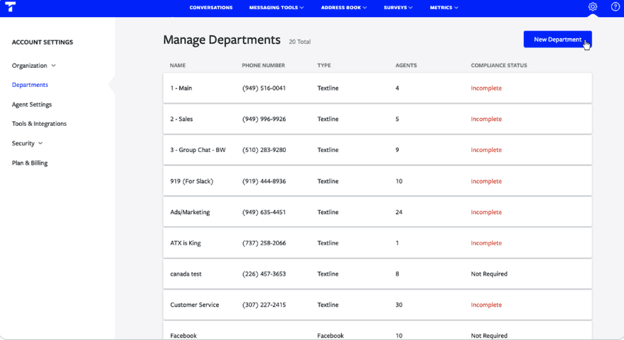
Textline makes it easy to organize conversations by department, helping larger businesses route messages to the right teams. Source: Textline
FYI
Even in the age of WhatsApp and Facebook Messenger, short message service (SMS) business messaging remains one of the most reliable ways to reach your customers. Not every phone has a messaging app, but virtually every phone can receive a text.
Ease of Use
No matter how you plan to use business texting, Textline makes the process painless. The platform is browser-based, so there’s no need to download software to your desktop. We like its sleek, minimalist layout, which makes it easy to find the features you need. For example, the main menu bar includes:
Conversations: View live chats and participant details and scroll through past messages.
Address book: A searchable contact list where you can tag customers with labels like “VIP” or “Wyoming Branch Customer.”
Surveys: Use one of two built-in templates or create custom surveys.
Metrics: Track key performance indicators like average response time, active agents, inbound messages and more.
Admin (via the cog icon): Manage departments, user permissions and security settings.
Managers and representatives can easily switch between teams, and we like that Textline’s interface stays consistent across roles. This makes it easy for managers to jump in and help without additional training.
Textline’s Chrome extension is another standout feature. It lets users send texts directly from their browser without switching tabs, which is especially helpful for sales reps doing research while messaging a client.
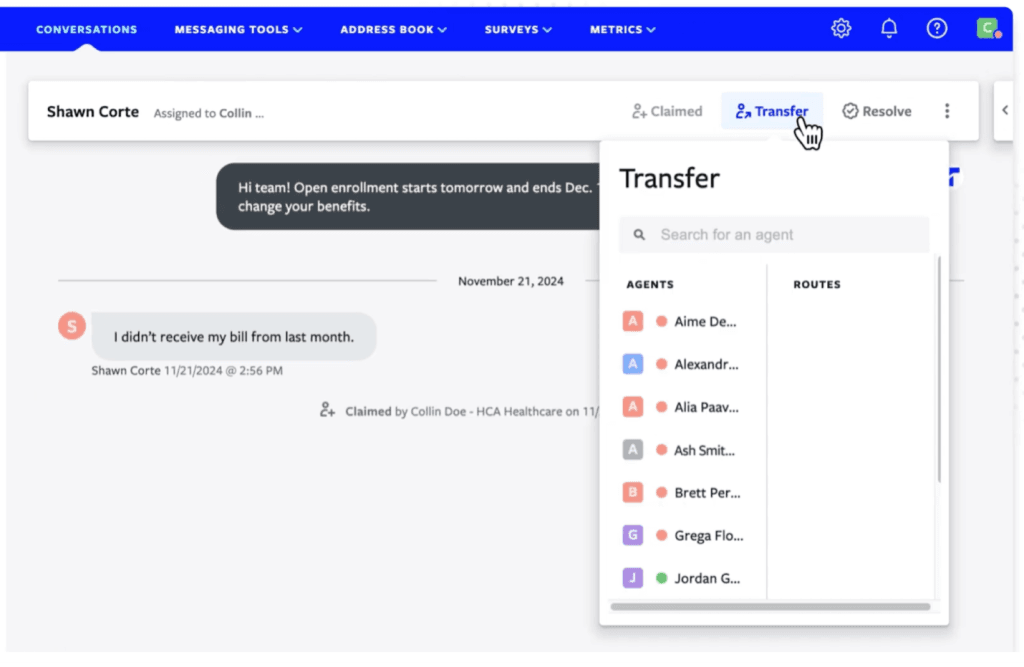
With one-click conversation claiming and transfers, Textline makes it easy to connect with customers and collaborate with teammates. Source: Textline
Textline Features
Textline has an impressive array of features, including the following.
Departments
Textline’s “departments” structure makes team-level communication easier by letting you set up and message separate groups within your business. For example, if you have sales, support and service teams across multiple locations, you can create departments like Wyoming Sales, Connecticut Support and Boston Customer Service. (Employees can belong to more than one department.)
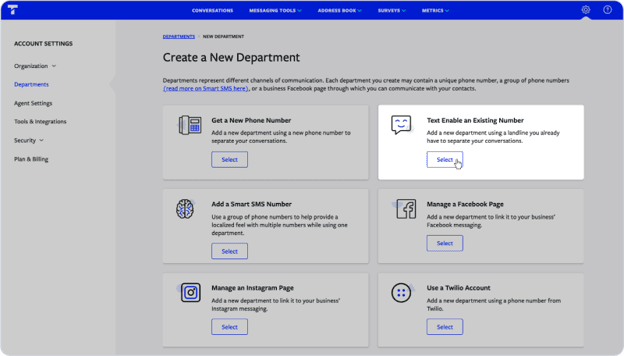
When setting up a new department, you can assign a dedicated phone number, enable an existing landline to receive texts or use an existing Twilio or Vonage (formerly Nexmo) number. You can also connect the department to your business’s Instagram or Facebook pages.
Each department functions as a distinct unit with its own contact info and, optionally, its own Facebook page. This compartmentalized setup keeps communication organized and helps ensure the right team members handle the right conversations. Employees only see the conversations in the departments they’re assigned to — and if they have access to multiple departments, switching between them is seamless. You can even set up department-specific automations and reports.
Did You Know?
Textline's sister app, Textedly, is designed for small and medium-sized businesses with flatter organizational structures and fewer customer touch points. Check out our review of Textedly if you have a smaller business with less complicated communication needs.
Textline lets businesses create departments using new or existing phone numbers and connect them to social messaging channels. Source: Textline
Unified Inbox
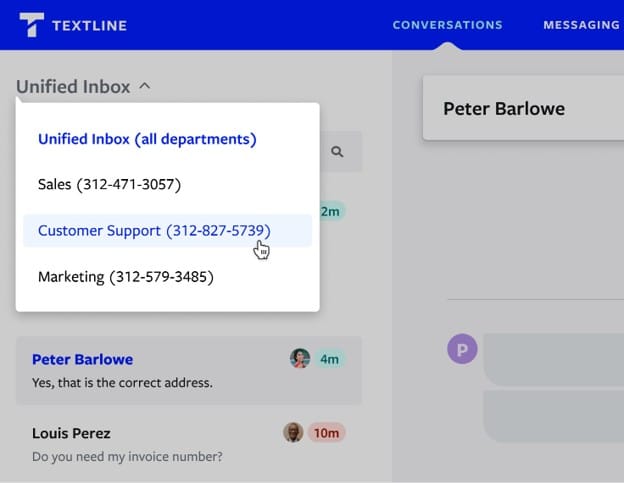
Textline’s Unified Inbox is a standout feature. From a central location, you can easily access and manage all your conversations. In addition to SMS, you can integrate Facebook and Instagram business accounts. Textline also integrates with internal tools like Slack and Pipedrive, letting your team send and receive texts without leaving those platforms. We love how simple it is to start new conversations, collaborate with team members and send files. A drop-down menu lets you switch between departments, phone numbers and channels — or view all messages in one feed. Admin controls ensure employees only see the messages meant for them.
However, we were disappointed that only Pro and Enterprise users have access to the Unified Inbox.
Textline’s Unified Inbox lets teams manage conversations across multiple departments from a single interface. Source: Textline
Tip
To make the most of your Facebook marketing strategy, don't wait for customers to message you. Use targeted ads and posts to spark conversations and connect with your audience.
Enterprise-Level Security
We were impressed by Textline’s focus on data protection, especially its Sensitive Data Redaction feature. This function automatically obscures sensitive information, making it visible only to authorized team members. This added security layer is especially valuable for companies handling confidential data.
Other security features include the following:
Textline complies with the CCPA and extends GDPR data privacy protections to all users, not just those in Europe.
You can choose how long data is stored, with maximum retention periods based on your subscription plan.
All data is encrypted both in transit and at rest.
Textline is SOC 2 compliant.
Multifactor authentication (MFA), SAML single sign-on (SSO), safelisted IP addresses and configurable user roles help organizations strengthen account security.
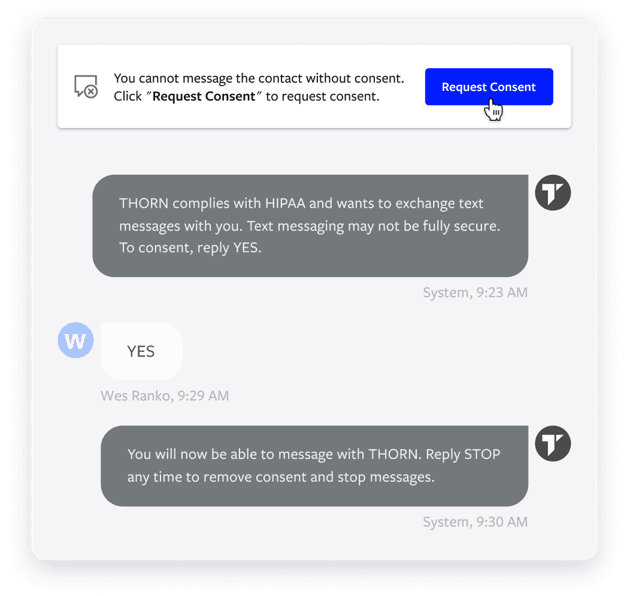
Textline also stands out for its healthcare-focused security features. Its HIPAA-compliant texting plans cover everything from obtaining patient consent to securely storing sensitive data. HIPAA compliance is available on all three subscription tiers, but it comes at an additional cost that varies by plan. Since Textline doesn’t publish HIPAA pricing, you’ll need to contact its sales team for a custom quote.
Textline’s HIPAA-compliant messaging tools help healthcare organizations obtain and document patient consent before exchanging text messages. Source: Textline
Group messaging: Add up to 10 contacts to a conversation and keep everyone’s responses in one thread. Everyone in the group can send and receive messages, making it easy to coordinate with customers or employees. Group messages use three message credits each, similar to multimedia messaging service (MMS).
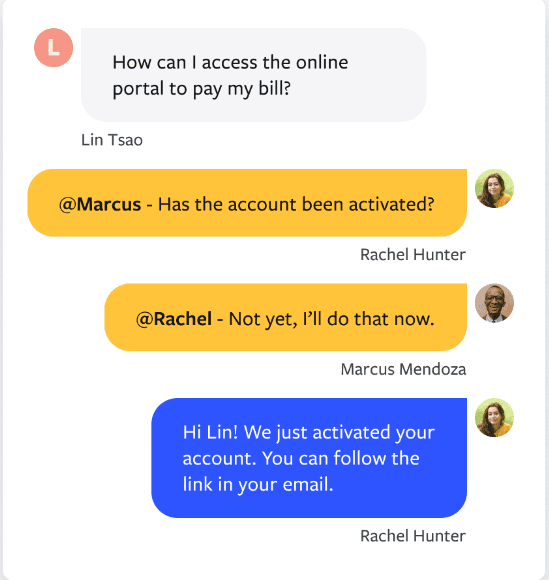
Whispers: This feature lets you loop in colleagues for help during a conversation. They can view the entire thread and leave private notes or suggestions, but customers never see Whisper messages.
Conversation management: Managers and team members can claim, transfer and resolve conversations to streamline workflows and speed up case closures. On the Pro plan, you can also tag resolved conversations with a “disposition” to categorize outcomes for reporting.
Textline’s Whisper feature lets team members collaborate behind the scenes without exposing internal messages to customers. Source: Textline
FYI
Business text messaging can boost sales by engaging leads, reviving older prospects, reducing no-shows and qualifying leads before handing them off to sales.
Workflow Automations and Shortcuts
Shortcuts and workflow automations are core elements of the Textline platform, helping users save time and respond faster to customers and colleagues. We especially liked that automations can be ordered by priority — a valuable feature when a message could trigger multiple rules.
Notable examples include the following:
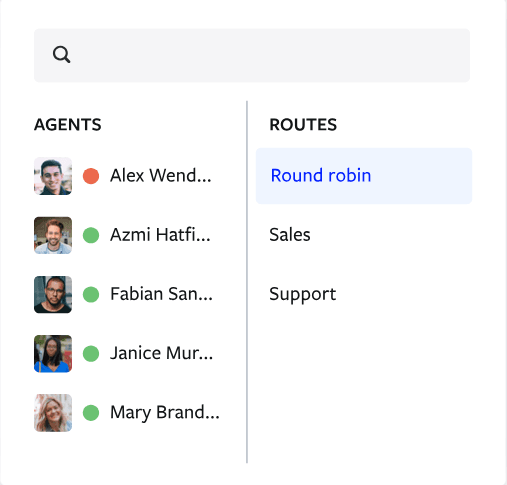
Message routing: We like how well Textline handles message routing, although we were disappointed it isn’t available on the entry-level Essentials plan. Automated routing options include the following:
Round Robin: Cycles through agents in order.
Last Assigned: Assigns conversations to agents based on prior interactions.
Load Balanced: Assigns messages based on each agent’s current workload.
Agent Pool: Filters by agent availability, workload limits, technical skills, organizational roles or language proficiencies.
Fallbacks: If no rules apply, you can assign a default agent, route to another team or escalate to a specific user.
Tagging automation: Smart tagging applies labels based on how conversations are resolved or when a customer subscribes — for example, by location, language or signup date. You can also trigger automations based on tags. For instance, you might tag high-priority customers as VIPs and assign a specific response when they reach out.
Message scheduling: Message scheduling is invaluable for businesses with appointments or site visits. You can set reminders, follow-ups or promotions to go out in advance.
Shortcuts: We like Textline’s Shortcuts feature, which offers prewritten templates that save time while maintaining message consistency. Whether confirming an appointment or answering frequent questions, shortcuts make processes more efficient.
Chrome extension: Textline’s handy Chrome extension allows agents to interact with customers without leaving their web browser. This function is ideal for sales reps who want to look up a business-to-business client’s details on their website or LinkedIn business profile while conducting a conversation.
Textline’s routing tools automatically assign incoming conversations to the appropriate agent or team based on customizable rules. Source: Textline
Managerial Controls and Insights
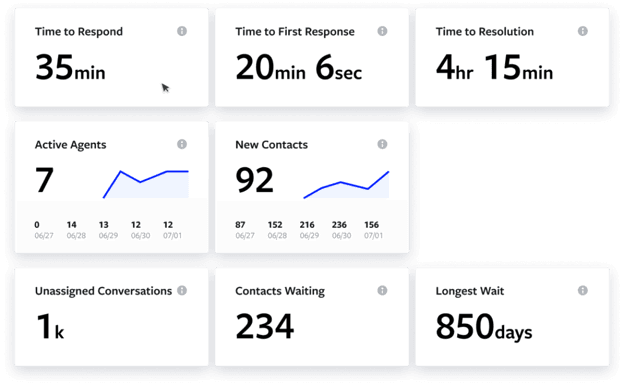
We like that Textline makes it easy for managers and company leaders to monitor conversation activity and other metrics, including the following:
Speed: Monitor how quickly agents reply to and resolve conversations by analyzing Time to Respond and Time to Resolution statistics.
Agent activity: Check the Active Agents metric to see who’s engaging with customers and how many new contacts each agent has helped.
Unresolved Conversations: The Unassigned Conversations metric shows clients awaiting a response; Contacts Waiting tells you how many unresolved conversations are underway in which the client was the last person to send a message.
Areas for improvement: Use the Longest Wait and Unresolved Conversations metrics to identify bottlenecks or conversations that need additional attention. Check Resolved Conversations to see how many issues have been successfully closed.
Resolution efficiency: The Average Messages to Resolve metric shows how many messages it typically takes your team to resolve customer questions and issues.
Volume of conversations: Check Active Conversations to see how many conversations are still live within the time frame you set; check each agent’s caseload with Assigned Conversations.
Automation use: The Automation Sent metric shows how frequently the system sends automated responses.
Conversation outcomes: The Dispositions metric shows every conversation’s outcome, including which issues have been resolved and which still need to be followed up.
We also liked that filters let you analyze data by individual team member, department or your business as a whole. You can also access marketing campaign metrics like replies, delivery failures and unsubscribes.
Textline’s analytics dashboard helps managers monitor agent performance, response times and conversation activity from a single view. Source: Textline
Customer Communication Tools
Textline’s customer communication tools impressed us. Features include the following:
Announcements: Announcements are Textline’s version of bulk messages. We like that Textline makes it easy to send mass text campaigns from the platform. With a few clicks, you can compose a message and send it to entire segments of a customer database. You can choose from established lists or upload and save new contact lists. Messages can be sent immediately or scheduled for later. After your campaign goes out, Textline displays graphs and charts showing sends, deliveries, responses, opt-outs and more. This level of analysis helps marketing teams improve future campaigns for greater engagement.
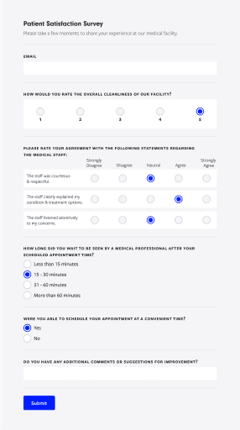
Surveys: We appreciate how well Textline’s survey feature is integrated into the platform. You can run Customer Satisfaction Score (CSAT) and Net Promoter Score (NPS) surveys using prebuilt templates or create custom versions. Gather survey data to gauge customer sentiment or schedule surveys to send at predetermined times, such as after an issue has been resolved.
Call forward: We liked Textline’s call forwarding features. If someone attempts to call your text number and the system recognizes it as a voice call, you can forward it to a number you select. If you have multiple departments, you can assign a different call forwarding number for each.
Smart SMS: If your business has multiple numbers with different area codes, Textline’s Smart SMS will send messages automatically from the number located closest to each customer. We love that this feature allows businesses with one location but a large reach to offer a more local-feeling experience.
Textline lets businesses create and send customizable customer satisfaction surveys, including CSAT and NPS questionnaires. Source: Textline
Textline Pricing
Textline no longer publishes subscription pricing, so you’ll need to contact the company for a custom quote. We were disappointed by the lack of pricing transparency, but Textline does clearly outline the features included with each plan. Here’s a quick comparison.
Priority support with a dedicated customer success manager
$70/agent per month
Enterprise
Everything in Pro, plus:
Customizable numbers of agents, phone numbers and message credits
Personalized implementation and account plans
Custom quote
Keep the following factors in mind relating to potential costs:
Custom pricing: Textline no longer publishes monthly subscription prices. You’ll need to contact the sales team for a custom quote.
Additional phone numbers: Additional phone numbers cost $15 per month on the Essentials and Pro plans.
Message credits: Each plan includes a monthly allotment of message credits. Additional credits cost 3 cents each, while backup credits are available for 4 cents each if you exceed your monthly allotment. Unused add-on and purchased backup credits roll over and never expire, although unused credits included with the subscription expire at the end of the billing cycle.
Phone numbers: You can choose a toll-free number or a 10-digit long code (10DLC). Existing landlines and certain VoIP numbers can also be text-enabled for $15 per month.
Annual billing: Annual billing is available, although Textline no longer publishes its discount. Contact sales for current pricing.
Free trial: Textline offers a free trial with no credit card required. Due to text messaging regulations, you’ll only be able to text your own number during the trial.
Implementation and Onboarding
We were happy to see that setting up Textline is straightforward. Here’s how it works:
Create a user account.
Choose the phone number you want to use to text customers — a new 10DLC or toll-free number, an existing number or one linked to your Twilio account.
If you select a new 10DLC number, enter your preferred area code, and Textline will assign an available number with that code.
Create the appropriate departments for your company.
Assign agents to specific departments. (You can assign agents to more than one.)
Upload your contact lists, such as customer and prospect databases, and verify that you have permission to message those contacts.
Group your agents into teams based on criteria like language or skill set.
If you prefer to use an existing phone number, Textline can help you text-enable it, including many landline numbers.
Customer Support
When you need help, Textline offers several ways to get in touch, along with an extensive online help center.
Channels: Textline’s customer service team is available from 9 a.m. to 5 p.m. Pacific time. You can open a support ticket, send an email or call or text to speak with an agent. Customers on the Pro and Enterprise plans benefit from priority support and a dedicated customer success manager. However, we were disappointed by Textline’s limited support hours — especially for larger businesses with multiple locations that might need help outside of regular business times. Some competitors offer extended support, including weekends.
Online resources: We like Textline’s extensive online knowledge base, which covers all aspects of using the platform. We love that many include clear, step-by-step instructions. There are also multiple video tutorials and an informative blog with additional tips and insights.
Limitations
Textline has many excellent upsides, but we did identify some limitations:
No short code: We were surprised that a messaging platform geared toward larger businesses doesn’t provide its own short code option. Most of the platforms we reviewed offer this capability. However, businesses that already use Twilio can connect a short code to Textline via its API.
Limited prebuilt integrations: Textline’s integrations were a bit disappointing. Its relatively small library of prebuilt integrations may not be enough for larger businesses seeking seamless connections with other business software. While the API and webhooks provide plenty of flexibility, businesses that need additional integrations will likely require developer resources. Read our review of Podium if you’re interested in a platform with a broader integration library.
Essentials tier is basic: Textline’s entry-level Essentials plan lives up to its name. Its narrow feature set is surprising for a vendor targeting larger businesses. You only get three included agent seats and one phone number, and the plan lacks many of the features that make Textline stand out, including message routing, custom surveys, the Unified Inbox and Salesforce integration. Conversation history is also capped at three years, versus unlimited on higher tiers.
No public pricing: Businesses must contact Textline sales for a custom quote, making it harder to compare costs before speaking with a representative.
Separate messaging fees: Textline plans include a monthly allotment of message credits instead of unlimited texting. While the per-message pricing is reasonable, businesses running high-volume marketing campaigns may find better value with providers that don’t charge separately for additional messages.
Paid inbound messages: Many competing platforms don’t charge for incoming text messages. With Textline, you’ll pay for each inbound SMS or MMS. Read our review of EZ Texting to learn about a platform that includes unlimited two-way texting and free incoming messages.
Limited communication channels: While Textline supports SMS, MMS and social messaging through its Unified Inbox, it doesn’t offer built-in voice calling or email tools. If your business wants to manage calls, emails and texts from one platform, you’ll probably be happier with a more comprehensive communications solution.
Lack of artificial intelligence (AI) features: Textline offers advanced automation and routing tools while remaining easy to use, so we were surprised that it hasn’t embraced AI to the same extent as many competitors. Platforms we reviewed increasingly include AI-powered capabilities like message drafting, intelligent routing and conversation summaries.
Tip
If you own a small business and want to grow sales with straightforward texting tools, check out our review of SimpleTexting.
Methodology
We analyzed and evaluated multiple text messaging services to identify the best solutions on the market. Our in-depth review process included assessing each platform’s ease of use, features, pricing, customer support and integrations. When evaluating the best text messaging service for larger businesses, we placed particular emphasis on team collaboration, customer communication tools, workflow automation, managerial controls and security.
Textline FAQs
Yes. Textline offers HIPAA-compliant texting plans for its Essentials, Pro and Enterprise tiers for an additional charge. These plans include features designed to help healthcare organizations protect patient information, including consent management and secure data handling. Textline also patented its HIPAA Contact Consent feature, which helps businesses obtain and document patient consent before sending text messages.
To use Textline, log in to the platform and manage customer conversations from a centralized dashboard. From there, you can send bulk text campaigns with Announcements, collaborate privately with teammates using Whispers, create automated workflows, manage surveys and monitor conversations across your departments.
Yes. Textline offers mobile apps for iOS and Android that sync with its web platform. The apps let users manage customer conversations, switch between departmental phone numbers, assign conversations and collaborate with teammates on the go. They also include features like Whispers for internal notes, Shortcuts for saved replies and real-time notifications. Users can schedule messages and access integrations with tools like Zendesk and Slack.
No. Textline isn't free, but it does offer a free trial. The company has three paid plans — Essentials, Pro and Enterprise — with pricing available by quote rather than published online. Each plan includes a set number of message credits, but businesses must pay for additional credits if they exceed that allotment.
Yes, text message marketing is legal as long as recipients have given their consent to receive messages from your business. Businesses must also comply with regulations such as the Telephone Consumer Protection Act (TCPA), which requires honoring opt-out requests and following other rules for marketing texts. Sending unsolicited text messages can result in significant fines.
Bottom Line
We recommend Textline for …
Multisite or multidepartment businesses that want a streamlined business texting platform with strong team collaboration tools.
Businesses that need workflow automation, shared inboxes and conversation management across multiple team members or locations.
Businesses that prioritize privacy and need HIPAA-compliant texting.
We don’t recommend Textline for …
Businesses that text infrequently or only message small groups and don’t need advanced collaboration features.
Businesses that rely heavily on MMS marketing, since Textline has message size and capacity limitations.
Businesses with high inbound SMS or MMS volumes, as Textline charges for incoming messages.
Mark Fairlie brings decades of expertise in telecommunications and telemarketing to the forefront as the former business owner of a direct marketing company. Also well-versed in a variety of other B2B topics, such as taxation, investments and cybersecurity, he now advises fellow entrepreneurs on the best business practices.
At business.com, Fairlie covers a range of technology solutions, including CRM software, email and text message marketing services, fleet management services, call center software and more.
With a background in advertising and sales, Fairlie made his mark as the former co-owner of Meridian Delta, which saw a successful transition of ownership in 2015. Through this journey, Fairlie gained invaluable hands-on experience in everything from founding a business to expanding and selling it. Since then, Fairlie has embarked on new ventures, launching a second marketing company and establishing a thriving sole proprietorship.