You’ve found the perfect candidate. They aced the interview, expressed genuine interest in your company and seemed ready to move forward. Then silence. Your emails go unanswered, your calls aren’t returned and your carefully scheduled follow-up interview sits empty. You’ve been ghosted.
This article is sponsored by ZipRecruiter
Once a rare occurrence, candidate ghosting has become one of the most frustrating challenges in modern hiring. When candidates disappear mid-process, it disrupts your timeline, wastes valuable resources and forces you to restart your search from square one. Understanding why candidates ghost and implementing strategies to keep them engaged throughout the hiring journey can help you secure top talent before they vanish.
The growing ghosting problem
Candidate ghosting isn’t just an occasional annoyance — it’s becoming a chronic problem. CareerPlug’s 2024 Candidate Experience Report reveals that 44% of candidates admit to ghosting employers, while 53% report being ghosted by employers themselves.
This behavior creates a vicious cycle. When employers ghost candidates, those candidates feel justified returning the same treatment. When candidates disappear, frustrated hiring managers may become less responsive to future applicants. The result is a breakdown in professional communication that hurts everyone involved.
That may be why the problem has intensified in recent years and shows no sign of slowing. An Indeed survey found 62% of job seekers plan to ghost employers during future job searches.
Highly engaged job candidates are less likely to ghost you.
Post your job on ZipRecruiter to access a wide-ranging network of highly engaged prospects, and benefit from their smart matching technology that uses billions of data points to match the best candidates with open jobs. It also sends jobs to 100+ job boards with one click.
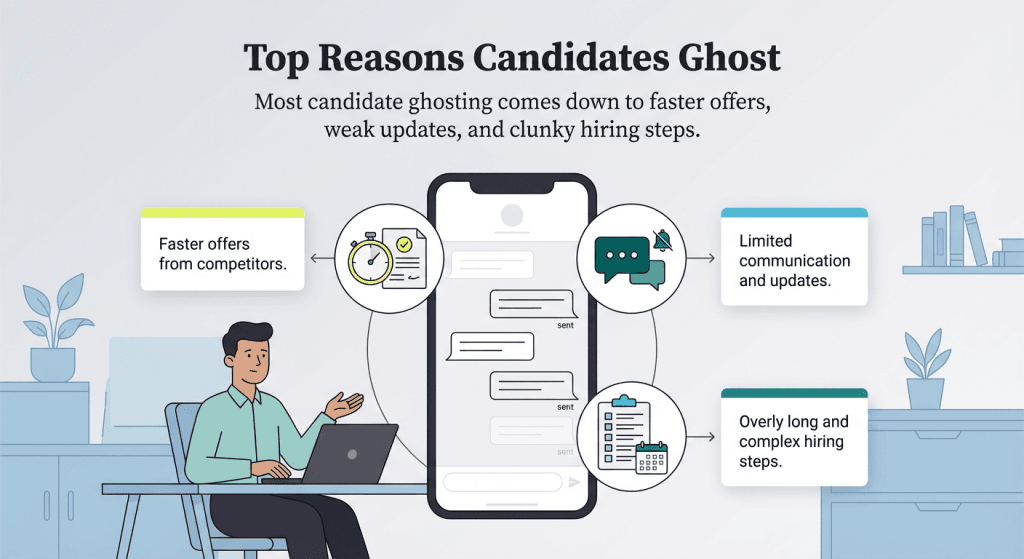
Top 3 reasons candidates ghost
Why do candidates disappear without warning? While every situation is unique, there are three common drivers behind this frustrating behavior:
1. They received a better or faster offer elsewhere
The most common reason candidates ghost is simple: they accepted another job. According to Indeed’s survey, receiving another job offer is the top reason job seekers cite for ghosting employers. In today’s competitive market, top candidates often juggle multiple opportunities simultaneously. If your hiring process moves slowly while a competitor extends an offer quickly, you’ll lose out—often without the candidate bothering to notify you.
Speed matters more than ever. The longer your process drags on, the more likely candidates are to accept offers from faster-moving companies. Many candidates apply to dozens of positions at once and make quick decisions when a strong opportunity arises. If weeks pass between their application and your first response, they’ve likely already moved forward with another employer.
2. Poor communication and lack of updates
Candidates crave transparency and regular communication throughout the hiring process. When they’re left in the dark about next steps, timeline expectations, or where they stand, they disengage and move on. According to the Greenhouse 2024 State of Job Hunting, 42% of candidates want stronger recruiter communication, the top area they’d like to see improved in the hiring experience.
When these expectations aren’t met, candidates assume the worst: that you’re not interested, that the role has been filled, or that your company doesn’t value their time. Rather than reaching out for clarification, many simply stop responding and focus their energy on employers who communicate better.
Silence breeds more silence. When candidates don’t hear from you, they interpret it as a signal that ghosting is acceptable behavior in your relationship. If you’ve left them hanging for days or weeks, they’re far less likely to feel obligated to notify you when they accept another position.
3. A lengthy, frustrating hiring process
Modern candidates expect efficient, streamlined hiring experiences. When your process involves too many steps, takes too long, or feels disorganized, candidates lose interest and drop out, often without explanation. CareerPlug’s research found that 33% of job seekers have abandoned applications requiring one-way video interviews because they found them impersonal and time-consuming.
The average time to hire is 44 days. For candidates actively job searching, 44 days feels like an eternity. Most candidates will only wait for a brief time for a callback before considering the job a lost cause and moving on to other opportunities.
Lengthy processes signal to candidates that your company is indecisive, bureaucratic or not serious about filling the role. Each additional interview round, each delay in providing feedback, and each scheduling complication gives candidates more reason to pursue faster-moving opportunities. By the time you’re ready to extend an offer, they’ve already accepted a position elsewhere.
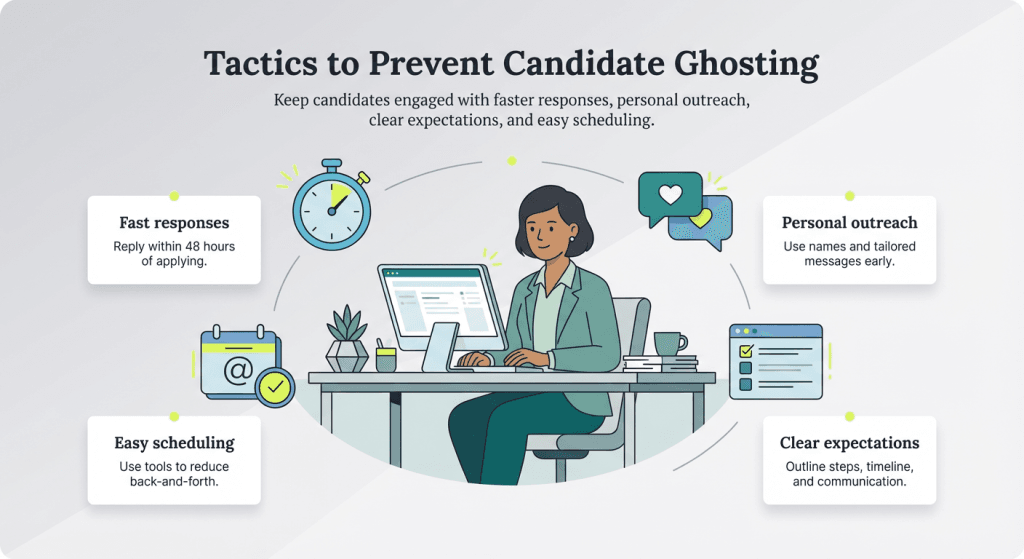
4 tactics to prevent ghosting
Preventing candidate ghosting requires a proactive approach focused on speed, communication, and engagement. Here are four proven tactics to keep candidates interested throughout your hiring journey:
1. Respond to candidates within 48 hours
The “Two-Day Rule” in recruiting emphasizes that the majority of candidates who accept interviews and jobs are those who receive a response from the employer within two days of applying. Research from Workable’s recruiting platform shows a strong link between time-to-respond and final outcomes: the faster you respond, the more likely you are to secure top talent.
Nearly half of candidates believe they should receive either an automated email from the company or a personal email from the recruiter after applying, according to Jobvite research. Don’t leave them waiting and wondering. Even if you’re not ready to schedule an interview, acknowledge their application promptly and provide a realistic timeline for next steps.
Speed isn’t just about being first, it’s about showing respect for candidates’ time and demonstrating that you’re serious about the opportunity. When you respond quickly, candidates remain engaged and are more likely to prioritize your opportunity over others.
Automation can help you maintain speed at scale. The best jobs platforms enable employers to automate initial responses while maintaining a personal touch, ensuring no candidate falls through the cracks while your team reviews applications.
2. Create personal connections from the start
Generic, impersonal communication makes candidates feel like just another number in your applicant tracking system. Personalization demonstrates genuine interest and creates emotional investment in your opportunity—making candidates far less likely to ghost.
Proactive outreach is particularly effective. Rather than waiting for candidates to find and apply to your job posting, identify strong matches and reach out directly with personalized invitations. ZipRecruiter’s Invite to Apply feature allows you to send a pre-written personal message to your favorite candidates so they’re more likely to notice your job.
Personal touches matter throughout the process. Use candidates’ names in all communications, reference specific details from their resume or previous conversations, and explain why you think they’d be a great fit for your team. This level of attention makes candidates feel valued and increases their commitment to seeing the process through.
3. Provide transparency and set clear expectations
Uncertainty drives ghosting. When candidates don’t know what to expect, how long the process will take, or what the next steps are, they’re more likely to disengage and pursue clearer opportunities elsewhere.
Be explicit about your hiring timeline from the first interaction. Tell candidates exactly how many interview rounds to expect, what the timeline looks like for each stage, and when they should expect to hear from you. If delays occur, communicate them proactively rather than letting candidates wonder what happened.
Transparency extends beyond logistics. The Greenhouse report found that 28% of candidates want more clarity on AI usage in hiring. Be upfront about how you use technology in your process. Share information about salary ranges, benefits, and job expectations early; the CareerPlug research found that 47% of job seekers expect to see salary information before applying.
When you set clear expectations and then meet them consistently, you build trust. Candidates are far less likely to ghost someone they trust and who has treated them with respect throughout the process.
4. Streamline scheduling and minimize friction
Every scheduling email exchange, every back-and-forth about availability and every delay in confirming interview times creates friction that gives candidates an opportunity to reconsider. Removing these friction points keeps momentum going and prevents candidates from losing interest.
Automated scheduling tools eliminate the tedious coordination that often creates delays and frustration. ZipRecruiter’s Schedule Meeting feature allows employers to set up phone, video, or in-person interviews directly within the platform. The tool sends automated confirmations and reminders, reducing no-shows while keeping candidates engaged throughout the process.
Minimize unnecessary steps in your process. Every additional interview round or assessment should serve a clear purpose. If you can make a confident hiring decision in three interviews instead of five, do it. Candidates appreciate efficiency and are more likely to stay engaged when they see clear progress toward a decision.
By making it easy for candidates to schedule interviews at their convenience and providing automated reminders, you demonstrate professionalism while significantly reducing the chance they’ll ghost.
Protecting your employer brand
Every candidate you ghost – or who ghosts you – potentially impacts your employer brand. According to CareerPlug’s research, 65% of job seekers said being ghosted made them less likely to reapply or refer others to the company.
The candidates you’re speaking with today may be your customers, partners or future employees tomorrow. How you treat them during the hiring process shapes their perception of your company for years to come. Even when candidates don’t work out or disappear mid-process, maintaining professionalism protects your reputation.
Make it a policy to always close the loop with candidates. If you’ve decided not to move forward, send a brief but professional message letting them know. If a candidate ghosts you, send one final message acknowledging their decision to pursue other opportunities and wishing them well. These small gestures demonstrate maturity and professionalism that candidates remember and share.
Candidate ghosting won’t disappear entirely; some level of attrition is inevitable in any hiring process. But you can dramatically reduce its frequency by focusing on the fundamentals: respond quickly, communicate clearly, personalize your outreach and minimize friction.
The companies that succeed in today’s competitive talent market are those that respect candidates’ time, maintain consistent communication, and move decisively when they find the right person. By implementing the tactics above and leveraging modern hiring platforms that prioritize speed and engagement, you’ll keep more candidates in your pipeline and secure top talent before your competitors do.
Remember that preventing ghosting isn’t just about filling positions faster, it’s about building a hiring process that treats candidates with the same level of professionalism and respect you expect from them. When you do that consistently, you’ll find that ghosting becomes the exception rather than the rule.