Business.com aims to help business owners make informed decisions to support and grow their companies. We research and recommend products and services suitable for various business types, investing thousands of hours each year in this process.
As a business, we need to generate revenue to sustain our content. We have financial relationships with some companies we cover, earning commissions when readers purchase from our partners or share information about their needs. These relationships do not dictate our advice and recommendations. Our editorial team independently evaluates and recommends products and services based on their research and expertise. Learn more about our process and partners here.
Marketing is especially important for small businesses that want to expand their reach.

Marketing is especially important for small businesses that want to expand their reach.
Marketing is an important tool for businesses of all sizes. Small businesses can use marketing techniques and strategies to attract more customers, gain market share, boost brand awareness and create new revenue options. Through these techniques, small businesses can market themselves to existing and potential customers, investors and even other businesses. A marketing campaign’s success is determined by its budget, creativity and strategy for connecting with its target audience.
Here are some small business marketing campaigns to inspire your efforts, along with the do’s and don’ts of creating a successful marketing campaign.
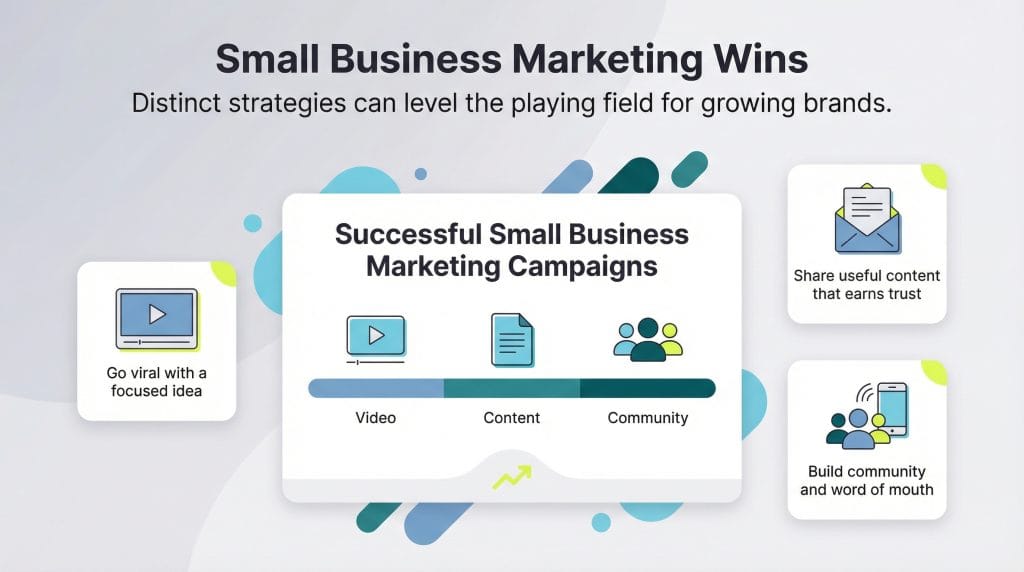
To fully grasp how marketing campaigns can benefit small businesses, check out how the following companies achieved success through marketing.
One great idea and a viral video skyrocketed this small business to the top. With a marketing budget of only $4,500, co-founder Michael Dubin took the subscription box and shaving industries by storm. Before Dollar Shave Club’s 2012 video, brands like Gillette and Schick had the men’s shaving market locked down, and the subscription service industry was just getting off the ground. By 2015, Dollar Shave Club had captured nearly 50 percent of the online razor market. Unilever acquired the company in 2016 for $1 billion, and sold a majority stake to Nexus Capital Management in 2023.
The Dollar Shave Club video hit every marketing principle perfectly. It was fun and informative, it listed the company’s information repeatedly and it communicated why the company was different from its competitors.
Airbnb is the poster child for persistence in marketing. In 2008, Airbnb co-founders Brian Chesky and Joe Gebbia started renting air mattresses. Now, Airbnb has more than eight million worldwide listings.
However, Airbnb did not experience growth until it focused on marketing. It relied on email and content creation to drive site interaction. The Airbnb team sent prospective renters and property owners emails recommending highly reviewed rentals in destinations an individual had searched for recently. The company even included location suggestions in some of its marketing emails to spur an interest in traveling.
The email campaigns were so successful that Airbnb went on to create a vacation inspiration travel blog.
Another company that relies on content creation is NOOMA, which is an abbreviation for “no more artificials.” This company sells plant-based athletic drinks for health-conscious customers. NOOMA drives engagement and sales with its blog. Many companies rely on blogs to drive interest, but not all of them are successful. NOOMA creates engaging and informational blog posts with recipes, workout routines, health information and an occasional sales pitch.
However, a good marketing campaign should not focus entirely on sales pitches. Instead, companies should create campaigns that provide valuable content that engages their audience so people come back to read the blog regularly. [Read related article: Sell Yourself: 7 Secrets to Appearing Confident During a Sales Pitch]
Language learning app Duolingo turned its mascot, the green owl Duo, into a viral marketing sensation using TikTok. In 2021, Duolingo began posting funny videos featuring the mascot in unexpected situations on the social media platform. By 2025, the account has amassed over 16 million followers, with individual videos reaching tens of millions of views, proving that mixing platform-native content with humor can drive brand awareness.
When Uber started its operations, the company’s marketing zeroed in on how its supply could meet demand. It relied on customers spreading the word about its service being reliable, easy to use and available when cabs were at a premium. Using this brand advocacy, Uber slowly attracted a customer base and transformed the startup into a household name that’s now synonymous with ride hailing.
Uber relies primarily on mobile marketing and its YouTube channel. The company’s mobile ads and easily digestible video content successfully enticed users to download the app. Uber reported 189 million monthly active platform consumers globally across its ride-hailing and delivery services.
Fitness apparel brand Gymshark began in 2012, operating from a garage. Instead of relying on traditional advertising, founder Ben Francis sent free products to fitness influencers and micro-influencers on social media. His grassroots approach created authentic brand advocacy among fitness enthusiasts and now Gymshark has more than eight million Instagram followers. The brand’s success demonstrates how small businesses can leverage influencer partnerships and user-generated content to build an engaged community.
With a name like Liquid Death, the canned-water brand automatically set itself apart from its many competitors. Since its inception in 2018, Liquid Death has carved out a niche target audience by not taking itself too seriously. Through a series of over-the-top commercials that employed slogans like “Murder Your Thirst” and “Death to Plastic” and creating a hypermasculine design for its cans, Liquid Death used humor to build brand awareness and connect with an untapped demographic.
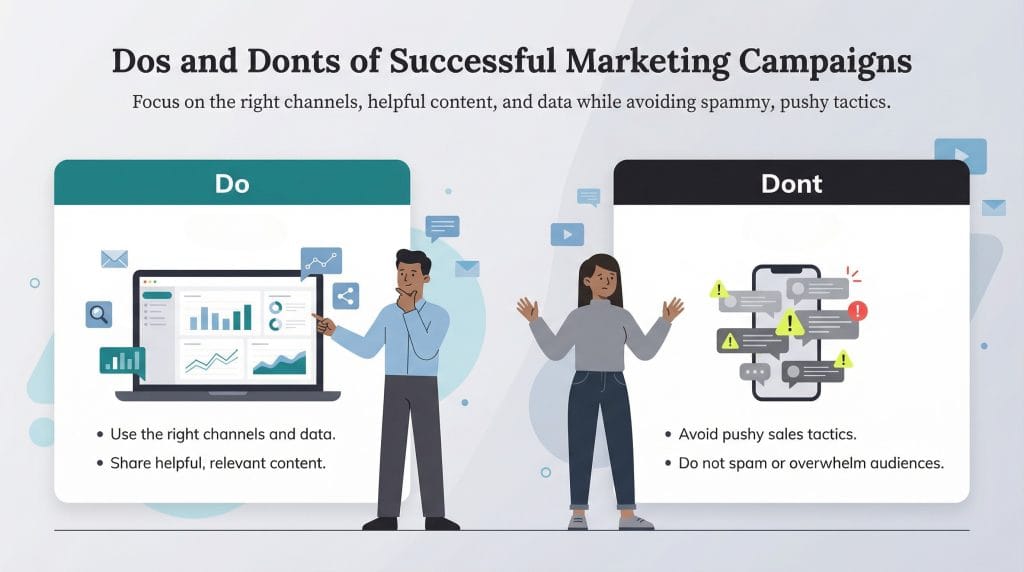
If you’re trying to replicate the success of these marketing campaigns, here are some tactics to keep in mind.
The primary goal of marketing is to connect a business with the correct target market. If you choose the wrong channel for a marketing campaign, the target market will not be engaged, even if the content is perfect. For example, TikTok is not the best channel for a program aimed at older adults.
Before you choose a marketing channel, consider how your target market interacts with social media, emails, blog posts, television ads and print media. There isn’t a one-size-fits-all channel; sometimes experimentation is valuable.
Nobody appreciates a pushy salesperson. Build rapport with potential customers before you make a sales pitch. Customers who feel appreciated will be more likely to engage with — and ultimately buy — your product.
Consider a soft push instead of a hard one. A soft push focuses on persuading customers while creating a low-pressure sales environment. This gives the customer a chance to decide to buy a product on their own. A soft-push approach takes time and nuance, but the result is a loyal customer base.
It’s important to create content that your audience wants to interact with. Valuable content creates a sense of trust in a company while sharing how the product meets consumers’ needs.
To produce valuable content, demonstrate your authority in your business’s area of expertise. Use research, and show your work. To attract the largest audience, keep the content simple. This is especially important for tech-heavy industries or businesses that use industry-specific terminology.
It’s easy to spam your customers with alerts and messages. However, when you do that, your message can become diluted and confusing. The goal of marketing is to widen your customer base, not lose subscribers from content burnout. Keep your company’s reputation intact during your email marketing campaign so you don’t come across as spammy.
Stick to a content schedule with clearly defined goals. A schedule makes it easier to plan promotions, track engagement and analyze performance. Build a calendar around new-product launches, holidays and specific service promotions. A standard way to do this is by breaking a schedule into fiscal quarters. [Read related article: Everything You Need to Know About Email Marketing Campaigns]
Marketing can be expensive; you don’t want to waste resources on ineffective campaigns. Analyze the success of your marketing campaigns by examining engagement, revenue changes and the effectiveness of different channels. Are you reaching your target market? How is your return on investment? Is your messaging clear? If you can’t answer these questions, you may not be paying close enough attention to your marketing data.
There are various tools for analyzing marketing data, but don’t be afraid to outsource data analytics to a third party or to crowdsource content if the numbers tell you more content is needed.
There is no one-size-fits-all marketing campaign or marketing strategy. What works for one company may not work for another. This is especially true for small versus large businesses. A marketing campaign’s success ultimately depends on the differences in the products, marketing budgets, advertising channels and campaign scaling. Consumers appreciate a creative marketing campaign, so focus on what makes your company unique.