Written for the leaders, owners and professionals of the 11 million businesses with between $50,000 and $50 million in revenue.
|
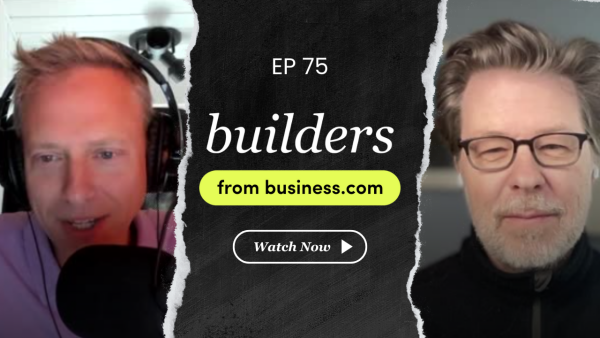
This week on our builders from business.com podcast, host John Busby is joined by Greg Sterling, co-founder of Dialog and Near Media, to discuss whether word-of-mouth is enough anymore, how small businesses are rapidly adopting AI, and what that means for their future success. Watch the episode on YouTube or listen on your favorite audio platform.
|
California sober: These cannabiz workers just say no
Servant leadership: How the management style boosts performance
Zoom: Its founder just wanted to chat with his girlfriend
|
|
|
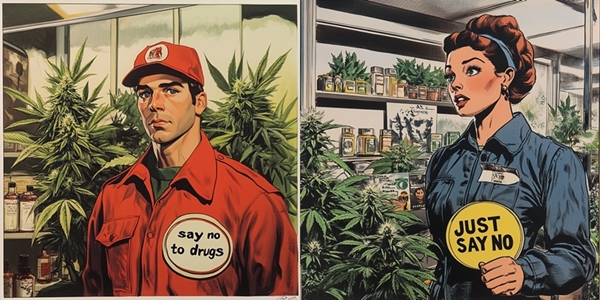
The Cannabis Industry Workers Who Pass on Grass
|
(Source: business.com / Midjourney)
|
Never get high on your own supply, the saying goes, but some legal marijuana company employees never get high at all.
Free samples can be a perk of employment at weed manufacturers and dispensaries, just as free beer is a common incentive for brewery workers. Nobody is required to participate in either case, but it can foster a culture where abstaining might look suspiciously like low enthusiasm.
That can be uncomfortable for nonusers like publicist Alice Moon, who’s worked in the cannabis industry for over 13 years. In 2018, Moon was diagnosed with cannabinoid hyperemesis syndrome, a medical condition associated with extreme bouts of vomiting after exposure.
“I have been shamed for not consuming,” Moon says, adding that a common attitude is “if you don’t use cannabis, then you don’t ‘deserve’ to work in the industry.”
However, this old-school attitude might be fading as enterprises selling legal THC and CBD attract MBAs and CPAs.
Jordan Martin, the head of product strategy at HashDash — a platform for matching people with their preferred strain — has had a more welcoming experience as a nonuser. (He tried pot in college but stopped as his family and professional life progressed.) Martin hasn’t felt peer pressure to get high at work, where “the focus is really on educating people and breaking down outdated stereotypes,” he says.
That sentiment is echoed by industry veteran George Sadler, founder of Gelato Canna Co. and Platinum Vape. He started both ventures with his son Cody, who has also never smoked weed. Neither of them felt like they had to sample their products personally to ensure the quality.
“You don’t have to own a cow to get milk and cheese to market,” Sadler explains.
Perhaps it’s easier to abstain when you own a cannabis company rather than work for one. Moon, who worked her way up from a trimmer, has a word of advice for employees in the industry who choose to remain sober: “I highly recommend they don’t broadcast that.”
|
|
|
Run your business at the speed of light
|
As the place where transactions happen, your point-of-sale system is one of the most important touchpoints for your customers. You need a POS system that’s efficient and reliable so it can keep up with the pace of your business as it grows.
Lightspeed is true to its name, processing transactions quickly and easily with a consistent uptime you can rely upon. Run payments, track inventory, and share data across teams and channels instantly, making your business nimbler than ever. Want to take things a step further? Lightspeed offers personalized support to boost your sales process and improve customer experience even further.
For an intuitive, effective POS system that can give your business a major boost, look no further than Lightspeed.
|
|
|
How Servant Leadership Elevates Performance
|
Dr. Steven Rogelberg is a chancellor’s professor at UNC Charlotte, former president of the Society for Industrial and Organizational Psychology, and author of Glad We Met: The Art and Science of 1:1 Meetings.
A servant leader, as opposed to a coercive leader, is highly focused on supporting their people’s needs and elevating their success. To help illustrate what a servant leader does, here are key behaviors:
- Provides feedback in a timely and constructive manner
- Offers help readily, but empowers their people to address challenging situations
- Puts the best interests of their people ahead of their own, and takes a genuine interest in their career progression
- Emphasizes high-level values of decency, giving back, and good ethics as the foundation of collective success
Critics of this leadership orientation suggest that it can be exhausting for the leader, cause complacency among staff, and derail the bottom line.
But a study in the Academy of Management Journal, which involved nearly 1,000 hourly restaurant employees in 71 locations, helped clarify servant leadership’s impact: The managers who practiced it had higher-performing employees. These employees tended to be more customer-oriented, creating a “culture of service” and boosting the restaurant’s overall success.
Servant leadership not only elevated humanity at work — with customers as a key beneficiary — but was good for business. It’s heartening when a leadership practice that privileges and helps others can be good for all.
|
|
|
Zoom Exists Because Founder Wanted to Chat With His Girlfriend
|
Zoom rose to popularity at the onset of COVID, with a staggering 3.5 trillion annual minutes and nearly 500 percent year-over-year customer growth in 2020. This earned founder and CEO Eric Yuan billions of dollars — and the title of TIME’s Businessperson of the Year.
Many users had never heard of the app before 2020, but its early iterations date back to 1987. The story goes that Yuan, frustrated with 10-hour train rides to visit his college girlfriend (and eventual wife), started working on Zoom to find a better way to keep a long-distance relationship going … but then put the project on the back burner for decades.
In 2008, as Webex’s VP of engineering, Yuan pitched his personal video software to parent company Cisco, but they turned him down. Finally, in 2011, Yuan decided to start Zoom on his own.
So, let’s not call Zoom an overnight success; its journey to teleconference dominance took over 30 years — and one case of true love.
|
|
|
On November 22 in Business History:
|
- 1809: Peregrine Williamson patented the steel pen. Today, writing instruments are a $19 billion industry.
- 1995: Toy Story hit the box office. It would bring in over $394 million worldwide, making it the year’s second-highest-grossing film (behind Die Hard With a Vengeance).
- 1999: Jack Welch, CEO of General Electric, was named “Manager of the Century” by Fortune Magazine.
- 2017: Uber admitted that hackers stole the personal information of 57 million people worldwide after first trying to keep it secret, resulting in the chief security officer’s dismissal.
|
|
|
Written by Lauren Vino and Ali Saleh.
|
|
|
|