Written for the leaders, owners and professionals of the 11 million businesses with between $50,000 and $50 million in revenue.
|
In April, Cheetos launched a fun marketing campaign embracing its tendency to leave “fingers … covered in that beloved orange Cheetle dust.” However, the brand now has a different problem on its hands.
Last year’s movie Flamin’ Hot, directed by Eva Longoria and released by Hulu, told the story of Frito-Lay janitor Richard Montañez, who (in the film, anyway) creates Flamin’ Hot Cheetos at home. He then convinces executives to produce it, earning a promotion to VP of multicultural marketing and sales.
But Frito-Lay called the story an “urban legend” and denied that the real-life Montañez “was involved in any capacity in the Flamin’ Hot test market.” Now, Montañez is suing for fraud and defamation over the “smear campaign.” Whatever the truth, perhaps this lawsuit will Frito-Lay the debate to rest? (Sorry if that pun was a little cheesy.)
In the meantime, read business.com’s guide to Why You Need to Develop Your Own Unique Product.
|
|
|
Ghost kitchens: Where did takeout-only restaurants go?
Infographic: Tiny homes are becoming a big business
Avocado mountain: Grocer’s stunt earns world record
|
|
|
How We Got Ghosted by Ghost Kitchens (But Will They Have an Afterlife?)
|
Flashback to 2021: Dine-in restaurants were still hurting from COVID downturns while 1,500 ghost kitchens exclusively catered to food delivery without a traditional storefront. (You could order from them, but you couldn’t eat at them.)
At the height of the pandemic, ghost kitchens had an estimated market size of $43 billion. Analysts predicted it would balloon to $71.4 billion by 2027 and make up half of global takeaway food service by 2030. In one famous example, internet personality MrBeast’s MrBeast Burger cooked up $150 million after its late 2020 debut.
However, ghost kitchens are now shuffling to an early grave:
- The National Restaurant Association reported that ghost kitchens had peaked and are likely on the decline. Over 70% of diners want a physical, publicly accessible location.
- Kitchen United, which had raised $175 million in venture capital, announced it would sell or close all of its ghost kitchens; Reef (backed by Wendy’s) slashed 550 planned kitchens; Fat Brands stalled its ghost kitchen testing; CloudKitchens, founded by Uber’s ex-CEO Travis Kalanick, had major cutbacks.
- In March, Uber Eats culled thousands of spam-y ghost kitchen listings.
- MrBeast even sued his business partners to shut down his own branded virtual burger restaurant due to poor quality control.
So, what happened?
For one, customers developed trust issues. A viral YouTube exposé revealed that a single ghost kitchen operated under 40 different fake restaurant names on delivery apps. The anonymous nature of ghost kitchens makes them famously difficult for health inspectors to regulate. And the margins just weren’t that great, with third-party apps charging up to 30% for the deliveries that ghost kitchens rely on.
Finally, ghost kitchens were a COVID phenomenon … and in a post-vaccine world, almost everybody felt safe going back to restaurants (even if the menu prices were higher than ever).
Does that mean it’s time to give up the ghost? Not necessarily. There will always be a market for takeout. A few major investors are gobbling up leftover ghost-kitchen assets, and the food-delivery app Wonder has a ton of hype in the chef community.
Ghost kitchens might have a future in larger, more consolidated hands that can rehabilitate consumer trust. Speaking to Restaurant Dive, industry lawyer Alon Lagstein summed it up: “Whoever can solve for quality control and cost is probably going to start becoming the winner here.”
|
|
|
Clover is the lucky charm your business has waited for
|
Accepting payments is beyond important, but many first-time business owners are surprised that it’s beyond complicated. Now, though, there’s a unified point-of-sale (POS) system and credit card processor that makes the entire experience a breath of fresh air.
Clover is an all-in-one POS system that provides your business with software, hardware, and processing support all in one place. Get started processing debit and credit card transactions right away, including tap and NFC payments. The built-in software allows you to track sales data and manage inventory with ease, helping you adapt in real-time to customer demand.
From the point-of-sale to the back office, Clover is your lucky charm.
|
|
|
Today’s podcast conversation is with Peter Cohan, management consultant, professor, and author of Brain Rush: How to Invest and Compete in the Real World of Generative AI. He discusses AI’s impact on various industries, including marketing, healthcare, and finance. Watch the episode on YouTube or listen on your favorite audio app.
|
Housing affordability is a generation-defining issue. The average worker is spending 40% of their income on rent — up from 25% in 2000 — and more young adults live with their parents than at any time since the Great Depression. Local regulations in many areas prevent supply from meeting demand.
No wonder tiny homes are trending. They aren’t for everyone, sure, but for those willing to live with less, it’s an affordable way to buy. (Hey, living in our parents’ backyard isn’t technically living with them, right?)
|
|
|
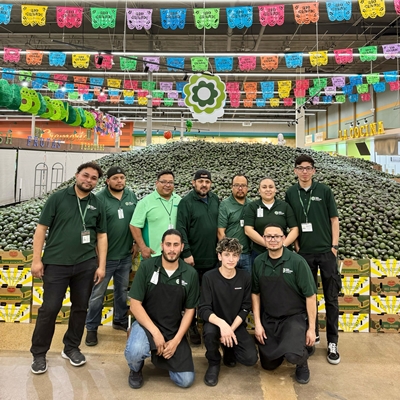
Latin Market Earns Guinness World Record With Avocado Mountain
|
|
|
(Source: El Rio Grande Latin Market/Facebook)
|
The team at Dallas grocery store chain El Rio Grande Latin Market wanted to promote their business by winning a Guinness World Record. After some brainstorming, they decided on the category of “largest fruit display.” Since avocados are a fruit, one thing led to another.
Actually, 260,292 things did, because that’s how many avocados it took for El Rio Grande to break the previous record. They took the campaign to the next level by making the unveiling a three-day event with cooking competitions, recipe workshops, live music, and free tastings. This served to highlight the importance of community access to healthy foods. (To get rid of the quarter-million avocados, El Rio Grande sold them for only $.20 each.)
“We could have one of those once a year with a different produce item,” a manager at El Rio Grande told b. over the phone.
|
|
|
Written by Marty Beckerman and Dan Ketchum.
|
|
|
|