HBO’s Succession was the big winner at this week’s Emmy Awards, but even if your company isn’t a media powerhouse like Waystar Royco, the moral of the story is that power handoffs take deliberate planning. Founder Logan Roy (Brian Cox) refused to settle on which of his children or deputies should take over in his absence, ensuring chaos and backstabbing.
For a better primetime example of good transition planning, change the channel from HBO to NBC’s Sunday Night Football. Immediately after parting ways with storied head coach Bill Belichick, the New England Patriots replaced him with veteran player Jerod Mayo, who’d already been announced as coach-in-waiting and earned the team’s trust.
Eldest Succession boy Kendall Roy (Jeremy Strong) could only dream about such a frictionless process. In most real-world cases, however, large family-controlled businesses outperform nonfamily corporations after switching CEOs, likely because heirs and heiresses have greater lifelong knowledge of their firms.
|
|
|
Why Gen Z Rejected the Girlboss (and Embraced the “Snail Girl”)
|
A decade ago, the “girlboss” ruled over business culture. This supposedly feminist figure was popularized by once-popular workplace texts like Sheryl Sandberg’s Lean In. It was considered the aspirational ideal of young, upstart millennial women hustling to get a seat at the table and climb the corporate ladder.
For all its can-do attitude and empowering spirit, however, the girlboss archetype has fallen apart in recent years. We can blame a few infamous executives like Theranos founder Elizabeth Holmes — who proved that toxic leadership and outright criminality don’t have a gender. Yet, the bigger problem might be hustle culture itself.
Research from Ipsos in 2023 found that Gen Z women feel more stressed than any other demographic. No wonder they have no interest in continuing this trend at burnout factories; they might be ambitious and career-minded, but they aren’t seeking personal meaning or existential salvation at the office.
Today’s young female professionals are instead embracing “snail girl culture,” a term coined by Sienna Ludbey, founder of Australian bag brand Hello Sisi.
“Snail girl, for me, is not about … stopping work completely,” Ludbey explained in Fashion Journal. “It’s just about taking that time to remember to not be as hard on myself, to have a work-life balance and to stop comparing my journey to others.”
The adjacent “soft girl” movement likewise rejects the notion that work is everything and instead prioritizes self-care, leisurely workouts, and healing. “Soft life is romanticizing every moment of your day,” writes one TikTok user. “Soft life is releasing the compulsion to produce and accomplish.”
This might sound like laziness or entitlement to older millennials who feel they had to pay their dues — or, worse, like ingratitude for 2010s girlbosses who paved the way. But zoomers would counter they’re seeking a healthier existence without feeling bossed around by anyone, especially themselves.
|
|
|
Napoleon: Physical Height Is a “Complex” Hiring Bias
|
(Source: Columbia Pictures)
|
Director Ridley Scott’s latest historical biopic, Napoleon, showcases the titular conqueror’s prowess and wit on the battlefield. But the film might surprise viewers by not showcasing Napoleon Bonaparte (Joaquin Phoenix) as particularly short.
In fact, historians now believe Napoleon was of average height — or even slightly tall — for an 18th-century Frenchman. The notion of him as vertically challenged is likely due to confusion between the British inch and the longer French inch, and due to British cartoonists’ propaganda.
Still, the trope of a “Napoleon complex” has an unfair modern impact in the workplace. Research shows that higher stature is associated with higher pay, with each additional inch more valuable up to six feet. A 2016 study found that shorter men earn approximately $4,200 less per year, with taller men getting promoted into leadership positions more often.
Don’t let your shorter workers get the short end of the stick. As employers strive to eliminate other biases in compensation and career development, remember that Napoleon won his battles with meticulous planning and perseverance, not the ability to dunk.
|
|
|
The Slinky Was Originally Designed for Navy Warships
|
Naval engineer Richard James of Philadelphia wasn’t trying to invent a toy; he wanted to stabilize warships’ instruments from the vibrations of gunfire, rough waves, and propeller shafts. Among the hundreds of tension spring coils stacked around his desk in 1943, James noticed one of them began “walking” away in a series of arcing motions with the help of gravity alone.
His wife Betty called it the Slinky, and together they saw the commercial potential. Upon going into business, James sold his entire inventory of 400 Slinkys in less than two hours. A couple years later, they’d reach $100 million in sales, which is well over $1 billion adjusted for inflation.
Sales had dried up by 1960 when James disappeared to South America, but Betty took over the company in his absence, initiated a new marketing campaign, and steered the Slinky from a forgotten novelty to a timeless classic.
|
|
|
The Fiery Pirate Has All the Vitamin C You Need for a Winter Voyage
|
Sometimes the best way for a landlubber to get through a dark and cold commute home is a warm cocktail waiting at home.
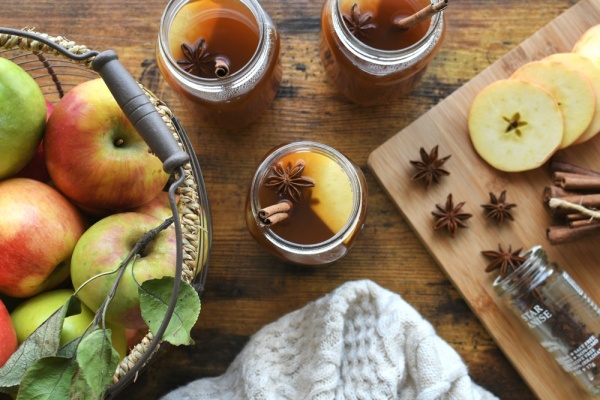
The Fiery Pirate is an elevated take on hot apple cider. It’s simple enough to make for a cozy night in with a relaxing book — though its festive garnish also makes it ideal for winter gatherings — and permeates your whole kitchen with a lovely, comforting smell. The recipe below serves four.
- 3 to 4 cups apple cider
- 3 to 4 whole black peppercorns
- 5 cinnamon sticks
- 3 to 4 whole cloves
- 1 star anise
- 1 orange
- 1 apple
- 8 ounces of spiced rum
Directions: Pour apple cider into a medium saucepan. Add the peppercorns, cloves, anise, and one of the cinnamon sticks. Peel a generous section of orange zest and add to the mixture. Bring to a rolling boil, then let simmer for about five minutes. While your cider is simmering, core the apple, slice it into medium-thin half rounds, and make a slit on one side. Slice the orange into similar-sized half rounds.
Add 2 ounces of spiced rum to each mug. Pour the hot cider over the rum. Garnish with the orange and apple on mug rim, and add a cinnamon stick to each mug.
|
|
|
Written by Shannon SImcox, Rachel Brodsky, Ali Saleh, and Tess Barker. Comic by John McNamee.
|
|
|
|