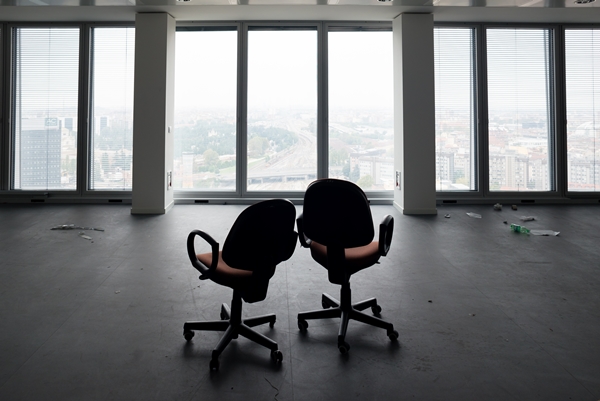
Even with return-to-office policies at 9 in 10 companies, a record level of corporate real estate — nearly 20% — sits unoccupied in U.S. cities, according to the latest research from Moody’s Analytics.
The culprit isn’t simply telecommuting, but also the popularity of open-office plans — which require less square-footage per worker — and overbuilding in past decades. (Modern companies want offices that look and feel equally modern, so 20th-century structures are the least popular.) But there’s an innovative potential solution, as we explore below.
|
|
|
Office space: Cities are turning empty workplaces into homes
aka Mr. Chow: Watch HBO’s doc on legendary restaurateur
Work trip: Silicon Valley’s company-sponsored ketamine retreats
|
|
|
Cities Are Turning Empty Abandoned Offices Into Homes
|
Office occupancy still hovers at half of pre-pandemic levels. It’s a $1.2 trillion liability for landlords and banks, NPR reports, and for small businesses in city centers like restaurants and dry cleaners. Meanwhile, many cities have a dire shortage of housing.
That’s why New York City is leading the charge to convert unused office buildings into apartments. With updates to zoning and permit rules, Mayor Eric Adams estimates that office-to-residential conversions could create 20,000 new homes over 10 years. When $5,000 rent is common due to the law of supply and demand, the shift is potentially a big deal.
The goal is a one-two punch: lower the outrageous cost of housing — which is driving professionals to the suburbs and exacerbating homelessness — while providing a foreclosure alternative to owners of empty office buildings. It could also boost foot traffic to nearby local merchants and generate property taxes for municipal necessities. (Another perk? Renovating office spaces would produce fewer emissions than new housing construction.)
Officials in Chicago, San Francisco and Washington, D.C. are planning similar rezoning. It’s a hard-fought (and not without controversy) victory for the “YIMBY” movement, which is poised to benefit from a federal push; the White House has pledged $45 billion in funds to incentivize developers to convert offices into domiciles.
The plans might or might not work as well in practice as they do on paper, and mixed-use zoning has many opponents (at least when it comes to turning residential areas into business hubs, if not the other way around). But as it stands, the hot real estate trend could soon be living at the office.
|
|
|
Cover Your Compliance Bases With BambooHR’s Ultimate HR Checklist
|
As your organization grows, your human-resources policies need to stay on top of regulatory compliance. At the same time, your HR team needs to stay aligned with your business goals while helping your company culture thrive.
That’s a lot to balance but it needn’t be daunting. With the Ultimate HR Checklist from BambooHR, you’ll find action items for compliance, compensation, payroll, recruitment, onboarding, and performance management. Checking all the boxes is critical for any growing business, and having all those boxes in one place makes it easy.
With BambooHR in your corner, you can knock it out of the park — because HR also stands for home run.
|
|
|
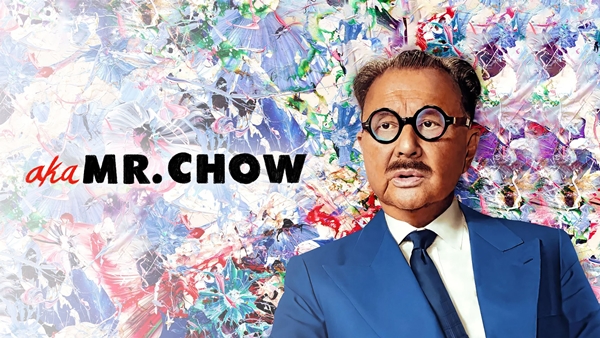
aka Mr. Chow: HBO Documentary Revels in Restaurateur’s Reinvention
|
Since 1968, the London restaurant Mr Chow has been in vogue with rich-and-famous clientele; diners have included the Beatles, Frank Sinatra, Andy Warhol and Madonna. It has since expanded to New York, L.A., Miami, Las Vegas and Riyadh, with each location providing a sense of theatricality elevating the core product (satay and noodles). This is despite the howls of naysaying food critics; a 2006 New York Times review gave it zero stars.
But who is the titular octogenarian restaurateur himself? That’s the subject of the recent HBO doc aka Mr. Chow. Through sheer willpower, laser-sharp personal curation and an outsized personality, Chow (born Zhou Yinghua in Shanghai back in 1939) reinvented himself from immigrant art student to hair salon owner to international restaurant mogul … and back again to abstract visual artist in his 80s. This man has stories for days.
aka Mr. Chow eschews the typical streaming business documentary formats of “unmissable trainwreck” and “motivational hero worship.” It simply hints that one way to get by in a world pushing against your ambitions is to create — and ultimately inhabit — a character who pushes back.
|
|
|
Work Trip: Companywide Ketamine Retreats Are Silicon Valley’s Latest Perk
|
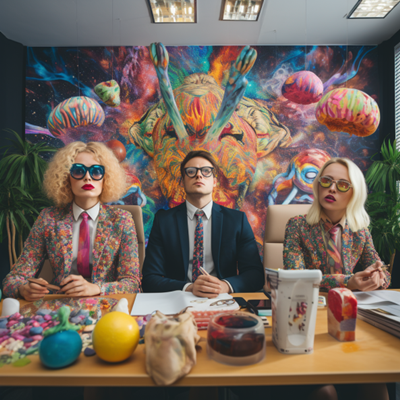
(Source: business.com/Midjourney)
|
Office pingpong tables and nap pods are so 2010s. Now forward-thinking startups are getting their employees together for injections of a dissociative psychedelic, Bloomberg reports. Companies such as Entrepreneurs Awakening offer “1-on-1 Psychedelic-assisted Executive Coaching programs as well as our group Amazon Ayahuasca Mastermind Program that includes 12 days in Peru.”
Psychedelic-assisted therapy has shown promising clinical benefits for people with PTSD and depression, and some progressive companies have added ketamine benefits to their healthcare plans (provider Enthea is onboarding more than 100 of them this year). But experts don’t recommend it for either recreational use or as a first stop on the mental health journey.
As for making it an official offsite with coworkers? Maybe we’ll just stick to the occasional happy hour at the pub downstairs.
|
|
|
|