Bar and restaurant owners know staying profitable requires more than happy hour deals. Many have attracted customers by investing in casual entertainment — think axe throwing or board games — and now they’re leveling up with something more dynamic: the golf simulator.
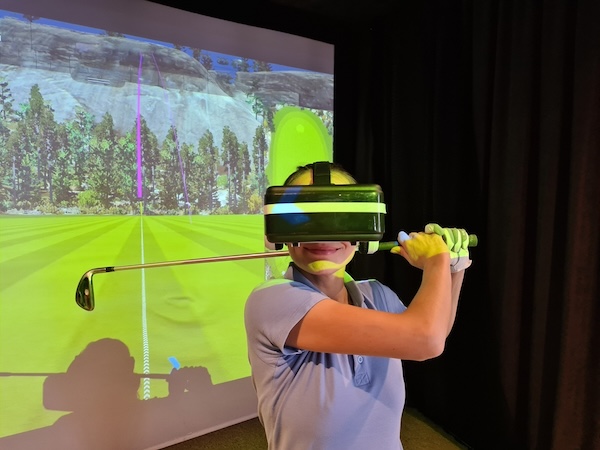
Golf has grown into an increasingly indoor activity. According to the National Golf Foundation, about 6.2 million Americans hit golf balls using a simulator over the past year, a 73 percent increase compared to pre-pandemic levels. With its new cool factor and youth appeal (more VR generation, less country club), dedicated chains like Five Iron Golf and X-Golf are taking off.
While golf simulators have been around since the 1970s, they were geared more toward pros than novices. New tracking tech has lowered the price and barrier for entry, allowing local watering holes and office spaces to offer them as video-game or pool table alternatives.
A basic setup might set you back $20,000 to $30,000, while a commercial-grade setup can run above $65,000, according to Sports Entertainment Specialists President Todd Mallon. That’s not cheap, but with customers paying approximately $30 to $60 per hour of playtime, you could see positive ROI in a matter of months. (For a flat rate instead of hourly, charge half of what it would cost to play 18 holes with a cart at the nearest golf course, Mallon recommends.)
As golfers wait for their turn, servers can take food and drink orders, and “You can use the simulator as a giant TV for the big game, a ladies golf night, leagues, or even trivia night,” Mallon says.
A golf simulator won’t make sense for every establishment. First, you’ll need an extra 300 square feet or so. Secondly, you’ll need to gauge whether your clientele is even interested. (Is the sport big in your area? Are you located in a colder-weather climate?) If your venue is more geared for concerts or dancing, then golf might come across as an awkward gimmick.
“Adding a simulator can be the reason customers choose your location,” Mallon says, but it needs to be “more of an extension of the overall theme of the bar” to prevent a swing and a miss.