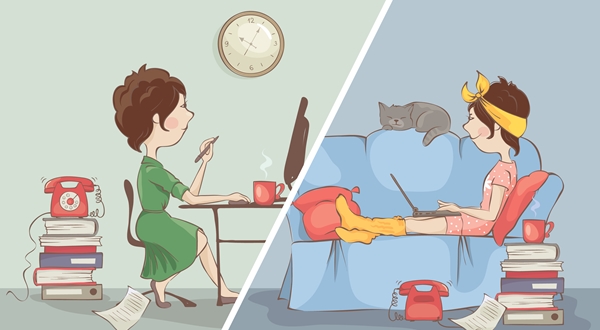
Living near the office could mean an easier professional trajectory. That’s the takeaway from a new WFH Research survey, which found in-office employees experience up to 40% more career development and mentorship than remote workers. Similarly, leaders polled said they devote more time to mentoring when in the physical office versus parked at home.
However, it doesn’t have to be this way. Thanks to tools such as LinkedIn Learning and Skillshare, employees can work on their professional development from anywhere, whether they commute in business-casual duds or telecommute in, uh, more casual duds. Leaders would also do well to consider whether they’re engaging in proximity bias, aka giving better opportunities to those around them.
Businesses that play favorites this way risk losing valuable remote employees — and that’s not all, as we explore in our lead story below.
|
Neurodiverse employees: Create a positive work culture for all.
The Bear: Hulu’s kitchen drama warns against toxic perfectionism.
|
Why Neurodivergent Employees Might (Or Might Not) Prefer WFH
|
|
|
But autistic workers are, of course, not a monolith. Now that most employers have mandated a partial return to the office, opinions are split within the autistic community, who comprise approximately 2% of the U.S. population.
“I would not want to work entirely remotely, as I think it would end up with me being very isolated and hardly interacting with anyone,” says Janine Booth, author of Autism Equality in the Workplace. “I am also concerned that employers will not bother making workplaces more inclusive and accessible to autistic workers, as they can just say that the worker can work remotely.”
Annie Kotowicz, author of What I Mean When I Say I’m Autistic: Unpuzzling a Life on the Autism Spectrum, tells b. that telework has ups and downs.
“For me, remote communication is a double-edged sword,” Kotowicz says. “I do better in-person than over a screen. Zoom calls magnify the issues I already experience with face-to-face communication [with how] the video and sound quality make facial expressions and vocal tone even harder to read, and the sea of faces is overwhelming. … I do best with email, and I appreciate when that’s an option …”
It’s important to give autistic employees a choice instead of assuming how they prefer to work. Keep these nuances in mind:
- Limiting unwanted social contact might help many neurodivergent professionals, but that doesn’t mean all social contact is unwanted; provide flexible opportunities for interactions with (and learning from) colleagues.
- When possible, offer hybrid options for meetings, and allow cameras to be off if preferred.
- If you’ve offered someone a remote position and they prefer that, stick to your word … no matter what the office-or-bust people say.
Simple considerations can make work life a little easier to navigate for neurodivergent people with diverse preferences. The Organization for Autism Research’s free Understanding Autism: An Employer’s Guide is a great place to start.
For more on this important topic and why employees with invisible identities might hesitate to disclose that aspect of themselves, read our organizational psychologist Dr. Eden King on how to support neurodiverse workers.
|
|
|
The Kentucky Derby Is Coming — and Your Customers Have the Need for Steeds
|
Bar and restaurant owners will need some extra horsepower next month. That’s because an estimated 16 million people will tune in for the Kentucky Derby on Saturday, May 6, to watch the thoroughbreds compete in the first jewel of the Triple Crown.
With DIRECTV FOR BUSINESS, your customers won’t need to flock to Churchill Downs to get in on the action. You can offer them unbridled access to the races in comfort, along with good company and refreshments. (Mint Juleps, anybody?)
Keep patrons glued to the Kentucky Derby all day long with DIRECTV FOR BUSINESS’ crystal-clear HD and 99% reliability for a premium entertainment experience (it’s even more entertaining with oversized hats). Any horse could win, but DIRECTV FOR BUSINESS is a sure bet.
|
|
|
The Bear Warns Against Toxic Perfectionism
|
In Hulu’s frenetic workplace drama The Bear, kitchen shifts feel as high-pressure as the Big Bang. Cooking on TV has never appeared so full of danger and gut-wrenching stress.
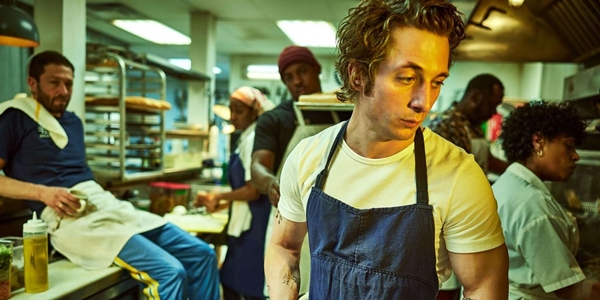
Self-destructive Chef Carmy Berzatto (Jeremy Allen White in a Golden Globe-winning performance) runs his inherited sandwich shop through the power of ego, unsatisfiable perfectionism, and a desperate need for adulation. His intensity trickles down to his crew, such as in baker Marcus’ (Lionel Boyce) bright-eyed quest for the perfect donut.
Unfortunately, a boss’s perfectionism can push away even the strongest and most passionate workers. Carmy insists his crew scrub the stove with toothbrushes and precisely cut mise en place tape; his cursing, shouting, and aggressive demands to meet impossible sandwich orders cause multiple walkouts.
Managing employees means first managing expectations. Quality control is important, but obsession can destroy efficiency. A healthy balance doesn’t mean abandoning your goals; it means redirecting your high standards to where they’re most needed.
If employees can’t stand the heat in the kitchen, maybe they should get out … but have you tried just turning the oven down a degree or two?
|
|
|
On April 14 in Business History:
|
- 1894: Thomas Edison revealed his kinetoscope, an early motion picture viewing device.
- 1898: Harold Stephen Black, whose negative-feedback principle revolutionized the applied electronics field, was born.
- 1902: In the small town of Kemmerer, Wyoming, J.C. Penney opened Golden Rule, his first dry goods store.
- 1988: Real estate tycoons Harry and Leona Helmsley were indicted for evading $1.7 million in taxes.
- 2008: Northwest Airlines and Delta Air Lines announced a $17.7 billion merger; NWA’s branding was retired two years later.
|
|
|
Written by Dan Ketchum and Ali Saleh. Comic by John McNamee.
|
|
|
|