Business.com aims to help business owners make informed decisions to support and grow their companies. We research and recommend products and services suitable for various business types, investing thousands of hours each year in this process.
As a business, we need to generate revenue to sustain our content. We have financial relationships with some companies we cover, earning commissions when readers purchase from our partners or share information about their needs. These relationships do not dictate our advice and recommendations. Our editorial team independently evaluates and recommends products and services based on their research and expertise. Learn more about our process and partners here.
Classic comedy is a tutorial on Situation, Problem, implication, and Need-Payoff.


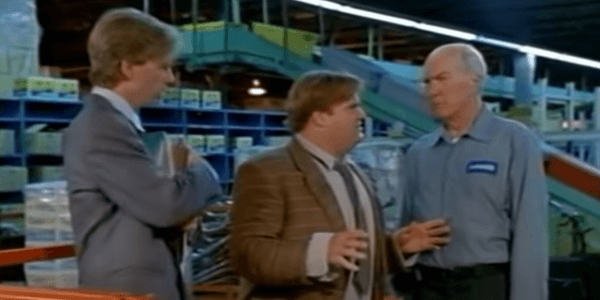
Tommy Boy is more than a beloved ‘90s comedy that shows Chris Farley at the height of his enthusiastic, twitchy, hilarious powers. One particular scene is a masterclass in SPIN (Situation, Problem, Implication, Need-payoff) Selling, which Neil Rackham popularized in 1988.
While attempting to sell brake pads to factory manager Ted Nelson, Tommy (Farley) realizes that simply lecturing his customers isn’t enough. Tommy flips the script, harnesses his “chicken-wing” mode, and starts asking questions instead:
Spin your selling strategy and have the customer answer your questions. As Richard (David Spade) wisely told Tommy, “These people are buying you, not just brake pads.”
