Business.com aims to help business owners make informed decisions to support and grow their companies. We research and recommend products and services suitable for various business types, investing thousands of hours each year in this process.
As a business, we need to generate revenue to sustain our content. We have financial relationships with some companies we cover, earning commissions when readers purchase from our partners or share information about their needs. These relationships do not dictate our advice and recommendations. Our editorial team independently evaluates and recommends products and services based on their research and expertise. Learn more about our process and partners here.
Not everyone on your email list and SMS list should get the same messages. These strategies help segment your list to boost conversions and engagement.


This article is sponsored by Intuit.
A customer who bought from you yesterday probably doesn’t need the same message as someone who just discovered your business. Yet when a promotion goes to your entire subscriber list, both receive an identical sales pitch. One needs help getting started with their purchase; the other may still be deciding whether to trust you.
Email and SMS list segmentation helps you account for those differences. By grouping subscribers according to their interests, behavior and relationship with your business, you can give each message a clearer purpose. Here’s how to build useful segments, coordinate the two channels and determine whether your efforts lead to more conversions.
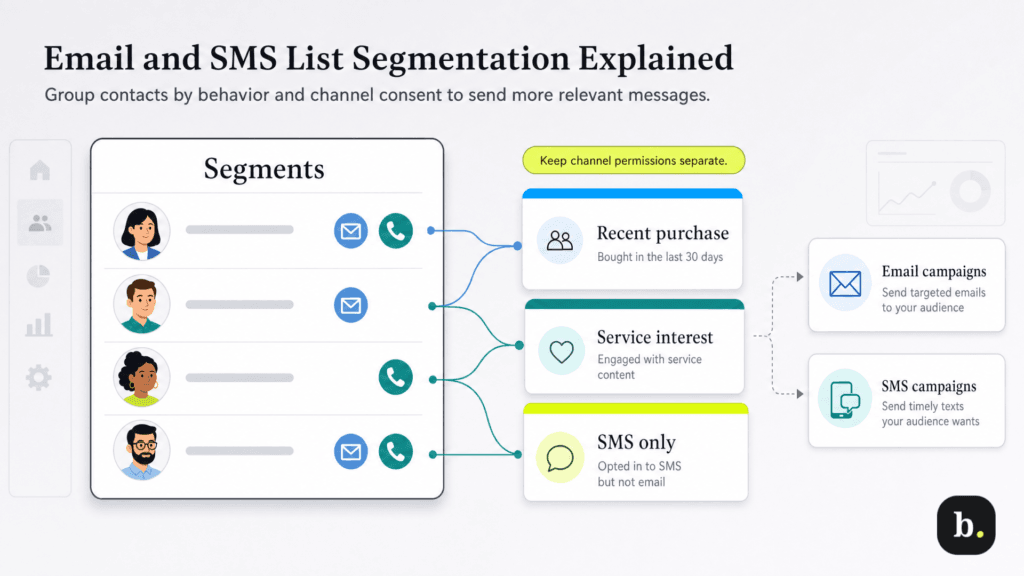
List segmentation is the process of grouping contacts who share relevant characteristics so you can send them appropriate messages. Those characteristics might include a recent purchase, an interest in a particular service or a preference for text messages.
Segmentation and email personalization work together. Segmentation determines who receives a campaign; personalization adapts what each recipient sees, such as their appointment details or recommended products.
Segments can overlap and change. Someone might belong to both your repeat-customer segment and your gardening-interest segment. After their next purchase, they may qualify for a replenishment reminder while becoming ineligible for a first-order offer.
Channel permission comes first. Platforms like Mailchimp distinguish email consent from SMS consent: An email subscription doesn’t authorize marketing texts. Keep subscription status separate for each channel, and exclude contacts who haven’t provided the required permission.
Before creating segments, decide what action you want to encourage. A first purchase, consultation booking and subscription renewal each call for different criteria and content.
Suppose you want more first-time buyers to return. You need to know who has placed exactly one order, what they purchased and when. If you want prospects to schedule a consultation, their service interests and previous inquiries may be more useful than purchase data.
Collect information that helps you make these decisions. When building your email list, you might ask subscribers which topics interest them. Later, a preference center can let them update those choices. Connect your store or booking system where supported, and check that records match the correct contacts.
Let’s take a look at how this works in a popular email and SMS marketing platform. Mailchimp provides several ways to organize audience information, including custom fields that can store details, groups to capture interests, and tags that can label contacts for internal organization. Its segmentation options let you use available audience data to select recipients. This gives you a practical foundation for targeting without rebuilding a spreadsheet for every campaign.
Avoid collecting details simply because you can. Every field should serve a purpose, and missing information shouldn’t automatically disqualify someone from all relevant messages.
If you’re looking for email and SMS marketing software that can support your list segmentation and campaigns, check out our picks for the best email marketing software and best text message marketing software.
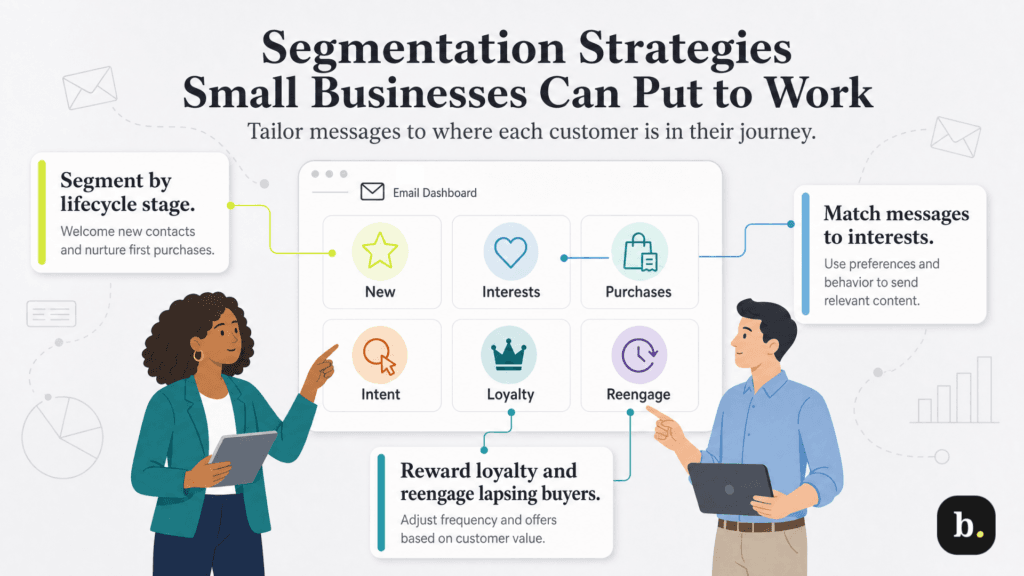
Start with distinctions that change what you would say to a customer. These six strategies offer useful starting points.
New subscribers may need an introduction before they’re ready to buy. Create a segment based on a recent signup date, then distinguish contacts who have already purchased from those who haven’t.
A local fitness studio could send prospective members an email explaining its classes and linking to an introductory booking. Existing members could receive information about a new workshop instead. If a prospect books, stop sending reminders for that same introductory offer.
The conversion goal is a first purchase or booking. Measure that action rather than treating a welcome-email click as the final result.
Stated preferences give you a direct basis for relevance. A garden center could let subscribers choose indoor plants, vegetable gardening or landscaping, then send seasonal advice and related offers to each group.
Behavior can supplement those preferences. Repeated clicks on indoor-plant content may justify testing a related recommendation. One click, however, shouldn’t permanently define a customer’s interests. Someone could be shopping for a gift or researching for another person.
Give subscribers an easy way to update their choices. Then connect each campaign to a relevant destination: A message about container gardening should lead to the appropriate collection or workshop, not leave readers searching your homepage.
Past purchases can suggest a useful next step. A coffee retailer might send a replenishment reminder to customers who purchased beans several weeks earlier. A shop selling equipment might recommend compatible accessories after customers have had time to use their purchase.
Timing should reflect actual buying patterns. Start with your order history, then adjust as results reveal whether reminders arrive too early or too late. Exclude customers who have already reordered or whose purchase was returned, where that information is available.
Mailchimp’s purchase-activity segmentation supports criteria such as products purchased, order count and total spending. With a supported store connection supplying the necessary data, these options can help turn purchase records into relevant follow-up audiences.
A subscriber who clicks a product link or starts checkout may benefit from a different message than someone browsing general advice. Where your tracking, permissions and integrations support those signals, create a segment for recent interest without a completed purchase.
Consider what might be holding the customer back. An equipment seller could send a comparison guide or clarify compatibility. A service business could answer common questions about the consultation process. A discount isn’t always necessary.
Keep the follow-up useful and proportionate. Avoid telling customers that you’ve watched every step they took. For an email retargeting campaign, the message should help them make a decision, and the messages should stop once the relevant purchase or booking occurs.
Define loyalty using measures that fit your business. Purchase frequency, recent activity and total spending can reveal different kinds of valuable relationships. One large order doesn’t necessarily mean a customer wants frequent promotional messages.
A boutique could invite repeat buyers to preview a collection. A business supplier could send relevant restocking suggestions to customers who order regularly. Useful recommendations or early access may be more appropriate than another blanket discount.
You can also combine criteria to narrow an audience. Mailchimp’s advanced segment builder, available on Standard plans and higher, supports combinations of conditions. This can help a business distinguish, for example, repeat buyers interested in a particular product category.
Define inactivity around your buying cycle. A customer who hasn’t purchased coffee in six months presents a different situation from someone who bought a durable appliance six months ago.
Separate purchasing inactivity from marketing inactivity. A customer who ignores campaigns but continues placing orders may need fewer messages. A former regular buyer who still clicks may need help finding a suitable product or understanding what’s changed.
Test a focused reengagement message with a clear reason to respond. You might introduce an improved service, ask about preferences or offer relevant assistance. If subscribers remain unresponsive, reduce promotional frequency or remove them from routine campaigns rather than repeating the same appeal indefinitely.
Using email and SMS together works best when each message contributes something useful. Email gives you room to explain an offer, compare options or answer questions. A text can provide a brief reminder when timing matters and the subscriber has opted in.
For example, a garden center promoting a weekend workshop could use this sequence:
Review the customer’s total message volume across campaigns. Someone may qualify for a workshop reminder, a replenishment message and a loyalty offer in the same week. Set priorities and spacing rules, and check how your platform handles overlapping audiences. Clear identification, easy opt-outs and appropriate sending times are also essential text message marketing practices.
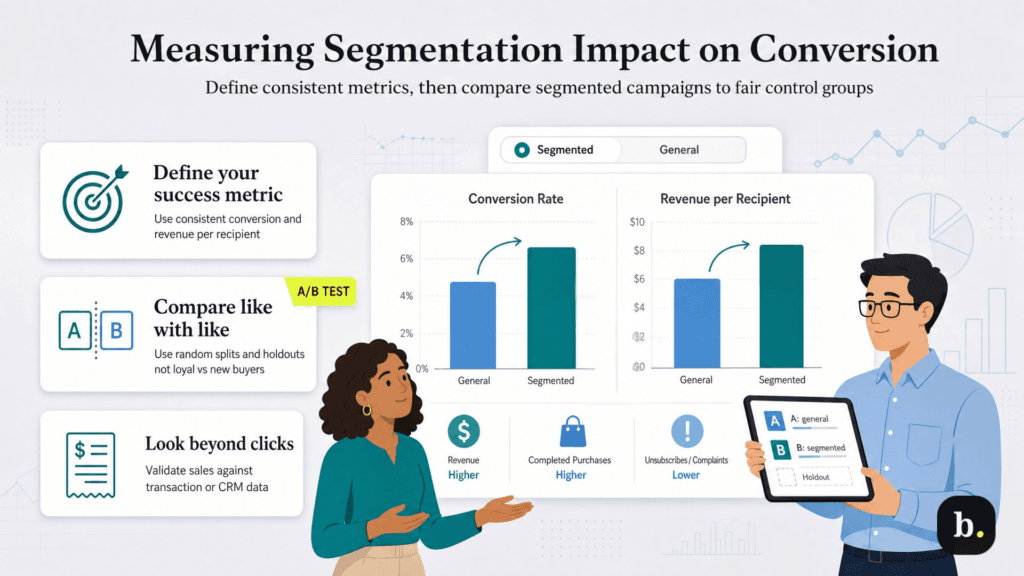
Define success before launching. Choose a reporting window that fits the purchase decision, and use the same definition when comparing results.
For a campaign-level measure, you could divide unique recipients who complete the desired action by delivered recipients, then multiply by 100. An illustrative campaign reaching 1,000 people and producing 40 buyers would have a 4 percent conversion rate. Label the calculation clearly because reporting platforms may use different denominators and attribution rules.
Track revenue per recipient alongside conversion, and account for discounts, messaging costs and product margins when evaluating profitability. Also monitor unsubscribes, SMS opt-outs and complaints. A campaign that generates orders while rapidly losing subscribers needs closer examination.
Opens and clicks can help diagnose performance, but they don’t establish that someone bought. Privacy features and automated activity can also distort engagement metrics. Check completed transactions or qualified leads against your sales or booking records.
To test segmentation itself, randomly divide a sufficiently large eligible audience between a tailored message and your usual general message, keeping the offer and timing comparable. A separate holdout receiving no campaign can help estimate how many conversions would have happened anyway. Avoid comparing loyal buyers directly with new prospects and attributing the entire difference to segmentation. If your audience is small, look for consistent results across comparable campaigns before drawing conclusions.
Choose one conversion goal and two or three segments you can act on with the data you already have. Write messages that address each group’s situation, check exclusions and review the results before adding complexity.
Consistent email marketing best practices still matter: Make the next step clear, deliver what you promised at signup and respect preferences. Segmentation makes those decisions more specific. Over time, the strongest segments will be the ones that help you understand what customers need next and give them a useful reason to act.
