Business.com aims to help business owners make informed decisions to support and grow their companies. We research and recommend products and services suitable for various business types, investing thousands of hours each year in this process.
As a business, we need to generate revenue to sustain our content. We have financial relationships with some companies we cover, earning commissions when readers purchase from our partners or share information about their needs. These relationships do not dictate our advice and recommendations. Our editorial team independently evaluates and recommends products and services based on their research and expertise. Learn more about our process and partners here.
Crowdfunding is an effective way to raise funds if you know how to create a successful campaign.

Crowdfunding has evolved from a niche fundraising method into a legitimate financing tool for businesses, creative projects and charitable causes. The global crowdfunding market is expected to hit $5.91 billion by 2034, a CAGR increase of 13.70 percent, according to Fortune Business Insights. For entrepreneurs and small business owners, crowdfunding offers the ability to raise capital without a credit check, collateral or an established revenue history — something most traditional financing options require.
But don’t think that crowdfunding is easy money. It requires compelling marketing, hard work and, sometimes, regulatory compliance. This guide will explain how crowdfunding works, the different types available, what major platforms to consider and practical tips for running a successful campaign.
The basic idea behind crowdfunding is simple: instead of seeking a large sum from a single lender or investor, you raise smaller amounts from many sources. A business or individual creates a campaign on an online platform, sets a funding goal and a deadline, adds details about the project or business, and then promotes the campaign to attract donations. [Learn how to decide if crowdfunding or a business loan is for you]
What those donors receive in return depends on the type of crowdfunding you choose. For example, in reward-based campaigns, contributors receive something from you like early access to a product, special recognition or merchandise. In equity campaigns, they receive ownership shares. In donation-based campaigns, individuals give without an expectation of financial return. Crowdfunding platforms handle all the details during the campaign, including payment processing, fund escrow and — in equity models — regulatory compliance.
One important distinction between platforms is how each one handles funding goals. For instance, some services like Kickstarter use an all-or-nothing model: if the campaign doesn’t reach its funding goal by the deadline, promised pledges are cancelled and donors aren’t charged. In comparison, GoFundMe offers a “keep-what-you-raise” model, in which campaign creators receive whatever is raised whether or not the goal is met. [Learn how to fund your business]
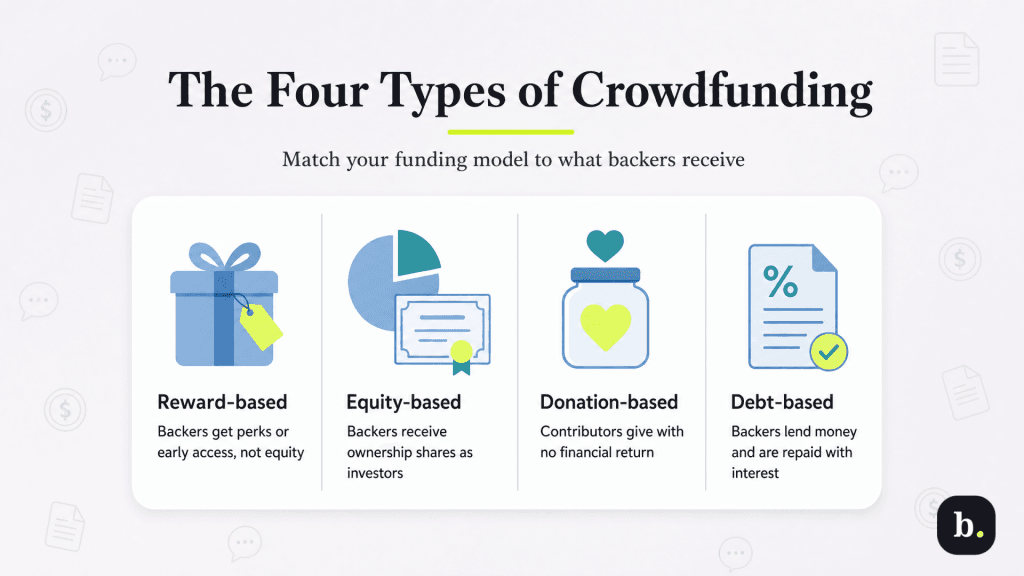
There are four primary crowdfunding models, each structured differently in terms of what donors receive and what regulatory requirements apply.
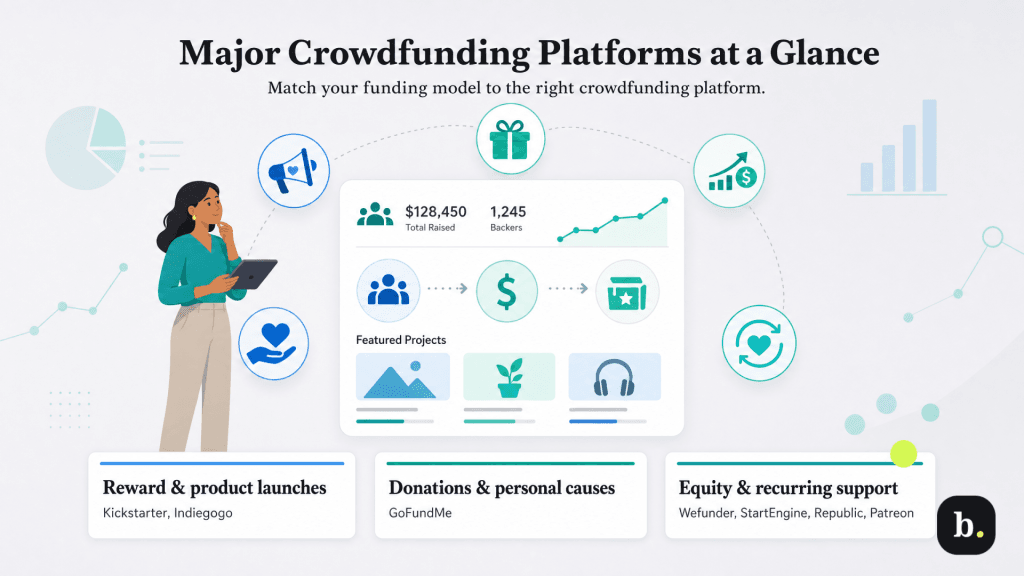
The right platform depends on your funding model, your product or project type, and your audience. Here’s some of the most popular options.
Kickstarter is the most recognized name in reward-based crowdfunding. Kickstarter operates on an all-or-nothing model and is known for creative and product-based campaigns. The platform had over 694,000 projects launched, according to Kaggle research. About four out of 10 campaigns reach their funding goals, according to Statista. Fees include a 5 percent platform fee on funds raised, with payment processing fees of approximately 3 to 5 percent plus $0.20 per pledge. Fees are only charged on successfully funded campaigns.
Indiegogo uses a fixed funding (all-or-nothing) model. It is popular for tech products, hardware and gadgets. The platform charges a 5 percent fee on funds raised, with payment processing fees of 3 percent plus $0.30 per transaction. Indiegogo also offers the Late Pledge program (formerly InDemand) that lets successful campaigns continue accepting orders after the initial campaign ends.
GoFundMe is a donation-based platform primarily used for personal causes, medical expenses and charitable campaigns. GoFundMe does not charge a platform fee for campaign organizers. Payment processing fees for each donation are 2.9 percent plus $0.30. GoFundMe is the largest crowdfunding platform, raising more than $50 million every week, according to the GoFundMe website.
Equity crowdfunding platforms: Wefunder, StartEngine and Republic. These are some of the leading equity crowdfunding platforms operating under SEC Regulation Crowdfunding. They allow startups and small businesses to raise capital by selling equity shares to the public. Equity campaigns require more preparation than reward-based campaigns — including SEC filings, financial disclosures and legal compliance — but they can raise substantial amounts (up to $5 million under Reg CF) from a broad investor base. Each platform has its own fee structure, application process and investor community. For example:
Patreon operates on a subscription-based model rather than a campaign model. Creators set up a page where supporters contribute on a recurring basis in exchange for ongoing content, access or perks. It’s not designed for one-time product launches or business funding rounds, but it’s a good option for creators, media companies and businesses that produce regular content and want a sustainable, consistent revenue stream.
The regulatory landscape for crowdfunding varies significantly depending on the model you choose.
Reward-based and donation-based campaigns are largely unregulated at the federal level, but campaign creators are still subject to consumer protection laws. If you promise backers a product and fail to deliver, you can face legal action, platform penalties and reputational damage. State-level requirements may also apply depending on the nature of the campaign.
Equity crowdfunding is heavily regulated. Under Reg CF, issuers must file Form C with the SEC before soliciting investors, disclosing company details, financial statements, risk factors and the terms of the offering. Ongoing reporting requirements apply as long as the securities remain outstanding, including annual reports filed with the SEC. All campaigns must be conducted through an SEC-registered funding portal or broker-dealer. Given the regulatory complexity, consulting legal counsel before launching an equity campaign is strongly advisable.
Tax implications also vary by model. Funds raised through reward-based crowdfunding are generally treated as income (or pre-sales revenue) and are taxable. Equity crowdfunding proceeds are considered a capital investment, not income, but the company takes on shareholders with associated rights and obligations. Donation-based funds may or may not be taxable depending on the purpose. A tax professional can help you understand your specific situation.
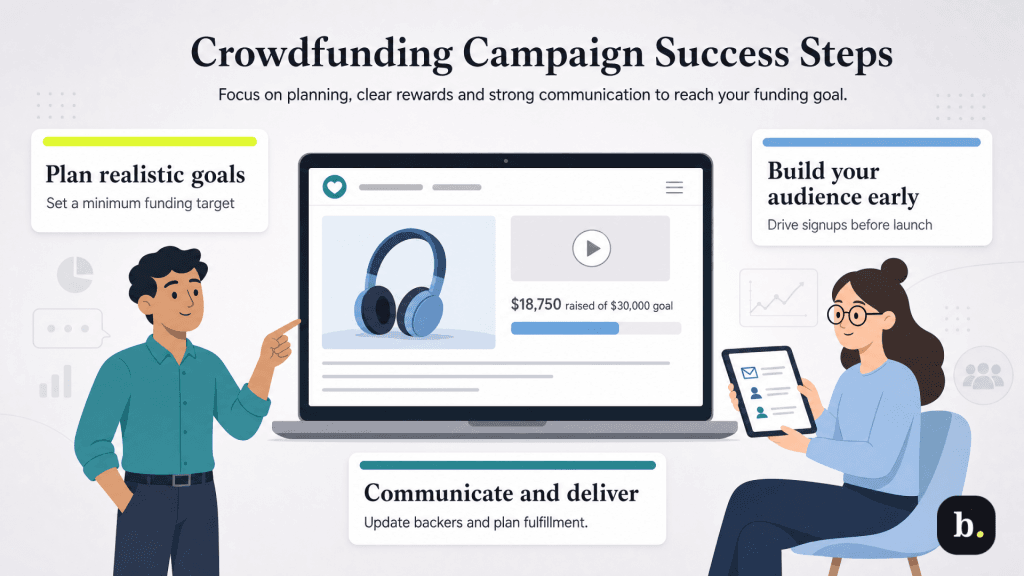
Launching a crowdfunding campaign is not the same as listing a product for sale. It requires planning, execution and marketing. Here are steps you can take to maximize your results.
Set a realistic funding goal. Ambitious targets can deter potential backers. On Kickstarter, most successfully funded projects raise less than $10,000, according to Statista research. Set your goal at the minimum amount you need. You can specify an initial amount, and then use stretch goals for additional expenses like improvements or expansion.
Invest in your campaign page. A compelling campaign page is your primary sales tool. Include a high-quality video that explains what you’re doing and why it matters, clear images of your product or prototype, a transparent breakdown of how funds will be used and a realistic timeline for delivery. Backers are putting money into something that doesn’t yet exist — your campaign page needs to build enough trust to overcome any hesitation.
Build an audience before you launch. The most successful campaigns don’t rely on the platform’s organic traffic to hit their goals. They arrive on launch day with an email list, a social media following and some press coverage already in motion. The first 24 to 48 hours of a campaign are critical — strong early momentum signals to the platform’s algorithm and to potential backers that the project is worth supporting.
Offer clear, tiered rewards. For reward-based campaigns, your rewards should be easy to understand, valuable to supporters and priced appropriately to account for production and shipping costs. Don’t offer so many tiers that backers get confused, and make sure your lowest tier is accessible enough to attract a broad base of support.
Communicate consistently. Update your backers regularly throughout the campaign and after it ends. Transparency about progress, challenges and timelines builds trust and turns backers into advocates. Campaigns that go silent after funding are a common source of backer frustration and such poor communication can damage your reputation for future projects.
Plan for fulfillment. Before you launch, have a realistic plan for how you’ll produce and deliver what you’ve promised. Consider production timelines, shipping logistics and extra time for unexpected delays. Underestimating fulfillment costs is one of the most common reasons crowdfunding campaigns fail to deliver, even when they’re successfully funded.
Crowdfunding offers several advantages that traditional financing doesn’t:
The downsides are significant, too.
Crowdfunding can be a powerful funding tool, but it works best when executed correctly, including a solid marketing campaign and a realistic fulfillment plan. It’s not a shortcut to generating capital — it’s a public pitch to potential backers, and the quality of that proposal determines your outcome.
For businesses considering crowdfunding, the first step is choosing the right model and platform for your goals. Reward-based crowdfunding is ideal for product launches and creative projects. Equity crowdfunding works best for startups seeking investment capital and are willing to navigate regulatory requirements. Donation-based crowdfunding is mainly appropriate for charitable and community-oriented initiatives. Debt-based crowdfunding allows small-to-medium enterprises (SMEs), startups and others access to capital, even if they cannot get bank loans. Whichever path you choose, be prepared to do the planning, marketing and communication successful crowdfunding requires.
