Written for the leaders, owners and professionals of the 11 million businesses with between $50,000 and $50 million in revenue.
|
Employees aren’t just protected from job demotions based on discrimination; they’re also protected from transfers due to bias, even if they keep the same pay and seniority, the Supreme Court ruled earlier this week.
In a unanimous decision, the justices clarified that civil rights law protects workers from all harm in discriminatory reassignments — such as new irregular hours or faraway office locations — not just from loss of pay or rank. (So, a bigoted manager can’t simply avoid employees of a protected class by putting them on the night shift or moving them to another city.) As Justice Brett Kavanaugh put it, “The discrimination is harm” by itself.
To learn more, read our guide to employment and anti-discrimination laws in the workplace.
|
Burnout: Why curing it takes self-work, not just less work
Godzilla: You don’t always need a monster-sized budget
Wrigley’s: How chewing gum became a sticky product
|
|
|
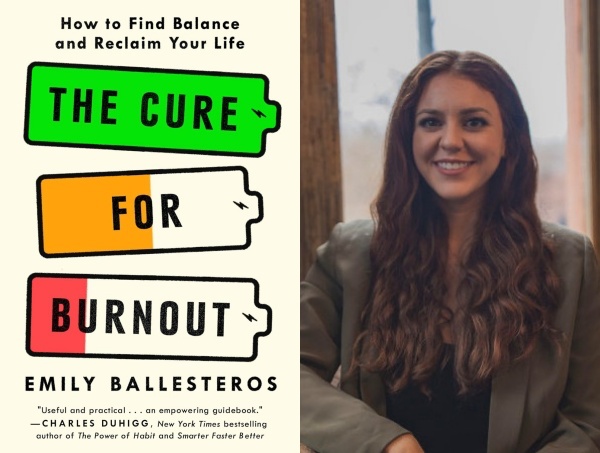
Why The Cure for Burnout Takes Self-Work, Not Only Less Work
|
(Source: Penguin Random House)
|
In recent years, many American employees are working fewer hours, getting more paid time off, and working from home for a day or two per week — yet burnout levels are at an all-time high.
Corporate trainer (and TikTok sensation) Emily Ballesteros has spent years interviewing burned-out professionals and consulting businesses on how to solve this very issue. Her new book, The Cure for Burnout: How to Find Balance and Reclaim Your Life, presents a methodology that could rejuvenate the hearts of 9-to-5-ers.
Ballesteros spoke with b. and gave us a road map back from the edge.
b.: Your book provides practical strategies for managing burnout in five key categories. Can you describe them?
Ballesteros: Mindset is being able to recognize and then change the burnout patterns that you find yourself in. … Personal care that you can incorporate weekly — and not just force into weekends as damage control. Time management is getting as much important work done as you can in the most effective way possible. … Boundaries: identifying and setting personal and professional limits without feeling super guilty. And finally, stress management. … A lot of people who are experiencing burnout just live in fight-or-flight mode and don’t realize how activated their stress responses are.
b.: Why has it gotten worse in recent years?
Ballesteros: When I started this work around 2017-2018, pre-COVID, it was already prevalent, but it has become increasingly prevalent with the flux of working from home, office work, and the hybrid model …
So many structures were changed. I was commuting an hour and a half each way, like three hours each day. So many things have changed since that point, but it’s like, “How did I ever do that? And why would I ever do that?”
People have experienced increased frustration after getting potentially a little bit more freedom when they got to work from home or having a little bit more flexibility.
b.: Is there a difference in burnout between generations?
Ballesteros: I’m a millennial. With previous generations, there was absolutely burnout and also their dollar went a lot further — if they were really burdened, they could also afford a [certain] lifestyle. So the burnout might have been more worth it …
[Millennial] burnout is that frustration, and then a lot of people have stereotypes about Gen Z of like, “Oh, they’ve given up before they’ve even started” or “they’re not even working towards the dream.” But they didn’t even see the dream. They’re so cynical and feel even less inclined to go through the motions because they didn’t even get to have that dream.
All of the burnout experiences at the end of the day have the same signs and symptoms. It’s going to be anxiety around work, troubled sleeping, mental and physical and emotional exhaustion. So the burnout experience is the same, but the circumstances are slightly different depending on when you were born.
This interview has been edited for length. Read the full Q&A at business.com.
The Cure for Burnout is available now.
|
|
|
Unify your business communications with Vonage
|
Phone, email, web chat, video conference — modern businesses have to manage communications across a lot of channels. Whether for internal teams or customer-facing communications, balancing it all can be a challenge.
Vonage offers a unified communications platform that helps you connect with team members, partners, and clients whenever and however you need. Crystal-clear phone calls through Vonage VoIP services, impeccable video conferences through Vonage Meetings, SMS/MMS messaging, and even social media chats are all part of what you can expect when you choose Vonage.
If you’re ready to streamline your business communications in a platform that won’t cost you an arm and a leg — or take ages to set up — then you’re ready for Vonage.
|
|
|
Godzilla Minus One: Matters of Scale
|
Even as Warner Bros.’ American-made Godzilla x Kong: The New Empire stomps the summer box office, it’s overshadowed by the success of 2023’s critically acclaimed, straight-outta-Japan Godzilla Minus One. Incidentally, the latter won an Academy Award for Best Visual Effects last month.
As with all things Godzilla, it’s a matter of scale: Minus One generated $115 million globally on a puny budget of $10 million to $12 million (about the cost of a U.S. drama with no giant lizards). That 850% ROI absolutely roared. In comparison, The New Empire’s budget reportedly cost up to $150 million before its marketing onslaught; Minus One’s marketing was largely positive word-of-mouth.
Like the Japanese film’s own scrappy crew of WWII vets, Minus One is an underdog story. Its Oscar-winning VFX team consisted of only 35 people, all under the direct supervision (and collaboration) of director Takashi Yamazaki. Compare this with a Marvel-sized Hollywood blockbuster that can wind up with 1,600 VFX contractors who’ve never met the director or heard their creative vision.
Minus One proves you don’t need a monster budget to turn a monster profit.
|
|
|
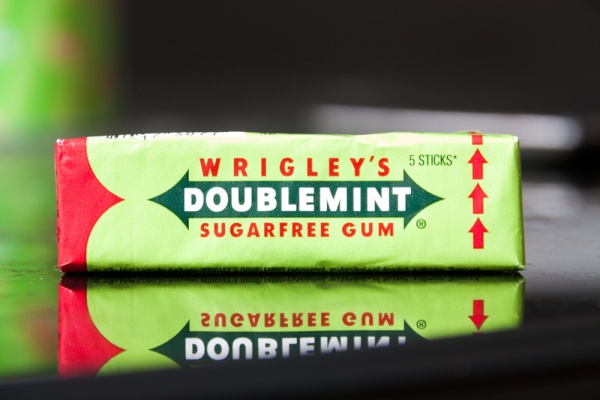
Wrigley’s Chewing Gum Was A Free Prize With Baking Soda
|
Wrigley’s produces the most familiar chewing gum flavors the world has ever seen: Spearmint, Juicy Fruit, Big Red, Winterfresh. And the enterprise was a complete accident.
In 1870s Philly, William Wrigley Jr. was a teenage traveling salesman for his father’s soap company. As an adult, he remained in the soap biz, which included offering a premium gift of baking soda with each box sold. Wrigley realized that his baking soda was more popular than the soap, so he switched to the baking soda biz. He also included gum as the premium offer, which then became more popular than his baking soda (yes, there’s a pattern here).
In 1909, he officially launched the Wm. Wrigley Jr. Company to sell gum, minus the soap and baking soda … and the rest is history. A century later, Mars, Inc. acquired the company — which enjoys 25% of the global market share in gum — for a very juicy $23 billion.
Wrigley’s story is a testament to the importance of listening to your customers, especially when you’re still trying to figure out what sticks.
|
|
|
On April 19 in Business History:
|
- 1933: To discourage the hoarding of gold, which was hampering economic growth and prolonging the Great Depression, Franklin D. Roosevelt announced the U.S. would leave the gold standard.
- 1955: Volkswagen founded Volkswagen of America to standardize its network of service members and dealerships in the U.S.
- 1965: Death Row Records co-founder Suge Knight, who signed Tupac Shakur and negotiated a distribution deal with Interscope Records, was born. He is currently in prison for a 2015 hit-and-run.
- 1987: The Simpsons debuted on The Tracey Ullman show as a series of one-minute shorts. Between its merch, syndication deals and 2007 movie, The Simpsons is considered the most profitable TV series of all time.
|
|
|
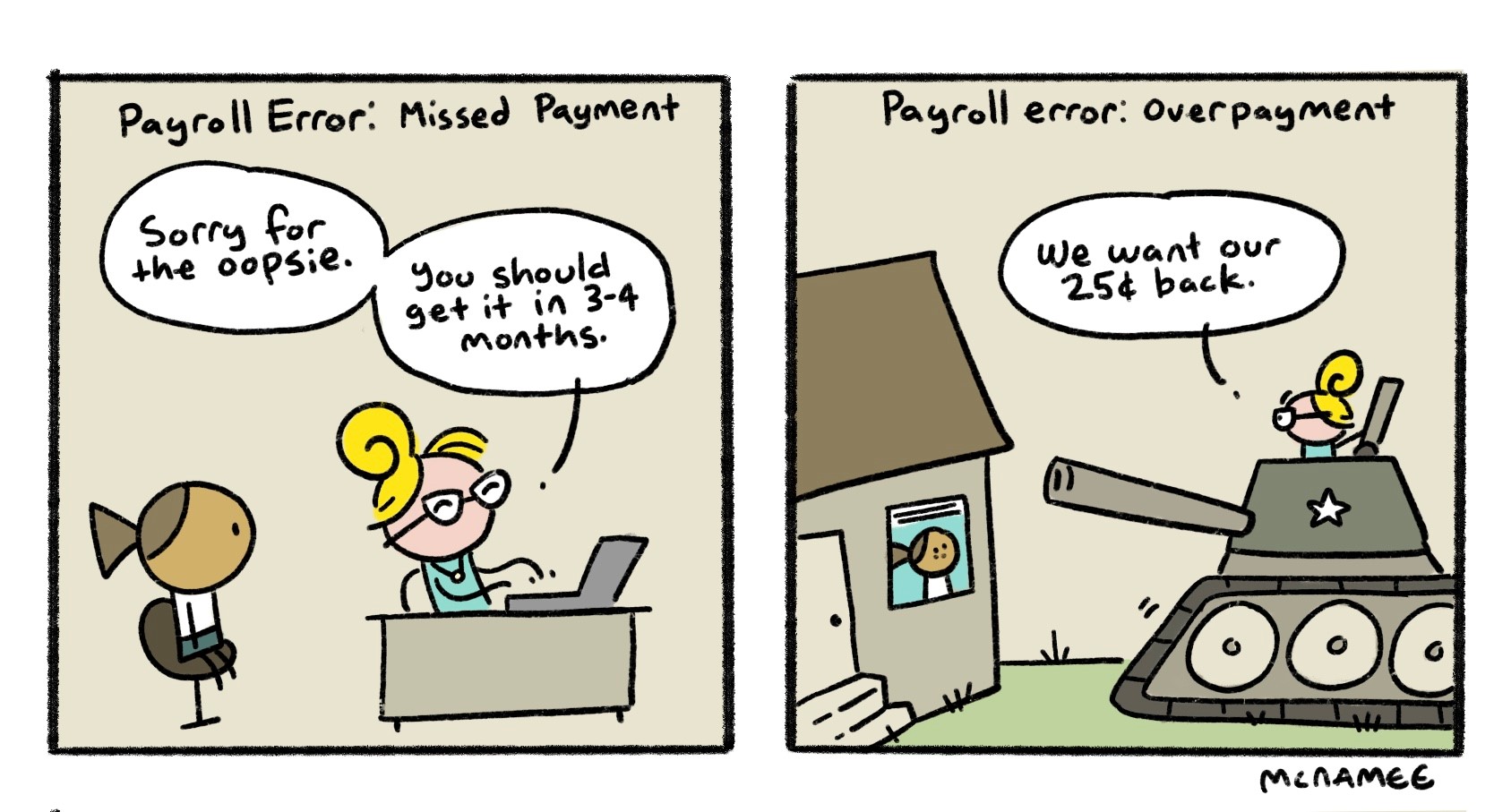
Written by Antonio Ferme, Dan Ketchum, and Ali Saleh. Comic by John McNamee.
|
|
|
|