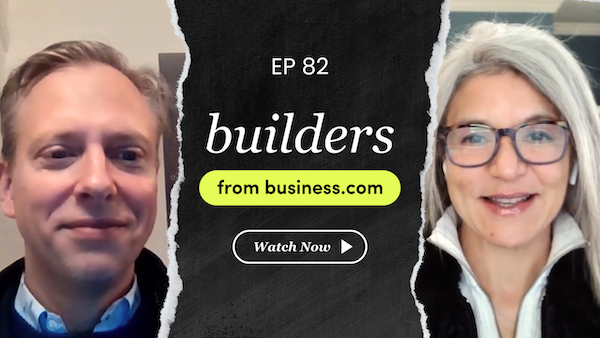
If you want to avoid the common pitfalls that hold startups back and learn from someone who’s seen it all — from Series A struggles to IPO successes — this episode of our builders podcast is for you.
Mona Sabet (previously featured in b.) is a startup advisor, tech executive, and corporate development leader with a track record of scaling companies and leading multimillion-dollar deals. She shares insider strategies on preparing for acquisitions, making the right hires, and ensuring your startup’s culture evolves as you grow.
Watch the episode on YouTube or listen on your favorite audio platform.
|
Toxic team members: Detecting them can be difficult
Buc-ee’s: The gas station where bigger is always better
The Brutalist: A reminder — do you know who you work with?
|
|
|
How to Detect and Address Toxic Individuals on Your Team
|
Dr. Steven Rogelberg is a chancellor’s professor at UNC Charlotte, former president of the Society for Industrial and Organizational Psychology, and author of Glad We Met: The Art and Science of 1:1 Meetings.
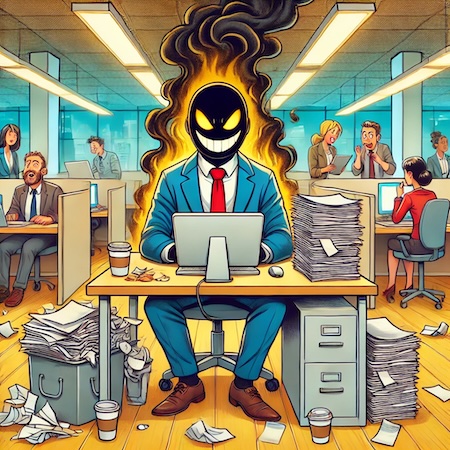
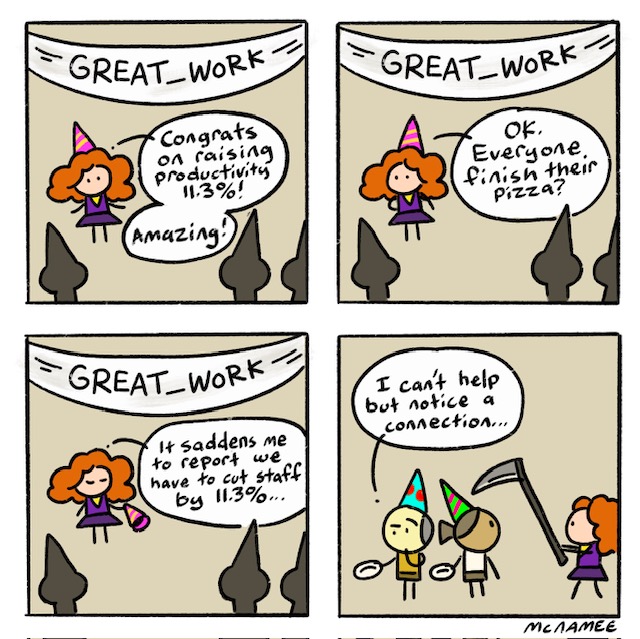
A healthy and effective team can be sabotaged by just one or two toxic individuals. These “bad apples” quickly undermine collective trust, coordination, cooperation, and effectiveness until a thriving team becomes dysfunctional.
Identifying toxic people is not necessarily easy when you’re managing them. Much of their destructive behavior takes place subtly and out of view. Still, behavioral signs to note include:
- Taking undue credit for contributions that were not theirs
- Promoting their own achievements — and no one else’s
- Responding aggressively to criticism and attacking the source
- Favoring only those who enhance their status (“trophy colleagues”)
- Withholding valuable information, preferring competition over cooperating with colleagues, or otherwise focusing on self-interest rather than what is best for the team
- Taking significant risks or ignoring ethical guidelines to achieve goals
- Harassing or undermining co-workers, shifting focus away from productive tasks
If you observe these behaviors, it’s important to intervene sooner rather than later. Talk to the employee and provide feedback; emphasize the values and norms you expect or even send the employee to a training program that discusses ethics and teamwork. If changes do not occur, document everything — and engage in an exit process with the toxic party.
An ounce of prevention is worth a pound of cure. In team meetings, emphasize the behaviors critical to collective success. Introduce reward systems that reinforce cooperation and shared credit, and celebrate collective successes together. As a manager, it is essential for you to stay on top of this before the team starts to spiral.
|
|
|
Bigger Is Always Better at Buc-ee’s
|
Buc-ee’s isn’t just a gas station chain with 50 locations across the South offering famously immaculate restrooms, countless pumps, and a world record 75,593 square feet of retail and food space. It’s a cultural phenomenon. It has everything from “Beaver Nuggets” to mascot-emblazoned socks and a 255-foot car wash, another world record.
Founder Arch Aplin III (nicknamed “Beaver,” hence the theme) was inspired by his grandparents’ Louisiana gas station, the Biggest Little Store in Catahoula Parish. In 1982, his first store — clocking in at a mere 3,000 square feet — had the concept from the jump: cheap ice, variety and clean bathrooms. A few years later, his second spot doubled the square footage and added an on-site kitchen hawking tacos, sammies and donuts.
True brand crystallization took off in the 2000s. Stores sprawled and Buc-ee’s became synonymous with high-quality barbecue and lots of beaver merch. (Its bounty extends to employees, too; they earn well above minimum wage, with some general managers clearing $225,000 yearly.)
|
|
|
The Brutalist’s Brutal Reminder: Know Who You Work With
|
It’s been a busy awards season for The Brutalist. Brady Corbet’s Oscar-nominated, three-hour-plus drama has inspired headlines about intermissions, AI-assisted dialogue, and how he’s made no money from it.
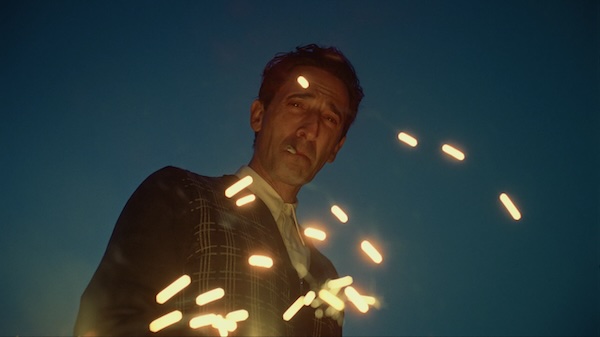
But buried within its ambitious and bold approach is a simple story of collaboration gone wrong. Near the end of World War II, Laszlo Toth (Adrien Brody), a renowned Hungarian-Jewish architect, escapes to the United States. There, he meets Harrison Van Buren (Guy Pearce), a wealthy Pennsylvania landowner and businessman who endeavors to build a grand community center.
On the surface, this seems like a practical partnership — Toth needs a job, and Van Buren needs an architect — but neither of them really knows what they’re getting into. Toth is an obsessive visionary who orders expensive, difficult-to-procure materials, and rejects outside help from project managers; Van Buren is also particular, throwing temper tantrums and fueling a toxic power dynamic that spirals into dark places.
It could have been avoided. When deciding on a contractor or taking on a new client, it’s crucial to do your homework — look at track records, verify references, and read the fine print. Are your goals and needs accounted for? Are your timelines aligned? And when making a handshake deal, do you know whose hand you’re shaking?
|
|
|
Written by Dan Ketchum, Ali Saleh and Jake Kring-Schreifels. Comic by John McNamee.
|
|
|
|