AI isn’t just for generating a deck for that meeting you absolutely forgot — it’s powering some seriously positive impacts in the world, too. One of the most prominent efforts is Microsoft’s AI for Good Lab. Here are three of our favorite initiatives:
- Protecting the Amazon: Project Guacamaya uses AI to track deforestation — the legal and illegal kinds — by analyzing daily satellite photos, tracking animals with hidden cameras, and listening to forest sounds with tiny microphones.
- Combating malnutrition: Microsoft’s AI-powered Food Nutrition Dashboard is helping Amref Health Africa protect 2 million Kenyan children from malnutrition. In a sub-arid region with erratic rainfall, the dashboard helps organizers prepare for humanitarian crises when and where they’re most likely to happen.
- Improving ear health: DrumBeat.ai and Microsoft have partnered to diagnose ear disease in remote Australian communities, where specialists are scarce. The technology helps healthcare workers identify eardrum damage faster, allowing them to prioritize care.
Read ahead for ways to help your community the old-fashioned way.
|
National Volunteer Week: Four ideas for your team
Team building: What works, according to research
Post-it notes: 3M stuck with a good idea
|
|
|
4 Meaningful Ways to Recognize National Volunteer Week
|
National Volunteer Week is right around the corner — from April 20 to 26. To acknowledge it, you could ask your office manager to send off a quick “We appreciate our volunteers!” email and call it a day (er, week). But your employees might feel better about their workplace culture with opportunities to make a real difference in the community. Here are four ways to do it:
Give PTO to volunteer
Companies that offer paid volunteer hours enjoy higher employee morale, according to Salesforce, which has its own program for doing just that. Workers appreciate the opportunity to give back without cutting into their vacation days. Just a day or two away from the laptop can make a big impact.
Partner with a nonprofit
Some employees might want to volunteer but don’t know how or where to start. Partnering with a nonprofit will give them a defined avenue that makes volunteering easy, builds bonds between co-workers, and provides your business with an authentic opportunity for charitable marketing.
Match donations
If you have too many big deadlines coming up to give every single employee a day off, match their donations within a specific time frame — such as a day or week. Donations are a great, low-lift way to be generous. Communicate clear expectations on the charities or foundations you’ll match, and be sure to announce how much your organization was able to raise by the end of the drive.
Recognize employees for their efforts
Shouting out employees who do good will showcase their efforts, get others involved and demonstrate your business’s values. Spotlight them in meetings, feature them in company-wide emails, or hand out awards (little trophies or ribbons count!) to show your appreciation.
|
|
|
What Actually Builds Teams (It’s Not Trust Falls)
|
Dr. Ben Baran is an associate professor at Cleveland State University and co-founder of Elevating What Works.
Everyone wants good teams at work — people who work well together, solve problems, and reach their goals more quickly. But the conventional approaches toward team building are often silly and yield little to no results.
So if you really want to build your teams, skip the trust falls, icebreakers, and awkward games. Instead, focus on the four areas that research suggests are key to team building:
Goal setting
Team building through goal setting involves managers collaborating with team members to set clear, measurable indicators of success. Once you’ve figured out a few concrete goals, set the team loose so they can work together to develop action plans to reach those goals. Review those action plans with them and help refine as necessary.
Good relationships
One way managers can improve relationships is by helping everyone understand the importance of helping each other and communicating in a productive way. Most teams encounter conflict at some point, so encourage them to have conversations that attack problems — not people.
Problem-solving
Getting a team engaged can be as simple as working with them to identify any major task-related problems that they’re having. Then, develop action plans to address those problems together. (This process accomplishes two goals: It helps solve a real problem and helps team members deliver a solution together, which builds trust.)
Clear roles
When roles and responsibilities are clear within a team, people have a better idea of who they can go to for what, which helps them be more productive together. If those roles aren’t clear, managers can work with team members to focus efforts.
Addressing these four areas will help your teams improve their performance and satisfaction. And because all these elements are directly related to people’s work, they’ll likely find the process itself relevant and worthwhile.
|
|
|
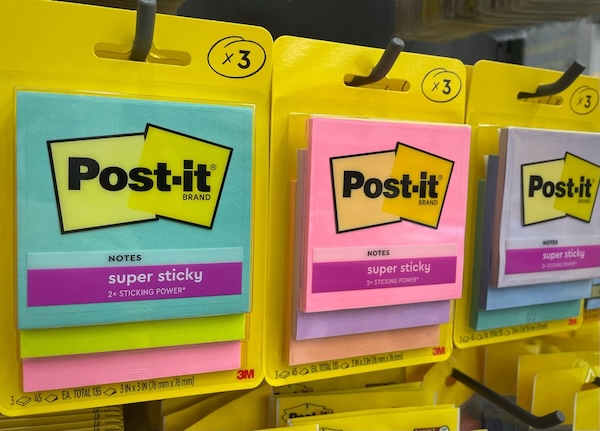
How Post-It Notes’ Inventor Stuck With a Good Idea
|
In 1968, 3M Company tasked chemist Spencer Silver with making a stronger and tougher adhesive for its products. His discovery, “microspheres,” turned out to be the opposite. It was considered a failure by 3M. After all, what could the company do with an adhesive that only stuck paper to other paper?
Silver spent the next six years trying to deliver on his original promise. One fateful day, his co-worker, Art Fry, mentioned being unable to get paper bookmarks to stay in his Sunday choir hymnal. They always fell out, but taping them damaged the pages.
And that’s when it hit Silver, who — along with Fry — perfected the sticky note and scattered a bunch around 3M’s headquarters as a proof of concept. The company launched a massive sampling campaign, and 90 percent of those who tried Post-its said they’d buy some.
Today, more than 50 billion Post-it notes are sold per year. Both Silver and Fry were inducted into the National Inventors Hall of Fame, proving that tenacity can pay off … even if your ideas don’t initially stick.
|
|
|
Our long-tenured (yet anonymous) recruiter for a major company answers burning questions about interviews, resumes and everything else related to getting hired in today’s competitive and changing job market.
Q: A day-old job listing on LinkedIn has “over 200 applicants.” Is it even worth applying?
Yes! If you are qualified for the role, still apply.
Look, don’t be scared away by big numbers. The “clicked apply” number only shows those who clicked into the job description itself. Maybe some were just curious, decided they weren’t a fit, or forgot to finish the application. In any event, it doesn’t mean that hundreds of people are in real consideration for that role.
Let me share some stats from a recent hybrid role I posted on a Thursday morning. The next day, I had 100 applications to review and 77 didn’t even live in the required location. That left 23 applicants who were simply eligible — not qualified, just eligible. I moved four of them forward to set up an initial call, then reviewed 100 more applicants that later came through over the weekend. Once again, I rejected a bunch more (35 this time), because they didn’t meet the basic eligibility requirements.
I know it’s difficult in this market, but if you see an exciting listing with an intimidating number of applicants, go for it anyway. There may very well be a team waiting for someone with your qualifications to hit “submit.”
|
|
|
Written by Ali Saleh and Jake Kring-Schreifels.
|
|
|
|