Written for the leaders, owners and professionals of the 11 million businesses with between $50,000 and $50 million in revenue.
|
Knowledge of AI is no longer a “nice to have” for job applicants. A staggering 66% of business leaders say they won’t hire a candidate without any AI skills, according to new research from Microsoft. (To put that in perspective, ChatGPT hasn’t even been out for two full years!)
However, only 1 in 4 employers is planning to offer AI training, Microsoft found. That’s leaving workers to teach themselves, although each company will have its own specific use cases. To make sure your employees are on the same page, check out business.com’s guide to How Businesses Can Invest in Employee Training.
|
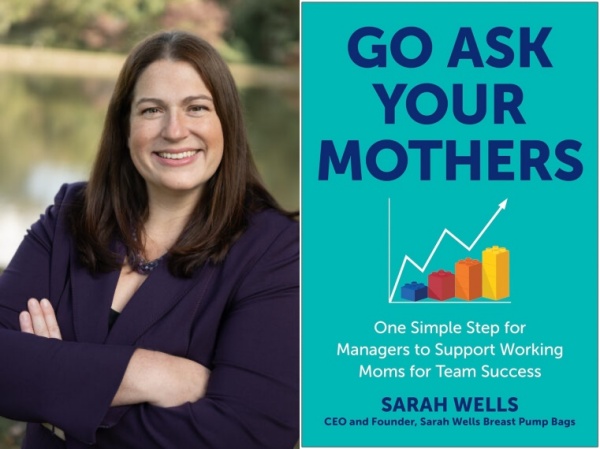
Support moms at work: Our Q&A with CEO Sarah Wells
Flickr and Slack: They both rose from a video game’s ashes
Mistakes happen: Help your team learn from inevitable errors
|
|
|
How to Support Moms at Work, According to CEO Sarah Wells
|
(Source: Penguin Random House)
|
When Sarah Wells went back to work as a first-time mom 11 years ago, she faced a common challenge. “I wanted to nurse … but quickly realized how difficult that was going to be in the workplace,” she said. That led her to launch Sarah Wells Breast Pump Bags, which generates a reported $5 million in revenue per year.
Now she’s written Go Ask Your Mothers: One Simple Step for Managers to Support Working Moms for Team Success. Wells told b. how companies can gain a competitive edge by listening to the most common requests of working moms.
Flexibility with childcare
The end of COVID-era subsidies has posed a major financial challenge for childcare centers across the U.S. “The cost and lack of availability of childcare is a massive problem,” Wells said. “I think we recognize that employers cannot fully solve that. It’s just about engaging in a dialogue on what kind of flexibilities an organization can offer to align with childcare needs.”
Flex schedules and remote benefits could make school drop-offs and pickups easier for working moms. “There’s no one-size-fits-all solution,” Wells said. “It can be tweaking hours or putting in a four-day workweek with extra hours to have Friday off.”
Nursing support
The Fair Labor Standards Act requires employers to provide time and space for working mothers to pump milk, but “Moms continue to say that even when they give us the time and a space … [it] may not work effectively,” Wells said. “I think moms would like to have more cultural organizational conversations about how to support breastfeeding.”
Paid leave
Even as more states introduce laws to ensure up to 12 weeks off for new parents with partial salary replacement, no federal requirements exist. Wells would like business owners to know: “You don’t have to wait for an Act of Congress to provide paid leave.”
She also pointed to options like a staged return to work, where new parents could telecommute for a few weeks as they make the transition back. This might go a long way toward recruiting and retaining millennial talent.
Mental health support
Finally, Wells advocates for mental health support in the workplace, as every stage of parenthood can be stressful.
“I’ve normalized talking about mental health in my company,” she said, adding, “It really starts with communication and putting moms at the center of policies, and practices, and benefits you have in your workplace by asking them what they actually need.”
|
|
|
HR and payroll without the headache
|
When you have a team to run, payroll and HR are a necessity — but for small business owners it can also be a pain. To reduce the administrative workload and get back to focusing on your business, TriNet stands ready to help.
Suitable for businesses of all sizes, TriNet can help manage your team, run payroll, administer benefits programs, and scale alongside your business as it grows. They’ll even assign you a team with expertise in your industry, so you know you’re getting the most relevant support for your specific business.
So, if you’re ready to take back your time and partner with an HR service provider that’s tailor-made for your business, check out what TriNet has to offer.
|
|
|
How Flickr (and Slack) Rose From the Ashes of a “Neverending” Video Game
|
In the late 1990s and early 2000s, Neopets — a browser-based game in which you care for virtual animals — took internet-savvy preteens by storm. It had 150 million users at its peak and sold to Viacom for $160 million.
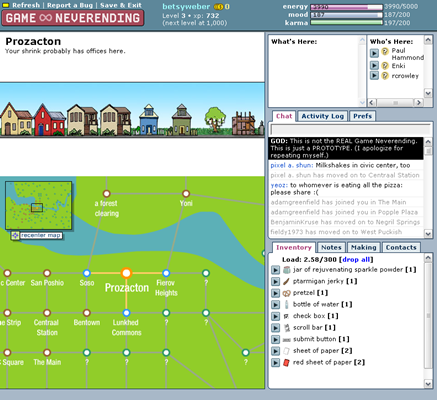
Stewart Butterfield, president of Vancouver video game company Ludicorp, did not create Neopets … but he was inspired by Neopets’ digital world, “Neopia.” So in 2002, he launched Game Neverending, which allowed users to build towns and interact.
Despite its title, Game Neverending ended in 2004. But the flop had one feature that users loved: the ability to share photos with just a click. So Butterfield salvaged that single element to launch his next venture: Flickr.
One year later, Yahoo — still a web behemoth — acquired Flickr for an estimated $25 million. It grew to host over 6 billion images from 112 million users.
If Flickr’s a little too old-school for you, here’s a related story …
In 2012, Butterfield shut down another failed video game, Glitch, in which players virtually gardened and cooked food. It bombed, but like Game Neverending, it had one killer feature: a really sick internal chat system.
So, Butterfield spun it off and rebranded it as Slack. The app became indispensable to over 100,000 companies and sold to Salesforce in 2020 for $27 billion.
As Butterfield proved twice, creative failures can lead to massive successes if you don’t throw out the baby with the bathwater. Read on for tips on how to best learn from mistakes.
|
|
|
Mistakes Happen, So Help Your Team Learn From Errors
|
Dr. Ben Baran is an associate professor at Cleveland State University and co-founder of Elevating What Works.
Even the best teams and organizations aren’t error-free. What really matters is managing errors and learning from them, especially if you’re trying to innovate. So what does it take to do that?
In a 2022 study, researchers conducted an experiment by randomly assigning people to one of three groups, each with a team task to complete:
- They told one team to work carefully and avoid errors.
- They told the second team to experiment, make mistakes, and learn from them.
- They told the last team about how other teams had succeeded in the task by managing errors productively.
The latter two teams outperformed the first group, which had been told to avoid errors. This study helps us understand more about managing errors in a smart way. If you want to help your team establish productive norms and learn from mistakes, consider the following:
- Include a discussion of error management in training for leaders and management. Become comfortable with the idea of teams making mistakes as they work together toward creative solutions.
- Talk directly with team members about the importance of learning from errors. Encourage them to discuss mistakes with each other to create an environment for learning.
- Storytelling, especially when it has to do with how other teams (in your organization or elsewhere) failed and learned — and caught small errors before they became big ones — can be a powerful tool.
|
|
|
Written by Dawn Allcot and Dan Ketchum. Comic by John McNamee.
|
|
|
|