Your free business.com+ membership unlocks exclusive tech deals and advisor support
Join Free
BDC Hamburger Icon

Menu

Close
BDC Logo with Name
Search Icon
Search Icon
Advertising Disclosure
Close
Advertising Disclosure

Business.com aims to help business owners make informed decisions to support and grow their companies. We research and recommend products and services suitable for various business types, investing thousands of hours each year in this process.

As a business, we need to generate revenue to sustain our content. We have financial relationships with some companies we cover, earning commissions when readers purchase from our partners or share information about their needs. These relationships do not dictate our advice and recommendations. Our editorial team independently evaluates and recommends products and services based on their research and expertise. Learn more about our process and partners here.

Generation Z and the Future of Print Marketing

Learn about Gen Z's buying preferences and how to use print media to attract these consumers.

author image
Written by: Jamie Johnson, Senior AnalystUpdated Jan 29, 2026
Gretchen Grunburg,Senior Editor
Business.com earns commissions from some listed providers. Editorial Guidelines.
Table Of Contents Icon

Table of Contents

Open row

Just when marketers and small businesses have mastered marketing to millennials, a new demographic demands their attention. Gen Z already commands about $360 billion in disposable income and is expected to reach $12 trillion in spending power by 2030, making it a group businesses can’t afford to ignore.

Gen Z grew up online, but that doesn’t mean digital is the only way to reach them. Their buying decisions are shaped by trust, relevance and how a brand shows up across channels. We’ll examine how Gen Z shops and explain where print marketing still fits into the mix.
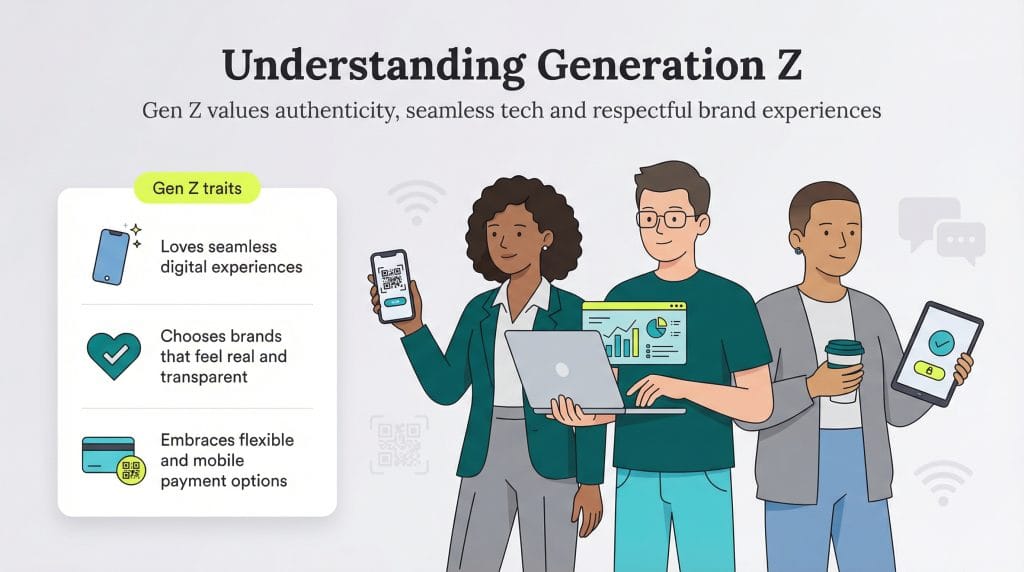
What is Generation Z?

Understanding Gen Z

Generation Z generally refers to people born between 1997 and 2012. Today, that group includes early teens through adults in their late twenties, many of whom are already in the workforce or finishing school. According to NielsenIQ, Gen Z is expected to make up about 30 percent of the global workforce by 2030.

Here are a few characteristics marketers should keep in mind when thinking about Gen Z:

  • Upbringing influences: Gen Z grew up during economic uncertainty, including the 2008 financial crisis, and in a world shaped by constant connectivity. Those experiences influence how they view money, stability and the brands they choose to support.
  • Comfort with technology: Gen Z has never known life without digital tools. They expect technology to work smoothly, and they tend to lose patience quickly when it doesn’t.
  • Expectations around respect: This generation places a high value on being treated well. Poor service or dismissive brand behavior can be enough to push them away for good.
  • High standards: Gen Z is generally less brand-loyal than millennials. If product quality or aspects of an experience fall short, they’re unlikely to give a company multiple chances.
  • Authenticity matters: Gen Z is selective about marketing messages. “Gen Z prefers personalized and interactive content over traditional, one-size-fits-all ads,” said Kaveh Vahdat, founder and president of RiseOpp. “Growing up with social media, they’re skeptical of inauthentic advertising and are quick to skip or block ads that don’t resonate. They value genuine engagement and expect brands to be transparent and relatable.”
Did You Know?Did you know
Gen Z consumers are more open than other generations to alternative in-person and e-commerce payment options. Incorporating QR codes into print materials and mobile device marketing strategies can make it easier for them to engage and convert.

Why Gen Z may prefer print media

Gen Z may be digitally fluent, but they’re also picky about what earns their attention. Digital marketing still has its place, though print can offer a different way to connect.

Here are several reasons print media can resonate with Gen Z consumers:

  • Print helps reduce distraction. Gen Z is accustomed to multitasking across devices, which can make sustained focus harder to come by. Print media removes notifications, pop-ups and competing tabs, allowing for more intentional engagement. Just as many students still rely on printed materials to study, print ads can hold attention longer because they’re physically present.
  • Many Gen Z consumers still prefer print for learning. Research from DirectTextbook found that 62 percent of college students prefer print textbooks over digital formats, citing ease of reading, note-taking and comprehension. Readers are more likely to skim content on screens, while printed text tends to encourage slower, more focused reading. Using a medium your audience already associates with learning can help your message land more effectively.
  • Print adds variety to a crowded media mix. For a generation constantly exposed to digital content, print can feel like a welcome change of pace. Incorporating printed materials alongside digital campaigns introduces another touchpoint and can make a brand interaction feel more memorable.
  • Print feels more authentic. Gen Z is quick to disengage from marketing that feels forced or insincere. “Print offers a tangible, aesthetic experience in a digital world, making it feel more authentic and memorable,” Vahdat noted. “Gen Z enjoys the retro appeal of physical media and values the intentionality behind print, seeing it as less intrusive than online ads.”
  • Physical media creates a tactile experience. Texture, weight and design all play a role in how print is perceived. These sensory elements can help Gen Z evaluate a product or brand in ways digital media can’t replicate.
  • Printed materials stick around longer. Unlike digital ads that disappear in seconds, printed pieces often remain visible until they’re discarded. Flyers, postcards, catalogs and mailers give Gen Z more time to notice, revisit and consider a brand.
  • Print supports personalization. Print campaigns can be highly targeted and tailored to individual interests. Interactive elements, such as QR codes or personalized offers, allow brands to connect print and digital experiences while still delivering information in a tangible format.
TipBottom line
Gen Z values being heard. Following up after a purchase to request customer feedback can help sustain and grow customer relationships with this cohort and signal that your brand takes their opinions seriously.

How to use print media to market to Gen Z

Print still has a place in modern marketing, especially when it’s used alongside digital marketing strategies rather than in isolation. For Gen Z, physical materials can feel more intentional and easier to engage with than yet another online ad.

Here are a few practical ways to use print media when marketing to Gen Z:

  • Include coupons and offers. Many Gen Z consumers are cost-conscious and pay close attention to value. It’s well known that coupons can drive engagement and retention. Printed coupons or discount codes can encourage first purchases, repeat visits and customer loyalty, particularly for retail and service-based businesses.
  • Use direct mail strategically. Because Gen Z receives less physical mail than older generations, well-designed direct mail marketing postcards and letters can stand out. Direct mail can feel more personal than digital outreach, especially when it’s targeted and relevant. Working with a direct mail service provider can also help streamline production and distribution.
  • Highlight real customer experiences. Gen Z relies heavily on social proof when making buying decisions. Including short, genuine testimonials in printed materials can reinforce trust, make your messaging feel more credible and improve your marketing ROI.
  • Make print interactive. Static print pieces are less effective on their own. Adding QR codes, scannable links or other interactive elements allows Gen Z to move easily between print and digital experiences. “Integrating print with digital strategies is key — think QR codes or AR links,” Vahdat advised. “Sustainability also matters to Gen Z, so using eco-friendly materials in print campaigns resonates.”
Did you find this content helpful?
Verified CheckThank you for your feedback!
author image
Written by: Jamie Johnson, Senior Analyst
Jamie Johnson has spent more than five years providing invaluable financial guidance to business owners, leading them through the financial intricacies of entrepreneurship. From offering investment lessons to recommending funding options, business loans and insurance, Johnson distills complex financial matters into easily understandable and actionable advice, empowering entrepreneurs to make informed decisions for their companies. As a business owner herself, she continually tests and refines her business strategies and services. At business.com, Johnson covers accounting practices, budgeting, loan forgiveness and more. Johnson's expertise is also evident in her contributions to various finance publications, including Rocket Mortgage, InvestorPlace, Insurify and Credit Karma. Moreover, she has showcased her command of other B2B topics, ranging from sales and payroll to marketing and social media, with insights featured in esteemed outlets such as the U.S. Chamber of Commerce, CNN, USA Today, U.S. News & World Report and Business Insider.
Related Tips & Topics
More Related articles
Arrow