Business.com aims to help business owners make informed decisions to support and grow their companies. We research and recommend products and services suitable for various business types, investing thousands of hours each year in this process.
As a business, we need to generate revenue to sustain our content. We have financial relationships with some companies we cover, earning commissions when readers purchase from our partners or share information about their needs. These relationships do not dictate our advice and recommendations. Our editorial team independently evaluates and recommends products and services based on their research and expertise. Learn more about our process and partners here.
A SWOT analysis helps you make smart, informed business decisions.

Understanding your company’s position within your market or industry and knowing how and where you can grow is critical for any business owner. The knowledge allows you to develop your company strategically rather than wasting your efforts trying to expand into a market that doesn’t align with your business or being steamrolled by a surprise competitor. This is why it is helpful to perform a strengths, weaknesses, opportunities and threats (SWOT) analysis to assess where you are now and how you can improve.
This comprehensive guide will walk you through everything you need to know about SWOT analysis, including what it is, why businesses should conduct it regularly, and how to perform the analysis and evaluate your results for maximum strategic impact.
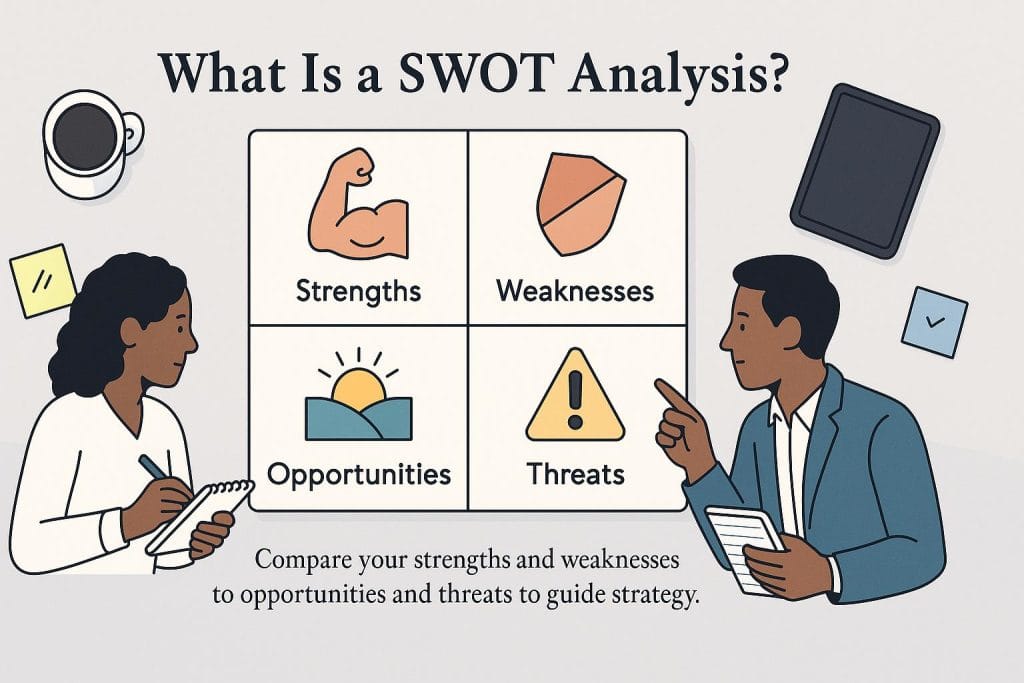
A SWOT analysis is a type of analysis that helps you develop your business strategy by comparing internal factors (strengths and weaknesses) against external factors (opportunities and threats). Examples of internal factors include things that you have control over and can change, such as your staff or your intellectual property. External factors are things that you cannot control, such as consumer trends or competitors.
According to Harvard Business Review, the most effective SWOT analyses begin by examining external conditions first, as this approach generates more actionable strategic recommendations by grounding internal capabilities in market realities.
A SWOT analysis has four quadrants:
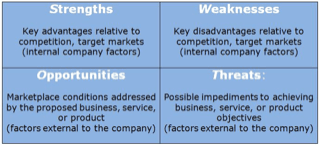
The analysis provides you with an accurate picture of what your business is currently doing well and how it can improve.
“[A SWOT analysis] gives you a firm grasp of what is affecting your business internally and externally,” said Lynne Pratt, creative content expert. “By carefully evaluating the analysis, a business can find new ways of progressing and achieving growth.”
Every company, no matter its size, should do a SWOT analysis periodically. It is a crucial strategic tool that will reveal problems that need to be fixed, strengths that need to be capitalized on, potential threats that need to be mitigated and opportunities for growth.
Sometimes, it’s hard to see the big picture when you are involved in the day-to-day operations of a company. A SWOT analysis gives you a detailed, unbiased overview of your business as a whole or a specific product or campaign. By involving a variety of stakeholders, you get a perspective that you might not have gotten as an individual or small group of executives.
It can also help train your brain to consider every factor that could affect your project or business. When you’re facing a tough issue or if you’re just unsure of your current strategy, a SWOT analysis illuminates details so you can formulate actionable plans based on each of the four quadrants.
For example, if you were considering opening a new location for your business, you could run a SWOT analysis to see if you are in a good position to do so. You could also use it to identify outside factors that you will need to plan for.
The threats portion, in particular, can help you see and overcome any possible problems, either competitive or market-based, so that you can prepare a proactive initiative. For example, if you find out that a competitor has improved its technology, you can work on similarly upgrading your own. During times of sudden market disruption — such as an economic downturn or a major shift in consumer behavior — businesses that conduct regular SWOT analyses are better positioned to pivot quickly because they’ve already identified vulnerabilities and mapped out contingency responses.
“A SWOT analysis is useful so that you don’t get caught entirely off-guard,” said David LaVine, founder of RocLogic Marketing. “You [should] do a SWOT analysis for each application area you’re considering operating in.”
“We conduct [analyses] every six months as a rule in our business,” said Alistair Dodds, marketing director and co-founder of Ever Increasing Circles. “They act as a great check on how the competition has evolved in that time period.” [Discover seven effective ways to differentiate your product.]
Although many of your company’s strengths should be known, you may discover one you hadn’t considered before or even something that might be new. Perhaps you have reached some threshold in revenue, sales, five-star reviews or customers that you can now use in your sales and marketing efforts. For example, a customer threshold might result in a marketing campaign with a headline of, “1 million customers have trusted Company X. Won’t you?”
While the basic SWOT framework remains consistent, its application varies significantly across different industries, each with unique considerations and strategic priorities.
For technology startups, SWOT analysis focuses heavily on innovation speed and market positioning. Key considerations include:
Retail companies must balance physical and digital presence considerations in their SWOT analysis:
Manufacturing businesses focus on operational efficiency and supply chain resilience:
Service-based businesses emphasize human capital and customer experience:
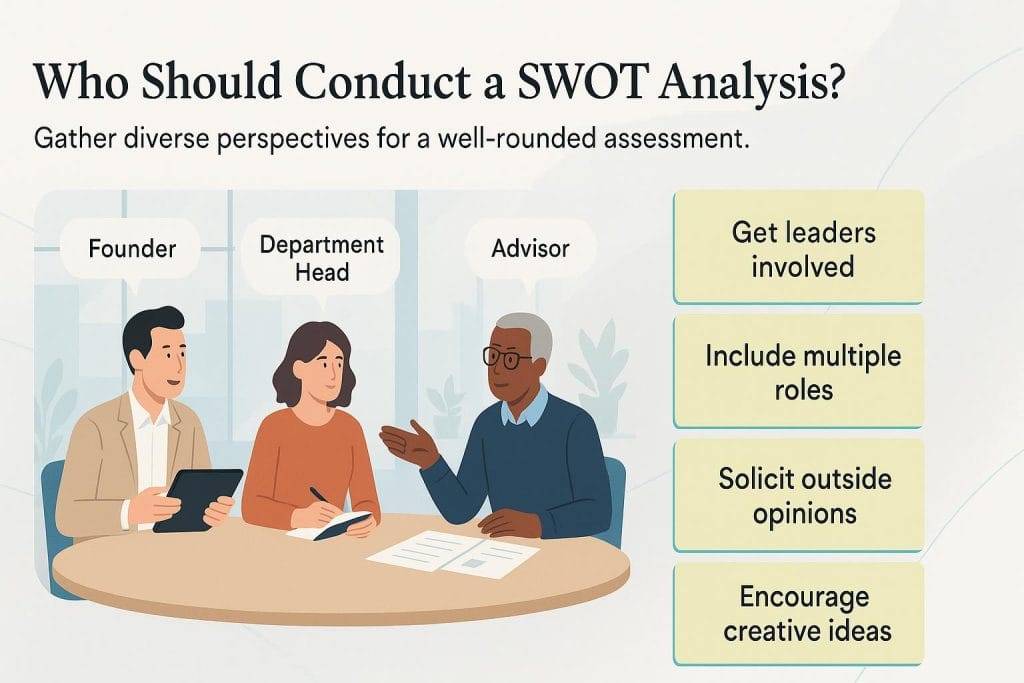
A SWOT analysis should be a collaborative effort between several levels of employment within your company. Founders and leaders should be the most closely involved but, to gain a true picture of your business, gather input from a group of people that can contribute several perspectives.
“It’s vital to go through your analysis with key stakeholders,” Dodds said. “When you identify weaknesses, it’s a great time to get other department heads and staff to suggest solutions — you’ll be amazed at the creativity and problem-solving inherent in your team if they are given the opportunity [for] input.”
If you’re a solo operation, ask close friends or related professionals, such as your accountant, lawyer or advisor, for input. Having plenty of outside perspectives helps make your analysis as well-rounded and objective as possible.
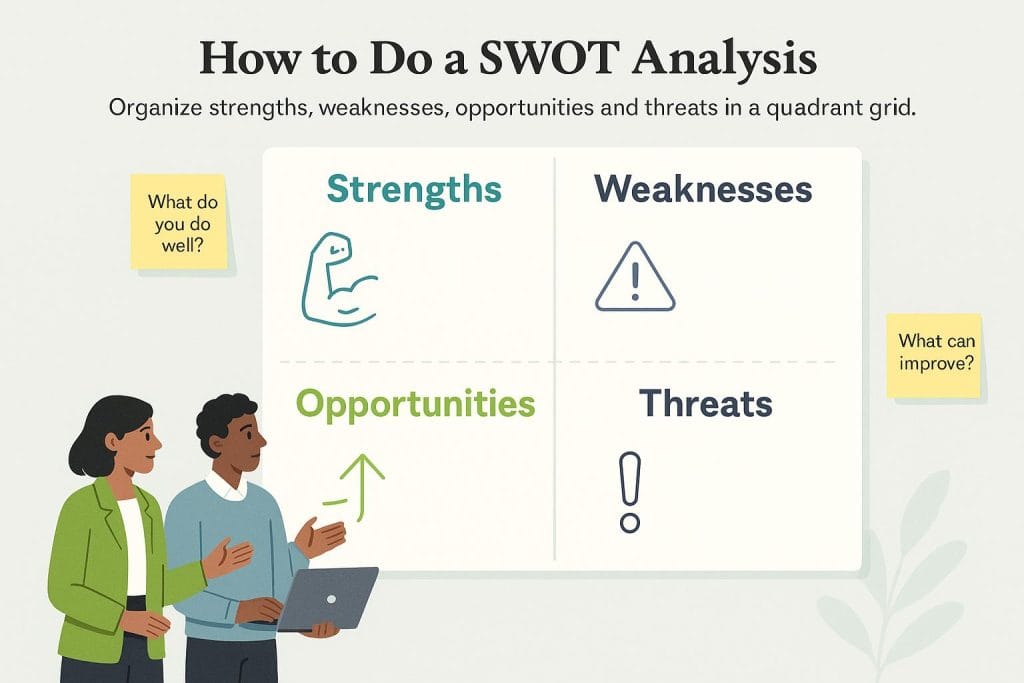
The first step of a SWOT analysis is to create your grid. Start with strengths in the upper left corner, then weaknesses in the upper right corner, opportunities in the bottom left and threats at the bottom right of the grid.
Next, fill in each quadrant. An easy way to do this is to ask yourself questions that apply to each box. Here are some suggestions.
Here are some additional points to consider as you fill in your quadrants:
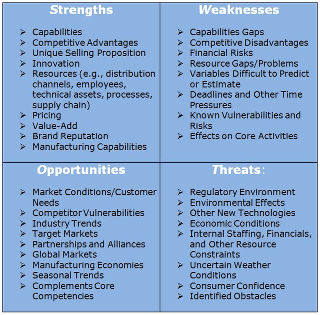
Your quadrants do not have to be perfect — you can always create multiple drafts of your analysis, editing what you have filled in as you go. Host a brainstorming meeting to complete your first draft.
After you have filled in the quadrants, review each quadrant and evaluate your results.
In preparation for these conversations, review some of the most important terms for business owners to enhance your ability to assess each area of the SWOT analysis and brainstorm solutions.
Even experienced business leaders can fall into common pitfalls when conducting a SWOT analysis. Understanding these mistakes helps ensure your analysis delivers actionable insights.
One of the most frequent mistakes is creating extensive lists without distinguishing between major and minor factors. This leads to analysis paralysis and difficulty focusing on what truly matters.
How to avoid: Limit each quadrant to three to five critical items and rank them by importance and potential impact.
Many teams misclassify factors — such as listing employee turnover as a threat when it’s actually an internal weakness.
How to avoid: Ask the simple question: “Is this factor within our direct control or not?” Internal factors (strengths/weaknesses) are controllable; external factors (opportunities/threats) are not.
Teams often overestimate their strengths without objective validation, leading to overconfidence and poor strategic decisions.
How to avoid: Back up perceived strengths with data and seek external validation from customers or industry experts.
Performing SWOT analysis without diverse stakeholder input creates blind spots and limits perspective.
How to avoid: Include team members from different departments, levels and functions. Consider external perspectives from customers, suppliers or industry advisors.
The business environment constantly changes, making a static analysis quickly outdated.
How to avoid: Conduct a SWOT analysis on a regular basis. Many organizations update their findings at least every six months and some fast-moving industries require quarterly reviews to keep strategy aligned with market conditions.
The most common mistake is completing the analysis but not developing specific, actionable strategies based on the findings.
How to avoid: Use the simple framework: “Given the condition of [external factor], our ability to [internal factor] leads to our recommendation that we [specific action].”
Once you complete your SWOT grid, you need to analyze the information you’ve collected. Here are a few things to consider.
To evaluate your SWOT analysis effectively, start with your strengths and don’t brush them off, said Pratt. “You might feel that because you’ve got these nailed down that you don’t need to do anything with them, but this is wrong,” she said. “There is always room for improvement and working on your strengths, as well as [with] the [other quadrants], will help them remain your strengths”:
Next, look at your weaknesses and identify which aspects of your business each weakness is related to. For example, do you need to boost customer retention by better training your staff? Or is location and/or competition the problem? “Identify where the problem is coming from so you can begin to plan to address it,” Pratt said.
You can also see which of your threats are related to your weaknesses and if any of them are caused by something you can change. Try to connect your strengths to ways you can combat threats:
Finally, consider whether there are time constraints that could impact your opportunities. Are any of them short-term or seasonal? If so, make it a priority to hit those opportunities first and create an action plan for taking advantage of them.
Nathan Thompson, e-commerce and growth lead at The Others Beauty Co., said his company splits their business opportunities into short-, mid- and long-term goals. They set deadlines for each goal to ensure it gets done. “SWOT results should be analyzed and evaluated in order of actionability,” he said. “Having deadlines set for each milestone ensures accountability for all parties.”
The true value of SWOT analysis lies not in its completion, but in how effectively you implement and track the resulting strategies.
There is no single metric for measuring SWOT success. Instead, focus on whether you’ve successfully converted findings into actionable recommendations that are followed through and implemented.
Key metrics to track include:
Businesses should update their SWOT analysis on a regular schedule based on industry dynamics. A general framework to consider:
Businesses should also conduct SWOT updates when:
To ensure SWOT analysis leads to real business improvements:
The most successful companies treat their SWOT analysis as a living document that guides ongoing decision-making rather than a static, one-time exercise. Building accountability into the process is what separates businesses that benefit from the framework from those that complete it and move on.
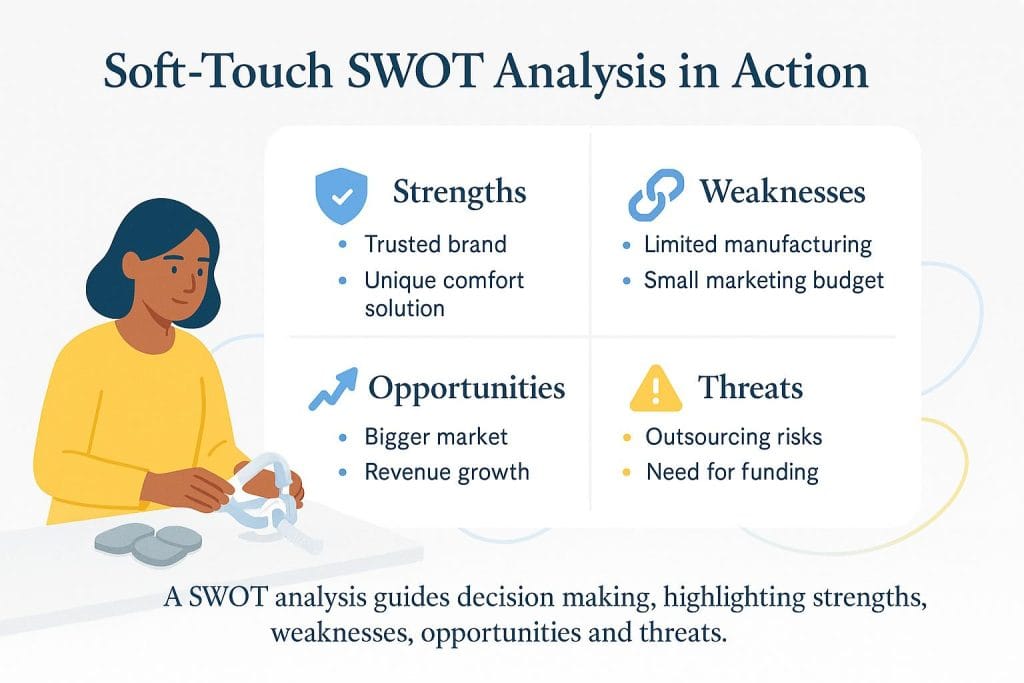
To see how SWOT analysis works, consider this example:
Soft-Touch makes pads that attach by Velcro to the plastic face mask worn by sleep apnea sufferers to help them breathe while they sleep. The company founder herself has sleep apnea and she developed the product to increase the comfort of wearing the mask and to eliminate the marks it left on her face the following morning.
The company has largely grown its sales through word-of-mouth. A major sleep apnea equipment maker wants Soft-Touch to supply the pads for all of its masks. To satisfy the increased demand, Soft-Touch would have to outsource its manufacturing.
Here is a sample SWOT analysis for Soft-Touch as they consider this opportunity:
Notice that the SWOT analysis doesn’t provide an answer. Instead, it provides a framework to help formulate an answer and allows you to see exactly what the opportunities are, what weaknesses currently limit the company, its current strengths and the threats it could face if it takes the opportunity.
“Taking time to think strategically will lead to ways you can streamline to get more done as well as take your business into new directions that can benefit (or even save) the company,” said Joshua Ladick, president and founder of GSA Focus.
Remember that your SWOT analysis is only a starting point, not an actionable plan. “Don’t confuse SWOT for strategy,” said Greg Githens, executive and leadership coach at Catalyst & Cadre. You are still responsible for developing a strategy that will take you from where you are to where you want to be, and SWOT provides a roadmap for that strategy.
Jennifer Dublino and Sean Peek contributed to the reporting and writing in this article. Source interviews were conducted for a previous version of this article.