Written for the leaders, owners and professionals of the 11 million businesses with between $50,000 and $50 million in revenue.
|
A year ago, b. reported on the emerging “dumb” phone market, which had a niche following of (former) iPhone addicts seeking a digital detox via low-tech, Y2K-throwback cellular devices. It seemed like a long shot that entrepreneurs could run modern businesses with flip phones, but we speculated it could lead to fewer distractions and greater productivity.
Well, folks, you heard it here first, because dumb phones are “the new boss flex” to “focus on deep work and be fully present in meetings,” according to the Wall Street Journal. (Fax machines, too, apparently.) Even tech CEOs now want to escape from constant pings — and being unreachable on Slack until you’re in front of a laptop or desktop is a kind of “power move.”
If you’re not quite ready to trade in your Pixel or Galaxy, read our guide Can You Run a Business via a Smartphone?
|
|
|
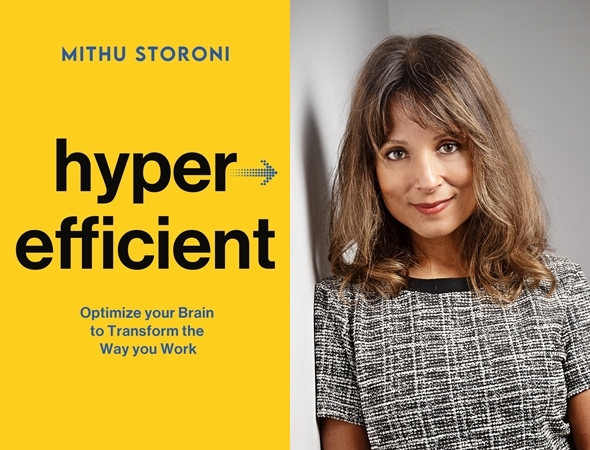
Hyperefficient: Neuroscientist’s new theory of peak productivity
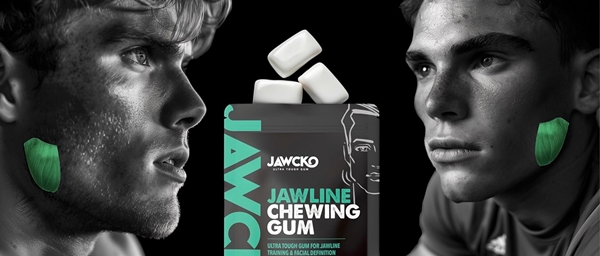
Gym gum: Dentists aren’t biting on “jawline chewing gum”
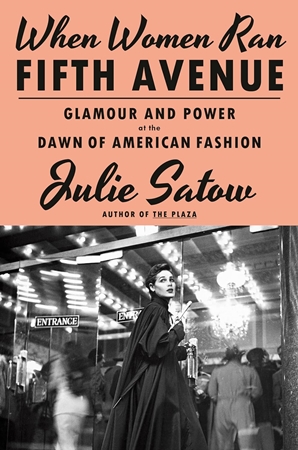
Fifth Avenue: How women paved fashion’s way in the 1920s
|
|
|
Hyperefficient: Dr. Mithu Storoni Shares New Theory of Peak Productivity
|
(Source: Little, Brown Spark)
|
Getting your brain ready for the workday might be more complex than loading a couple K-Cups into the coffee machine.
In Hyperefficient: Optimize Your Brain to Transform the Way You Work, physician and ophthalmic surgeon Dr. Mithu Storoni — who has a background in neuroscience — uses the latest research to offer productivity boosters. She told b. how to increase focus without (just) relying on caffeine.
b.: What is the “gear network” you describe for optimal efficiency?
Storoni: If you’re driving a car, you would be matching your gear. … Imagine your mind running at three speeds: slow, medium, and fast.
Mental processing happens best in what I term “gear one,” a state of the mind that is relatively sober. … If you need to focus, as when you’re reading a heavy report, the best kind of mental state is … “gear two” [where] it doesn’t get distracted. A faster pace … is “gear three,” where your mind is working, where it is reactive — it’s easily distracted; it’s following leads without actually having any focus …
For what you’re doing, one state is going to be ideal.
b.: How might efficiency change for varying personalities or environments?
Storoni: You could be someone who needs to be in the office, surrounded by your team — surrounded by people, surrounded by noise and deadlines of urgency — and that keeps you in the right mental state. … You could be someone else who’s focused and alert in a quiet environment …
There are different times of day where certain types of work take place better. A team that’s putting the ideas down to a plan would be scheduled differently. … No one works for more than four hours at an extremely high intensity.
b.: How long should it take for the average person to achieve hyperefficiency?
Storoni: The change of habits revolves around your circadian rhythms, how you’re working, your work environment, the type of work you’re doing, giving yourself enough rest, and so on. It’s engineering the right environment.
If your mind … is constantly working with a heavy load — if it is always tired, creaking under the strain — then as soon as you remove that strain, you create optimal conditions for it to perform. So there isn’t really a time limit.
Hyperefficient is available now.
|
|
|
Earn more bread with Toast POS
|
Restaurants have unique point-of-sale (POS) needs,from turning tables quickly to connecting front and back of house. Restaurateurs also need powerful reporting capabilities to help them manage inventory, reduce waste and analyze sales to make strategic menu changes.
Enter Toast, a powerful POS system designed specifically for restaurants, cafes, bars, food trucks, and food-service businesses of all kinds. Waitstaff can navigate Toast’s user-friendly software easily on the dining room floor, and itsstress-tested hardware can stand up to high heat and spills in a kitchen environment.
New restaurant on a budget? No problem! Toast offers a Starter Kit that includes one hardware terminal at no cost and no interest, so you can get started now and pay later. See why more than 112,000 restaurants trust Toast with everything from POS to payroll.
|
|
|
Gym Gum: Dentists Aren’t Biting on “Jawline Chewing Gum” (But Teen Boys Are)
|
Chewing gum can be a lot of things: a way to freshen breath, quit smoking, and … work out?
A new wave of companies and influencers are trying to brand “hard gum” as a fitness product, according to The New York Times. The idea is that working through a piece will build up one’s facial muscles, thus creating a stronger jawline. Brands like Jawcko, which offers flavors including “Jacked Watermelon” and “Chiseled Cinnamon,” are particularly appealing to teenage boys and young men eager to improve their appearance.
However, several dentists told the NYT that hard gum is unlikely to yield visible results. “You would have to chew gum for so long, for eight hours a day for years and years, to get the effect that they’re looking for,” said one of them. (It could even lead to painful jaw disorders, warns the American Dental Association.)
Still, it’s very tempting to pop a stale Juicy Fruit and call that our workout for the day.
|
|
|
When Women Ran Fifth Avenue Recounts “Dawn Of American Fashion”
|
|
|
A century ago, American fashion didn’t really exist. We wore European-inspired threads up through the 1920s. That all changed with a few New Yorkers, according to journalist Julie Satow’s new book When Women Ran Fifth Avenue:
- Hortense Odlum became president of near-bankrupt luxury department store Bonwit Teller. She tripled its sales with more appealing interiors and better customer service.
- Geraldine Stutz, vice president of I. Miller Shoes and then president of Henri Bendel, similarly helped create the aesthetic of modern department stores.
- Lord & Taylor executive Dorothy Shaver bucked Parisian design trends and hired a team to focus on original American styles.
When Women Ran Fifth Avenue grabs you by the wrist and pulls you through a series of decadent revolutions, barrelling through whirlwind intersections of business and culture. The dynamic trio’s stories are wrapped up in glitz, glam, and pure business savvy.
As Satow writes, “These were strong, complex women, figures with interlocking yet varying fates, pioneers of their eras whose efforts contributed to the contours of American fashion and helped pave the way for women today.”
|
|
|
Written by Jane Meggitt, Tess Barker, and Dan Ketchum.
|
|
|
|