Can any business thrive without social media influencers in 2025? With 80 percent of companies investing in influencers — with a record projected spend of $9.3 billion — it may seem impossible to compete without hiring them.
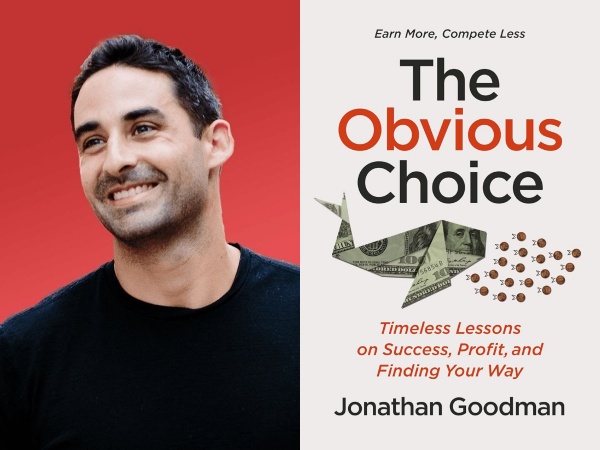
But Jonathan Goodman, author of The Obvious Choice: Timeless Lessons on Success, Profit, and Finding Your Way, believes that too many brands excessively focus on winning the internet. It’s a surprising perspective from someone with 260,000 Instagram followers. He spoke with b. about how to build a successful marketing strategy without the influence of influencers.
b.: So you’re telling business owners to play in their own lanes?
Goodman: How do you beat Michael Jordan? You sure as hell don’t play basketball. … There’s absolutely nothing wrong with wanting to be an influencer, but you have to understand that the rewards, time horizons, rules of engagement, and odds of success are fundamentally different in that game compared to building a business.
The problem is we’re now conflating those two things. If you’re a marketer … you’re going to compete with people who are full-time entertainers. That’s their full-time job — it’s what they live and breathe. And you’re trying to fit this in on top of your everyday work?
b.: Which metrics of success do you feel are being inflated as more important than they actually are?
Goodman: Likes can be important if your goal is to become famous on the internet, but if your goal is to build a business … likes don’t necessarily correspond with dollars. What’s good for your ego is often bad for your wallet. I can put a post up any given day on my Instagram and it’s going to get 10,000-plus likes, but those are not the posts that generate inbound inquiries for our business.
A seasonal gelato shop in Toronto measures their social media success like this: When they announce a new flavor, how many people flood into their shop? And how quickly do they sell out of it?
So what are the metrics you’re tracking? And how much do they actually correspond to tangible business outcomes? Likes and engagement might have something to do with that, but they certainly don’t tell the whole story.
Over 90 percent of sales still happen through (mostly offline) word of mouth. And as we trust what we see online less, I’d argue we’re actually going to make even more decisions this way.
b.: What’s the biggest problem with modern digital marketing?
Goodman: With the internet making everything so much easier for us, we get worse and worse if we’re not careful. If you have access to [some new technology], so does everybody else. There’s no advantage. Warren Buffett once said that if everybody’s at a parade and one person stands on their tiptoes to get a better view, what happens next is everybody steps on their tiptoes and then nobody’s view is better — but everybody’s legs hurt.
The Obvious Choice is available now.
This interview has been edited for length. Read the full Q&A at business.com.