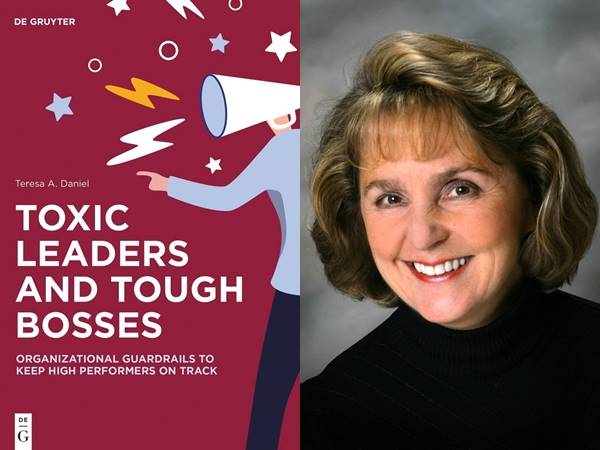
Leadership is a balancing act. Without setting goals and measuring results, employees can underperform. However, excessive criticism and micromanagement tend to backfire and cause even worse problems.
So, is there a perfect medium? b. spoke with Teresa A. Daniel, JD, PhD, dean of human resource leadership programs at Sullivan University. She’s also the author of the new book Toxic Leaders and Tough Bosses: Organizational Guardrails to Keep High Performers on Track.
b.: You write that toxic workplaces have driven 20% of U.S. employees out of their jobs within the past five years. How are companies responding to this?
Daniel: Smart companies demand that all employees are treated with respect and that employee well-being is a top priority. They have read the research and understand that productivity and profitability go hand in hand with organizational cultures where trust is high and respect is a given.
b.: Can you describe the difference between a toxic leader vs. a tough boss, and what makes the latter desirable?
Daniel: Tough bosses have high standards for both themselves and others and generally create a positive workplace culture that allows people to thrive, while toxic leaders are generally focused on their next promotion, don’t care about their people, and create a negative workplace that often results in a climate of fear.
b.: Is it possible for such a toxic personality to turn themselves around or are their intrinsic issues too deeply ingrained?
Daniel: I remain hopeful that some toxic leaders can be salvaged. Their strength is that they do get results, but mostly at the expense of their people. I think if they … are told they must either change or be fired, they might be able to make the adjustments needed to turn things around, but only with some sustained executive coaching and direct feedback.
b.: What’s the wrong way to respond to a toxic leader?
Daniel: The absolute wrong way to handle toxic leaders is to continue to allow them to get away with it. Most everyone in the organization knows who the problem leaders are. Theirs are the units that have high turnover, low morale, greater absenteeism, and more litigation.
Accountability is key. Toxic leaders simply cannot thrive in an organization that truly values its people. … It is not just “nice to do,” but it is a business imperative. Businesses that take this approach are more profitable and successful.
This interview has been edited for length. Read the full Q&A at business.com.
Toxic Leaders and Tough Bosses is available now.