Written for the leaders, owners and professionals of the 11 million businesses with between $50,000 and $50 million in revenue.
|
|
|
Whole Foods: Our Q&A with founder John Mackey
Starbucks: How the chain survived the Great Recession
Prophetic: Startup wants you to work in your dreams
|
|
|
Whole Foods Co-Founder John Mackey Talks Selling to Amazon and When to Walk Away
|
Many people start successful businesses, but few change how the rest of us live — or eat. Natural, organic, and vegetarian diets were niche “health-nut” interests when John Mackey opened the first Whole Foods Market in 1980; by the time Amazon purchased the company for nearly $14 billion in 2017, they were mainstream lifestyles.
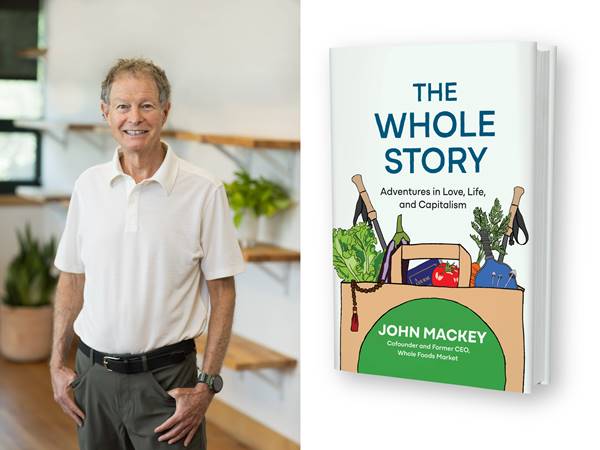
As CEO from Whole Foods’ founding until 2022, Mackey has a unique perspective on growing and selling a category-redefining business, which he recounts in his new memoir The Whole Story: Adventures in Love, Life, and Capitalism. He spoke with b. about negotiation, keeping (most) customers happy, and the continued importance of location, location location.
b.: How did you stay focused on growth while giving current stores the resources and time they needed?
Mackey: I chose to focus most of my time and energy on growth and empowering more operationally skilled executives to focus more on current operations. It is impossible to do everything well yourself. Ultimately you need to create an empowered team that works together to get all the necessary and important work done, both for today and in the future.
|
b.: Do you think real estate is as important an element for brick-and-mortar companies to consider as it was in the 20th century?
Mackey: Knowing how to select the right space for physical retail is both an art and a science, and if you make the wrong choice, it can be a disastrous and often very expensive mistake.
During my 44 years at Whole Foods, we established an extremely rigorous process for identifying new locations and it’s proven to be very, very successful. … “Location, location, location” remains just as true today as it was 25 years ago.
b.: What factors should be considered when deciding whether to sell your company?
Mackey: It is important to ask the question, what is the best thing for the company and all of the key stakeholders: customers, team members, investors, suppliers, and the community? What is the win-win-win solution, good for you, good for me, and good for all of us?
Sometimes the best solution is to sell the company instead of staying independent. That is the conclusion I came to when we decided to sell Whole Foods to Amazon. This decision created more value for all of our stakeholders than continuing to stay independent would have.
|
b.: Do you think one needs to enjoy negotiating to excel at it?
Mackey: Negotiating is a type of game, and it can and should be fun most of the time. I always seek the win-win when negotiating with anyone. I never try to take advantage of the other person when negotiating …
Often, if I feel like the other person is trying to take advantage of me in the negotiation, I rethink whether this is actually someone I want to be in partnership with at all. If they are trying to screw me in some way in the negotiation, then it is highly probable that they will try to do so in the partnership in the future.
Integrity and trust are the foundations of any good relationship and if I decide the person I’m negotiating with is not trustworthy, then I walk away from the deal.
b.: Does creating a fun corporate culture ever come at the expense of profits?
Mackey: It could, but it doesn’t need to. Instead of looking for trade-offs, I prefer to look for win-win-win solutions. Create a fun corporate culture that raises morale and productivity in such a way that it also increases profits.
The Whole Story is available now.
|
|
|
Get ready to Rock ‘n’ Payroll with QuickBooks
|
As your team grows, so do your payroll needs. At every stage of growth, though, QuickBooks Payroll has the features you need.
With QuickBooks Payroll, you’ll have access to same-day deposit, helping you hang onto your cash right up until payday. Automated e-filing and payment features make your payroll taxes a breeze. You can also bundle other QuickBooks products to create a software suite that covers accounting, benefits, and taxes as well. These seamless integrations will save you time and energy, while keeping you one step ahead of the competition.
Best of all, when you sign up today by clicking the link below, you’ll get 70% off QuickBooks Payroll for the first three months. See the difference QuickBooks Payroll can make for your business at a steep discount for a limited time, available until June 3.
|
|
|
How Starbucks Emerged From the Great Recession
|
|
|
With nearly 35,000 Starbucks stores worldwide (just shy of the ultra-ubiquitous McDonald’s 40,000 restaurants) collectively brewing $37 billion in annual revenue, you could almost forget that the coffee chain was on the brink of ruin in 2008.
When the Great Recession hit, millions of consumers tightened their belts and cut out unnecessary expenses — with a daily Frappuccino (and scone, hey, we deserved it) being the poster child for the sacrificed splurge.
But the truth is that Starbucks already had problems before Wall Street crashed. In 2007, a year before the subprime mortgage crisis, the company’s stock had already cratered 42%. Traffic had slowed under CEO Jim Donald.
Starbucks threw a Hail Mary and brought back former CEO Howard Schultz, who had overseen its legendary expansion from 1986 to 2000. In a letter that lives on as an artifact in MBA case studies, Schultz decried a “watering down of the Starbucks experience” (for example, switching to automatic espresso machines had “removed much of the romance and theatre”) and detailed exactly how to make it feel like a café again.
Under Schultz, Starbucks was among the first major companies to effectively harness social media and launch its own mobile app for ordering and promotions. When the global economy recovered, Starbucks was bigger than ever — Venti-sized, you could even say.
|
Prophetic Wants You to Work in Your Lucid Dreams
|
|
|
If you’ve ever said you could do a job in your sleep, well, maybe you can.
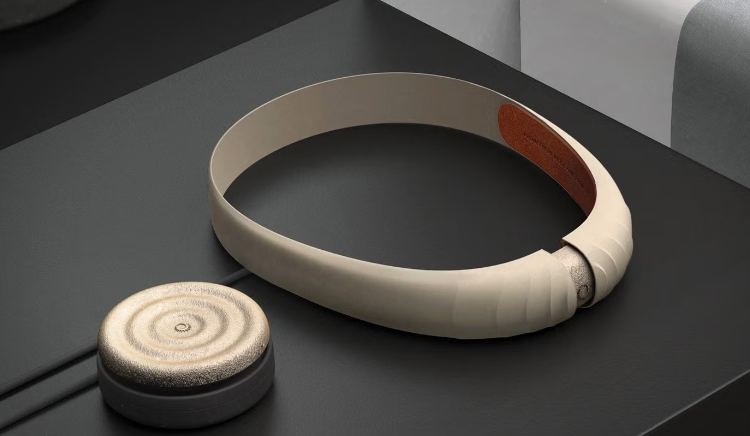
Prophetic’s upcoming headband is a “non-invasive neural device” that claims to induce lucid dreams (the kind in which you’re aware it’s a dream) by beaming ultrasound currents to AI-targeted areas of the brain. Founder Eric Wollberg says it could give workers “the chance to practice demos or perform creative problem solving for difficult tasks” while unconscious.
At least one study found that lucid dreamers had higher-than-average creativity scores. However, induced lucidity only shows a 50% success rate in lab settings, so we’re skeptical. (Also, sleep is pretty much the only place left where we can ignore Slack notifications. Please don’t take that away from us, Eric.)
|
|
|
Written by Tess Barker, Elizabeth Barton, and Dan Ketchum.
|
|
|
|