Written for the leaders, owners and professionals of the 11 million businesses with between $50,000 and $50 million in revenue.
|
Your business’s social media presence isn’t just for marketing; it’s also for attracting employees. In a recent survey commissioned by LiveMe, over 90% of respondents said that social media posts, including official accounts and employee testimonials, influenced their job application decisions. While LinkedIn is still the top career network, nearly 40% have searched for a job on Facebook and 12% have searched on TikTok.
Fortunately, business.com has plenty of Tips to Improve Your Social Media Presence and insights from our Small Business Guide to Hiring a Social Media Manager.
|
|
|
SME marketing: Use public trust to your advantage
Play Nice: A deep dive into Blizzard Entertainment
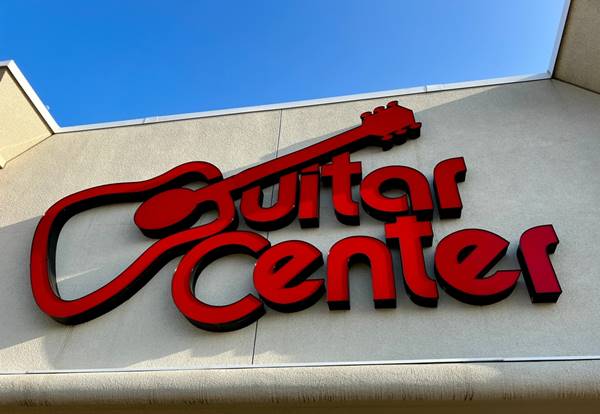
Guitar Center: Music chain is returning to its roots
|
|
|
Americans Trust Small Businesses Like Nothing Else
|
Nearly 7 in 10 Americans have a negative opinion of large corporations, according to a Pew survey from earlier this year. However, it’s not because the public is against commerce. In fact, an incredible 86% of respondents hold a positive opinion of small business, making it a more trusted institution than any other, including the military (60%), religious organizations (59%) and K-12 schools (53%).
So it appears the concern has more to do with bigger companies, with 2 in 3 Americans sometimes feeling guilty after shopping at big chain stores, found AT&T and OnePoll in 2022. This speaks volumes about changing consumer values … and signals a golden opportunity for small-to-medium-sized enterprises (SMEs) to harness Americans’ trust in their marketing strategies. Here are a few tips for doing just that.
Humanize your brand
Whereas large corporations might be viewed as faceless, faraway entities, SMEs are like the friendly neighbors next door, always ready to lend a cup of sugar. Approximately 9 in 10 Americans in AT&T’s survey knew someone who worked for a local small business. Plus, for every dollar spent at a small business, $.67 stays in the local community, according to American Express.
As major brands replace their customer service departments with AI chatbots, the prospect of speaking with a real human being might sound refreshing to consumers who need an issue solved. Fill your marketing materials with imagery of employees happily assisting customers.
Transparency triumphs
We’ve all scrolled past terms of service with a mountain of legalese and clicked on OK, unsure of what rights we were handing over and what hidden fees we were agreeing to pay. On the other hand, SMEs are turning the tables by embracing radical transparency.
Tell your story plainly and proudly: where your materials come from, how your products are made, and what customers are paying for. Let your honesty shine in your marketing, proving that candor is good business.
Showcase local partnerships
Teaming up with other SMEs can offer mutual benefits, build local connections, and make customers feel even more strongly that they’re supporting their community. For more on this topic, read business.com’s guide to How Businesses Can Support Other Local Small Businesses.
|
|
|
Make generative AI work for your next email marketing campaign
|
Artificial intelligence is driving headlines, but how can it drive your business forward? These new and innovative tools may help you grow your business, but only if you can make heads or tails of them.
Thanks to Mailchimp, you can leverage generative AI1 for your next email campaign without the steep learning curve. Take advantage of more than 20 AI and data science tools housed directly in Mailchimp’s user-friendly interface to personalize content for your audience, your industry, and your brand.
See why marketers say Mailchimp’s AI-built predicted segments help them grow their revenue by 141% on average. With flexible, competitive pricing plans and the ability to try before you buy, Mailchimp is a great choice for any small business ready to level up its email marketing with AI. If you’re ready to get started with the #1 Email Marketing and Automation Platform, sign up for Intuit Mailchimp below.
|
1Intuit Assist functionality (beta) is available to certain users with Premium, Standard and Legacy plans in select countries in English only. Access to Intuit Assist is available at no additional cost at this time. Pricing, terms, conditions, special features and service options are subject to change without notice. Availability of features and functionality varies by plan type. Features may be broadly available soon but represents no obligation and should not be relied on in making a purchasing decision. For details, please view Mailchimp’s various plans and pricing.
|
|
|
Today’s podcast conversation is with Jessica Shirra, fractional CMO, on advice for aspiring fractional CMOs. We explore her journey from marketing to entrepreneurship, the role of AI in marketing, and tips on elevating business strategy. Watch the episode on YouTube or listen on your favorite audio app.
|
Play Nice: The Rise, Fall, and Future of Blizzard Entertainment
|
|
|
(Source: Grand Central Publishing)
|
Blizzard Entertainment is known for juggernaut video game franchises like Call of Duty, World of Warcraft, Overwatch, and Tony Hawk’s Pro Skater. But in recent years, as half of Activision Blizzard, it’s come under fire for allegations of employee abuse and discrimination, culminating in lawsuits from the California Department of Fair Employment and Housing, the U.S. Equal Employment Opportunity Commission, and its own shareholders.
With more than 300 interviews tracing three decades of history, Jason Schreier’s Play Nice: The Rise, Fall, and Future of Blizzard Entertainment chronicles how mismanagement and clashing post-merger cultures tarnished the Santa Monica game developer’s stellar reputation — and where it might go after Microsoft’s $68.7 billion acquisition in 2023.
Whether or not you’re a fan of Blizzard’s titles, Play Nice is a fascinating cautionary tale of an industry that’s never been all fun and games.
|
Guitar Center Is Shredding Its Low-End Playbook
|
|
|
During the classic-rock 1970s, guitar-rock revivalist ‘80s, and grunge ‘90s, Guitar Center enjoyed massive amounts of success, becoming the largest musical instrument retailer in the U.S. More recently, however, Guitar Center has fallen on hard times, filing for bankruptcy in 2020 and closing its Times Square location.
Now, Guitar Center’s new CEO Gabe Dalporto has a plan to turn it all around — by focusing on $3,000 guitars instead of $300 ones.
The gear giant has forgotten its “core customer,” Dalporto admitted in the May 2024 issue of Music Inc. Magazine. For example, a present-day Guitar Center tends to place its most inexpensive, beginner’s instruments at the front of the store and its professional options near the back.
“It’s very hard to experience our premium product because we have our best guitars locked on the top row where you can’t easily get to them,” Dalporto added. “So, if I’m a serious musician and I walk into a Guitar Center, it doesn’t feel like the right place for me anymore.”
Guitar Center will also invest in training sales reps to better understand what differentiates higher-end guitars, so customers feel the brand is “consultative” rather than “transactional.” The turnaround plan might or might not work, but Dalporto deserves kudos for trying a new song.
|
|
|
Written by Antonio Ferme, Dan Ketchum, and Rachel Brodsky.
|
|
|
|