Your free business.com+ membership unlocks exclusive tech deals and advisor support
Join Free
BDC Hamburger Icon

Menu

Close
BDC Logo with Name
Search Icon
Search Icon
Advertising Disclosure
Close
Advertising Disclosure

Business.com aims to help business owners make informed decisions to support and grow their companies. We research and recommend products and services suitable for various business types, investing thousands of hours each year in this process.

As a business, we need to generate revenue to sustain our content. We have financial relationships with some companies we cover, earning commissions when readers purchase from our partners or share information about their needs. These relationships do not dictate our advice and recommendations. Our editorial team independently evaluates and recommends products and services based on their research and expertise. Learn more about our process and partners here.

50 Free Websites to List Your Business

These websites allow you to list your business for free. Here’s why you should list your business in online directories and how to do it effectively.

author image
Written by: Max Freedman, Senior AnalystUpdated Sep 19, 2025
Gretchen Grunburg,Senior Editor
Business.com earns commissions from some listed providers. Editorial Guidelines.
Table Of Contents Icon

Table of Contents

Open row

In today’s digital landscape, your business needs to show up wherever customers are searching. That means your name, contact details and services should be consistent across major platforms like Google Business Profile and Yelp, which drive a huge share of local discovery and customer traffic.

But don’t overlook smaller listing sites. Niche directories and local platforms can still help new customers find you, especially in competitive industries. The good news: Many of these sites let you list your business for free. Expanding your presence across multiple directories can strengthen your online visibility and help you generate sales leads.

50 free websites to list your business

Here are 50 websites where you can list your business information for free. Please note that some of these sites may offer premium features for a fee, but all provide basic listing capabilities. 

  1. Angi
  2. Apple Business Connect
  3. Better Business Bureau
  4. Bing Places for Business
  5. Brownbook.net
  6. Business Local Pages
  7. Business White Pages
  8. ChamberofCommerce.com
  9. Citysearch
  10. CitySlick.net
  11. CitySquares
  12. Cybo
  13. Cylex
  14. Data Axle
  15. DiscoverOurTown.com
  16. Dun & Bradstreet
  17. eLocal
  18. EZlocal
  19. Facebook
  20. Foursquare
  21. Google Business Profile
  22. HERE Maps
  23. HomeAdvisor
  24. Hotfrog
  25. Houzz
  26. iBegin.com
  27. Insider Pages
  28. Jayde
  29. LinkedIn
  30. Manta
  31. MapQuest (via Yext integration)
  32. MerchantCircle.com
  33. MyHuckleberry.com
  34. Nextdoor
  35. Opendi
  36. SalesSpider
  37. ShowMeLocal
  38. Sitejabber
  39. Superpages
  40. Thomasnet
  41. Thumbtack
  42. Tripadvisor
  43. Trustpilot
  44. Turbify
  45. USCity
  46. USdirectory
  47. Yellow Pages Directory Inc.
  48. Yellowbook
  49. Yelp
  50. YP (YellowPages.com)

Specialized directories can help you reach niche audiences.

Not every directory on this list will matter equally for your business. Major platforms like Google Business Profile, Yelp, Bing Places and Apple Business Connect typically deliver the most visibility. Industry-specific directories can also drive high-intent leads because users are actively searching for those services. Smaller general directories can still help with citations, but they’re less likely to generate meaningful traffic on their own.

Use the list above strategically based on your industry, and consider the following:

  • Service-based businesses: Sites like Angi, HomeAdvisor and Thumbtack connect contractors and service providers with customers looking for home improvement and professional services.
  • Professional services and B2B companies: LinkedIn company pages and Thomasnet can improve visibility with business buyers and potential strategic partners in your industry. LinkedIn doubles as a networking platform and directory, while Thomasnet focuses on industrial and manufacturing firms.
  • Restaurants and hospitality businesses: Tripadvisor can influence travel and dining decisions through reviews and search results, making it a key directory for these industries.
  • Local and community-focused businesses: ChamberofCommerce.com and local business associations can be a great addition to your local marketing strategy, helping to strengthen community visibility and local authority.
TipBottom line
Focus on business listing websites that support user-generated content (e.g., reviews, photos) and detailed profiles. These features can boost your local SEO strategy and credibility more than basic name-and-phone listings.

Top free directories every business should claim first

Before you start adding your business everywhere, focus on the online directories that matter most. The following platforms drive the bulk of local search traffic, reviews and customer actions.

Google Business Profile

Google Business Profile is the single most important directory listing for most businesses. Your free profile helps customers find you across Google Search and Maps, where many local searches begin. Google has reported significant growth in “near me” searches in recent years, highlighting how often consumers rely on Google to find nearby businesses. 

A complete profile can drive calls, website visits and direction requests directly from search results, making it a critical touchpoint for local discovery and customer engagement.
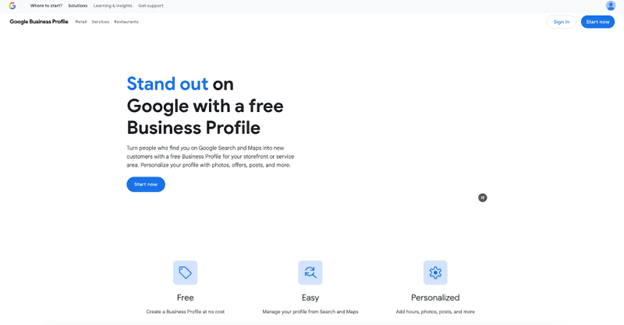
google business
A Google Business Profile allows you to manage how your business appears on Google Search and Maps.

Yelp for Business

Yelp is still a major player in local discovery and reviews. The company says its app reaches about 29 million unique devices each month and hosts more than 308 million reviews, underscoring how widely consumers use the platform to research local businesses.

Even more important for small businesses: Yelp users tend to have strong purchase intent. According to additional Yelp data, 92 percent of users are looking for a business they can return to, and 83 percent hire a business they find on the platform, making it a high-value channel for lead generation.
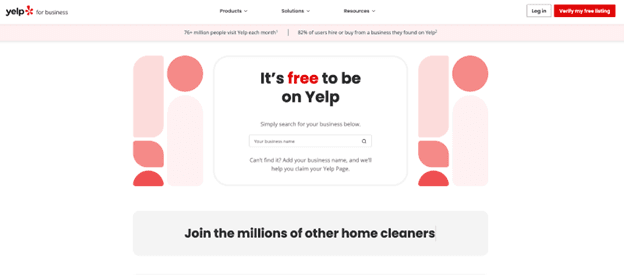
Yelp for business
Yelp for Business helps you connect with a community ready to spend.

Bing Places for Business

Bing Places for Business helps your company show up across Microsoft’s search ecosystem, including Bing search and Windows-integrated tools, and offers a bulk upload feature for businesses with multiple locations.

Bing is smaller than Google, but people still use it, especially on desktop. It represents about 7.5 percent of U.S. search traffic overall and close to 11 percent of desktop searches, so it’s worth claiming your listing to reach more local searchers.

Because Bing listings often have less competition, they can be an easy way to capture additional leads without much extra effort.
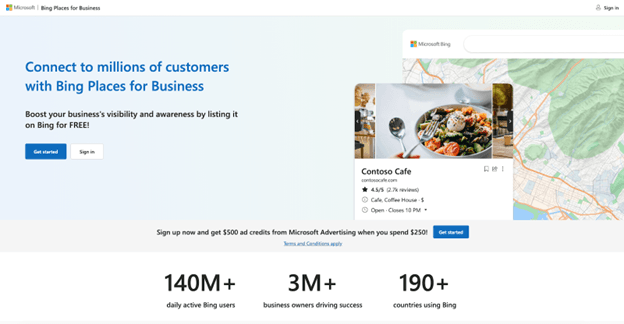
Bing for Business
Bing Places adds your business to the Microsoft search ecosystem.

Better Business Bureau

A Better Business Bureau (BBB) listing can help build trust, especially for service businesses where customers want reassurance before they hire you. BBB profiles often appear in search results and show key details like your rating, accreditation status and how complaints have been handled.

Did You Know?Did you know
You can create a free BBB profile, but accreditation costs a fee and requires a vetting process. For many small businesses, a complete free profile with accurate information and responses to complaints can still help grow customer relationships and trust.
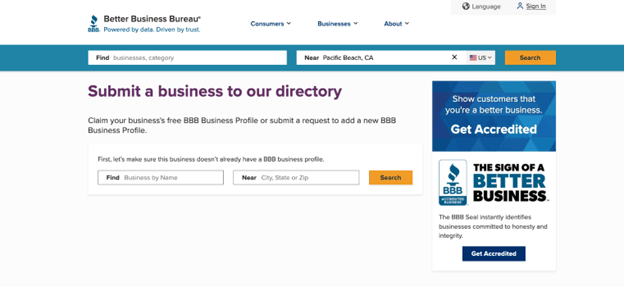
Better Business Bureau website
A BBB accreditation signals high trust to consumers.

Apple Business Connect

Apple Business Connect (formerly Apple Maps Connect) lets you manage how your business appears across Apple services. Claiming your place card (your business profile in Apple Maps that shows your location, hours, photos and contact details) helps ensure your business shows up accurately in Apple Maps and Siri search results, which is especially important for customers using iPhones and other Apple devices to find nearby businesses.
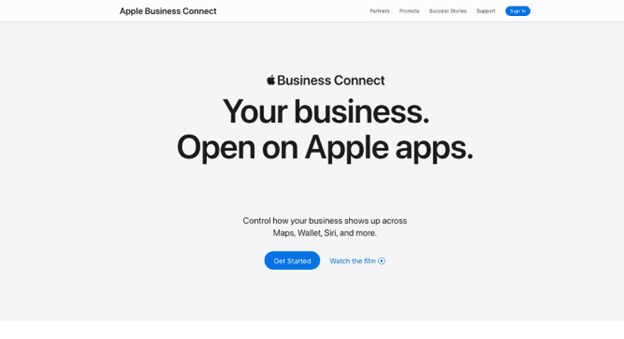
Apple Business Connect
Apple Business Connect lets you customize your place card in Maps, Wallet and Siri.

YellowPages.com (YP)

YellowPages.com (YP) is the digital version of the old Yellow Pages books that used to land on doorsteps every year. It’s no longer a primary discovery tool, but it can still help with local visibility and citations, especially for service searches. (Note that Yellow Pages Directory Inc. is a separate, unaffiliated business directory platform that can serve as a supplemental citation source.)
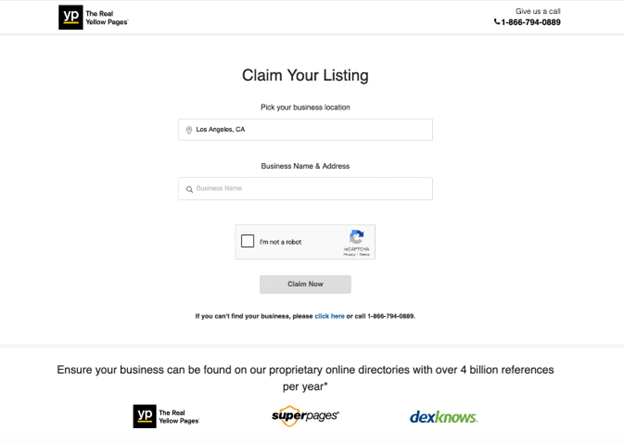
Yellow Pages
The digital version of the Yellow Pages remains a relevant citation source
FYIDid you know
Run a quick search for your business name each week to monitor and help protect your brand reputation. This makes it easier to spot new reviews, directory listings or negative mentions and respond before they impact customers.

How to optimize directory listings for maximum impact

Optimizing your directory listings goes beyond adding your name. Focus on NAP (name, address and phone number) consistency, complete profiles, strong visuals and thoughtful keyword use to improve your online brand awareness and credibility. Here are some tips:

Maintain consistent NAP information across all directories.

NAP consistency is the foundation of effective directory listings. Your brand name, address and phone number should match exactly across platforms so search engines can verify your information and customers can trust it.

“Something that’s often overlooked is keeping on top of NAP,” said Karl Blaza, founder of the digital marketing company G10 Digital. “It’s important that these are consistent across the internet, so update them across listings if they ever change. If it is too time-consuming or you’re unsure where you’re listed, you can hire companies to do it on your behalf.”

Complete and regularly update your business profiles.

Complete profiles tend to perform better than bare-bones listings. Profiles with current photos, accurate hours and a website link can build trust and drive more clicks than incomplete entries.

Regular updates also signal that your business is active. Blaza suggested going beyond basic information: “If a listing drives traffic, keep it updated with your latest products or case studies, and encourage reviews,” Blaza advised. “A well-looked-after listing will stand out compared to a poorly maintained one.”

Did You Know?Did you know
Forty-two percent of consumers trust online reviews as much as personal recommendations, according to BrightLocal. That makes accurate listings and good customer reviews crucial for building trust and driving clicks.

Include high-quality visual content.

Photos and videos can make your listings more engaging and help potential customers understand what you offer. Video content marketing, in particular, can boost visibility and trust by showing your products, services and team in action. Add images and short videos of your location, offerings and staff so customers know what to expect before they reach out.

Strategically integrate relevant keywords.

Use service and location keywords in your business description, but write for people first. A clear, natural description helps customers quickly understand what you do and can also improve how your listing shows up in directory searches.

Step-by-step listing checklist

You might already have directory profiles you didn’t create yourself. Some platforms publish placeholder listings automatically, which means you can claim the page and fix the details rather than building one from the ground up. If you haven’t done that yet, the process is usually simple.

“Businesses can create free accounts and list their business on free listing websites by providing information such as their name, website, address, phone number and social media handles,” explained Shraddha Mehta, founder of the digital marketing agency Skysail Digital. “Typically, most websites require a phone number to validate, while some ask for a video record to prove the existence and legitimacy of a business.”

This checklist can help you keep your business information consistent and accurate across platforms.

  • Claim your business page or create a new profile on each priority directory.
  • Verify ownership using the platform’s process (often a phone call, postcard or video upload).
  • Enter complete NAP information using identical formatting across all platforms.
  • Add your website URL and current business hours.
  • Write a clear business description that naturally includes your services and location.
  • Upload high-quality photos of your business, products, services and team.
  • Choose business categories that accurately reflect what you offer.
  • Include additional contact information, such as email addresses and social media accounts.
  • Add attributes like accepted payment methods, accessibility features or certifications.
  • Monitor and respond to customer reviews to maintain engagement and reputation.
  • Update listings promptly when any business information changes.

Track performance to see which platforms drive the most traffic and leads.

TipBottom line
Even though every directory is different, fill out each profile as completely as possible and keep your contact information consistent.

Common mistakes that weaken your listings

Even small missteps can undermine your business directory listing strategy. Watch out for these common issues:

  • Inconsistent NAP information: Your business name, address and phone number should match exactly across every directory. Even minor formatting differences can confuse search engines and customers. “Businesses should make sure their information is accurate and update it over time as it changes or evolves,” Mehta said. “If you rebrand, move locations or launch a new website, you must push those changes to every directory immediately.”
  • Duplicate or unverified listings: Multiple profiles for the same business location can split your online authority and hurt local search visibility. Claim and verify any listings you find to keep your presence consolidated.
  • Incomplete profiles: Listings without business hours, photos or descriptions tend to get fewer views and interactions. A complete profile builds trust and makes it easier for customers to take the next step.
  • Ignoring reviews: Unanswered negative reviews can signal poor customer service, while not encouraging positive reviews means missing credibility-building opportunities. Responding to all online reviews shows you’re engaged and attentive.
  • Inconsistent business categories: Different platforms offer different category options, but your core services should be consistent. Accurate categories help customers (and search engines) better understand what you do.
  • A mobile-unfriendly website: Many customers find directories on their phones and click through to your site. A mobile-friendly website is critical. If your website isn’t mobile-friendly, you’re likely losing potential leads before they convert.

Comparison table of top free directories

The table below compares several widely used free directories, though many other platforms on the full list can also be useful depending on your industry.

DirectoryPrimary impactIdeal use caseEase of setup
Google Business ProfileHighest local search visibilityAll businesses with physical locations or service areasEasy; requires verification
YelpCustomer reviews and discoveryConsumer-facing businessesModerate; detailed profile setup
Bing PlacesMicrosoft ecosystem visibilityBusinesses seeking broader search visibility beyond GoogleEasy; similar to Google
Apple Business ConnectiOS and Mac user visibilityBusinesses targeting Apple Maps and Siri usersEasy; Apple ID required
LinkedIn (company page)B2B networking and credibilityProfessional services and B2B companiesModerate; requires company page
Better Business BureauTrust and credibility signalsService businesses needing reputation validationModerate; verification process
FacebookSocial media marketing integrationConsumer businesses with a social media presenceEasy; business page creation
TripadvisorTravel and hospitality reviewsRestaurants, hotels and attractionsEasy; business account setup

Why free business listings matter today

Business listings still matter for local search. BrightLocal’s 2025 survey (cited earlier) shows that 83 percent of consumers use Google to evaluate local businesses, which is why showing up in directories can influence whether someone calls, visits or clicks through to your site.

Free listings can help your business:

  • Build local search credibility: Listings give search engines consistent details about your business, which makes it easier for them to verify your location and contact information.
  • Increase visibility and trust: Profiles on reputable directories make it easier for customers to find, compare and contact your business.
  • Reach customers wherever they search: Consistent information across platforms ensures your business shows up in search engines, maps and directory results.
  • Support AI and voice search discovery: Directory data also helps voice assistants and AI search tools surface local businesses in results.

Think of free online listings as digital signposts; every accurate profile makes it easier for customers to find and trust your business.

FAQs on business listings

Start with Google Business Profile, Yelp and Bing Places. These are the big platforms people actually use when they’re searching for local businesses. After that, look at industry-specific directories where your target audience already spends time, such as Angi for contractors or Tripadvisor for hospitality businesses. You don’t need to be everywhere. A few accurate, well-maintained listings will do more for your visibility than dozens of outdated ones.
Yes. Listings can help with local SEO because they give search engines consistent information about your business. That said, more isn’t always better. A few accurate listings on highly respected and reputable directories will do far more for your visibility than dozens of low-quality listings you never update.
No. Focus on 10 to 20 high-quality, relevant directories rather than chasing volume. Prioritize the platforms your customers are most likely to use and directories that are well-known in your area or industry. A small number of accurate, up-to-date listings will do more for your business than hundreds of profiles you never maintain.
Update listings as soon as any business information changes, and run a quarterly audit to check for accuracy. Monitor your NAP details across platforms and correct any inconsistencies in hours, phone numbers or addresses right away. Active businesses should also refresh photos, descriptions and offers periodically to signal that the business is current and engaged.

Skye Schooley contributed to this article. Source interviews were conducted for a previous version of this article.

Did you find this content helpful?
Verified CheckThank you for your feedback!
author image
Written by: Max Freedman, Senior Analyst
For almost a decade, Max Freedman has been a trusted advisor for entrepreneurs and business owners, providing practical insights to kickstart and elevate their ventures. With hands-on experience in small business management, he offers authentic perspectives on crucial business areas that run the gamut from marketing strategies to employee health insurance. At business.com, Freedman primarily covers financial topics, including debt financing, equity compensation, stock purchase agreements, SIMPLE IRAs, differential pay, workers' compensation payments and business loans. Freedman's guidance is grounded in the real world and based on his years working in and leading operations for small business workplaces. Whether advising on financial statements, retirement plans or e-commerce tactics, his expertise and genuine passion for empowering business owners make him an invaluable resource in the entrepreneurial landscape.