Business.com aims to help business owners make informed decisions to support and grow their companies. We research and recommend products and services suitable for various business types, investing thousands of hours each year in this process.
As a business, we need to generate revenue to sustain our content. We have financial relationships with some companies we cover, earning commissions when readers purchase from our partners or share information about their needs. These relationships do not dictate our advice and recommendations. Our editorial team independently evaluates and recommends products and services based on their research and expertise. Learn more about our process and partners here.
Learn how to build a business credit card strategy that maximizes rewards, reduces costs and keeps spending organized across multiple cards.


Business credit card rewards can provide real value for growing companies. Whether you’re earning cash back on everyday purchases, accumulating travel rewards or taking advantage of category bonuses, those perks can help offset routine business expenses over time.
The challenge is making sure each card has a purpose. Without a clear strategy, rewards can become fragmented across multiple programs, annual fees can add up and employees may use the wrong card for key purchases. The businesses that get the most value from multiple business credit cards typically assign each card a specific role and match spending to the rewards structure that delivers the strongest return.
This guide explains how to evaluate reward programs, analyze your spending, build a card lineup, manage employee cards and avoid common mistakes that can reduce the value of your rewards.
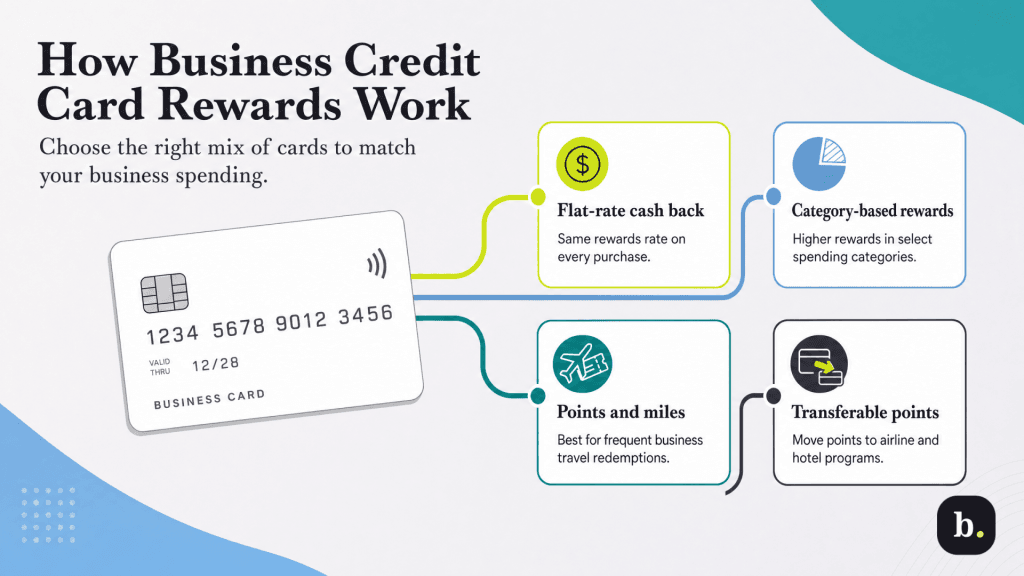
Before deciding which cards belong in your wallet, it’s important to take a look at how different rewards programs work. Some cards reward the same rate on every purchase, while others offer bonus rewards in specific categories. Understanding those differences can help you earn more from the spending your business is already doing.
Most business credit cards fall into one of four rewards models:
There’s no requirement to pick one rewards structure and stick with it. Many businesses use a mix of cards, with one card handling travel expenses, another earning bonus rewards in key categories and a flat-rate card filling the gaps.
Once you understand how different rewards programs work, the next step is putting that knowledge into practice. Businesses that get the most value from multiple credit cards don’t randomly collect cards with attractive rewards. Instead, they create a system that routes spending to the card that rewards it best.
The process is fairly straightforward: identify where your business spends money, assign each card a specific role and make sure employee spending follows the same strategy.
Optimization starts with knowing where your money actually goes. Reviewing transactions from your business bank account can make it easier to identify spending patterns. Start by pulling up the last three to six months of expenses and looking for patterns. Which categories account for the biggest share of your spending? Those are usually the areas worth focusing on first. After all, a bonus rewards rate on a category where you spend thousands of dollars each month is likely to generate far more value than an elevated rate on a category that only comes up occasionally.
Once you’ve identified your biggest expense categories, compare them against your existing cards’ rewards structures. This exercise often reveals where you’re leaving rewards on the table.
If you’re considering adding another card, here’s a useful rule of thumb: A new card should earn its place by covering a meaningful spending category that your current cards don’t reward well, especially if you’re also working to improve your business credit score. The additional rewards should clearly outweigh any annual fee and the extra management required.
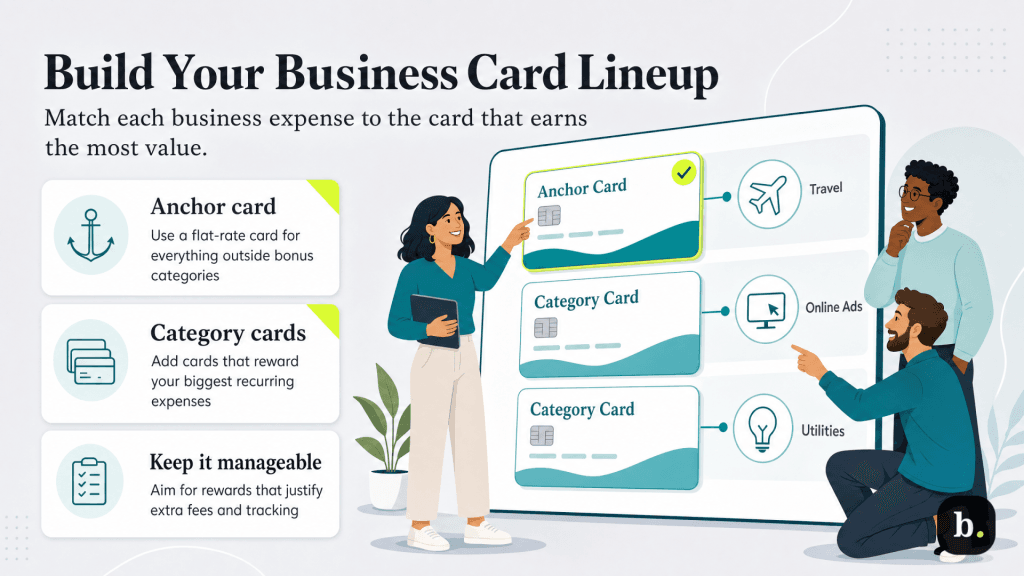
Once you’ve identified your biggest spending categories, it’s time to decide which card should handle each type of expense. Most businesses don’t maximize rewards by putting every purchase on a single card. Instead, they use different cards for different spending categories, with each card earning the strongest rewards where it’s used most.
A well-rounded lineup often includes:
The right mix depends on how your business operates. For example:
It’s easy to assume more cards automatically mean more rewards, but that’s not always the case. Every card adds another account to manage, another rewards program to track and potentially another annual fee. If a card isn’t earning its keep, it may be more hassle than it’s worth.
Some businesses prefer to keep most of their spending on cards from the same issuer because rewards are easier to pool and redeem. Others don’t mind juggling multiple programs if it means earning better rewards in more categories. Which approach makes sense depends largely on how much time you’re willing to spend managing it all.
Employee cards can dramatically increase the amount of rewards your business earns. Many business credit card programs allow rewards from employee purchases to flow into a central account rather than being split among individual users. That means everyday spending across your team can help build a larger rewards balance.
However, the more employee cards you issue, the easier it becomes for spending to end up on the wrong card. If certain cards are reserved for travel, advertising or other categories, make that clear upfront. Spending limits and category controls can help keep everything organized and support better expense management.
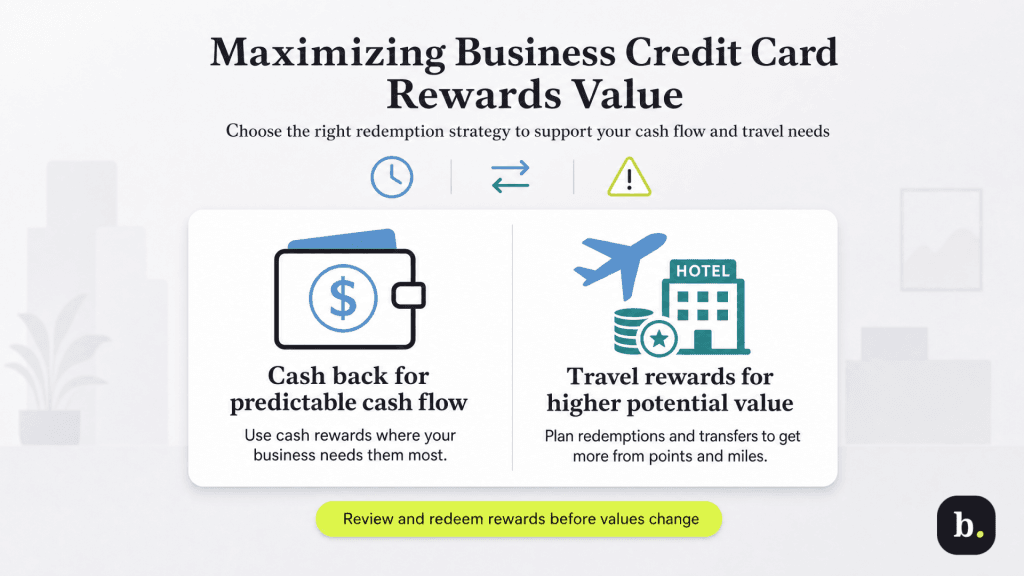
Building the right card lineup helps you earn more rewards. The next step is making sure you redeem those rewards in a way that delivers the greatest value for your business.
Consider the following decisions before cashing out points, miles or cash-back rewards.
Cash back is simple, flexible and predictable, making it a useful tool for businesses focused on cash flow. Every dollar earned has a clear value, and rewards can typically be applied wherever they’re needed most.
Points and miles can be especially appealing for businesses that travel often. In some cases, a flight or hotel redemption may deliver more value than taking the equivalent amount in cash back. The catch is that getting that extra value usually takes a little more planning. Businesses that prefer a simpler approach may be perfectly happy sticking with cash back.
Some rewards programs allow points to be transferred to airline and hotel loyalty programs rather than redeemed directly through the card issuer.
For businesses that travel often, those transfers can sometimes provide more value than redeeming rewards for cash back or statement credits. However, the best opportunities aren’t always available when you need them, so maximizing value may require some patience and planning.
One of the biggest mistakes businesses make is focusing entirely on earning rewards while paying little attention to when they’re used.
Points and miles don’t always hold the same value forever. Loyalty programs can change redemption rates, and some rewards may expire or be forfeited when an account closes. Rather than letting rewards accumulate indefinitely, review your balances periodically and redeem them when they support a business need.
Before closing any credit card account, check whether outstanding rewards need to be redeemed, transferred or converted first. In some programs, unused rewards disappear when the account is closed.
Rewards can add up over time, but it’s surprisingly easy to leave value on the table. Here are a few mistakes businesses make when trying to get the most from their credit card rewards:
The most effective rewards strategy isn’t necessarily the one with the most cards. It’s the one that matches the way your business actually spends money. By identifying your biggest expense categories, assigning each card a clear role and redeeming rewards thoughtfully, you can earn more value from purchases you’re already making.
Review your card lineup periodically as your business evolves and continue building business credit through responsible card use. Spending patterns fluctuate, rewards programs change and new card options become available. Above all, remember that rewards only create value when balances are paid in full. A focused lineup built around your real expenses will usually outperform a complicated collection of cards chosen primarily for welcome bonuses.
