Business.com aims to help business owners make informed decisions to support and grow their companies. We research and recommend products and services suitable for various business types, investing thousands of hours each year in this process.
As a business, we need to generate revenue to sustain our content. We have financial relationships with some companies we cover, earning commissions when readers purchase from our partners or share information about their needs. These relationships do not dictate our advice and recommendations. Our editorial team independently evaluates and recommends products and services based on their research and expertise. Learn more about our process and partners here.
Your brand's longevity depends on your team's customer service interactions.

Customer service is crucial for business success. It strengthens your company’s reputation and helps you earn repeat business and frequent referrals. Consistently providing excellent customer service is the best way to retain customers, boost satisfaction and grow your business.
We’ll outline 11 essential components of excellent customer service and share how you can implement these best practices across your support channels, sales process and day-to-day operations.
Businesses today can’t afford poor or even mediocre customer service. According to Zendesk’s 2026 CX Trends Report, 83 percent of consumers believe the customer experience could be far better than it is. And they’re not waiting around to find out: 75 percent say they’ll look for help elsewhere after just two or three negative support experiences — a clear warning that brands have very little margin for error.
Unhappy customers are also more likely to share their negative experiences with others, amplifying the damage to your brand reputation. And adequate customer service isn’t enough. Your whole team needs to consistently delight customers. Consider the following 11 elements of excellent customer service as you train your support team and weave these best practices into everyday operations.
Customer retention is critical, so every customer deserves to be treated as a vital business asset. Set clear expectations so your team understands that customer satisfaction is always the No. 1 priority.
Consider the following ways to prioritize your customers:
When a customer contacts your business about a problem, your customer service team must respond with empathy. According to the ACA survey cited above, 78 percent of consumers say having employees show genuine empathy is a crucial part of great service. Representatives must recognize and acknowledge that the customer has experienced some pain — whether physical discomfort, inconvenience, frustration or another form of harm — due to buying your product or service.
Here’s how to take an empathetic approach:
It’s OK to make a mistake; after all, we’re all human. However, when a business messes up, frustrated customers will expect the company to acknowledge it. Knowing when and how to apologize — and how to make things right — is essential.
Train your customer service teams on the following best practices for apologizing:
And it’s worth the effort. In the ACA report, 81 percent of customers said they’d consider returning to a business that took real steps to make amends for a bad experience. Owning the mistake and addressing it thoughtfully goes a long way toward rebuilding trust.
Ensure your customers can reach you when they need a problem resolved or simply want a listening ear. Being reachable means the following:
Responsiveness is at the heart of great customer service. When someone reaches out — whether they’re confused, frustrated or just trying to check something off their to-do list — they want to know you’re paying attention. Train your team to return every email, call and message promptly, even if the full answer will take more time. A quick acknowledgment goes a long way toward reassuring customers that they’re not being ignored.
And that reassurance matters, because response time expectations keep growing. For example, a LeadPort survey found that 46 percent of customers expect companies to respond to emails in under four hours, while 12 percent want a reply within just 15 minutes. Social media raises the stakes even more. According to Sprout Social’s 2025 Index, 73 percent of consumers say that if a brand doesn’t respond on social, they’ll buy from a competitor.
The good news: You don’t need a huge team to meet these expectations. Simple touches, like automated customer service emails, live chat options or offering a callback when phone wait times run long, show customers you’re on it. Those small moments of responsiveness build trust, calm frustration and set the tone for a smoother service experience.
Customer service depends on strong communication skills. Even if your team knows the basics (responding promptly, apologizing when appropriate and following best practices), those habits won’t translate into happy customers if agents don’t know how to listen, interpret and address what the customer is actually saying.
Clear, empathetic communication is essential to great service, but it can slip through the cracks when things get busy. Remind your team to slow down a bit: Listen first, ask questions and make sure they truly understand the customer’s issue before offering a fix. People feel more respected when they know they’re being heard, not rushed.
Many customer issues have straightforward fixes, but not all of them. Sometimes resolving a problem takes a little creativity and the confidence to try something unconventional. Encourage (and empower) your reps to think outside the box and train them on creative problem-solving.
For example, say a customer bought a large, high-ticket item that broke or malfunctioned after they brought it home. In this case, it wouldn’t be practical for them to ship the item back for an exchange or repair. Instead, a quick-thinking customer service rep could refer the customer to a local repair shop and offer to credit the customer’s account for the cost of the repair.
Empowering reps to craft thoughtful, creative solutions shows customers that your company will go above and beyond to make things right. It also gives your support team more ownership of their work — and that sense of agency can boost morale in a big way.
Efficient customer service is an admirable goal, and customers value it. In fact, in the ACA survey mentioned earlier, 82.4 percent of respondents cited “efficiency” as one of the top three words that describe excellent customer service. But efficient doesn’t mean hurried. A fast resolution should never come at the expense of a customer feeling heard or respected.
Customers can tell when a rep is rushing through an interaction. It can make them feel unimportant, dismissed or even like an inconvenience. Instead, encourage your team to strike the right balance: Keep the conversation focused, but allow space for brief pleasantries and genuine rapport before diving into the issue.
Reps should take the time to fully understand the customer’s concern and offer the best solution possible, not just the quickest one. After resolving the problem, a simple closing loop (“Is there anything else I can help you with today?”), along with a sincere thank-you and warm goodbye, leaves a lasting positive impression.
Today’s customers expect to reach support in the way that’s most convenient for them, whether that’s a phone call, an email, a live chat window, a support ticket or even a social media DM. Offering multiple ways to get help shows that your company is flexible and accessible, which goes a long way toward building goodwill.
Customers also expect those channels to work together. Nothing frustrates people more than switching from chat to phone or email and having to start the story all over again. To create a smoother experience, aim for a true omnichannel approach — one where customer history and context follow them wherever they go. When customers can move between channels seamlessly, without repeating themselves, their confidence in your service grows.
Great customer service feels personal. Reps should come into every conversation with as much context as possible, including previous purchases, past support interactions and any important notes about the customer’s history. When agents can see the full picture, they’re better equipped to solve problems and make customers feel valued.
And customers notice the difference. In the ACA survey, 84 percent of customers said they prefer companies that offer a personalized service experience, with Gen Z valuing personalization even more than other generations. It’s a clear signal that personalization isn’t a “nice to have” — it’s an expectation.
After pulling up a customer’s account, reps should reference personal information by saying something like, “I see that you have been a customer for 10 years. We really appreciate your business!” or “I see that you called us last week. Is this the same problem you experienced previously or a new issue?”
Your CRM and point-of-sale (POS) systems make this possible by giving reps fast access to buying patterns, communication history and account details, so personalization becomes the norm, not the exception.
The customer journey, including every service interaction, should feel consistent and frictionless. Customers want to experience your brand as one cohesive unit, not a patchwork of disconnected touchpoints. When the quality of service is steady and reliable, customers feel more confident doing business with you.
Prioritize consistency in the following ways:
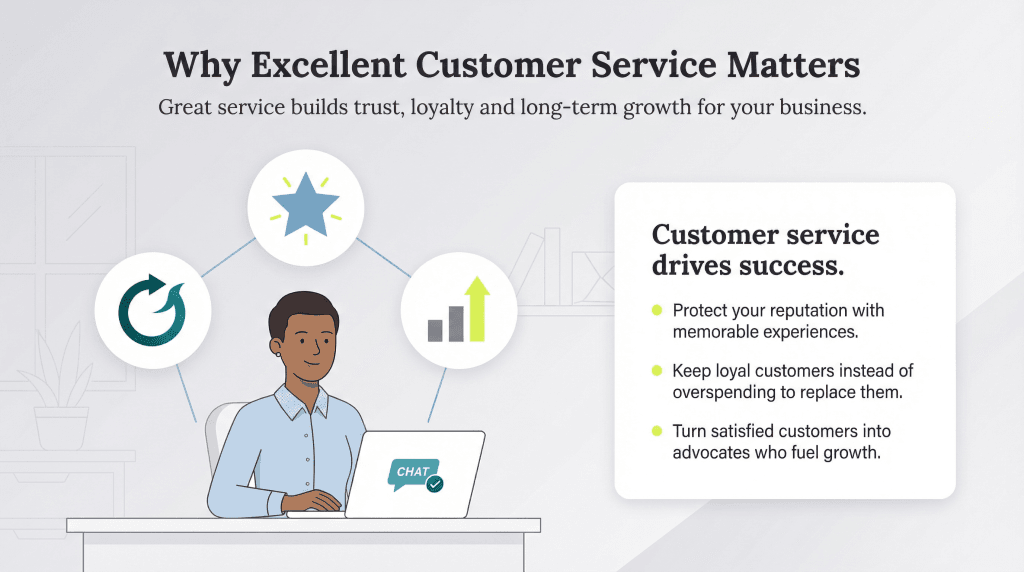
Excellent customer service isn’t just a “nice to have,” it’s one of the most powerful drivers of business success. Here’s why it matters so much:
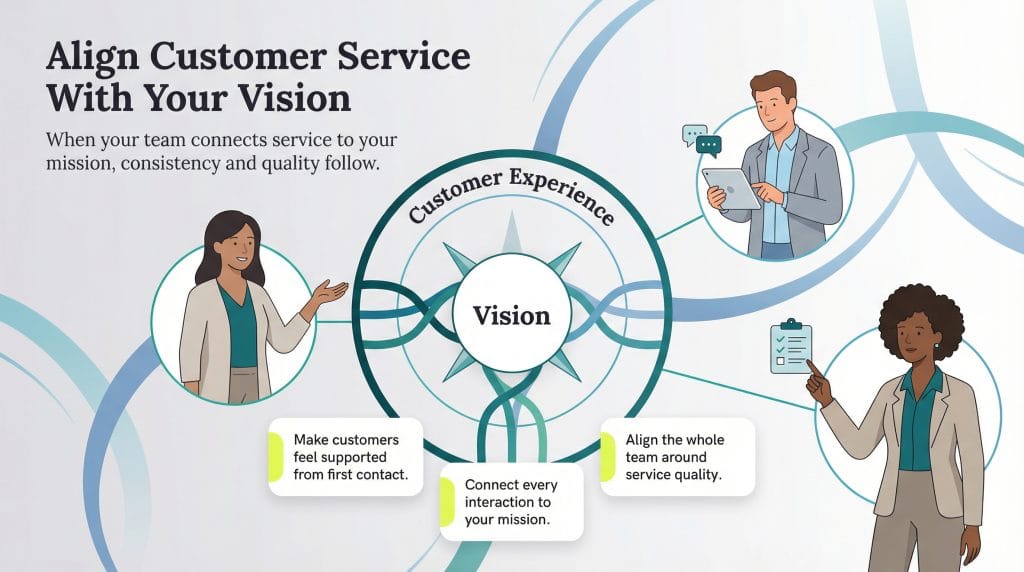
How you care for your customers shapes how they perceive your business. Prioritize making people feel supported and valued from the very first interaction and throughout their entire journey with you.
Your customer service philosophy should flow naturally from your larger company vision. When your team understands what your business stands for — and how customers fit into that mission — it becomes much easier to move in the same direction. Encourage every employee to bring their best to each interaction and emphasize that every part of the customer experience matters. When everyone is aligned, consistency and quality become the standard.
Jennifer Dublino contributed to this article.