Business.com aims to help business owners make informed decisions to support and grow their companies. We research and recommend products and services suitable for various business types, investing thousands of hours each year in this process.
As a business, we need to generate revenue to sustain our content. We have financial relationships with some companies we cover, earning commissions when readers purchase from our partners or share information about their needs. These relationships do not dictate our advice and recommendations. Our editorial team independently evaluates and recommends products and services based on their research and expertise. Learn more about our process and partners here.
While audience size matters, the true driver of influencer marketing success lies in the strength of those relationships.

Traditional advertising often relies on a broad-reach strategy: Create a campaign and broadcast it to the widest possible demographic. However, with today’s social media marketing, the priority is personalized engagement and building connections with the audience.
Influencer marketing takes the personal approach a step further. Respected influencers need their followers’ trust, so they tend to promote high-quality, reputable products and services. Most won’t risk their reputations just to make a quick buck. Establishing the right partnerships creates a mutually beneficial dynamic where your brand awareness grows and the creator’s authority is reinforced. We’ll examine the benefits of building quality relationships in influencer marketing arrangements and share tips for improving both new and existing relationships.
Influencer marketing is a digital marketing strategy in which brands partner with social media personalities to promote products or services. Influencers build large, loyal followings on social platforms. While some celebrities, such as actors and singers, are influencers, “internet-famous” content creators can be just as powerful. They’ve amassed significant audiences who trust their advice and recommendations.
In influencer marketing arrangements, a brand pays an influencer to endorse or mention its offerings in social media posts. Their clout often depends on audience size, as well as engagement and other factors. While tiers can vary slightly by platform, here is how the industry generally categorizes influencers:
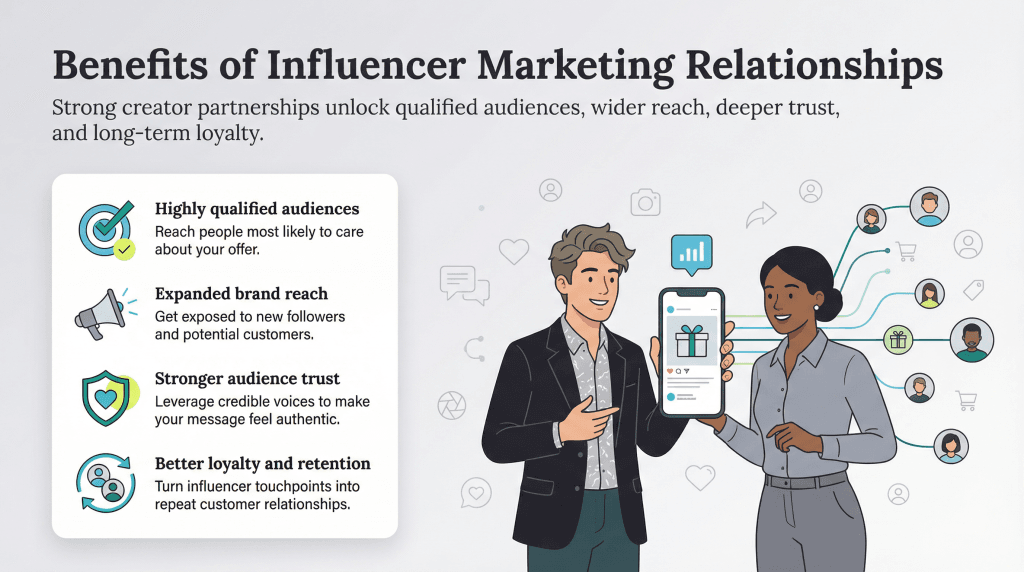
Building relationships is an essential part of influencer marketing. When you build a relationship with an influencer, you also strengthen relationships with your target audience — if you choose the right social media star to partner with.
Taco Bell’s collaboration with Doja Cat is a great example of how the right brand relationship can work on all levels. This relationship grew out of the artist’s viral push to bring back the Mexican Pizza, turning a genuine fan moment into a full campaign that resonated across social media. The partnership generated massive online buzz and strong positive sentiment, showing how authenticity, not just reach, can drive real marketing momentum.
While you may not have a massive budget to sign a star, choosing the right influencer relationships can positively affect your bottom line. Here are some concrete ways influencers help businesses grow when brand relationships are strong.
There’s a big difference between marketing to a broad audience and reaching the people most likely to care about what you offer. The right influencer can help you connect with individuals who are already interested in your space and more inclined to engage with your product or service.
Influencers can help you build an audience that feels aligned with your brand. When you and your influencer develop a strong working relationship, they’re more likely to become genuine advocates for what you do. That enthusiasm tends to come through naturally in their content, helping you reach followers who already trust their perspective and may be more open to becoming customers, which can ultimately increase sales.
Strong influencer relationships can help increase brand visibility online and reinforce your brand’s credibility. Every time an influencer engages with your business or shares a post, they introduce you to audiences you likely wouldn’t reach on your own.
As trust deepens between your brand and the creator, they may feel more comfortable reviewing your products or sharing unboxing content in a way that feels natural to their audience, helping expose your business to potential customers.
Consumers are increasingly turning to creators for inspiration and validation before buying, and trust is a significant factor. In fact, according to the 2025 Edelman Trust Barometer, 58 percent of respondents said they trust influencers to give accurate information about a brand, similar to the trust they place in journalists and company CEOs.
When you build a real relationship with an influencer, the way they talk about your brand feels more authentic. Their audience already knows their likes, preferences and overall “vibe,” so brand mentions come across less like ads and more like something they’d naturally share. That kind of authenticity makes people more comfortable paying attention and sometimes more willing to try something new.
Influencer marketing can also be a way to foster trust if you’re specifically trying to build a brand that resonates with Gen Z and millennials. According to Statista, 40 percent of Gen Zers turn to TikTok to search for products like gift ideas and beauty items instead of traditional search engines, showing how much product discovery now happens through creators.
In addition to generating more sales leads, influencers you’ve bonded with could introduce you to other businesses and influencers in the space. You can gain new connections that benefit your business in unexpected ways.
Here’s an example of how influencer marketing can help brands build new connections: Marketing software company Traackr worked with the online travel site Travelocity to establish more human, authentic relationships with its audience. Travelocity wanted to challenge the perception that online travel agencies are cold and transactional. Together, Traackr and Travelocity collaborated with influencers to create content that boosted brand visibility and invited creators to value-driven events designed to build rapport.
The Travelocity team maintained ongoing strategic partnerships with key influencers, joining forces for promotions like the Travelocity Roaming Gnome.
It’s not enough to maintain good relationships with influencers. You must prioritize relationships with the audience members who become your customers. Win them over with your product quality and excellent customer service. If you don’t first establish customer relationships, buyers may abandon your brand if the influencer stops promoting your product.
When you build relationships with influencers and customers, you can improve customer retention via social media and earn repeat business.
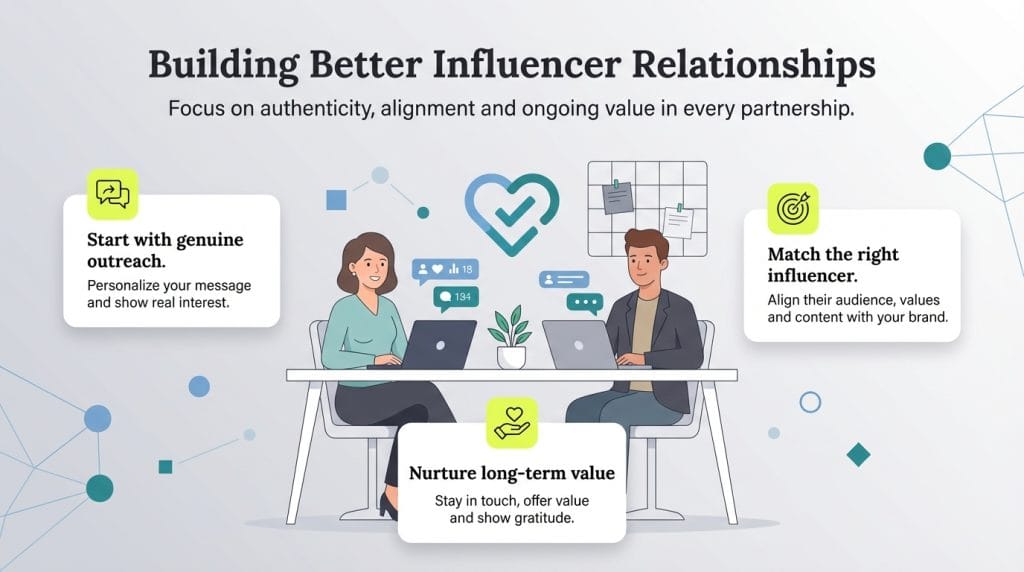
Your influencer marketing relationships must be genuine. Consider the following tips for building authentic, trusting influencer marketing relationships:
Influencer marketing costs vary widely by influencer clout, platform, agency fees, usage rights, exclusivity and more. Pricing is fluid and often negotiated based on engagement rates rather than just follower counts. While there’s likely an open-ended budget for celebrities and megainfluencers, nanoinfluencers typically command lower fees. New influencers may even accept compensation in the form of products, discounts and giveaway entries.
Below are estimated ranges based on industry benchmark data from Impact.com. Note that typical influencer fees have increased alongside demand, especially for short-form video content.
Actual rates vary widely based on niche, engagement and campaign scope, and many small businesses still work with nano- and microinfluencers at lower negotiated rates.
Platform | Nano | Micro | Midtier Price per post/video | Macro Price per post/video | Mega/ Price per post/video |
|---|---|---|---|---|---|
$500 to $2,000 | $2,000 to $8,000 | $8,000 to $20,000 | $20,000 to $45,000 | $45,000+ | |
TikTok | $500 to $2,000 | $2,000 to $8,000 | $8,000 to $20,000 | $20,000 to $45,000 | $45,000+ |
$500 to $1,500 | $1,500 to $6,000 | $6,000 to $15,000 | $15,000 to $40,000 | $40,000+ | |
X | $500 to $1,000 | $1,000 to $6,000 | $6,000 to $15,000 | $15,000 to $30,000 | $30,000+ |
YouTube | $1,000 to $2,500 | $2,500 to $9,000 | $9,000 to $25,000 | $25,000 to $49,000 | $49,000+ |
Many brands also pay creators strictly for user-generated content (such as images and videos) to use in ads, without the creator posting it to their own feed. Compensation varies widely depending on usage rights, production quality and editing requirements.
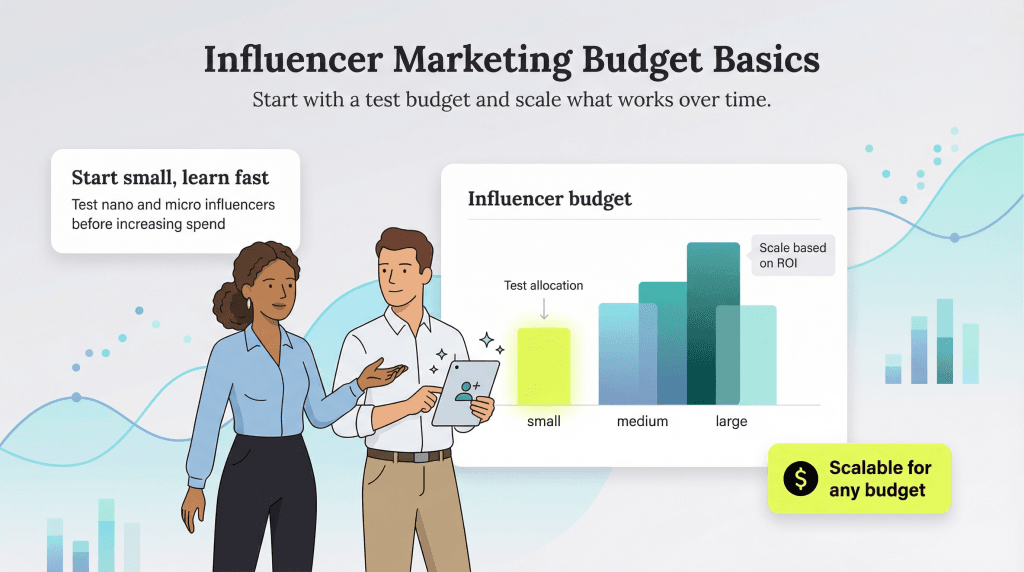
How much you decide to spend on your influencer marketing campaigns will depend on your budget and numerous other factors. According to Influencer Marketing Hub, the influencer marketing industry reached an astounding $32.55 billion in 2025, reflecting continued growth and investment across businesses of all sizes.
However, small businesses can still compete. Many brands begin with a small test budget to see how nanoinfluencers and microinfluencers perform before investing more heavily. That approach reflects how influencer marketing has become more accessible to companies of all sizes. Across industries, marketers continue to see solid results from well-planned campaigns, whether they’re partnering with niche creators or larger personalities.
Jennifer Dublino contributed to this article. Source interviews were conducted for a previous version of this article.