Written for the leaders, owners and professionals of the 11 million businesses with between $50,000 and $50 million in revenue.
|
The marketing team for Alien: Romulus is bursting with creativity.
“Facehuggers,” the crab-like extraterrestrial creeps first seen in Ridley Scott’s original 1979 Alien — which latch onto victims’ faces to lay eggs in their mouths — recently appeared in the streets of New York. Fortunately, they were well-animated puppets and the convulsing victims were paid actors, one of whom was even rigged with a prosthetic “chestburster.”
It is New York, though, so while the shock viral stunt generated plenty of social media buzz, we can only assume that most pedestrians saw at least three weirder things on their way to work that same day.
Read business.com’s guide to Aggressive Marketing Strategies for Startups in Any Industry.
|
|
|
Public libraries: Why they’re the quietest business partners
Finding Fortunato: The story of “the Rolex of chocolate”
Yoga: A (literal) “corpse pose” workshop costs $1,200
|
|
|
Why Your Local Library Is the Quietest Business Partner
|
There are many well-known reasons to get a library membership, from books and magazines to museum discounts and community resources. But there’s one reason we might be sleeping on: help with starting a business.
The American Library Association has a $2 million initiative (funded by Google) called Libraries Build Business, which provides marketing and accounting classes, coworking and meeting spaces, mentorship opportunities, and grants up to $150,000. “LBB projects have impacted more than 15,000 small business owners and entrepreneurs across the United States,” the ALA explains.
Libraries also give you free Wi-Fi and access to otherwise expensive business, academic, and research journals, which you might even be able to read at home via apps like BrowZine. And while you might associate libraries with ancient microfilm stacks and Xerox machines, some provide access to surprisingly modern equipment like 3D printers and robust makerspaces.
The University of Texas at Austin estimates that public libraries provide a 4x return on investment to communities per dollar spent.
“Indirectly, businesses of all sizes will benefit from strong libraries [through] a more educated populace and a stronger, more vibrant community,” says Derrick Casey, the former director of McKinstry Library at Lincoln College in Illinois. “Plus, on the flip side, many libraries are highly engaged in offering resources for jobseekers, helping create a robust workforce for those businesses to draw from.”
After building your business through a public library’s entrepreneurial programs, you can even pay it forward by participating in them as a knowledgeable expert, fostering the local business ecosystem.
“Businesses and libraries are on different sides of the profit/nonprofit spectrum, but smaller businesses have to engage in their communities to succeed,” Casey says, “and libraries are part of that tapestry.”
|
|
|
Manage your team and pay your employees with Gusto
|
When it comes to taking care of your employees, you should be doing it with gusto.
And thanks to Gusto’s HR software, you can! It centralizes helpful features, allowing you to manage your payroll and administer employee benefits in one place, as well as track professional development progress and extend your employees the growth opportunities they want. Look to the future, too, with hiring and onboarding tools that make it easy to select the right candidate and grow your team with purpose.
See the difference that a comprehensive HR management software can make in your business, when you sign up for Gusto today.
|
|
|
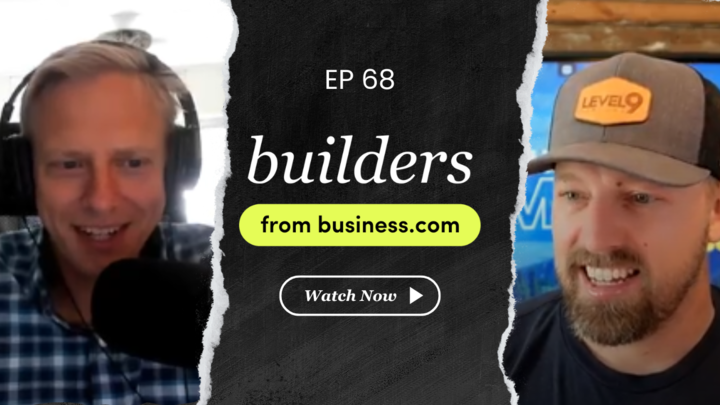
Today’s podcast conversation is Joe Rare, owner and CEO of Level 9 Virtual, on outsourcing as a CEO, the importance of courage, and the mental aspects of entrepreneurship. Joe shares his experiences in founding Level 9 Virtual and highlights the unique services offered by his virtual assistants.
Watch the episode on YouTube or listen on your favorite audio platform.
|
Finding Fortunato Tells the Story Behind ‘The Rolex of Chocolate’
|
|
|
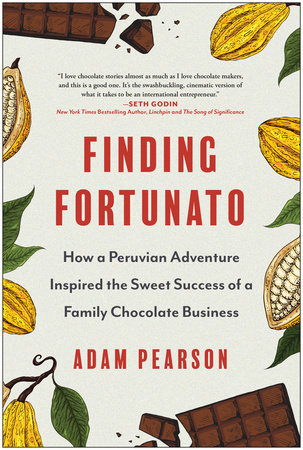
(Source: Penguin Random House)
|
Some startup stories begin in a Harvard dorm room or Silicon Valley basement. Fortunato Chocolate’s began deep in a Peruvian jungle with the discovery of an uber-rare cacao bean, which Anthony Bourdain featured on Parts Unknown and a Swiss pastry chef called “the Rolex of chocolate.” It’s detailed in co-founder Adam Pearson’s new book Finding Fortunato, which often reads more like an adventure log than a business manual.
What can non-chocolatiers take from this? Lessons in letting the quality of your product market itself, treating your partners ethically, and — perhaps most relevant to the moment — streamlining your supply chain.
“Any industry that has a lot of brokers and distributors is ripe for disruption,” Pearson tells b. “Be the only company … between the manufacturer and the customer, cut everybody else out, and decide how to use the profits. … Our book is a detailed case study in how to do this.”
(Ah, the sweet taste of success.)
|
Learn Yoga By Stretching Actual Human Remains for Only $1,200
|
|
|
Most yoga classes end in Savasana, or “corpse pose,” but now yoga (and Pilates, etc.) instructors can actually pose corpses.
According to The New York Times, dissection workshops for fitness professionals — which cost about $1,200 — are designed to deepen their understanding of human physiology. Attendees report that manipulating real abdomens, fascia, and IT bands can offer insights far beyond what’s possible from reading a textbook or twisting a mannequin. (This is why such classes have long been a key element of medical school.)
So the next time a yoga teacher or personal trainer gives you a helpful adjustment, maybe ask if they’ve washed their hands first?
|
|
|
Written by Dan Ketchum and Tess Barker.
|
|
|
|