Written for the leaders, owners and professionals of the 11 million businesses with between $50,000 and $50 million in revenue.
|
For the past few years, work-life balance and flexible working arrangements have dominated the business culture conversation. Even as return-to-office policies rolled out, many leaders had — in public, anyway — adopted the “you catch more flies with honey than vinegar” approach.
So, former Google CEO Eric Schmidt turned heads this week when he told a Stanford University audience, “Google decided that work-life balance and going home early and working from home was more important than winning.” He added that “you’re not going to let people work from home … if you want to compete against the other startups.”
Schmidt later retracted the comments, calling them an “error.” Whatever his true feelings, most companies now balance in-office and remote employees. For more info, read business.com’s guide to Remote Work Best Practices.
|
Tipflation: Are we tipping more … or just more often?
Get outside: Research shows it’ll recharge your thinking
Road House: Hire fast when you find a knockout candidate
|
|
|
Tired of Tipflation: Are We Tipping More or Just More Often?
|
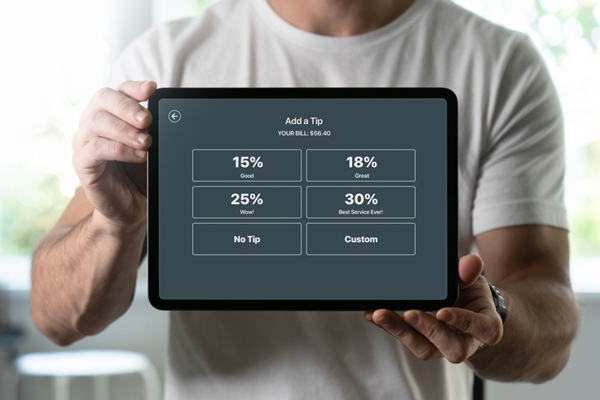
It’s no shock that customers are experiencing tip fatigue. To the average Joe and Jolene, it feels like iPad screens keep asking for bigger and bigger gratuities, rising to the level of “emotional blackmail.”
But for all the public consternation, are we actually leaving bigger tips?
According to new data from POS solutions company SpotOn, the average tip for 2024 is 19% — identical to last year’s figure — and only a fifth of U.S. service workers expect more than 15% extra. That was the standard amount before COVID’s inflationary spike.
So, the problem isn’t your waiter’s greed. What’s changed, then?
It might not be the higher percentage of tip requests but rather the higher frequency. Nearly three-fourths of Americans say that tipping is expected in more places nowadays, Pew found. While we’re used to tipping in restaurants — 92% of Americans “always or often leave a tip” when dining in — only a quarter of us feel compelled to tip a coffee shop barista.
That’s not even getting into the weirdness of tip requests at sports stadiums and self-service kiosks. No wonder two-thirds of Pew’s respondents feel uncertain about when and how much to tip lately. (Is the kiosk splitting its tips with any humans? Will its feelings be hurt if we decline?)
Look beyond the iPads, though, and it’s the same as it ever was: 77% of Americans say the amount of their tip still boils down to the quality of service. Even if more types of businesses feel comfortable asking for gratuities, they still need to leave customers satisfied. Just a tip.
|
|
|
Limited-Time Business Card Offer For Up to $1,500 in Free Travel!
|
With a signup bonus of up to 120,000 points once spend requirements are met, this travel rewards business credit card offers substantial value for both new and experienced travelers. These points can be worth over $1,500 when redeemed through the card’s travel portal or even more when transferred to various airline and hotel partners. This card earns up to 3x on qualified purchases in key business categories. It also includes valuable travel benefits like no foreign transaction fees, primary rental car insurance, and coverage for trip cancellations and delays, making it an ideal choice for business owners looking to maximize their travel rewards.
|
|
|
Get Outside to Recharge Your Thinking
|
Dr. Ben Baran is an associate professor at Cleveland State University and co-founder of Elevating What Works.
As a manager, it’s important to have fresh thinking and energy to solve problems and figure out better ways of doing things. And sometimes it takes a walk outside, especially in nature, to get that mental recharge.
Getting yourself outside improves your thinking for two reasons. First, it separates you from workplace distractions: what you see, hear, and feel all around you. People can’t interrupt or distract you, especially if you ignore your phone for everything except emergencies. That frees up your brain to relax and wander.
Second, research suggests that spending time in nature helps boost both working memory and cognitive flexibility. This increases your ability to recall information and think in different, creative ways. That can benefit you both in your professional and personal lives.
Does walking outside down a busy city sidewalk deliver the same benefits?
Interestingly, not as much — being in natural environments is better. We don’t know exactly why, but one reason might be that natural environments give us more relaxing scenes. Still, you don’t need to go on some remote trip; many cities have parks, waterfronts, or other natural outdoor opportunities.
For many managers, it might not be possible to take a short break in nature during the workday. If that’s your situation, getting out during nonworking hours might be your best option. That could be an 18-hole round of golf, but it doesn’t have to be. Start small and build simple outdoor experiences into your routine when the weather permits. Your brain will thank you.
|
|
|
The Road House Recruiter: Hire Fast When You Get a Knockout Candidate
|
When you find the right person to “take it outside,” don’t take your precious time.
Hiring the wrong employee is a costly mistake. With 6 in 10 job candidates dropping out of consideration due to a long hiring process, however, recruiters might have a problem with too much talk, and not enough action.
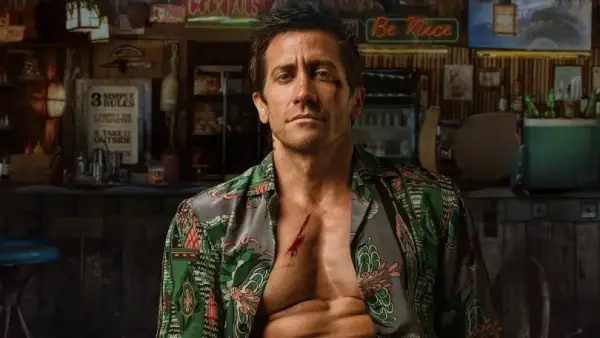
So, let’s turn to Amazon Prime’s 2024 Road House reboot, starring Jake Gyllenhaal, which packs a punch along with a valuable hiring lesson.
Ex-UFC fighter Elwood Dalton (Gyllenhaal) earns what he can at underground fight clubs. Meanwhile, roadhouse owner Frankie (Jessica Williams) needs a new head bouncer to deal with all the unruly guests and gang members terrorizing her establishment. When Frankie sees Dalton fight, she offers him a job on the spot — no personality quizzes or six rounds of interviews needed — because his aptitude is self-evident.
From Dalton’s first day on the job, the roadhouse’s situation improves. He even becomes a teacher to the junior bouncers, providing much-needed structure.
If Frankie had asked Dalton to sit for multiple panel grillings via Zoom or kept him on the back burner for more résumés to come in, he might’ve entertained other job opportunities and walked away. But Frankie knew she’d found a talented candidate who checked off many of her requirements. She didn’t let “perfect” be the enemy of “good”; she let Dalton be the enemy of evil.
|
|
|
On Aug. 16 in Business History:
|
- 1896: Gold was discovered in the Yukon, drawing 100,000 prospectors hoping to strike it rich.
- 1898: Hate roller coasters? Blame Edwin Prescott, who patented the first one, leading to an estimated $3.7 billion global market.
- 1954: Sports Illustrated debuted. It was most recently sold for $110 million in 2019.
- 1988: Think AI began with ChatGPT? Thirty-six years ago, IBM introduced its first AI software.
- 1989: A solar flare affected microchips, bringing Toronto’s stock market to a halt.
|
|
|
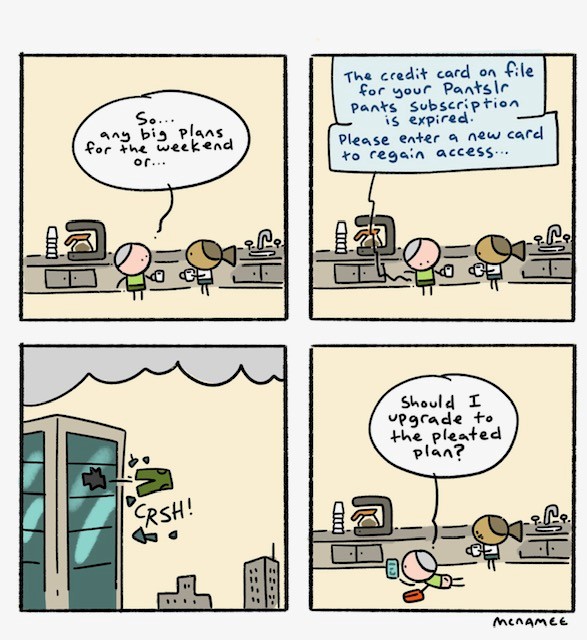
Written by Dan Ketchum and Carlos Rosario Gonzalez. Comic by John McNamee.
|
|
|
|