Written for the leaders, owners and professionals of the 11 million businesses with between $50,000 and $50 million in revenue.
|
We all know that money can’t buy happiness, right? A famous 2010 study from Nobel Prize-winning economists even concluded that emotional well-being plateaus at $75,000 per year (or approximately $108,000 adjusted for inflation).
There’s just one problem: A 2022 follow-up study from one of those same economists revised the figure upwards to $500,000 per year. And now, Wharton School research has found that happiness keeps increasing forever with more and more cash; billionaires are even happier on average than people earning half a million bucks annually.
So, perhaps Charles Dickens’ A Christmas Carol was a lie — Ebenezer Scrooge would’ve been the jolliest fellow in town — but we can take comfort that as our own enterprises grow, we’ll probably feel terrific.
|
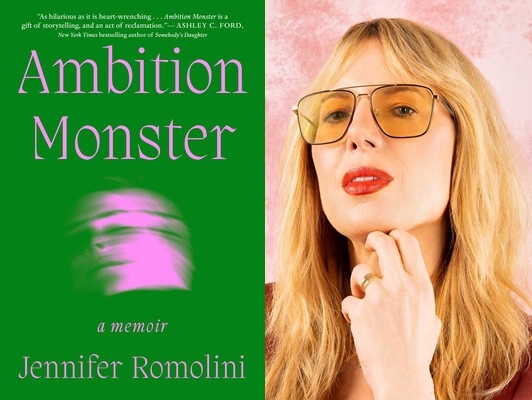
Ambition Monster: Jennifer Romolini talks C-suite burnout
Exit Stage: How to find the right buyer for your business
Apples to apples: Chemical engineer now hunts for “lost” fruit
|
|
|
Ambition Monster: Jennifer Romolini Talks C-Suite Burnout
|
(Source: Simon & Schuster)
|
In the 2010s, Jennifer Romolini had reached the top of the corporate media ladder. With high-profile positions at Condé Nast and Yahoo — and as chief content officer for Shonda Rhimes’ Shondaland.com — Romolini appeared wildly accomplished and personally fulfilled. Except that she was falling apart, mentally and physically, from all the stress, caffeine, and never logging off. (So much for that Wharton study above.)
In Romolini’s acclaimed new memoir Ambition Monster, she looks back at her personal burnout journey — she even needed vocal cord surgery due to overuse — and how it reflects a wider broken workplace culture.
b.: When did you realize that you needed to change your relationship to work?
Romolini: I’d been feeling an inner rot for years. I just had not conceived of the idea that I could do something else. … I didn’t care about taking care of myself. I thought of myself as a machine built for work … even after a doctor had told me not to, even after I knew the stakes — that I could potentially have stopped being able to talk …
I kept going because [I thought], “How can I let this project down?” You start to see your own sickness, that this is not sustainable.
b.: What is a typical psychological profile that can lead to workaholism?
Romolini: Workaholism is not as studied as it probably should in the rise-and-grind culture of the United States. But the little research that is available makes a very clear connection [with] childhood trauma … when a child is exposed to things that they are not developmentally ready for [such as] caretaking a parent. … They become a mini-adult way too young. That sort of drives them throughout their lives.
b.: Society doesn’t seem to recognize achievement as a potential addiction like substance abuse. How should we reframe our outlook?
Romolini: I think we need to interrogate our behavior and our decisions. Why are you going above and beyond for a job? Why do we always bring an “A” game to everything when a “B” game will probably suffice? … I no longer go full force in anything that doesn’t light me up, that I’m not getting energy back from. … So, I think that’s how we start to change.
b.: Knowing what you do now, what would you tell your younger self?
Romolini: “Slow down” is my No. 1. … What matters is how you feel and your relationships. Those are the significant things that you’re going to remember when you die. You might remember some work you were really proud of, but most of it, you won’t. Try to have some fun along the way. Try to give it some levity …
This interview has been edited for length. Read the full Q&A at business.com.
|
|
|
Earn more bread with Toast POS
|
Restaurants have unique point-of-sale (POS) needs, from turning tables quickly to connecting front and back of house. Restaurateurs also need powerful reporting capabilities to help them manage inventory, reduce waste and analyze sales to make strategic menu changes.
Enter Toast, a powerful POS system designed specifically for restaurants, cafes, bars, food trucks, and food-service businesses of all kinds. Waitstaff can navigate Toast’s user-friendly software easily on the dining room floor, and itsstress-tested hardware can stand up to high heat and spills in a kitchen environment.
New restaurant on a budget? No problem! Toast offers a Starter Kit that includes one hardware terminal at no cost and no interest, so you can get started now and pay later. See why more than 112,000 restaurants trust Toast with everything from POS to payroll.
|
|
|
How to Find the Right Buyer for Your Business
|
You didn’t build your business in one day, so selling it won’t happen in one day either. Finding the right buyer will take some time.
Most business owners, once they’ve decided to sell, perform some informal research — including contacting competitors, partners, suppliers, and adjacent businesses — within their industry or geographic area to see if there is any interest. If the response is tepid or even nonexistent, then you might need to consider casting a wider net.
Consider a business broker
Business brokers earn anywhere from 8% to 15% of the sale price, so they don’t come cheap. However, they can add significant value by providing access to buyers and negotiating a better deal on your behalf.
“Business brokers … bring valuable experience to the table and understand the intricacies of the process,” says serial entrepreneur Brian Prince, who sold off his business Best of the Web using a broker. “They can help [with] due diligence and documentation [and] tidy up and present those all-important financial statements.”
As with a real estate agent for selling your house, business brokers aren’t strictly necessary, but they make a successful exit easier.
Listing your business online
You can sell your clothes on Poshmark, your car on Carvana, and everything else on eBay or Facebook — so why not sell your business on a digital marketplace?
BizBuySell, BizQuest, and Dealstream can do their magic to find you buyers. These marketplaces aren’t brokers, but they do charge advertising fees for a more prominent listing or a mention in an email blast to their subscribers.
Selling to family, friends, or employees
A business owner might simply decide to sell the business to people they already know. While you wouldn’t need to deal with brokers or strangers, you might not get the best price and you might have to offer seller financing.
Still, this might be a good option for someone who still wants to keep working there after the sale … just not as the boss.
|
|
|
From Chemical Engineer to Full-Time “Lost” Apple Hunter
|
Chemical engineer Tom Brown’s retirement began in 1999. But then came a fruitful second career.
Shortly after retiring, Brown encountered a display of heirloom apples at his local farmers market in Winston-Salem, North Carolina, and the vendor uttered two words that changed his life: “apple hunting.” Turns out, there are hundreds upon hundreds of forgotten varieties … and a community of hunters willing to trek miles to find (and then, crucially, preserve) the trees that grow them.
To date, Brown’s nonprofit Apple Search has discovered over 1,200 once-lost apple varieties, donating many to local orchards. (You can buy some of those trees for yourself at his website.)
“Right now, I am mainly working on maintaining the ‘apples found’ collection,” Brown tells b. “It is much more difficult to find the rare apples now. I was doing my main apple hunting right at the end of an era, when the old trees were still alive …”
A productive retirement? Yeah… Tom really, really likes them apples.
|
|
|
Written by Rachel Brodsky, Jake Wengroff, and Dan Ketchum. Comic by John McNamee.
|
|
|
|