Business.com aims to help business owners make informed decisions to support and grow their companies. We research and recommend products and services suitable for various business types, investing thousands of hours each year in this process.
As a business, we need to generate revenue to sustain our content. We have financial relationships with some companies we cover, earning commissions when readers purchase from our partners or share information about their needs. These relationships do not dictate our advice and recommendations. Our editorial team independently evaluates and recommends products and services based on their research and expertise. Learn more about our process and partners here.
Use these tips to increase the impact and success of your next email marketing campaign.

Email marketing can help you boost awareness of your company’s products and their unique features and benefits. It’s also a great way to build trust with customers and help shape a positive opinion of your business. However, your ultimate goal is to influence your subscribers to take action, such as completing a lead-generation form or purchasing a product or service. To drive engagement in today’s competitive landscape, you need to deliver content that resonates with your audience’s specific needs and preferences at precisely the right moment.
Before you can create impactful, personalized content for your email marketing campaigns, you must first gain a deep understanding of your subscribers’ interests. We’ll share five ways to shape your content to influence subscribers and convince them to take action and engage with your business.
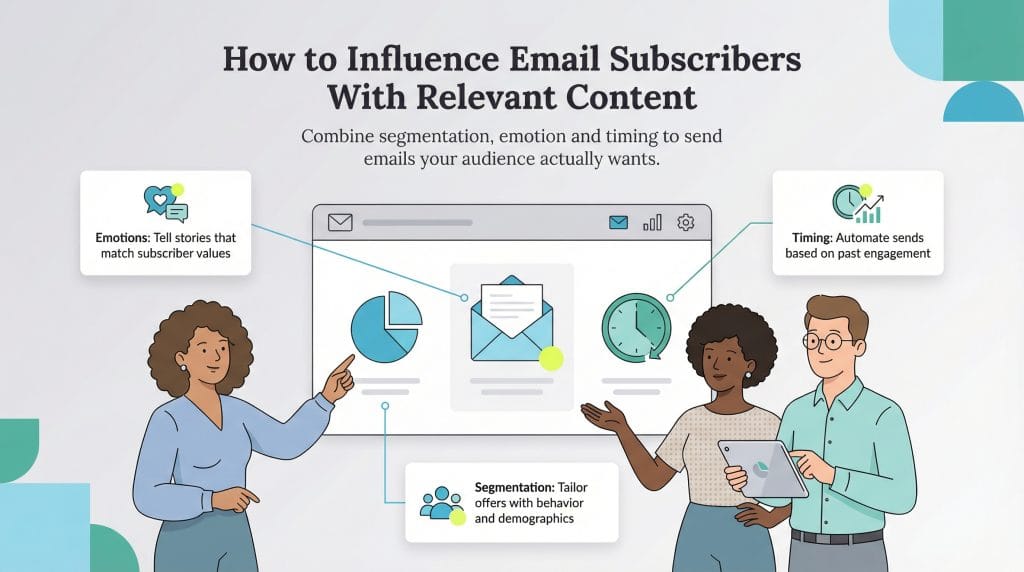
An annoying email marketing campaign will only generate opt-outs and message deletions. In contrast, an effective email campaign presents high-quality content that can ultimately improve your engagement rate and boost sales. Consider the following five best practices for engaging subscribers with relevant content.
Creating an emotional connection with your email subscribers goes beyond promotional messaging — it’s about building relationships that foster long-term loyalty and advocacy. When subscribers feel connected to your brand, they’re more likely to open your emails, engage with your content and ultimately make purchasing decisions based on trust rather than price alone.
Think strategically when outlining marketing strategies to emotionally connect with customers in your email content. For example, ask yourself the following questions:
By analyzing how subscribers engage with various marketing messages, you can personalize their journey through the sales funnel and deepen emotional connections.
Market segmentation is one of the best tactics for ensuring relevant content is sent to subscribers. Email list segmentation involves grouping subscribers by criteria like geography, age, gender, transactional history and customer journey status. It can help you simplify and segment multiple lists. It can also tailor content based on specific conditions and customer personas.
Consider the following best practices for list segmentation that can help you deliver relevant content to specific subscribers.
The best email marketing services make list segmentation seamless and effortless. Look for platforms that offer AI-powered capabilities, which can automatically identify and create segments based on patterns in subscriber behavior that humans might miss.
You may be sending thoughtful, relevant content. However, if it isn’t reaching your subscribers at the right time, your efforts may be in vain. This is particularly crucial when it comes to following up with leads. For example, experts advise following up with inbound online leads within 10 minutes. You should also follow up quickly via email after a prospect engages in relevant on-site searches.
Time of day is also a critical parameter in email campaign engagement rates. Consider geolocation when segmenting your list to ensure you deliver emails when the recipient is most likely to see them. Some email marketing platforms allow you to be more specific and send emails based on individual recipients’ past engagement metrics.
Email marketing software streamlines the process of tracking email analytics and determining how subscribers interact with content and data. Understanding campaign performance helps you develop new strategies and create more centralized audience targeting and relevant content.
Email marketing platform analytics and tools like Google Analytics help marketers make critical decisions about stagnant promotions and campaigns. Users aren’t responding to your emails as they have in the past? Then collecting data can help you figure out why. Now you can adjust your content and digital marketing strategy and improve your email marketing campaigns.
If you’re trying to capitalize on your content, there is no better way to reach your audience and increase brand awareness than by delivering personalized, relevant content to their inbox. Companies pay millions of dollars annually to reach their target consumers and capture their attention. Thankfully, it’s easy to use email marketing to grow your business with the help of exceptional marketing software, personalization techniques and a thoughtful content strategy.
Source interviews were conducted for a previous version of this article.