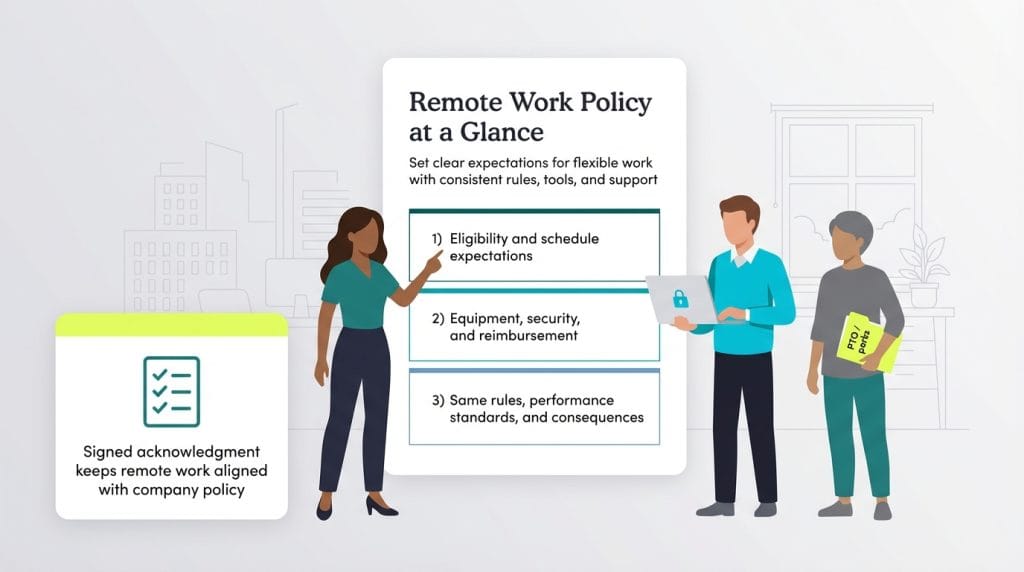
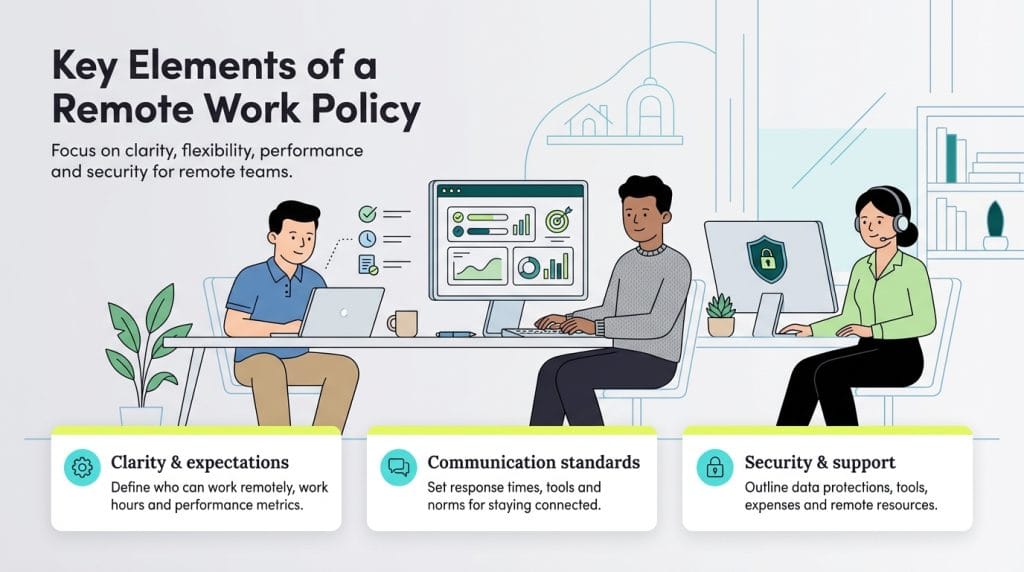
Remote work not only provides people with the ability to work from home but has also introduced new dynamics to the workforce, including flexible work schedules and cost savings for office space for employees. According to a Pew Research Center survey, about 75 percent of employees with a job that can be performed at home, work remotely some of the time. Nearly half of those stated they would probably leave their job if required to come into the office.
Remote work has perks for both employers and employees. Companies making a more long-term or permanent switch to a remote environment can help the adjustment be successful by ensuring a smooth transition, excellent remote management plans and best practices for remote work.
What are remote work best practices for businesses?
To help ensure remote work is a success across your organization, follow these best practices.
1. Maintain a company culture
Some employees choose an employer for their company culture. Whether your company is only recently remote or has always been, maintaining the culture that attracted employees to your organization in the first place can help keep employees happy and working for your company. For instance, you might bolster a culture of care by expanding wellness perks to cover home-office needs, as Actualize Consulting did. Its $900 wellness benefit is available to each employee to use toward a gym membership and fitness purchases such as treadmills and classes.
“Design a comprehensive onboarding experience tailored to remote workers. This could include virtual meet and greets, digital tours and guided introductions to the company culture, values and team dynamics,” said Angela Tait, chief executive officer at Tait Consulting, LLC. “Invest in creative virtual team-building activities, like virtual escape rooms, cooking classes or collaborative online games, to foster a sense of belonging and camaraderie.”
As another example, Sarah Danzl, chief marketing officer at Skillable, said that a priority for her was to ensure the holistic care and mental health of her team with regular check-ins, specifically to ask about how they’re doing and dedicate some time to nonwork chat.
Addressing remote work difficulties often involves corporate wellness initiatives with a specific emphasis on mental health.
Editor’s note: Looking for the right employee monitoring software for your business? Fill out the below questionnaire to have our vendor partners contact you about your needs.
Error RfqWidget on @jelly/shared not defined
2. Use video tools to stay connected
Working remotely can be difficult for people who strive for face-to-face interaction. Utilize the best practice of acting as if you and your team are in the office with the help of technology. Consider keeping spirits high and teams connecting by hosting a Friday video happy hour, video team meetings and virtual employee lunches. The goal here is to stimulate activities that would be done in the office, outside the office.
Pranav Dalal, the CEO and founder of Office Beacon LLC, explained how video tools help grow communication and trust. “Regular check-ins and feedback loops will keep everyone aligned and engaged,” he said. “Ultimately, prioritizing employee well-being alongside productivity fosters a more motivated and effective remote team.”
3. Go paperless
Just about everything can be done digitally these days. Use a tool like DocuSign for contracts that need signatures and encourage employees to lean on the best customer relationship management software and other digital tools instead of paper for notes, project management and other tasks.
Transitioning to a paperless environment not only streamlines document retrieval for remote workers but also significantly reduces supply costs and storage fees.
4. Invest in internet security
A network is only as secure as its weakest link. When employees access company data from home networks or public Wi-Fi, the risk of a breach increases. To ensure data confidentiality and safe internet usage, Dalal said it is crucial to implement key practices. He advised that internet security is a must, especially in public spaces.
“First, encourage the use of virtual private networks (VPNs) to secure connections on public Wi-Fi. Regularly update software and use strong, unique passwords for all accounts to minimize vulnerabilities,” said Dalal. “Additionally, promote awareness about phishing scams and encourage employees to avoid accessing sensitive information on unsecured networks. By fostering a culture of cybersecurity mindfulness, we can help keep our data safe while working remotely.”
By investing in a cybersecurity plan, you can provide (and even mandate) the tools that keep everyone’s devices safe. This, in turn, keeps company information safe. Most importantly, it minimizes the risk of personal data being leaked through a vulnerability in your infrastructure. At the heart of your internet security is a VPN. It allows for direct, safe communication between all remote workers and the office.
5. Consider employee monitoring
Employee monitoring is necessary for large organizations. A significant part of leadership and management is keeping people on task. However, with remote work, that becomes challenging.
Employee monitoring software allows you to see a worker’s computer activity. This informs you as to how much of a workday is spent on work projects and tasks. These solutions help managers identify bottlenecks and track productivity without having to physically hover over a desk. [Related article: The Best Employee Monitoring Software]
6. Accommodate flexible work schedules
While remote work offers benefits like lower overhead, poor implementation can lead to burnout or disengagement. To maximize productivity, many businesses are shifting toward “asynchronous work,” allowing employees to complete tasks on a flexible work schedule.
“Embrace asynchronous work by allowing employees to set schedules that accommodate different time zones or personal obligations. This flexibility can boost productivity while also respecting individual needs,” Tait said. “Encourage thorough documentation of processes, updates and project details so everyone can access needed information without waiting for someone to be online.”
Many remote workers balance professional duties with caregiving or other personal responsibilities. Empowering them to manage their own hours often results in higher output and loyalty. To facilitate this, focus on a results-based model where success is measured by project completion rather than hours logged.
7. Invest in collaboration tools
Collaboration tools are everywhere. Some of the biggest names to rise to the top include Microsoft Teams and Zoom. These tools allow for adjustable online workgroups. They include video and audio chat and they allow for screen sharing.
You can also look into apps that create shared workspaces. File sharing systems are similarly important. Consider dedicated communication servers like Slack or Google Chat to keep conversations organized by topic.
“In my experience, tools like Slack and Zoom are game-changers for fostering seamless communication within remote teams,” Dalal said. “For collaboration, platforms like Asana or Trello keep everyone aligned on tasks and deadlines, ensuring clarity and accountability. Additionally, leveraging tools like Google Workspace enhances productivity by allowing real-time collaboration on documents. It’s all about finding the right mix that suits your team’s dynamics.”
To ensure
remote work success, businesses should maintain company culture, use video tools to stay connected, go paperless, invest in internet security, consider employee monitoring, accommodate flexible work schedules and invest in collaboration tools.