You need a solid understanding of human psychology to manage employees, but will you soon also need to understand robot psychology?
“We’re going to be the last CEOs who are only going to be managing humans as our workforce,” said Salesforce CEO Marc Benioff on Thursday during the World Economic Forum in Davos, Switzerland. “From this point forward, we will be managing not only human workers, but also digital workers.”
To prove the point, Benioff unveiled a Salesforce-designed “AI agent” that would select the best panels for each individual Davos attendee to attend. (According to IBM, such agents are more advanced than other AI chatbots because they use “tools, memory and reasoning” and “plan ahead.”)
You’ll still need to deal with those pesky humans and their fleshy problems for now — ugh, carbon-based life — so read our guide to What Does It Take to Be a Good People Manager?
|
Millennial managers: A career vibe check at 40
Morning mood: The a.m. hours aren’t for everybody
Misleading marketing: Behold The Substance
|
|
|
A Career Vibe Check for Millennials Turning 40
|
It seems like yesterday millennials were the new kids on the block — and at the office — but now millions are hitting the big 4-0. If you’re among them, you can either drown your sorrows in a Friends marathon or take some healthy stock of your career advancement. Here are some questions to ask (after you’ve answered, “Do these skinny jeans still look good?”).
Are you able to save for retirement?
When millennials graduated into the Great Recession, retiring was the last thing on their minds, but at 40 your career is almost hitting its halfway mark. So, how much are you contributing to your retirement fund? Are you taking full advantage of tax benefits and employer match?
Experts recommend stashing away 10 percent to 20 percent of your pay. This can be especially difficult in high-cost-of-living areas, but it’s time to make sure your financial needs are met, now and in the future.
Are you excited and advancing at work?
Nothing ages people like stagnation. Ask yourself which parts of your work satisfy and energize you the most; lean into those aspects. If you can’t seem to get ahead, figure out why and recalibrate. Are you compromising your health or beliefs for work, and if so, how can you change that?
Whether you’re an employee or entrepreneur, make sure your career trajectory reflects professional growth and continued education.
Is it time for a big change?
There’s a reason why turning 40 makes you susceptible to a midlife crisis: Your choices feel more concrete, and the future isn’t such a limitless series of options. But it’s still possible to pivot as long as you do it thoughtfully. If you’re going to course correct, right now could be your best opportunity.
Forty might not be the new 20, but it is a milestone, and you’ve made it, so be proud. Also, not to douse the vibe, but you probably should go ahead and get that cholesterol test, too.
|
|
|
Streamline clientflow for your business, from lead to sale
|
From lead generation and nurturing to closing deals and billing, you need more than just a CRM platform. A clientflow management system can do it all.
One of our favorite platforms is Honeybook, which seamlessly brings together every aspect of a customer’s journey. With Honeybook, you can field inquiries, schedule appointments, share contracts, manage projects, accept payments, and issue invoices. All of these tools are packaged in a user-friendly platform that’s simple for your team and your customers.
If Honeybook sounds like just what you need, you’re in luck — you can try it for free today by clicking the link below.
|
|
|
Your Morning Mood Matters
|
Dr. Steven Rogelberg is a chancellor’s professor at UNC Charlotte, former president of the Society for Industrial and Organizational Psychology, and author of Glad We Met: The Art and Science of 1:1 Meetings.
Each morning we awake, our mood fluctuates. This impacts behavior at work, according to recent research published in the Academy of Management Journal.
Participants kept a diary across two weeks with numerous assessments per day. Those who started their day feeling more down and low had a meaningful decrease (an average of 10 percent) in productivity, took fewer calls with customers, and resolved fewer problems. The mood people come to work with impacts how they engage with others and carry out their job.
Given this, it behooves managers to help foster a more positive atmosphere for employees in the morning. Here are tips for carrying that out:
- Create an energizing start to the day by sharing an encouraging email or organizing a quick, upbeat team check-in. Simple gestures, like offering snacks or coffee, can also lift moods and help employees transition more smoothly into their tasks.
- Allow team members a few moments to chat and settle in before diving into work. These small interactions can replace lingering negativity with a sense of community.
- Refrain from reaching out to employees during off-hours unless necessary. Interrupting their personal time can disrupt sleep and create unnecessary stress, leaving them ill-prepared for the day ahead.
- Choose the right time for tough conversations. While it may seem logical to address issues like tardiness or procrastination first thing in the morning, it can be counterproductive. A punitive approach when an employee is already frazzled can diminish their productivity for the rest of the day. Consider postponing these discussions until later when the conversation can be more constructive.
|
|
|
The Substance: A Cautionary Tale of Shame-Based Marketing
|
In The Substance, Demi Moore’s character turns to a too-good-to-be-true injection that promises, uh, intense antiaging — enough to become “another version of yourself.” We won’t spoil how literal it turns out to be, but her performance was intense enough to win a Golden Globe.
The film isn’t just a darkly comic send-up of women’s beauty standards; it’s a primal-scream repudiation of marketing tactics that make people feel ashamed rather than inspired. (For example, The Substance’s in-movie campaign reminds customers, “You can’t escape from yourself.”)
The good news IRL is that positivity produces profits. Dove’s trailblazing “real beauty” campaign, which just celebrated its 20th anniversary, boosted sales by 700 percent, making 30 times more than its ad spend. In recent years, Dove promised to never use artificial intelligence models, and Olay stopped digitally retouching its advertising materials. Glow Recipe, a skincare company, banned marketing terms like “flawless” and “antiaging” while making $100 million per year. Now that’s beautiful.
|
|
|
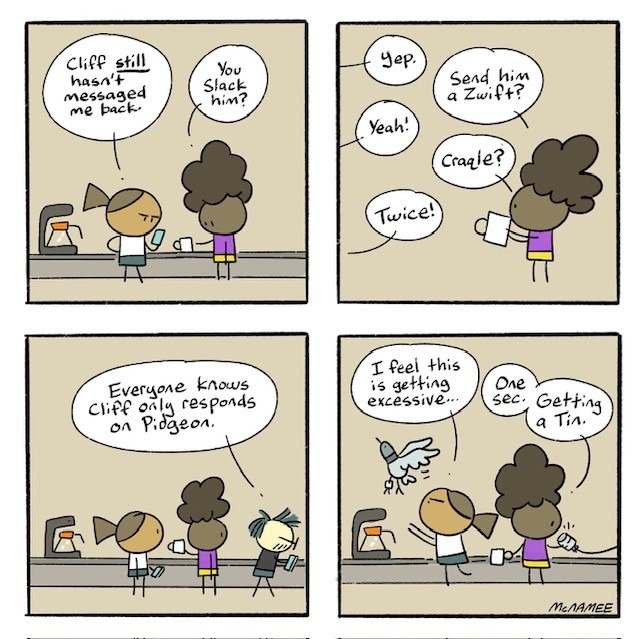
Written by Dan Ketchum. Comic by John McNamee.
|
|
|
|