Business.com aims to help business owners make informed decisions to support and grow their companies. We research and recommend products and services suitable for various business types, investing thousands of hours each year in this process.
As a business, we need to generate revenue to sustain our content. We have financial relationships with some companies we cover, earning commissions when readers purchase from our partners or share information about their needs. These relationships do not dictate our advice and recommendations. Our editorial team independently evaluates and recommends products and services based on their research and expertise. Learn more about our process and partners here.
Want to Invest in Digital Real Estate? How to Get Started
You’ve seen people make money from website ownership. Here’s how you can do it, too.
Business.com earns commissions from some listed providers. Editorial Guidelines.
Table of Contents
Investing in digital real estate is a promising avenue for entrepreneurs in search of new opportunities. These online assets can often require less upfront capital than traditional property, and the upside can be substantial. However, the digital landscape is also marked by volatility, scams and regulatory uncertainty, meaning investors need to weigh both the opportunities and the risks before diving in. Understanding current trends and best practices is crucial for navigating the realities of this dynamic market.
What is digital real estate?
Digital real estate refers to virtual properties and assets that exist online, including websites, domain names, social media accounts, blogs, metaverse land and non-fungible tokens (NFTs). Just like physical real estate, these digital assets can be purchased, developed and sold for profit.
Digital assets can provide serious profits, too. For example, the web domain Cars.com was acquired along with its parent business for approximately $872 million. However, the range of digital real estate assets has expanded well beyond domains in recent years. The growth of NFTs and metaverse platforms offer significant opportunities for entrepreneurs — albeit ones that come with a new set of risks.
How digital real estate works — and why it’s valuable
Investing in digital real estate means acquiring and managing online assets to generate income and potentially grow asset values over time.
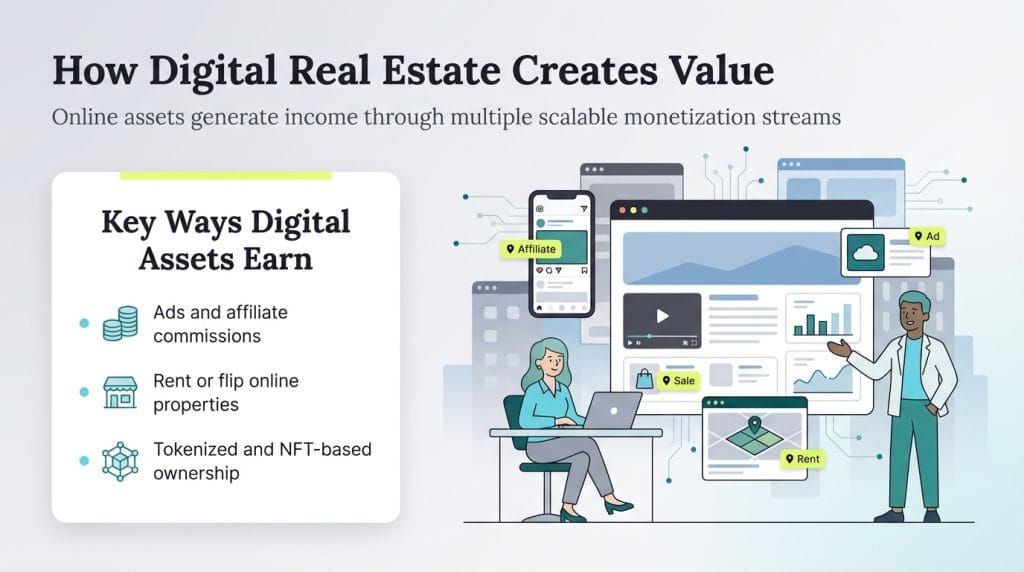
Monetization opportunities include:
Advertising revenue from website traffic or social media audiences.
Affiliate marketing, by promoting products from other businesses and earning commissions.
Rental income, such as leasing advertising space or digital storefronts.
Flipping assets, meaning buying undervalued domains, websites or metaverse parcels and selling them for profit.
Tokenization, where digital assets are divided into shares using blockchain technology, allowing fractional ownership and more liquidity.
NFT sales, representing ownership or partial stakes in virtual or physical properties, often within the metaverse ecosystem.
Digital real estate is valuable because it allows global reach, flexibility and scalability, along with the ability to generate income with relatively low barriers to entry. Demand is fueled by the ever-growing need for online visibility, ecommerce, entertainment and virtual communities.
Types of digital real estate investments
Digital real estate encompasses many asset classes:
Domain names: Buy and hold, flip or lease for branding.
Websites and blogs: Monetize through ads, subscriptions, affiliate programs or by selling for profit.
Digital storefronts: Ecommerce shops on platforms like Shopify, Amazon or metaverse venues.
Metaverse land: Purchase virtual land parcels on platforms such as Decentraland or The Sandbox, develop spaces for commerce/events, and sell or rent.
Social media accounts: Grow and monetize follower bases or sell established accounts.
NFTs and tokenized property: Own, buy/sell or fractionally invest in blockchain-based assets representing property rights or access.
Evolving, with emerging federal and international frameworks
Highly regulated, well-defined laws
Liquidity
Can be highly liquid, especially domains/websites
Generally illiquid, takes months to sell
Risk profile
Volatile, exposed to scams and tech changes
Stable, but exposed to economic downturns
Benefits and risks of digital real estate
Benefits
Global reach and scalability: Operate and sell anywhere online to a worldwide audience.
Passive and active income potential: Monetize websites, domain names or virtual storefronts in multiple ways.
Lower barrier to entry: Many digital assets can be acquired for a fraction of what physical property costs, making it accessible to a broader range of investors and entrepreneurs.
Risks
Market volatility: Value of digital assets can fluctuate dramatically based on trends and technology shifts.
Risk of scams and fraud: Unverified listings, fraudulent sellers or insecure smart contracts can impact returns.
Regulatory uncertainty: Legal protections for digital property owners remain limited and inconsistent, particularly for NFTs and metaverse assets. The U.S. Securities and Exchange Commission and other global regulators are still developing formal guidance.
Technical requirements: Upkeep involves updating content, cybersecurity vigilance and adapting to platform changes.
How to begin investing in digital real estate
Getting started as a digital real estate investor does not require advanced technical expertise, thanks to modern platforms and support tools.
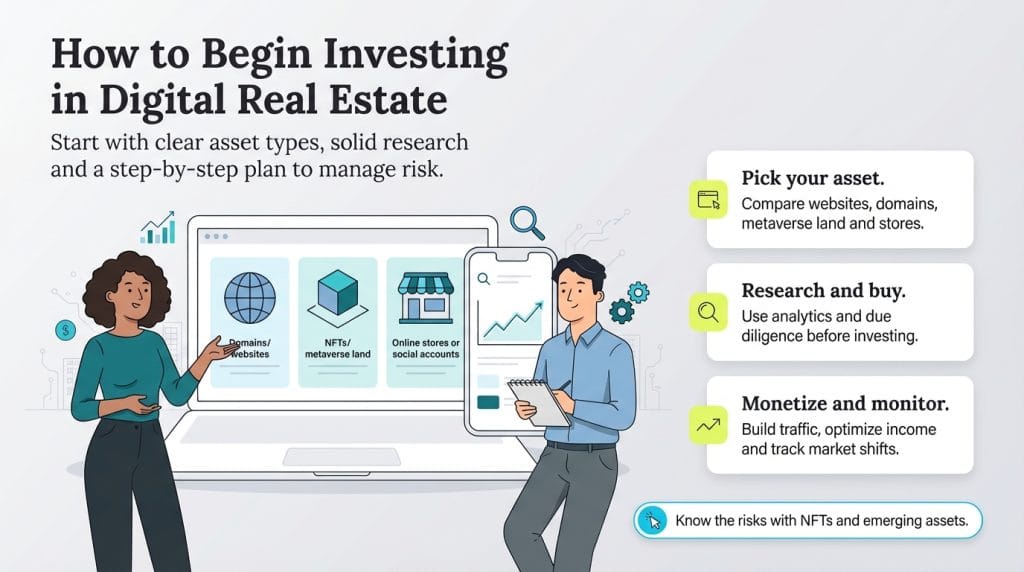
Beginner steps:
Choose asset type: Decide among domains, websites, metaverse land, stores or social accounts.
Research investment opportunities: Use marketplaces, analytics tools and platform guides.
Acquire assets: Buy, develop from scratch, or participate in auctions/token sales.
Monetize or flip: Optimize through advertising, content, affiliate programs or rental; consider timing for resale or portfolio growth.
Monitor trends and maintain: Stay updated on regulations, platform changes and market shifts.
If buying an established website, conduct thorough due diligence. Verify domain ownership, request analytics, review financials, analyze SEO and negotiate purchase contracts. Use SEO tools like Semrush or Ahrefs to assess potential investments, and consider working with a broker if you’re new to the process.
When building a website from scratch, budget for domain, hosting and design. Then, focus on building an audience with regular content to attract traffic and enable monetization.
If you plan to invest in emerging digital real estate such as metaverse land or blockchain-based assets, it’s important to understand the risk involved. The metaverse real estate market, for example, saw sharp price corrections following its 2021 to 2022 peak, demonstrating that speculative digital assets can lose value quickly. Spend time researching the existing landscape and technology that underpins these assets before committing capital — there may be tremendous potential for profit, but that comes with a high risk of losses, as well.
Did You Know?
Website design software is a self-service tool that allows users to build their own websites. Web design services, by contrast, are full-service companies that support website development, building and maintenance. These companies typically offer additional services, including SEO, branding and marketing.
Emerging trends & future outlook
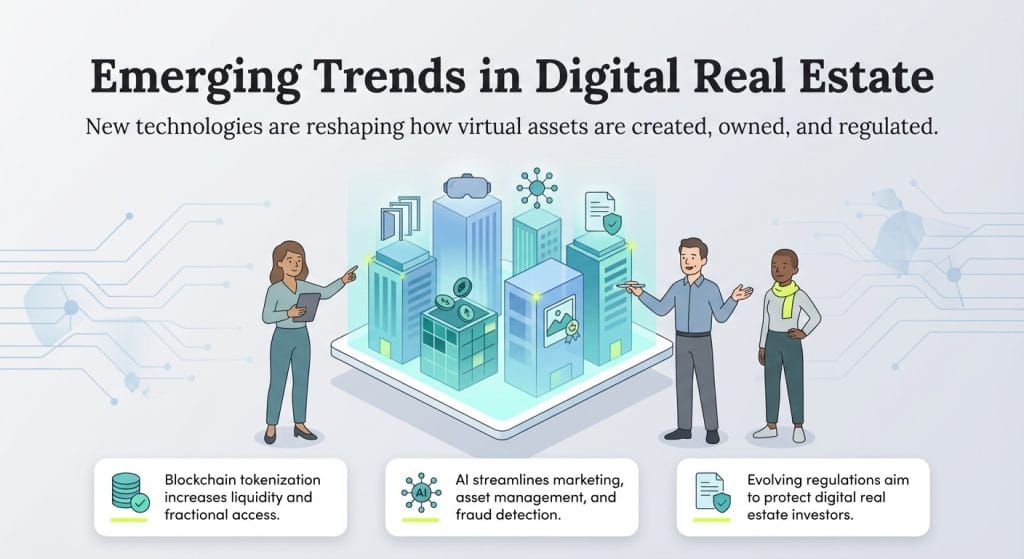
Blockchain tokenization: Expect an increase in fractional asset ownership via secure, tradeable digital tokens, which improve liquidity and accessibility for more investors. Blockchain technology is also helping investors buy, sell and manage their digital assets with transparent transaction histories and lower risk of fraud.
NFT growth: NFTs created a new asset class linked to property rights, artwork and exclusive experiences. However, following early hype in 2021, the NFT market has contracted significantly, and the near-term outlook remains uncertain as the market searches for sustainable use cases.
Metaverse expansion: Virtual land sales grew rapidly in 2021, with major brands investing in digital storefronts and entertainment venues. These sales peaked in 2022, and while activity has cooled since, analysts continue to watch the space as metaverse platforms refine their offerings and pursue more practical applications for virtual environments.
AI and automation: AI-driven platforms enable personalized marketing, smarter asset management, faster transactions and predictive analytics. AI also helps automate content creation, recommend optimal monetization strategies and identify fraudulent listings before purchase, making management easier for digital real estate owners.
Regulatory evolution: Governments and regulatory bodies worldwide are accelerating efforts to establish clearer frameworks around tokenized assets, digital property rights and consumer protections. Investors should monitor shifting policies, as compliance requirements are expected to increase and legal definitions around digital ownership continue to evolve.
Sean Peek and Syed Balkhi contributed to the reporting and writing in this article.
Sean Peek co-founded and self-funded a small business that's grown to include more than a dozen dedicated team members. Over the years, he's become adept at navigating the intricacies of bootstrapping a new business, overseeing day-to-day operations, utilizing process automation to increase efficiencies and cut costs, and leading a small workforce. This journey has afforded him a profound understanding of the B2B landscape and the critical challenges business owners face as they start and grow their enterprises today.
At business.com, Peek covers technology solutions like document management, POS systems and email marketing services, along with topics like management theories and company culture.
In addition to running his own business, Peek shares his firsthand experiences and vast knowledge to support fellow entrepreneurs, offering guidance on everything from business software to marketing strategies to HR management. In fact, his expertise has been featured in Entrepreneur, Inc. and Forbes and with the U.S. Chamber of Commerce.