Business.com aims to help business owners make informed decisions to support and grow their companies. We research and recommend products and services suitable for various business types, investing thousands of hours each year in this process.
As a business, we need to generate revenue to sustain our content. We have financial relationships with some companies we cover, earning commissions when readers purchase from our partners or share information about their needs. These relationships do not dictate our advice and recommendations. Our editorial team independently evaluates and recommends products and services based on their research and expertise. Learn more about our process and partners here.
Everybody’s startup costs will be a little different, but here are some common expenses you can expect to see when you’re starting an online business.
Starting an online business can be relatively simple and inexpensive, but some expenses are unavoidable. Depending on the type of business you want to start and how and where you plan to set it all up, your startup costs can vary significantly. Let’s take a deep dive into the typical costs associated with starting an online business and how you can save.
Starting an online business is easy and affordable. Here are some expenses you can expect to encounter:
To operate a business, you may be required to obtain a business license or permit. The cost depends on the type of business license you need and the location of your company; each state has different fees.
A business license can cost anywhere from $50 to a few hundred dollars, plus annual renewal fees. If you operate in certain regulated industries — such as agriculture, mining, or transportation — you’ll also need a federal business license or permit.
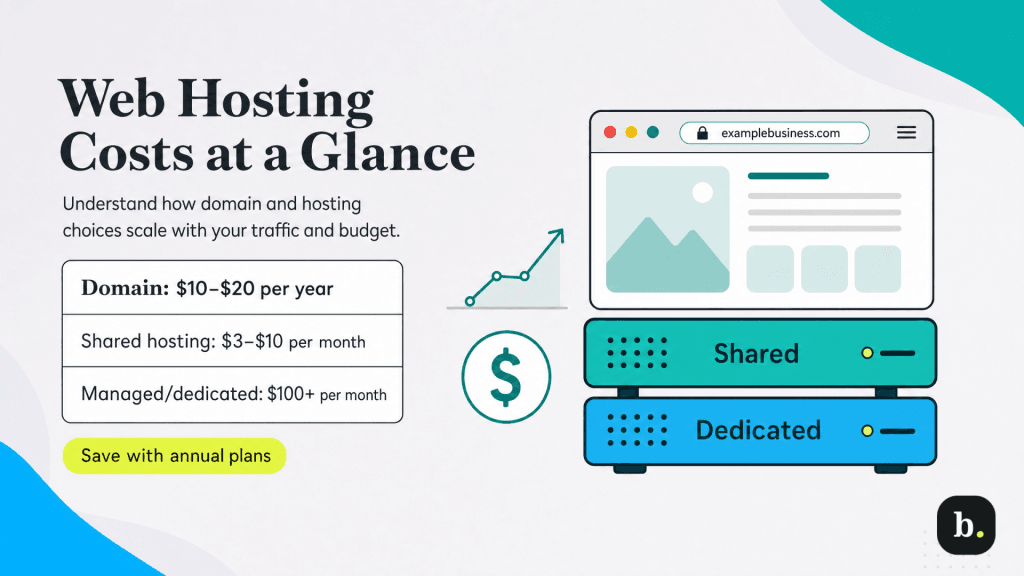
You’ll need a web hosting service and a domain name, which is typically your business website’s URL. You’ll pay an initial registration fee of roughly $10 to $20 for a domain name and then an annual renewal fee in a similar range, depending on the registrar and domain extension you choose.
Web hosting costs depend on how large your company is and how much traffic you anticipate. Are you expecting a generous amount of traffic to your site every day? Then you’ll need to pay a bit more to have a platform that can host a large number of visitors.
You can pay annually or monthly. Shared hosting plans — a common starting point for new online businesses — typically run $3 to $10 per month, while managed or dedicated hosting for higher-traffic sites can cost $100 or more per month. Many providers offer discounted rates when you commit to an annual plan.
Customers must be able to easily access and navigate your website on their phones. Plus, you’ll rank higher in Google search results if your website is mobile-friendly. So, make sure your website platform includes mobile responsiveness in the costs.
If you have specific branding standards to follow, you’ll also need to pay for custom web design. Hire a professional who uses your brand colors and fonts to design your website’s homepage, menu and other content.
These costs can vary — you could pay as little as a few hundred dollars or as much as several thousand dollars for a fully custom website design. If you don’t have strict brand standards to follow, many website builders offer free or low-cost themes that make it easy to get a polished site up and running without hiring a designer.
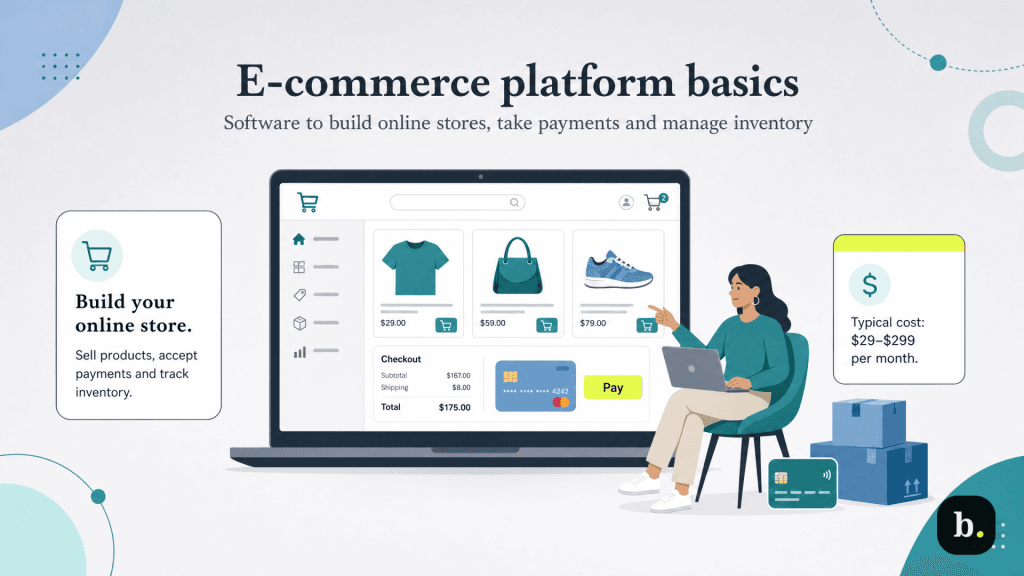
An e-commerce platform is a software application that helps business owners create an online store, accept payments for products and manage inventory. Many are cloud-based and charge monthly for their services. The cost of e-commerce software typically ranges from $29 to $299 a month, depending on the features and tools you need, though enterprise-tier plans can run significantly higher.
A payment processor makes sure you get paid for your online sales. How much you’ll pay to accept credit and debit cards varies depending on the type of card. It also depends on the amount of the sale, whether the card is present and which processor you hire. [Read related article: The Best Credit Card Processors of 2025]
Visa and Mastercard typically charge interchange rates that range from around 1.5 to 2.5 percent per transaction depending on the card type and merchant category, while American Express charges approximately 1.6 to 3.5 percent. The payment processor then adds its own fee on top — known as the markup — which varies by provider and can sometimes be negotiated based on your monthly sales volume.
Whether you operate a physical store or sell only online, you’ll have to stock inventory. The costs to store, maintain and replenish it make up your inventory expenses.
Typically, inventory costs are calculated as a percentage of the inventory’s value. Known as the carrying costs, they can represent as much as a third of the value of your inventory. For e-commerce operators, inventory tends to be the most valuable asset and the largest cost.
Business owners who don’t want to keep inventory on hand can adopt a dropshipping model. Dropshippers don’t have any inventory or don’t purchase the products they are selling until they have a sale.
But there are still costs associated with this type of selling, and they are dictated by the sales platform you use. Whether it’s eBay, Amazon, Walmart or Etsy, you’ll have to pay listing fees and a percentage of the sale. Those fees can add up quickly, so it’s worth calculating your true take-home before committing to a platform.
Marketing is one of the most important things you can spend money on, because it has a direct payoff if you do it well. You’ll need to budget for expenses such as search engine optimization (SEO), pay-per-click (PPC) ads, social media and content creation.
“When it comes to starting an online business, the biggest costs often revolve around three key areas — your platform, your branding and your marketing,” said Phil Portman, founder and CEO of Textdrip. “For most online businesses, this means spending on website development or e-commerce platforms, securing a domain name and setting up hosting services. Add in some must-haves like logo design, content creation and email marketing tools, and you’ll see these costs can add up quickly.”
Why do you need to pay for SEO? For starters, so that customers know you exist! Do you want to ensure that your site ranks highly in organic search results? Then you may want to hire an SEO agency to help you build backlinks and further optimize the content on your site.
You can expect to pay several thousand dollars to set up your SEO marketing with an agency and then at least several hundred each month to maintain ongoing results, depending on the scope of services and the size of your business.
Many online brands and businesses also choose to employ PPC marketing. With this option, site owners pay a fee based on the keywords they want to rank for and how many clicks they receive to their site.
Your ads will appear on potential customers’ screens — for example, as a sponsored link at the top of search results or a targeted ad in their social media feed. If they click it, you pay a fee. This is a proven way to drive traffic, but costs vary depending on your industry and goals. You could spend as little as $100 per month or as much as $10,000 or more per month.
If you’re not an experienced content writer, you should hire a freelancer to take care of your web content creation. Google and other search engines prioritize sites with well-written, quality content.
If your homepage is full of errors or offers a poor user experience, your search rankings will suffer. Hiring a skilled copywriter helps ensure that your homepage, subpages and any blog posts feature quality content that makes it easy for users to find what they need.
You should also hire a professional to engage your audience on social media. Just because you have a personal Instagram account doesn’t mean you know how to run a business’s Instagram account.
You’ll need someone to maintain all of your social media platforms, create content, monitor reviews and comments, and make sure everything runs smoothly. Chances are, you don’t have the time or bandwidth to do all of that and run your business.
Just hire a freelancer who knows how the world of social media works; then, sit back, relax and watch your follower count grow.
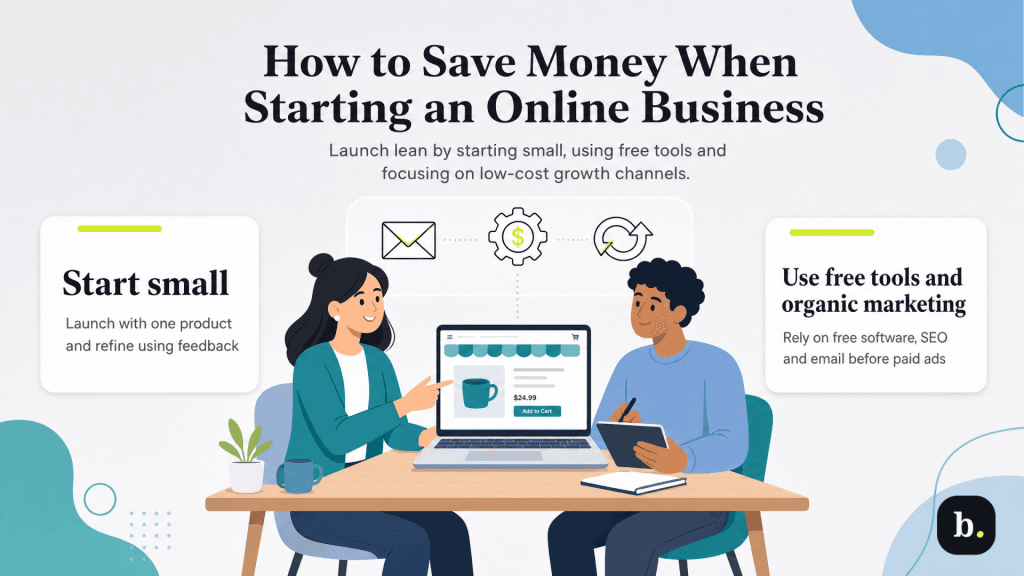
If you’re in the early stages of starting a business, you’ve probably found that reality doesn’t always match your expectations. Most new entrepreneurs discover they spend more money and earn less in those first few years than they originally anticipated.
Here are some ways you can save money during the early stages of growing your business:
Jamie Johnson and Donna Fuscaldo contributed to the reporting and writing in this article. Source interviews were conducted for a previous version of this article.