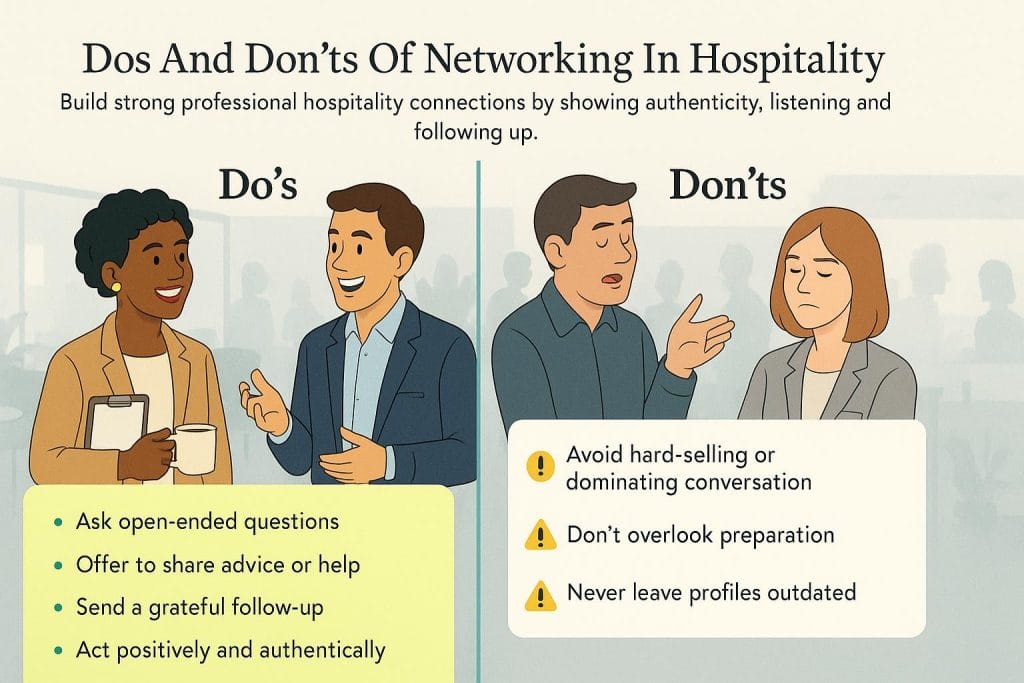
If your business operates in food service, transportation, events or tourism, forming relationships with hospitality industry professionals can bring enormous benefits. It’s a chance to connect with like-minded colleagues, track industry trends and expand your knowledge. However, building a strong professional network can be challenging. We’ll explore practical ways to meet hospitality industry insiders, introduce them to your business and start benefiting from positive industry relationships.
How to network with hospitality industry insiders
Here are nine tips and tricks to help you network with hospitality industry professionals.
1. Network at industry supplier events.
Instead of attending large, overwhelming trade shows, consider smaller supplier showcases and equipment demos — events that offer a more personal way to build connections. You’ll find other professionals who are actively looking for new ideas and solutions, which naturally leads to more focused, productive conversations.
In other words, instead of trying to stand out in a crowded convention hall, you’ll find yourself talking with people who genuinely want to learn, share experiences and grow their business.
Equipment manufacturers and technology providers often host exclusive demos or preview events. These are great opportunities to meet hospitality professionals who share similar challenges and interests. For example, a restaurant technology showcase gives you a chance to meet operators who are genuinely interested in fresh ideas and better ways of doing things. It’s an easy environment to spark real conversations and start building relationships.
Brand videos are an effective way to build your reputation and get noticed. Consider starting a
YouTube channel and posting regular videos.
2. Join regional hospitality councils and local chapters.
Beyond national associations, regional hospitality councils offer a more relaxed way to network and build relationships. Local chapters of groups like state restaurant associations or city tourism boards often host monthly mixers with 30 to 50 attendees, creating a comfortable setting for real conversations instead of quick, surface-level exchanges.
Here are some ways to get the most out of joining local groups:
- Attend regularly: Going to a single meeting won’t build momentum. Show up consistently so members start recognizing you and feel more comfortable engaging.
- Be curious and genuine: Ask questions, show interest in others’ work and look for common ground. People remember warm, authentic conversations more than a polished elevator pitch.
- Get involved: Volunteering at events or joining a committee is a great way to become more visible and build trust within the group.
- Look for collaboration opportunities: If you meet someone whose skills or audience complement yours, explore ways to support each other, whether through shared events, referrals or educational sessions.
Stay active on social media so the people you meet offline can easily find you online. A simple, consistent
social media presence helps keep new connections warm between events.
3. Engage through industry-specific online communities and forums.
Networking groups and professional platforms like LinkedIn can help you meet the right people in your industry. LinkedIn, in particular, continues to grow as a powerful networking platform, with more than 1.2 billion members across 200 countries and regions.
Follow these steps to get the most from networking on LinkedIn:
- Create a LinkedIn business profile: When you create a LinkedIn business profile, you open a powerful channel for connecting with industry experts to form relationships and explore career opportunities.
- Expand your network: Being a consistent, active LinkedIn member can help you expand your professional network. Grow your network by adding people you come in contact with, even if your connection was brief. You never know when you could help each other in the future. Additionally, reading other people’s profiles boosts your industry knowledge and exposes you to a network of companies and people you might not have otherwise known.
- Join LinkedIn groups: LinkedIn groups are a concrete way to unite with industry professionals to share insights, ask for help and build strong relationships.
- Map out your career growth: LinkedIn lets you view people’s career histories to discover how they navigated their career paths, helping inspire your career direction.
LinkedIn is a great place to start, but it’s not the only place to build industry relationships online. Consider joining hospitality-focused platforms, such as HospitalityNet, Restaurant Business Online forums or niche Discord groups. These memberships can lead to deeper, more meaningful engagement because they attract professionals who are actively discussing real-world challenges in your industry.
Create a presence on these platforms just as you would on LinkedIn. Take time to explore their features, join conversations and use the tools available to stay visible, share insights and build credibility.
To successfully
network on LinkedIn and other hospitality industry sites, connect with people immediately after meeting them. You'll strengthen your in-person connection and avoid letting a valuable contact fall through the cracks.
4. Participate in hospitality education and certification programs.
Hospitality certification programs and educational workshops are a great way to learn new skills while networking with other professionals who share your goals. Programs like the Certified Hotel Administrator (CHA) or ServSafe certification show that you’re committed to growing in the industry and open the door to new relationships.
According to Marketing General’s 2024 Membership Marketing Benchmarking Report, networking is the number one reason people join professional associations (67 percent). Because many hospitality credentials are offered through associations such as AHLA, AHLEI and HSMAI, certification programs naturally place you alongside peers, mentors and future collaborators, expanding your network while you build your skills.
Beyond gaining new skills, these programs give you the chance to learn alongside other hospitality professionals, share experiences and build relationships that can support your career growth.
5. Create value through industry research and content sharing.
Networking online and offline is an excellent first step, but one of the most effective ways to build industry connections is by sharing helpful, relevant information. When you consistently provide value, your peers begin to see you as a go-to resource and will naturally want to connect with you.
You don’t need to publish formal research for your content to resonate. Share insights that your peers in the hospitality industry can actually use. This could be a lesson learned from a recent project, a tip that improved guest experiences, or something meaningful you picked up at a conference or workshop. You can also spark conversation by asking a question, running a quick poll or putting together a small roundup of trends you’re seeing in the industry.
If you’re not sure where to start, sharing content that highlights your expertise and experiences is a great way to gain visibility. Here are a few ways to increase your visibility and establish yourself as a go-to resource:
- Create a compelling website design and offer valuable information.
- Generate and share helpful blog content.
- Use short videos to share your expertise and personality.
- Write guest posts for industry blogs.
- Publish articles on LinkedIn or in industry publications.
- Use social media platforms to build your personal brand.
When people find your content valuable, they’ll start engaging with you, which can often lead to meaningful new relationships.
6. Organize collaborative industry roundtables.
Instead of hosting another traditional networking event, try organizing a small roundtable discussion around a timely industry challenge. Bringing eight to 12 hospitality professionals together to swap ideas on topics like labor retention, sustainability or new technology creates a relaxed environment where people can share what’s working, ask questions and learn from one another. These smaller, focused conversations often spark more genuine connections than large, open-ended mixers.
When networking, listen more than you talk. People appreciate when others are actively interested in what they have to say. You may even learn something valuable.
7. Develop cross-industry partnerships with complementary businesses.
The hospitality industry values creating experiences and relationships with customers and other businesses. These shared experiences stimulate customer loyalty and contribute to your business’s success. Reaching out to another business is an excellent opportunity to create a shared experience and form a strategic partnership that benefits you both.
Look beyond direct competitors to form partnerships with businesses that match up well with yours. For example, hotels might work with local tour operators, restaurants and nearby farms make great collaborators, and event venues can have much success teaming up with catering companies. These kinds of partnerships naturally put you in contact with new people. As you work together, you’ll meet your partner’s network, too, often through casual introductions that can lead to meaningful new relationships.
Strategic partnerships help you become part of a larger business community. When you work closely with another company, you build trust, share audiences and gain more visibility. Over time, these connections can strengthen your reputation and grow your professional network in a meaningful way.
8. Utilize vendor and supplier networks strategically.
Your vendors and suppliers interact with countless hospitality businesses, which means they often know exactly who’s doing interesting things in the industry. When you build genuine relationships with sales reps, distributors, service providers and other partners you already work with, you gain access to the wider circles they’re connected to.
Don’t hesitate to talk to your vendors about what you’re working on or the challenges you’re trying to solve, as they may be able to introduce you to someone who’s been in your shoes or has a solution worth exploring.
Many suppliers also host client appreciation events, product demos or small user groups. These gatherings can be a relaxed way to meet other professionals, swap ideas and grow your network without the pressure of a formal “networking event.”
9. Leverage alumni networks from hospitality schools.
Hospitality school alumni networks are often overlooked, but they can be incredibly valuable for making industry connections. Many well-known programs — like Cornell’s Hotel School, Johnson & Wales University and the Culinary Institute of America — have active alumni groups with graduates working across hotels, restaurants, travel, events and food service.
If you attended a hospitality school, reconnecting with your alumni community can open doors to job leads, collaboration opportunities and introductions to people who understand the industry from the inside. Even if you didn’t attend one of these programs, don’t rule them out. Alumni mixers, panels and industry events are often open to guests, giving you a chance to meet seasoned professionals who are passionate about helping others succeed in the field.