Check out The Best Time & Attendance Software of 2026 business.com recommends.
Business.com aims to help business owners make informed decisions to support and grow their companies. We research and recommend products and services suitable for various business types, investing thousands of hours each year in this process.
As a business, we need to generate revenue to sustain our content. We have financial relationships with some companies we cover, earning commissions when readers purchase from our partners or share information about their needs. These relationships do not dictate our advice and recommendations. Our editorial team independently evaluates and recommends products and services based on their research and expertise. Learn more about our process and partners here.


Check out The Best Time & Attendance Software of 2026 business.com recommends.
Restaurants, retailers and other businesses with hourly employees need more than a simple time clock. They need a system that makes it easy to build schedules, track employee hours, control labor costs and keep everyone on the same page. We found When I Work delivers on all of those fronts with intuitive scheduling tools, GPS and photo clock-ins, built-in team messaging, labor forecasting and overtime monitoring. Employees can swap shifts, request time off and manage their schedules from the mobile app, while managers can automate scheduling, track attendance and reduce administrative work. Combined with its affordable pricing, these capabilities make When I Work our choice for the best time and attendance software for restaurants and retailers.
Restaurants and retailers rarely have the same staffing needs from one week to the next. Managers need to build schedules around employee availability, fill last-minute openings, control labor costs and make sure employees clock in from the right place at the right time. When I Work brings all these tasks together in one easy-to-use platform, making it our choice for the best time and attendance software for restaurants and retailers.
The software combines employee scheduling, time tracking and team messaging with automation tools that help managers spend less time creating schedules and more time running their business. Features like auto scheduling, shift swapping, GPS and photo clock-ins, overtime alerts and labor forecasting make it easier to manage hourly employees while keeping labor costs under control. Employees can view schedules, swap shifts, request time off and communicate with managers from the mobile app, while managers can monitor attendance and approve requests from anywhere.
We also like that When I Work is affordable for small and midsize businesses. Plans start at just $2.50 per user, per month and include employee scheduling, time and attendance and team messaging, giving restaurants and retailers the core tools they need without paying for features they may never use.
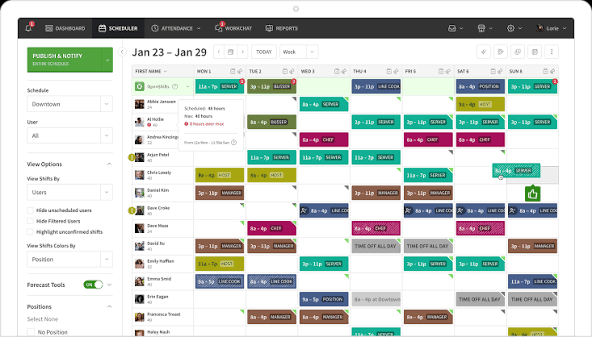
When I Work is easy to learn and navigate whether you’re using the web platform or the mobile app. Managers can quickly build schedules, approve time-off requests, fill open shifts and monitor employee attendance, while employees can check schedules, swap shifts and clock in from their phones. The straightforward interface makes it easy to handle everyday scheduling tasks without a lot of training.
Another feature we appreciated was the built-in messaging. Managers can send schedule updates, check in with individual employees or reach an entire team when they need to fill an open shift.
We also like the platform’s scheduling automation. Auto-scheduling can create schedules based on employee availability and eligibility, while labor forecasting and overtime alerts help managers make staffing decisions without exceeding labor budgets. Although When I Work doesn’t include payroll processing, it integrates with many of the best online payroll services, including ADP, Gusto and Paychex. We were particularly impressed by its close integration with Rippling, which helps businesses streamline scheduling, time tracking and payroll in one connected workflow.
When I Work combines employee scheduling, time tracking, team messaging and workforce management tools in one easy-to-use platform. Managers can build schedules, monitor attendance, control labor costs and communicate with employees from the web or mobile app, while employees can swap shifts, clock in, request time off and stay up to date on schedule changes. The following features helped When I Work earn our recommendation for restaurants and retailers.
Employee scheduling is where When I Work really shines. In fact, it’s considered among the best employee scheduling software solutions available. The platform makes it easy to build schedules from scratch, reuse templates or automatically create schedules based on employee availability and scheduling rules. Managers can oversee multiple locations, publish schedules in minutes and make adjustments as staffing needs change.
We also like the platform’s built-in scheduling automation. Auto scheduling helps fill shifts based on employee availability and eligibility, while scheduling rules can help reduce overtime and support compliance with company policies and labor laws. Employees receive shift reminders, can confirm upcoming shifts and swap or pick up open shifts directly from the mobile app, making it easier to handle last-minute schedule changes without creating extra work for managers.
Businesses with multiple locations can manage schedules across sites from the same platform. The multi-location plan adds features such as labor sharing, custom reporting, role permissions, multiple time-zone management and advanced privacy controls for organizations with more complex scheduling needs.
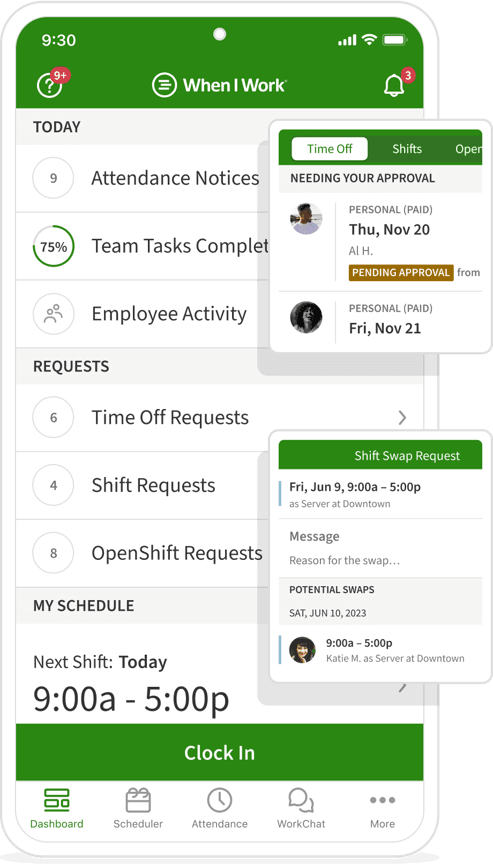
When I Work lets employees clock in and out from nearly any internet-connected device, including phones, tablets and computers, so businesses don’t have to invest in dedicated time clock hardware. During our testing, we found the process simple whether using the mobile app or a web browser. Businesses can also require employees to take a photo when clocking in, helping managers confirm staff members are on-site and reducing the risk of buddy punching, a common form of timecard fraud. For restaurants and retailers, where employees may clock in from different entrances, registers or workstations, this flexibility makes it easier to accurately track hours without slowing down the start of a shift.
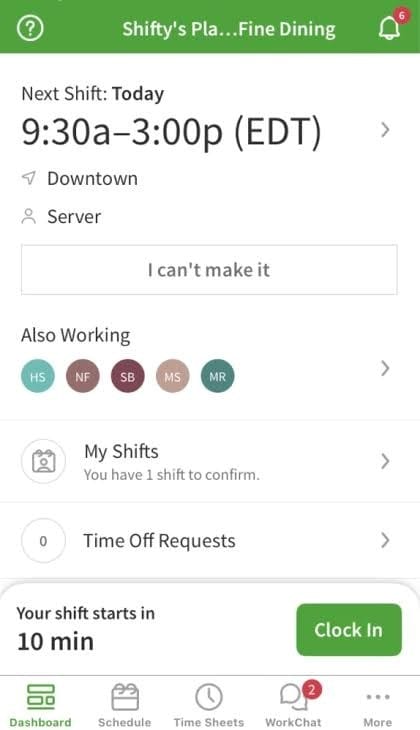
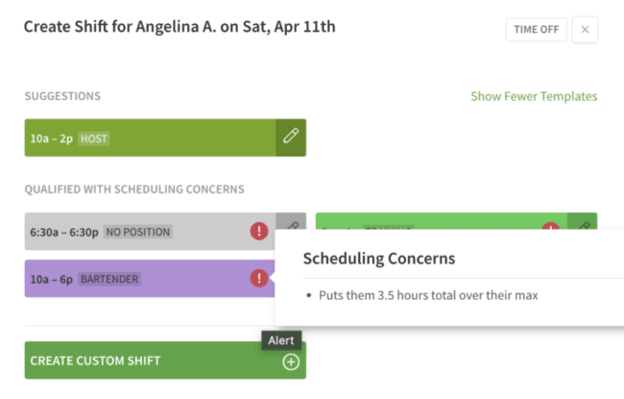
Keeping labor costs under control can be just as important as tracking employee hours, especially for restaurants and retailers with constantly changing schedules. When I Work helps managers approve time-off requests, track paid and unpaid breaks and monitor employee hours from one place. We especially like that the software alerts managers before an employee is scheduled to work overtime, giving them time to adjust the schedule before extra labor costs add up.
During our research, we also found that managers can view labor budgets and forecasts while building schedules, making it easier to balance staffing levels with expected demand.
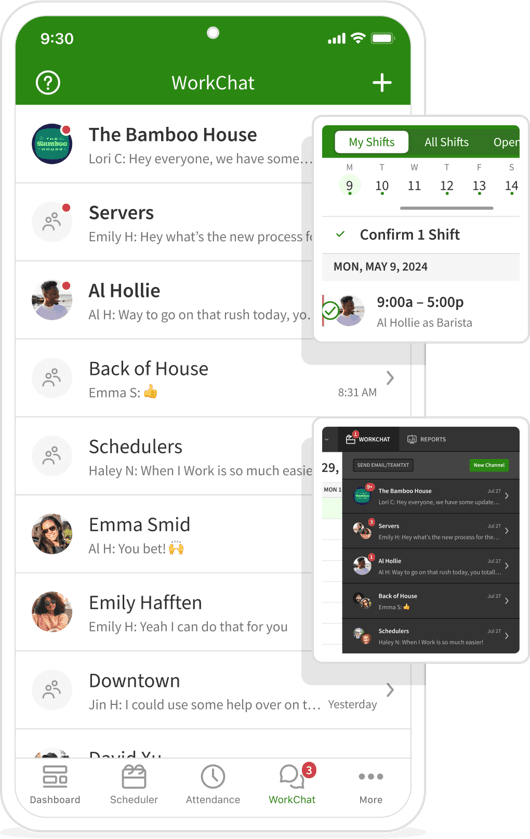
When I Work goes beyond scheduling by giving managers and employees a built-in way to communicate throughout the workday. Managers can send announcements, notify employees about schedule changes and message individuals or entire teams without switching to another app. Employees can also request shift coverage, share feedback after a shift and ask for additional help when things get busy.
During our testing, we found these communication tools fit naturally into the scheduling process and help reduce the back-and-forth that often comes with managing hourly employees. We also like that employees can share documents and links in the app, so schedules, conversations and important files are all in one place.
When I Work offers straightforward per-user pricing for both single-location and multi-location businesses. Every plan includes the platform’s three main products: employee scheduling, time and attendance software and team messaging. Plans start at $2.50 per user, per month, making When I Work an affordable option for restaurants, retailers and other businesses with hourly employees.
Here’s a closer look at the two plans.
Plan | Price | Key features |
|---|---|---|
Single location or schedule | $2.50/user/month |
|
Multiple locations or schedules | $5/user/month | Everything in the single-location plan, plus:
|
Here are some additional pricing considerations to keep in mind when evaluating When I Work:
When we tested When I Work, one of the first things that stood out was how quickly we could get started. Unlike larger workforce management platforms that can take weeks to implement, When I Work is designed so most small businesses can be up and running in hours or days. Employees can be added individually or imported in bulk with a CSV or Excel file, making it easy to migrate from spreadsheets or another scheduling system.
Setting up schedules is equally straightforward. After creating positions — such as servers, bartenders, cashiers or sales associates — managers can build schedules with drag-and-drop tools or save schedule templates for recurring shifts. We especially like that templates can be reused and adjusted as staffing needs change instead of requiring managers to rebuild schedules every week.
Businesses with multiple locations can build and manage schedules for every site from one place. The higher-tier plan also makes it easier to share employees between locations, assign manager permissions and create custom reports.
When I Work’s customer support isn’t as robust as some competitors’, particularly because it doesn’t offer phone support. However, we found its online resources to be thorough, and support is available every day of the week through live chat and ticket submissions. Here’s what you should know:
While we came away impressed with When I Work overall, there are a few limitations worth keeping in mind before you decide if it’s the right fit for your business.
To identify the best time and attendance software, we evaluated leading platforms based on pricing, ease of use, scheduling capabilities, time tracking, reporting, mobile access, integrations, customer support and overall value. Whenever possible, we participated in product demos, watched training videos and explored free trials or vendor documentation to better understand how each platform works in real-world settings.
For this review, we paid particular attention to the features that matter most to restaurants and retailers, including employee scheduling, shift swapping, mobile clock-ins, overtime management, team communication and multi-location support. We also compared pricing, implementation, integrations and customer support to determine which solution delivers the best overall value for businesses with hourly workforces.
We recommend When I Work for …
We don’t recommend When I Work for …
Check out The Best Time & Attendance Software of 2026 business.com recommends.
