Business.com aims to help business owners make informed decisions to support and grow their companies. We research and recommend products and services suitable for various business types, investing thousands of hours each year in this process.
As a business, we need to generate revenue to sustain our content. We have financial relationships with some companies we cover, earning commissions when readers purchase from our partners or share information about their needs. These relationships do not dictate our advice and recommendations. Our editorial team independently evaluates and recommends products and services based on their research and expertise. Learn more about our process and partners here.
If you love technology and data, these are the careers for you.


From developing computer games to building secure financial transaction platforms, tech skills remain essential to the economy. Although the tech industry has faced high-profile layoffs, the need for skilled professionals remains — a demand reflected in continued salary growth. According to the 2025 Dice Tech Salary Report, the average tech professional now earns $112,521.
We’ll highlight 20 high-paying tech careers, explain what these roles actually involve and share practical tips for breaking into the industry.
If you have an aptitude for and interest in technology, the job market offers numerous high-paying and future-proof career opportunities.
“There are many rewarding career paths that have a bright future ahead for the technically [inclined],” said Larry Jacobson, former senior engineering manager at Amazon and Snap and now a consultant and executive coach. “Look to be the candidate that can demonstrate technical depth.”
Below are 20 of the highest-paying technology roles in the U.S., including estimated salary ranges as you advance from entry-level to more experienced positions. Note that these numbers are averages across the U.S., but what you earn can vary significantly depending on your location.
Job title | Entry | Average | Experienced |
|---|---|---|---|
Agile project manager | $60,375 | $105,000 | $138,632 |
Artificial intelligence engineer | $99,500 | $125,361 | $177,880 |
Artificial intelligence specialist | $75,000 | $139,000 | $226,000 |
Blockchain engineer | $101,875 | $130,175 | $177,880 |
C developer | $96,525 | $117,233 | $145,525 |
Cloud architect | $123,388 | $155,125 | $208,865 |
Computer network architect | $86,928 | $123,025 | $186,038 |
Cybersecurity engineer | $97,250 | $124,111 | $172,100 |
Data architect | $99,600 | $122,550 | $186,038 |
Data modeler | $85,385 | $104,321 | $174,315 |
Data scientist | $83,063 | $111,875 | $180,750 |
DevOps engineer | $99,500 | $125,361 | $177,880 |
Full-stack engineer | $74,226 | $106,665 | $148,449 |
Hardware engineer | $101,875 | $130,175 | $177,880 |
Interaction designer | $62,875 | $76,200 | $126,458 |
iOS developer | $100,000 | $120,233 | $148,748 |
Lead software engineer | $85,348 | $120,800 | $148,449 |
Python developer | $100,000 | $120,233 | $148,748 |
Ruby on Rails engineer | $85,348 | $115,313 | $164,050 |
Video game developer | $99,481 | $120,908 | $156,225 |
2026 salary data from Talent.com (AI specialist from PayScale); figures are national averages and vary by location, company and total compensation.
What does it take to land one of the 20 highest-paying tech jobs? Below, we break down why these roles matter to modern businesses, what the day-to-day work looks like and the technical and business skills you’ll need to compete for them.
One important note: The tech industry evolves quickly. “I always tell folks to never get complacent,” said Owen Luddy, senior talent partner at FalconX. “Always keep an eye on what is emerging, evaluate it and use it so that you can make recommendations when needed. Stay ahead of the game.”
Candidates should view this list not as a definitive career roadmap, but as a starting point for shaping their long-term professional growth and skill development. (Note that average salaries can vary widely by location, skill set, experience and more.)
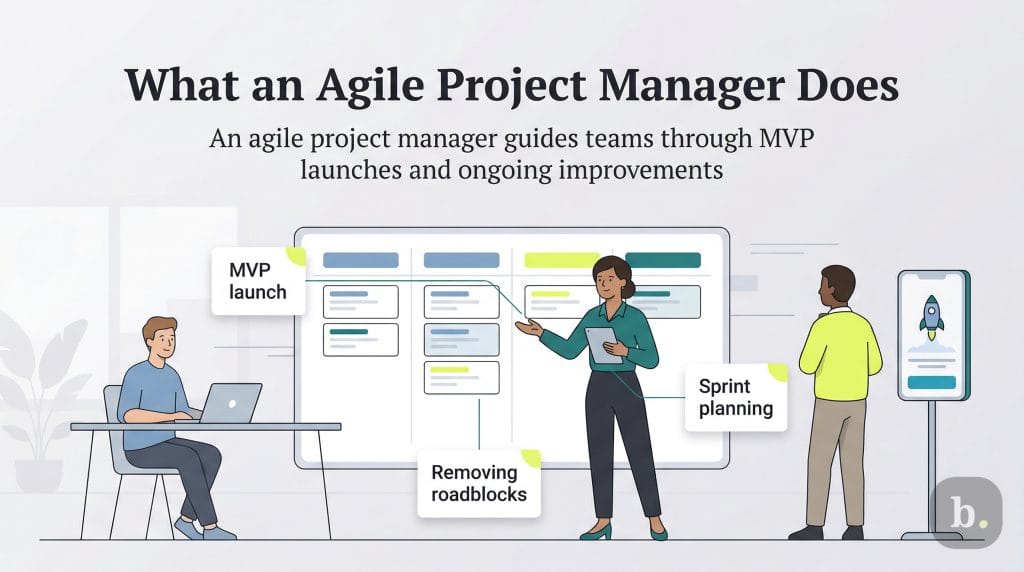
Agile companies don’t wait until a product is perfect before releasing it. Instead, they launch a minimum viable product (MVP) and improve it over time with regular updates.
Agile project managers don’t write code themselves. Their role is to guide teams through initial launches and ongoing development cycles. They focus on removing roadblocks, coordinating cross-functional teams and making sure projects stay on schedule and within budget.
Approximate average salary: $105,000
Artificial intelligence engineers turn AI strategies into working systems. They build, train and deploy the models that power AI chatbots, recommendation engines and other intelligent tools. Demand for this role has climbed with the rise of generative AI, as companies look for engineers who can develop and fine-tune large language models (LLMs).
To succeed, you’ll need a strong foundation in software development and data engineering, along with experience using AI frameworks such as TensorFlow or PyTorch. Comfort working with large datasets and cloud computing platforms is also important.
Approximate average salary: $125,000
Artificial intelligence (AI) and machine learning (ML) tools can help companies automate tasks, analyze large datasets and improve business decision-making. AI specialists focus on applying these technologies within an organization’s existing systems. Rather than building new models from scratch, they often adapt, implement and optimize AI tools to support business goals.
Success in this role requires a solid understanding of AI and ML concepts, along with practical knowledge of software systems and data security. Employers value candidates who can connect technical capabilities to real operational needs.
Approximate average salary: $139,000
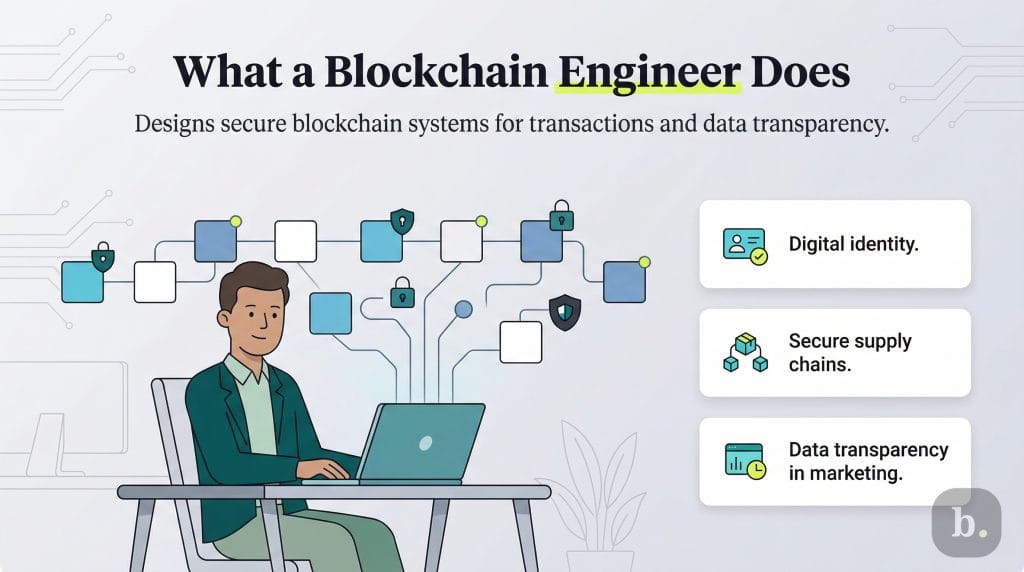
Blockchains are distributed digital ledgers that record and verify transactions. While they were originally developed to support cryptocurrencies such as Bitcoin, companies now use blockchain technology in various industries beyond financial technology, ranging from supply chain management to healthcare.
Blockchain engineers design, build and maintain blockchain networks and the protocols that support them. They’re responsible for developing secure systems that can handle large volumes of transactions and protect sensitive data.
To succeed in this role, you’ll need a strong understanding of blockchain architecture and its practical applications. Proficiency in programming languages such as Java, Go, C++ and Solidity is also essential.
Approximate average salary: $130,000
C and C++ developers write low-level and system software that powers operating systems, embedded devices and performance-critical applications. They design, build and test new features, as well as maintain and improve existing codebases.
Employers look for strong proficiency in C and C++, along with experience working in modern development environments. Familiarity with additional languages such as Python, Go or Java — and version control systems like Git — is often expected in collaborative teams.
Approximate average salary: $117,000
Cloud computing continues to expand as organizations shift more of their infrastructure and applications off-site. Cloud architects design, build and oversee the systems that power cloud services and environments, including the security controls that protect sensitive data.
In this role, you’ll need hands-on experience with infrastructure-as-a-service (IaaS) platforms such as Amazon Web Services (AWS) and Microsoft Azure. Familiarity with containers, APIs, serverless computing and DevSecOps practices is also important as companies modernize their tech stacks.
Approximate average salary: $155,000
Computer network architects design and maintain the data communication systems that keep organizations connected. They build everything from local area networks (LANs) to wide area networks (WANs) and cloud-based infrastructure, ensuring systems can scale as business needs evolve.
In this role, you’ll create plans for new networks, upgrade hardware and evaluate security controls to protect organizations from data breaches and other threats. Most professionals enter the field with a degree in information technology, engineering or a related discipline, along with hands-on experience as a network or systems administrator. Senior positions may require advanced certifications or management experience.
Approximate average salary: $123,000
Cybersecurity engineers protect an organization’s systems, networks and data from phishing, ransomware attacks and other cyberattack risks. They design and implement security controls, monitor systems for vulnerabilities and respond quickly when incidents occur. Many also help train employees on security best practices to reduce the risk of human error.
To succeed in this role, you’ll need experience conducting cybersecurity risk assessments, understanding current and emerging threats and developing security policies that align with business needs.
Approximate average salary: $124,000
Data architects design the systems that allow organizations to collect, store and access data effectively. They create the overall structure for databases and data warehouses, ensuring information is organized, secure and ready to support business decisions.
In this role, you may oversee new database implementations, modernize legacy systems and develop strategies for managing historical data. Employers typically look for strong SQL skills, experience with platforms such as Oracle and a background in data analysis or data engineering.
Approximate average salary: $122,000
Data modelers organize and structure big data so companies can use it effectively. They design frameworks that define how information is stored, connected and accessed across systems, helping teams turn raw data into usable insights.
In this role, you’ll work with large datasets, identify relationships between data points and create models that support reporting and analytics. Strong analytical skills and a solid understanding of information systems are essential.
Approximate average salary: $104,000
Data scientists analyze large datasets to help business leaders make informed decisions. They identify trends, build predictive models and translate complex findings into insights that C-suite executives can use to shape strategy.
Success in this role requires more than technical skill. You’ll need to understand the business context behind the numbers and determine which data points matter most. Strong analytical ability, experience with statistical tools and the ability to communicate findings clearly are essential.
Approximate average salary: $112,000
DevOps engineers bridge development and operations teams to improve how software is built, tested and deployed. In this role, you’ll automate infrastructure, manage cloud environments and streamline release cycles.
Strong DevOps engineers understand both coding and systems administration. They focus on improving system reliability, reducing downtime and ensuring new features move smoothly from development to production.
Approximate average salary: $125,000
Full stack engineers don’t specialize in just one part of an application. They move between the front end and back end, working with the languages and tools that run in browsers, on servers and inside databases. Because they understand how the pieces connect, they can step in at almost any point, whether that’s shaping an early prototype, building features or helping push a release live.
Employers typically look for experience in responsive web design and core web technologies such as HTML, CSS and JavaScript, along with familiarity with back-end languages like Java or PHP and database systems that use SQL.
Approximate average salary: $106,000
Hardware engineers design and develop the physical components that power computers and related devices. Their work can include processors, circuit boards, chips and other core systems that support modern computing.
In this role, you may help develop prototypes, test performance and collaborate with manufacturing teams to ensure products meet quality and safety standards. While the field overlaps with electrical engineering, hardware engineers focus specifically on computer and computing-related technology.
Approximate average salary: $130,000
Interaction designers focus on making websites and apps intuitive and easy to use. Their goal is to improve how users move through digital products, whether that means simplifying navigation, reducing friction on e-commerce websites or making information easier to find.
One well-known example of interaction design is infinite scroll, originally created by Aza Raskin for social media platforms. The feature is now widely used across news sites and other content-heavy platforms.
Employers typically look for proficiency in design tools such as Figma, along with a working knowledge of front-end technologies like HTML, CSS and JavaScript. Familiarity with version control platforms such as Git and GitHub is also valuable.
Approximate average salary: $76,000
It’s often faster and more convenient to check your bank balance or shop through a mobile app vs. a mobile browser. That’s one reason companies continue to invest in built-in mobile experiences.
iOS developers build and maintain apps for Apple devices, including iPhones and iPads. In this role, you’ll design, code and test applications using Swift and other tools within Apple’s development ecosystem. Strong attention to performance, usability and security is critical, since users expect apps to load quickly and work reliably.
While this role focuses on Apple’s platform, mobile development isn’t limited to iOS. Android developers and engineers who specialize in cross-platform tools like React Native are also in demand.
Approximate average salary: $120,000
Lead software engineers combine technical expertise with team leadership. They’re senior developers who guide projects from planning through release, while still contributing hands-on code and technical direction.
In this role, you’ll coordinate developers, review architecture decisions and help solve complex technical challenges. Lead software engineers often mentor junior team members and may weigh in on budget planning, timelines and outside vendors when needed.
Approximate average salary: $120,000
Python is widely used in software development, web applications and data analytics. Developers rely on it to build backend systems, automate workflows and connect applications to databases.
Because Python is widely used in AI and data work, experienced developers are still in strong demand. Employers often want to see hands-on experience with frameworks like Django or Flask, along with comfort using Git and GitHub to manage code.
Approximate average salary: $120,000
Ruby on Rails engineers build web applications, e-commerce platforms and content management systems using the Rails framework. They typically work across both the front end — what users see — and the back end that powers the application.
Employers look for strong experience with Ruby on Rails, along with familiarity with JavaScript, HTML, CSS and SQL. Proficiency with version control tools such as Git and GitHub is also important in collaborative development environments.
Approximate average salary: $115,000
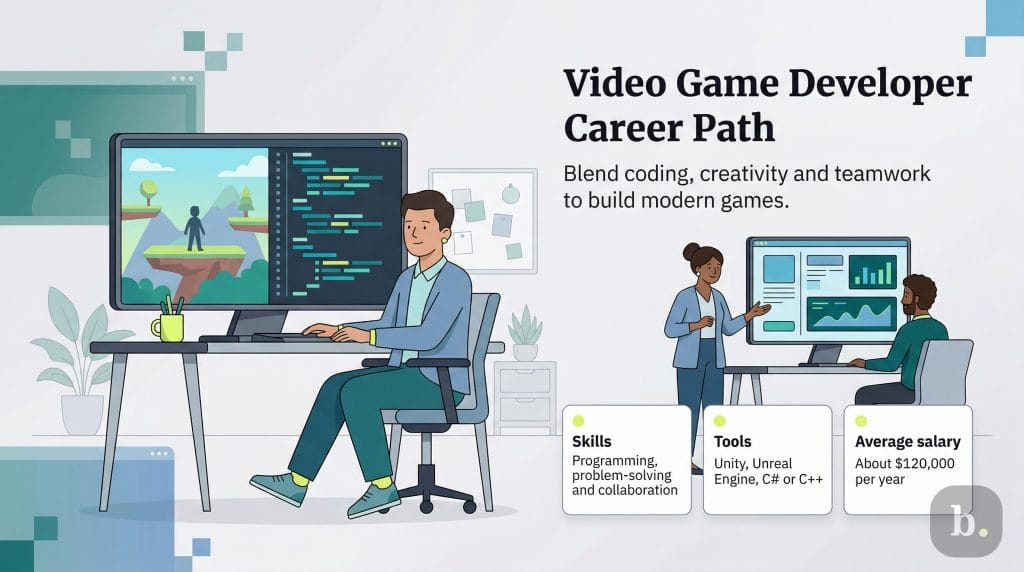
Video game developers create games for consoles, computers and mobile devices. As gaming continues to grow across platforms, studios rely on skilled developers to bring ideas from concept to launch.
Game development is highly collaborative. Teams often specialize in areas such as graphics, gameplay mechanics and performance optimization, working together to refine and debug each release.
To enter this field, you’ll typically need experience with game engines such as Unity or Unreal Engine, along with proficiency in programming languages used for game development. Employers also value creativity, teamwork and the ability to meet tight production deadlines.
Approximate average salary: $120,000
Despite the ongoing shortage of tech talent in the U.S., high-paying roles remain competitive. Employers want candidates who combine technical depth with strong communication and collaboration skills. Here are expert-backed ways to stand out in the hiring process.
Mark Fairlie contributed to this article. Source interviews were conducted for a previous version of this article.