Business.com aims to help business owners make informed decisions to support and grow their companies. We research and recommend products and services suitable for various business types, investing thousands of hours each year in this process.
As a business, we need to generate revenue to sustain our content. We have financial relationships with some companies we cover, earning commissions when readers purchase from our partners or share information about their needs. These relationships do not dictate our advice and recommendations. Our editorial team independently evaluates and recommends products and services based on their research and expertise. Learn more about our process and partners here.
Are you guilty of poor nonverbal communication? Avoid making these negative body language mistakes at work.


Communication drives success for employees, teams and entire businesses. The way you express yourself can help you land a job, build strong relationships, earn new business, improve customer retention and so much more.
But communication isn’t just about what you say. Much of what others perceive about you comes from what they see. Research shows that people process visual cues far more than verbal ones, which means your posture, gestures and expressions can speak volumes, even when you’re silent. Understanding which body language habits to avoid can help you communicate more confidently and make a stronger impression at work.
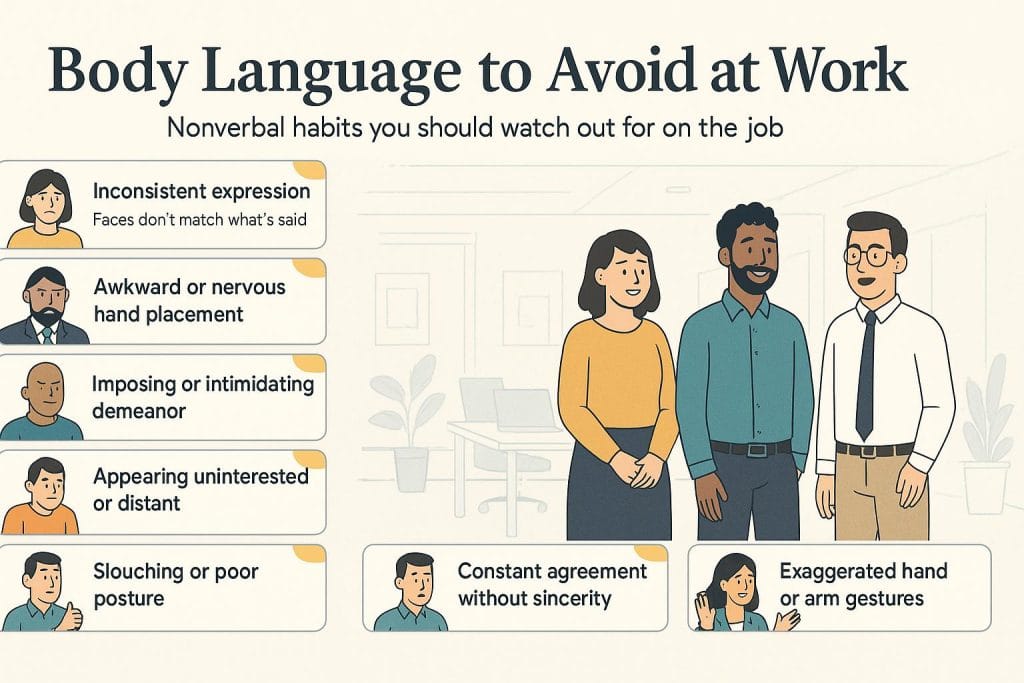
Be mindful of how your nonverbal communication might come off to others and how it might impact your individual and company success. Here are seven key nonverbal cues to avoid.
When someone’s words and expressions don’t match, it can create confusion and make their intent harder to read. In business settings, that mismatch can quickly undermine credibility during conversations, negotiations or performance reviews. Clear, genuine communication, where tone, facial expression and message work together, helps reinforce trust and understanding. Instead of sending mixed signals, express your thoughts clearly and make sure your tone and expressions match your message.
When you’re frustrated or overwhelmed, where do your hands go? Do you tug at your clothing, touch your face or twirl your hair? Confident professionals avoid these gestures, as they can make you seem uneasy or distracted. Common habits like rubbing your face or neck, fidgeting with your hands, or using the “fig leaf” pose — standing with both hands in front of your groin — can signal discomfort or insecurity.
If you struggle with nervous gestures, consider recording yourself during a practice presentation. Watching your own body language can help you identify and replace these unconscious habits with calm, purposeful movements.
You don’t want to appear overconfident or aggressive. Clenched fists, intense eye contact and angry expressions can make co-workers hesitant to share ideas and may push potential partners toward more collaborative alternatives.

In contrast, a composed, confident presence encourages open, much more comfortable interactions in the workplace. This is especially important in an age when workplace conflicts can become serious. According to the Society for Human Resource Management, 61 percent of U.S. workers have personally witnessed or experienced acts of incivility at the office — incidents that can destroy morale and hinder productivity.
Ensuring everyone feels safe and comfortable is paramount. To do so, keep a reasonable amount of personal space (about 18 inches in most professional settings) between you and those you’re speaking with, which helps conversations feel natural and respectful. Genuine, relaxed smiles also shape how others perceive you. Research published in the Journal Evolution & Human Behavior found that smiles rated as more genuine led observers to view people as more trustworthy and cooperative, a reminder that authenticity in even small gestures can leave a lasting impression.
Crossed arms, eye rolls, constant glances at the clock or phone, or avoiding eye contact altogether can make a person seem disengaged or closed off. These cues suggest disinterest and can discourage collaboration or conversation.
Engagement shows through subtle, consistent signals. One sign of attentiveness is steady eye contact, which often reflects genuine interest in what others are saying. Even small adjustments — like angling your body slightly during a tense discussion — can diffuse pressure while keeping you part of the conversation.
When you hunch over, you can appear tired, disengaged or unsure of yourself. Posture shapes perception — both how others see you and how you see yourself. Research in the European Journal of Social Psychology found that sitting upright with your chest out increased participants’ confidence in their own thoughts compared with slouched postures, which were linked to doubt and lower self-evaluation.
Good posture helps you occupy your space fully and convey calm assurance. Standing or sitting tall signals readiness and professionalism, reinforcing a sense of confidence that others are likely to notice.
Always agreeing with your co-workers or employees might feel safe and polite, but avoiding honest dialogue actually limits creativity and progress. Different viewpoints and experiences help teams think more critically and solve problems from multiple angles. In fact, McKinsey research shows that companies in the top quartile for racial and ethnic diversity are 35 percent more likely to outperform less-diverse peers, a reflection of how a mix of backgrounds and ideas strengthens business decision-making and innovation.
Conversations often feel more constructive when the atmosphere is steady and focused. People notice nonverbal cues — subtle movement, composure and pacing — and those signals quietly influence how ideas are received. When participants appear comfortable and engaged, workplace collaboration tends to stay open, thoughtful and respectful.
Flailing arms and other similar gestures can invade others’ personal space. These exaggerated mannerisms can portray you as one who inflates the truth and is possibly frenzied, which are not ideal traits in the business world. Instead, use controlled gestures within your shoulder width to emphasize key points while maintaining professional composure.
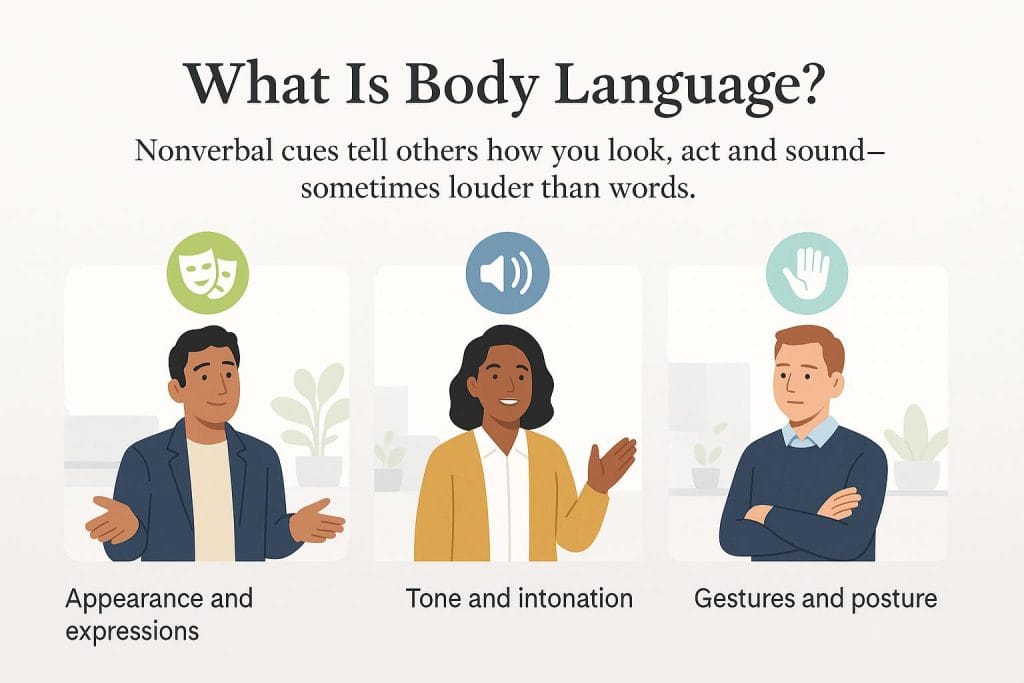
Body language is the unspoken part of communication — the signals you send through your movements, expressions, posture and tone of voice. It’s how you communicate without using words.
These nonverbal cues might be intentional, like making eye contact to show confidence, or more instinctive, like crossing your arms when you’re thinking. Because people tend to focus on what they see as much as what they hear, your body language often helps others interpret your message.
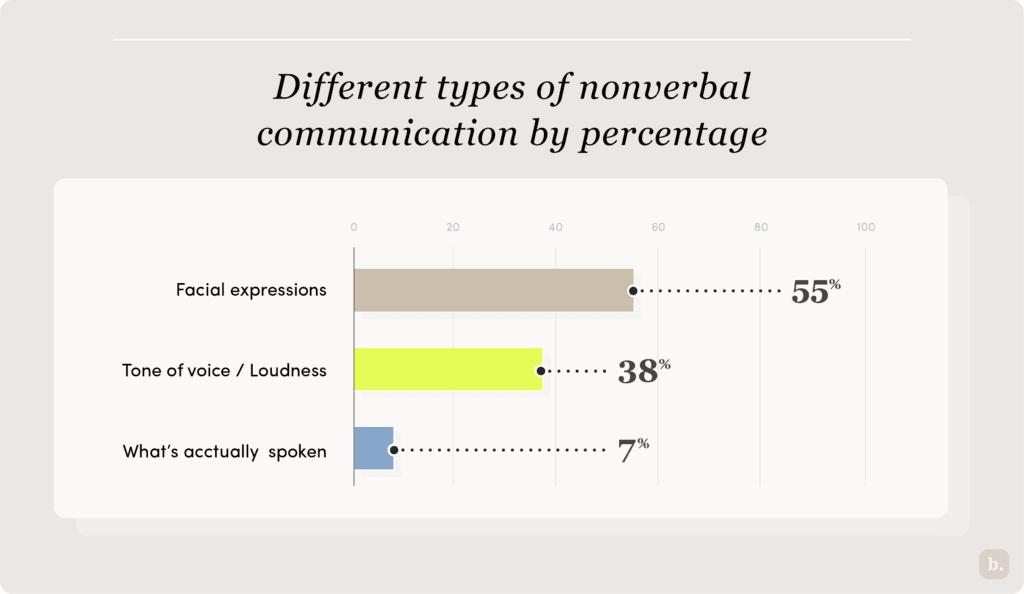
While Albert Mehrabian’s classic research highlighted how much of communication is nonverbal, modern studies continue to show its influence in professional settings. Research from Erasmus University found that when presenters used frequent hand gestures during a pitch, investors were about 12 percent more interested in the idea. The takeaway: Confident, expressive body language can make your message more persuasive and memorable.
Because communication shapes nearly every part of business, using positive body language isn’t just a nice-to-have business skill. It helps you build trust, strengthen relationships and create a workplace where employees and customers feel respected and understood.
Here are a few key reasons why body language is important in the workplace:
According to a report by Owl Labs, 38 percent of U.S. employees now have remote work plans or hybrid work arrangements. A 2025 Robert Half survey found a similar trend, with 36 percent of job postings offering remote or hybrid options. With so much daily communication happening through screens, learning how to present yourself well on camera has become a vital professional skill.
Even though most of us are more comfortable on video calls than we were a few years ago, subtle nonverbal habits can still send the wrong message. Since your screen only shows a limited view, gestures, expressions and posture take on extra importance. Practicing good virtual body language, like maintaining eye contact with the camera, sitting upright, and avoiding distractions, helps you appear attentive, confident and engaged.
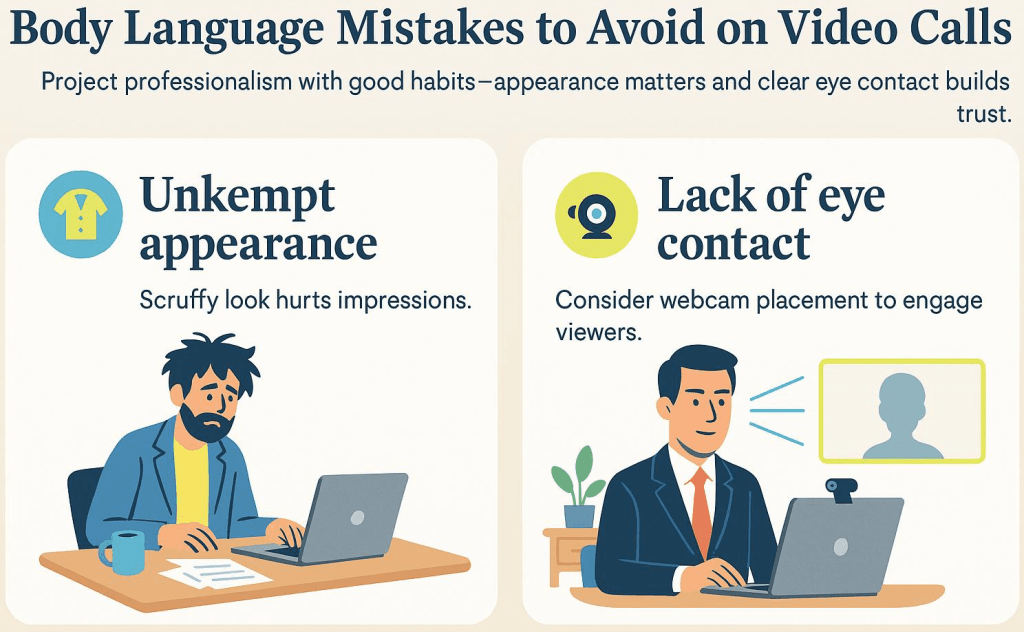
A disheveled look, like messy hair or a scruffy face, can send the wrong message that you’re not fully engaged in the conversation. While workplace dress codes are generally more relaxed today, maintaining a neat, professional appearance still matters on video calls, especially when meeting with clients or company leaders. Taking a few extra minutes to look polished can also boost your confidence, which naturally comes across in how you speak and carry yourself.
As with in-person nonverbal communication, eye contact is incredibly important over video calls. Eye contact makes you appear more trustworthy and helps you build relationships. But making eye contact can be somewhat challenging via video conferencing, depending on how your webcam is set up. Position your webcam at eye level and place a small arrow or dot near your camera lens as a reminder to look there when speaking.
Lighting affects mood and productivity in an office setting, but it can also affect virtual meetings. When you’re preparing for an online business call, choose a space with good lighting so others can clearly see your face and expressions. Since facial expressions make up about 55 percent of communication, visibility helps people connect your words with your tone and intent. Natural light in front of you works best, but a simple ring light or desk lamp positioned behind your monitor can also make a big difference in how professional and engaged you appear.
How you appear in the frame on a video call is just as important as your posture in an in-person meeting. Sitting too close to the camera can feel intrusive and limit your body language, preventing others from seeing gestures that convey warmth and personality.
On the other hand, sitting too far back makes it hard for people to read your expressions. Aim for a balanced setup that shows you from mid-chest up, with your eyes in the top third of the screen. This framing feels natural, professional and helps you maintain a comfortable sense of space.
Whether you’re meeting in person or over video, fidgeting or touching your face can signal distraction or nervousness. These small habits can make you seem unsure of your message. To manage the urge to move, keep a stress ball or small fidget tool out of sight below the camera; it lets you release tension discreetly while keeping your upper body language calm and confident.
Patrick Barnett contributed to this article.