Business.com aims to help business owners make informed decisions to support and grow their companies. We research and recommend products and services suitable for various business types, investing thousands of hours each year in this process.
As a business, we need to generate revenue to sustain our content. We have financial relationships with some companies we cover, earning commissions when readers purchase from our partners or share information about their needs. These relationships do not dictate our advice and recommendations. Our editorial team independently evaluates and recommends products and services based on their research and expertise. Learn more about our process and partners here.
Learn the signs you've outgrown your current business credit card, how upgrades work and what to consider before making a switch.


The business credit card you opened when you were starting a business may not be the best fit for the company you run today. As a business grows, spending patterns change, credit needs evolve and new card options become available. A card that once made sense may no longer offer the rewards, credit limits or features your business needs most.
Recognizing when it’s time to upgrade can help you get more value from your spending and avoid paying for features that no longer fit the way your business operates. This guide explains the signs you’ve outgrown your current card, how business credit card upgrades work, what to look for in a replacement card and how to time the transition.
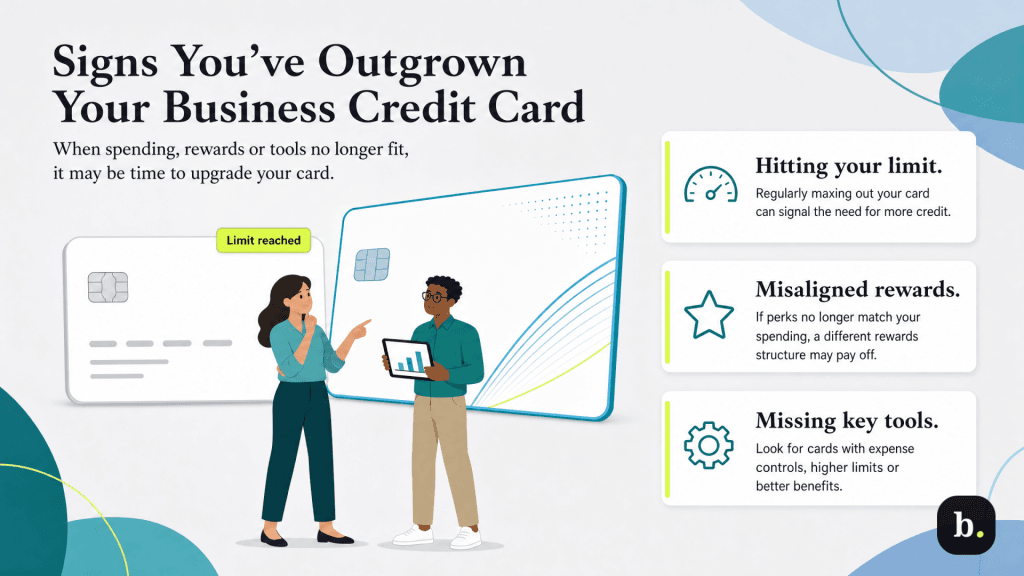
Growth changes more than revenue. It can also affect how your business spends money, manages cash flow and uses credit. If your current card no longer fits the way the business operates, an upgrade may be worth considering. Here are some signs to watch for:
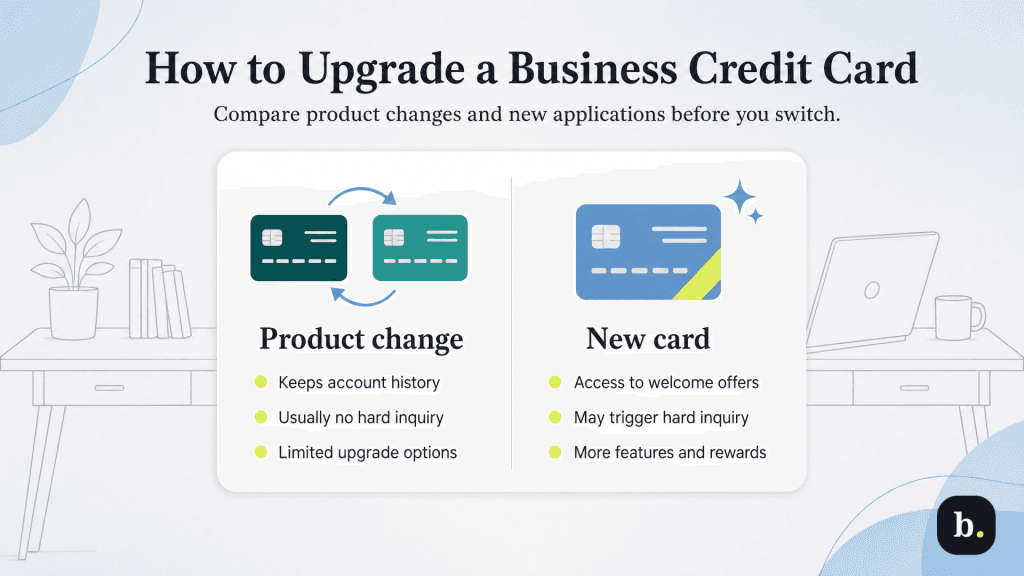
There are two main ways to upgrade a business credit card: request a product change with your current issuer or apply for a new card. The better path depends on whether you want to preserve your current account history, qualify for a welcome offer or move to a card with different features.
A product change lets you swap one card for another, staying within the same business credit card issuer. This is often the easiest way to upgrade your business credit card because it typically keeps your account history intact and usually doesn’t require a hard credit inquiry.
Start by reviewing the cards your issuer allows you to switch to. Product changes are typically limited to cards within the same issuer family, and not every card will be eligible. Then compare the annual fee, rewards structure, credit limit, employee card options and business credit card fees before deciding whether the new card is a better fit.
A product change isn’t always the best deal, though. Some issuers keep their largest welcome bonuses and promotional APR offers for new applicants, not existing cardholders switching products. You may also have fewer upgrade options if the account is less than a year old.
Applying for a new card can give you more flexibility, especially if your current issuer doesn’t offer a strong upgrade option. This path may also make sense if you want a welcome bonus, a promotional APR offer, better rewards or features your current card family doesn’t provide.
Before applying, compare the new card’s rewards and benefits against its costs. You should also consider how the new application could affect your credit profile and business credit score. A new application will likely trigger a hard inquiry, while a product change may not.
If you move spending to a new card, think carefully before closing the old one. Closing a card can reduce your total available credit and may affect your utilization ratio. In some cases, keeping the original account open — especially if it has no annual fee — can help preserve your credit history while you use the new card for future business spending.
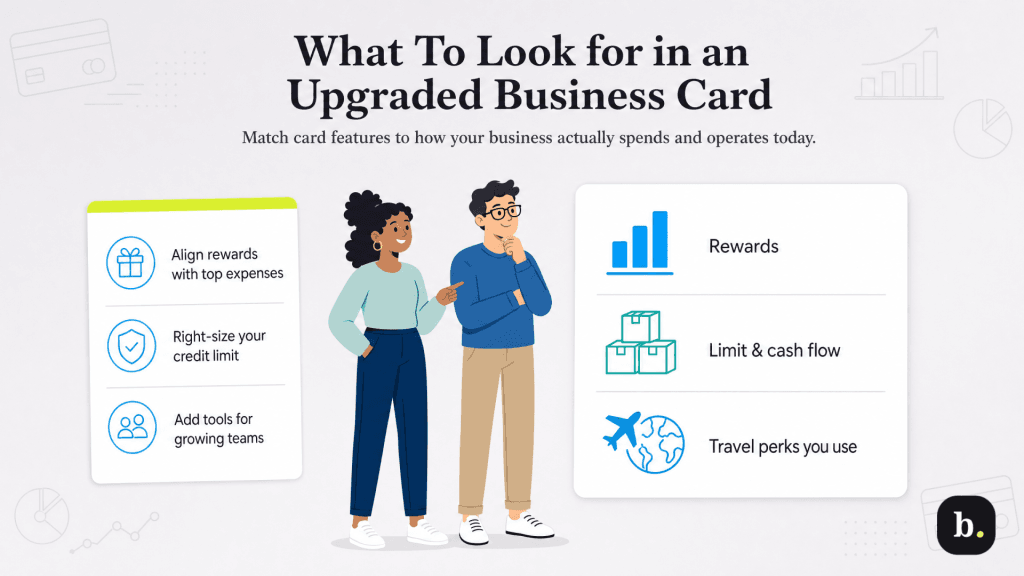
Not every upgrade is worth making. The best business credit card for your company depends on how you spend, borrow and manage cash flow today — not how the business operated when you first opened a card. As you compare options, focus on features that will deliver meaningful value rather than simply choosing the card with the largest welcome offer. Consider the following:
Usually not, especially if you’re upgrading through a product change with your current issuer. A product change that doesn’t involve a hard inquiry typically has little to no effect on your credit because the existing account remains open and its history stays intact. In some cases, an upgrade may even come with a higher credit limit. If spending remains the same, that additional available credit can lower your utilization ratio.
Applying for a new card can have a greater short-term impact. New applications generally trigger a hard inquiry and create a separate account, which can affect factors such as account age and credit utilization. For most businesses, any impact is modest and tends to fade over time. However, it’s something to keep in mind if you expect to apply for a business loan, line of credit or other financing in the near future.
Choosing the right card matters, but timing the upgrade can matter just as much. A little patience — or waiting until after a major financing application — can help you avoid unnecessary headaches and get more value from the move. Here are some tips:
The business credit card that made sense when you were starting out may not be the best fit today. As spending patterns change, credit needs evolve and new features become available, it’s worth periodically taking a fresh look at whether your current card still delivers value.
An upgrade doesn’t have to be dramatic. Sometimes it’s a simple product change with your existing issuer. Other times, it’s adding a new card that better aligns with the way your business operates. Many growing companies ultimately use multiple business credit cards to maximize rewards, separate spending categories or give employees access to dedicated cards. The goal isn’t to chase the flashiest offer — it’s to make sure your card supports the business you’ve become.
