Business.com aims to help business owners make informed decisions to support and grow their companies. We research and recommend products and services suitable for various business types, investing thousands of hours each year in this process.
As a business, we need to generate revenue to sustain our content. We have financial relationships with some companies we cover, earning commissions when readers purchase from our partners or share information about their needs. These relationships do not dictate our advice and recommendations. Our editorial team independently evaluates and recommends products and services based on their research and expertise. Learn more about our process and partners here.


LogMeIn Resolve (formerly GoTo Resolve and GoTo Assist) is a remote support and endpoint management platform that helps IT teams troubleshoot devices, manage tickets, monitor endpoints and provide remote PC access from a single system. During our review, we found that remote support is only part of the story. The platform also includes endpoint management, help desk tools, automation and device monitoring capabilities, making it a strong fit for businesses that want to support users and manage devices without juggling multiple IT tools.
Businesses often rely on separate tools for remote support, device management, ticketing and endpoint monitoring. During our review of LogMeIn Resolve, we found that it brings all of those capabilities together in a single platform, making it our choice for the best remote support and endpoint management solution.
LogMeIn Resolve allows technicians to launch attended support sessions, provide unattended access and manage endpoints from the same system. We especially like that support teams can create sessions through a web-based console, share links or support keys with users and access tools such as file transfer, screen sharing, chat, session notes and remote execution without constantly switching between applications.
One feature that stood out during our review was Camera Share. Technicians can view a user’s surroundings through their mobile device camera to troubleshoot hardware, equipment and other physical issues that can’t be diagnosed through a traditional remote desktop session. Unlike remote-control sessions, Camera Share doesn’t require users to download software, making it a convenient way to investigate problems in real time.
Beyond remote support, LogMeIn Resolve includes endpoint management, remote monitoring, help desk tools and conversational ticketing integrations with platforms such as Microsoft Teams. The platform also follows a Zero Trust security model and supports Windows, Mac, iOS, Android and Chromebook devices. Businesses that want to support users, manage devices and keep IT operations organized from one platform will find a lot to like in LogMeIn Resolve.
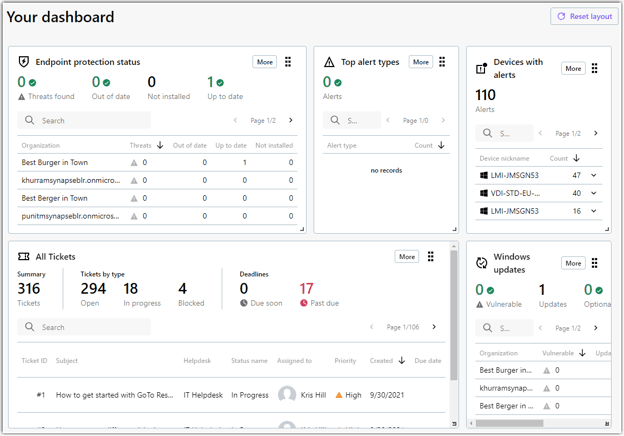
During our review of LogMeIn Resolve, we found the platform relatively easy to navigate despite the number of tools it includes. Remote support, help desk, device management, reporting and automation features are grouped into separate sections, so it didn’t take long to figure out where to go for common tasks.
Getting started requires some initial setup, particularly if you’re configuring devices, policies or endpoint management tools. However, Resolve provides guided onboarding and in-app prompts to help administrators get up and running. We also like that settings and policies can be applied across multiple devices, reducing repetitive administrative work.
Starting a support session is straightforward. Technicians can invite users to a support session with a direct link or support key and manage attended and unattended support from the same interface. Additional technicians can join active sessions when an issue requires extra expertise.
The help desk tools are also easy to navigate. Ticketing, device monitoring and support workflows are available from the same dashboard, making it easier to keep track of requests and endpoint issues. Microsoft Teams integration also allows users to submit and manage tickets without switching applications.
Overall, we found LogMeIn Resolve intuitive for both technicians and administrators despite its broad feature set.
LogMeIn Resolve gives IT teams a centralized way to support users, manage devices and monitor endpoint health. Here are some of the features that stood out most.
Many IT teams rely on separate tools for remote support, device management, ticketing and endpoint monitoring. LogMeIn Resolve brings those functions together in one system, giving technicians a centralized place to support users, monitor devices and manage IT operations.
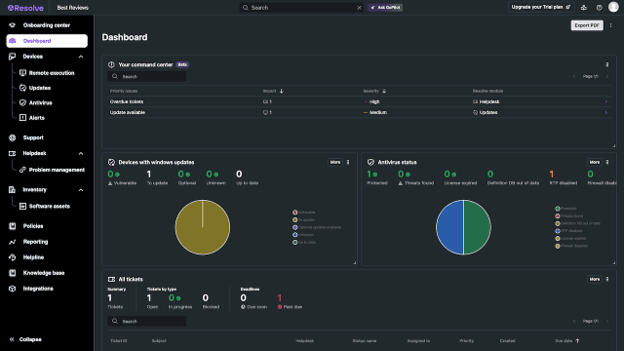
The dashboard provides visibility into device health, alerts, tickets, software updates and security status without requiring administrators to jump between multiple applications. We also like that remote support, unattended access, help desk tools and RMM capabilities are integrated into the same environment, helping teams centralize workflows and reduce tool sprawl.
For small and midsize businesses in particular, this unified approach can simplify day-to-day IT management and make it easier to keep track of support requests, endpoint issues and ongoing maintenance tasks.
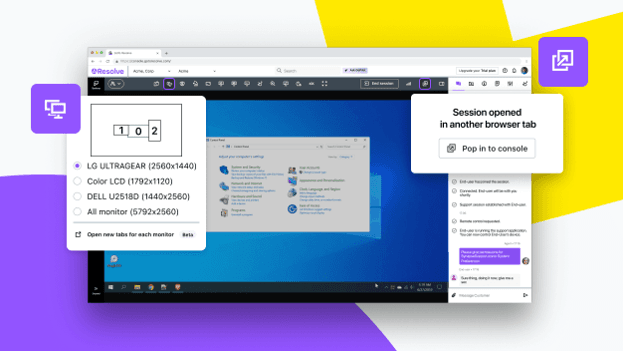
LogMeIn Resolve makes it easy for technicians to support users whether they need immediate assistance or ongoing access to managed devices. Technicians can launch attended support sessions from the web-based console and invite users with a direct link or support key. Once connected, they can use tools such as screen sharing, file transfer, chat and session notes to diagnose and resolve issues.
We also like that Resolve supports unattended access, allowing IT teams to connect to devices when end users aren’t available. This capability is especially useful for performing maintenance, troubleshooting problems outside business hours and managing distributed devices across multiple locations.
Another advantage is that attended and unattended support tools are accessible from the same interface. Technicians don’t have to switch between separate products to help users, access managed devices or perform routine support tasks. During our review, we found the workflow straightforward and appreciated the ability to bring additional technicians into support sessions when more expertise is needed.
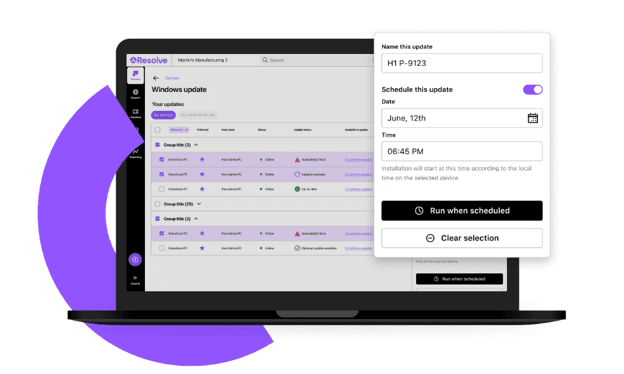
LogMeIn Resolve includes RMM tools that help IT teams keep an eye on device health and address issues before they disrupt users. Administrators can use the platform for real-time monitoring of endpoints while tracking alerts and viewing device status from a centralized dashboard.
The platform also includes patch management and update tools, allowing administrators to identify outdated software and deploy updates across multiple devices. We like that technicians can see alerts, endpoint health information and support activity in one place rather than jumping between separate management tools.
Resolve goes beyond basic device monitoring with features such as remote execution, policy management and antivirus oversight. These tools can help IT teams automate routine maintenance tasks, maintain device security and reduce the amount of manual work required to manage large numbers of endpoints.
For businesses with remote work plans or distributed workforces, these tools help IT teams keep devices updated, monitor endpoint health and address problems before they generate support tickets.
LogMeIn Resolve includes a built-in remote help desk that helps IT teams track, prioritize and manage support requests from the same platform they use for remote support and device management. We found it helpful to have tickets, device information and support tools connected in one system rather than spread across multiple applications.
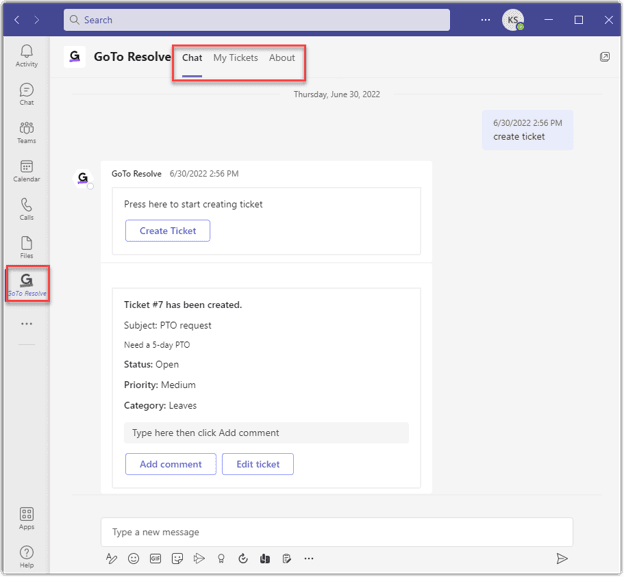
One feature we especially like is conversational ticketing. Resolve integrates with collaboration platforms such as Microsoft Teams, allowing users to submit and manage employee issues without leaving the tools they already use every day. Technicians can respond to tickets, track progress and access related device information from one place.
The help desk also supports ticket management, assignment, prioritization and workflow management, helping teams stay organized as request volumes grow. For businesses that already rely on Microsoft Teams for internal communication, these integrations can make it easier for employees to get help and for IT teams to keep service requests moving.
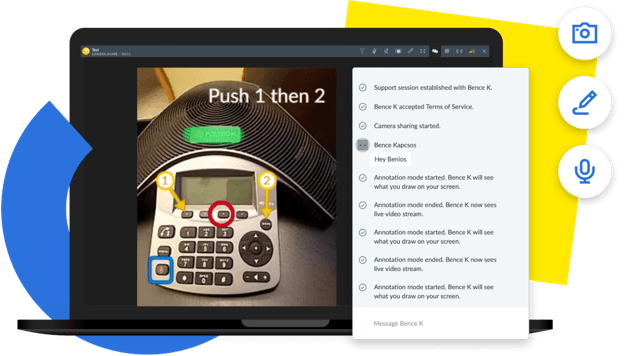
Some IT problems can’t be solved through a traditional remote desktop session. When troubleshooting hardware, equipment or physical setups, technicians often need to see what’s happening in the real world. LogMeIn Resolve’s Camera Share feature addresses this challenge by allowing users to stream video from their mobile device cameras during a support session.
During our review, we found Camera Share particularly useful for diagnosing issues involving printers, business Wi-Fi hardware, network equipment, point-of-sale systems and other devices that can’t be fully evaluated from a computer screen alone. Technicians can view live video, take snapshots, annotate images and guide users through troubleshooting steps in real time.
Unlike attended remote-control sessions, Camera Share doesn’t require users to download software. Instead, users can open a link and grant permission to access their device camera, making it relatively easy to start a visual support session. However, note that Camera Share is sold as an add-on rather than being included with every Resolve plan.
Remote support tools are powerful, which is why cybersecurity and risk management play such an important role in vendor selection. LogMeIn Resolve includes several controls designed to help businesses manage access and limit unauthorized changes. For example, technicians may be required to complete additional verification steps before performing certain administrative tasks.
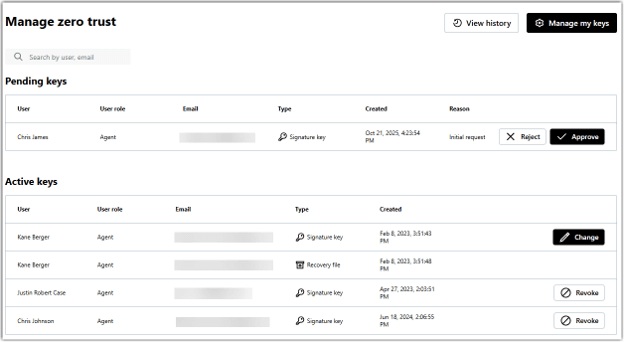
We like that security controls are built into everyday workflows. Resolve supports role-based permissions, multifactor authentication and encrypted remote support sessions. It also uses signature keys and confirmation prompts for sensitive actions, such as installing updates, adding an extra layer of verification before changes are made.
We also appreciate that security controls extend beyond remote support sessions. Resolve includes tools for managing software updates, monitoring device health and maintaining endpoint visibility across distributed environments. For businesses whose cybersecurity plan must include supporting remote employees or managing large numbers of devices, these controls can help strengthen security while giving IT teams the access they need to do their jobs.
LogMeIn Resolve has four tiers that build from unattended remote access to full endpoint management. You can often find discounts and promotional pricing, so check the company’s website for current offers.
Plan | Starting Price (annual billing) | Key Features |
|---|---|---|
Starter | $29 per month |
|
Growth | $55 per month | Everything in Starter, plus:
|
Advanced | $78 per month | Everything in Growth, plus:
|
Complete | $94 per month | Everything in Advanced, plus:
|
Keep the following additional pricing considerations in mind:
Getting started with LogMeIn Resolve is relatively straightforward because the platform is cloud-based and delivered through cloud services rather than on-premises infrastructure. New administrators are walked through key setup tasks, including creating a signature key, adding users and configuring devices. LogMeIn also provides a detailed Getting Started guide, an Admin Checklist and free training resources through its Embark learning portal.
Technicians can access Resolve through either a web-based console or a desktop application for Windows and macOS. We like that businesses can choose the setup that best fits their workflows instead of being locked into a single management interface.
Starting a support session is straightforward. Technicians can send users a link or access code to start a support session in just a few clicks. If a business wants ongoing access to a device, LogMeIn Resolve requires a small agent to be installed first. Once that’s done, technicians can reconnect to that device whenever needed.
Overall, we found Resolve’s onboarding process approachable for small and midsize IT teams, especially those that want a single platform for remote support, help desk functions and endpoint management.
All paid LogMeIn Resolve plans include live customer support via email, chat and phone. However, users typically start through the product’s online support portal rather than a direct support phone number. After they submit basic information about their issue, Resolve routes them to the appropriate support resources or team. That extra step may be frustrating for businesses that prefer to pick up the phone and speak with someone right away.
The portal also provides access to technical documentation, troubleshooting articles, case management tools and community resources. We do like that Resolve offers free training resources for new users and maintains a public service-status page so customers can quickly check for platform outages or service disruptions.
Here are a few potential drawbacks to keep in mind if you’re considering LogMeIn Resolve:
We spent considerable time investigating the best remote PC access software and remote support platforms on the market. As we evaluated LogMeIn Resolve, we obtained a free trial to test the product firsthand, corresponded with the customer support team and reviewed tutorials, training materials and support documentation. We closely examined Resolve’s remote support, endpoint management, help desk, security and automation features, along with its pricing, integrations, usability and customer support. When selecting the best remote support and endpoint management solution, LogMeIn Resolve stood out for its functionality, ease of use, security, scalability and overall value.
We recommend LogMeIn Resolve for …
We don’t recommend LogMeIn Resolve for …