Business.com aims to help business owners make informed decisions to support and grow their companies. We research and recommend products and services suitable for various business types, investing thousands of hours each year in this process.
As a business, we need to generate revenue to sustain our content. We have financial relationships with some companies we cover, earning commissions when readers purchase from our partners or share information about their needs. These relationships do not dictate our advice and recommendations. Our editorial team independently evaluates and recommends products and services based on their research and expertise. Learn more about our process and partners here.
Building a personal brand can boost sales and give you a competitive edge.


Many entrepreneurs consider their companies extensions of themselves, and there’s a good reason for that: When you start a business, you pour your hard work, vision and values into it every day. But it also means you, personally, affect how customers, vendors and investors see your business — for better or worse.
Editor’s note: Looking for the right social media management tool for your business or personal use? Fill out the below questionnaire to have our vendor partners contact you about your needs.
This public image you portray is called personal branding. When others research you, they should discover your intelligence, knowledge and expertise in your field and feel confident doing business with you. They should also find that you (and your employees) operate with transparency, professionalism and integrity. We’ll explain more about using personal branding in your marketing plan and share tips for starting a personal branding campaign.
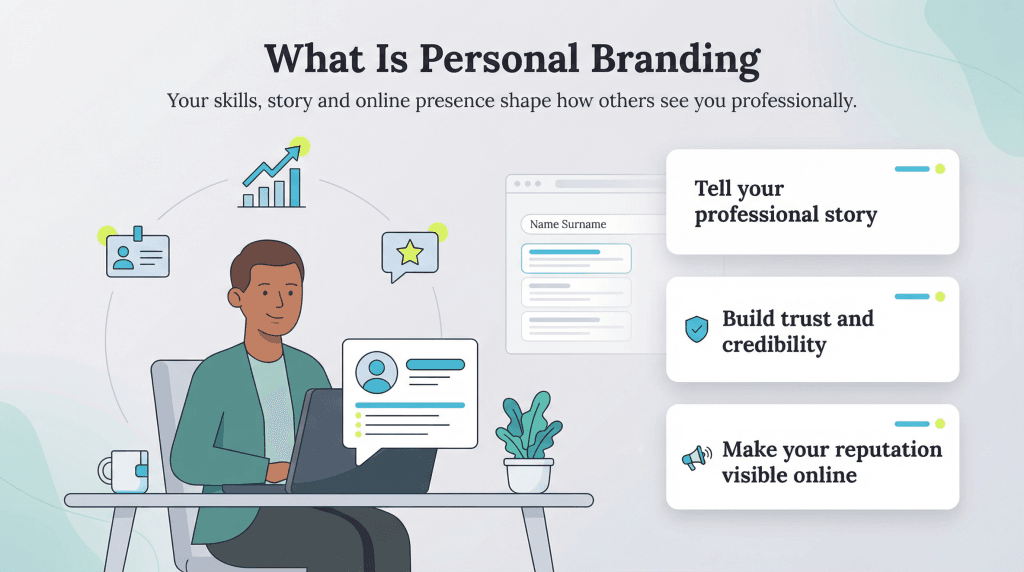
Personal branding is the way someone markets themselves as an individual to shape how others perceive them professionally. Business owners and CEOs typically cultivate personal brands, but any professional can benefit from this effort. Several factors generate your personal brand, including your skills, job titles, experiences and personality.
You can evaluate your personal brand by checking your online presence. For example, if you Google your name, what results do you see? Is your personal brand favorable?
Here are some significant elements of personal branding:
There are many avenues for demonstrating your personal branding, including social media, blogs, email marketing campaigns and public relations. Executives can choose how and where to brand themselves and reap the benefits.
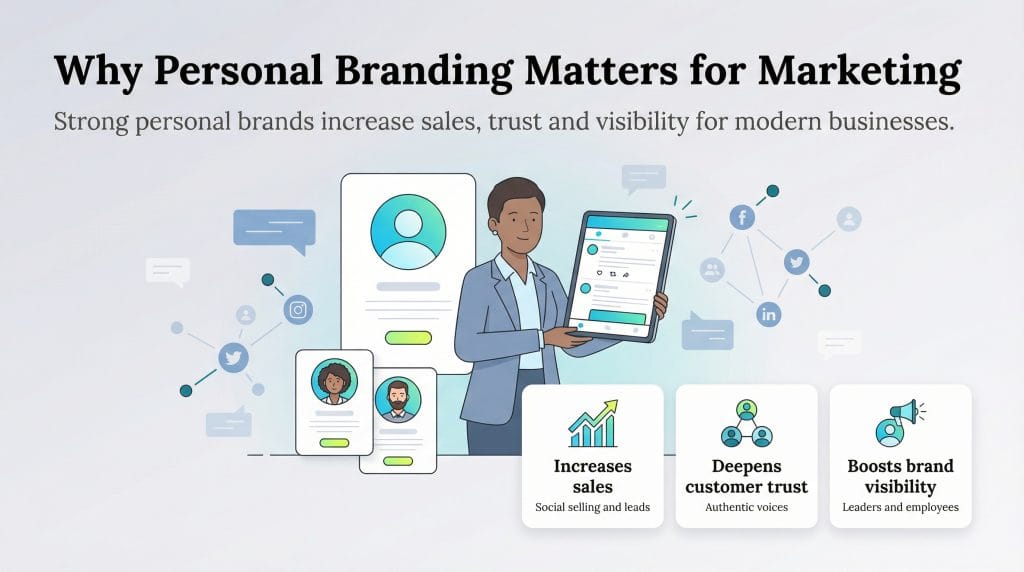
Personal branding brings numerous benefits to professionals and businesses and is an important component of a strong marketing strategy for the following reasons.
One of the most valuable benefits of personal branding is increased sales. Consider the following ways personal branding can boost your bottom line:
Social media users are drawn to influential, knowledgeable and engaging people, not just company logos. When multiple employees at your company build personal brands, your message can travel farther and resonate more deeply, as it’s delivered through real people and authentic voices.
According to the Employee Advocacy Benchmark Report 2025, 52 percent of organizations say increased brand visibility is the primary benefit of employee brand advocacy, while another 19 percent say that expanded reach and audience engagement is the top advantage. Content shared by employees often outperforms brand-only posts because audiences are more likely to trust and engage with people they follow than with corporate accounts.
Collectively, employees’ personal brands reflect on the company as a whole. As followers gain insight into the knowledge, values and expertise of the people behind the business, they’re more likely to feel a connection and to choose your company over one they don’t recognize or trust.
Consumers are drawn to companies that invest in personal branding efforts, particularly when CEOs and business leaders actively participate. According to Sprout Social research, 70 percent of consumers feel more connected to brands whose CEOs are active on social media. More personal, human posts from business leaders, such as content about values, interests or experiences, can improve how consumers perceive a company, helping brands appear more relatable and trustworthy.
Today’s audiences want visibility and perspective from company leadership. Businesses that ignore leadership-driven personal branding risk blending into the background while more visible competitors build stronger connections and customer loyalty.
Trust still matters, especially online, where buyers are trying to decide who’s credible and who isn’t. While friends and family are highly trusted when giving brand recommendations, people don’t need a personal relationship to trust someone’s opinion. What they look for instead is familiarity and relevance, which are the same signals a strong personal brand creates over time.
That’s clear in the 2025 Edelman Trust Barometer, which found that 80 percent of people trust “customers like me” to give accurate information about a brand, and 63 percent trust brand employees. Both rank higher than CEOs, journalists or influencers, reinforcing the value of visible, relatable voices tied directly to a business.
You see the same behavior when consumers research businesses. According to BrightLocal’s 2025 Local Consumer Review Survey, 97 percent of consumers read online reviews at least occasionally, and 47 percent pay closer attention to reviews from the past month. By consistently sharing timely, authentic and valuable content, employees and company leaders alike can build the kind of credibility that helps people feel comfortable choosing their business.
People like to do business with people, not faceless corporations. When business owners, CEOs and other team members establish a personal brand and help bring awareness to a company, they put a face on the business and humanize it. They can assure consumers that the company is authentic, has integrity and is a worthwhile place to do business.
Personal branding efforts may include details of a professional’s personal history, education, family, likes and hobbies, giving potential customers a way to relate to them and, ultimately, the company.
Creating a personal brand is an excellent way to demonstrate your expertise and establish authority. There are two primary ways personal branding can help you convey authority:
Personal branding gets your name out there, and when it reaches the right circles, it can open the door to strategic partnerships and opportunities. An industry group may invite you to be a keynote speaker, or a company may reach out about a co-marketing opportunity. You may even attract the attention of potential investors or merger partners.
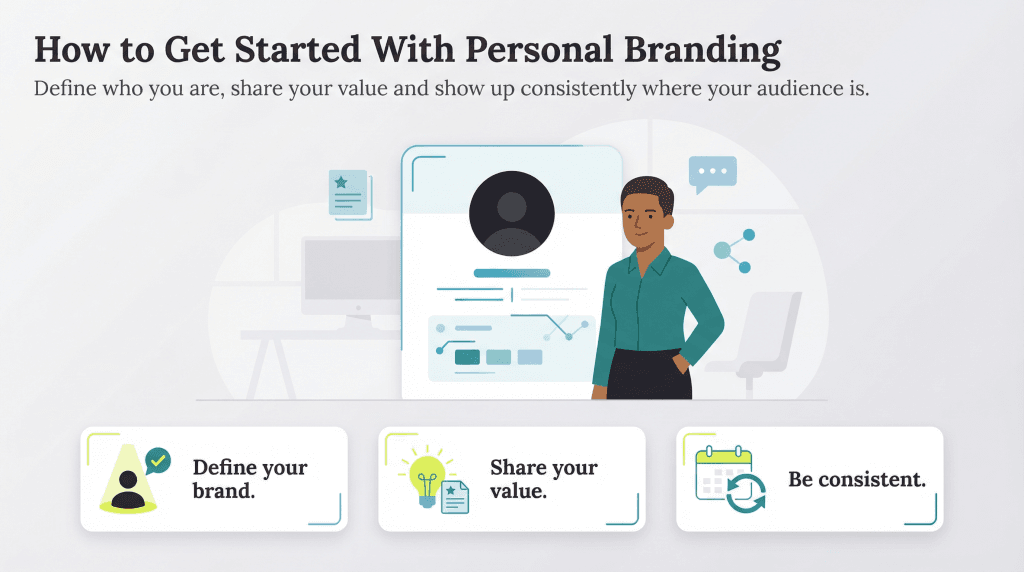
Launching a robust personal branding campaign may seem daunting, but you don’t have to do everything at once. Instead, take your time and strategize. The goal of personal branding is to define the individual behind the business, not just the company itself. It’s crucial to determine how your online content can showcase your personality on a deeper level. Here’s how to get started.
Developing a personal brand starts with defining what it means to be you. Answer the following questions:
Rob Durant, founder of Flywheel Results, noted that personal branding is a balance of marketing and introspection, with authenticity being the most important component. “People talk about ‘building a personal brand’ as though it’s a marketing exercise,” Durant said. “However, it can be and should be as simple as sharing your authentic personality online.”
In business, an elevator pitch is a quick summary of what you do and why people should want to do business with you. It should last no longer than the time it takes an elevator to go up a few floors.
Likewise, you must come up with a quick summary of who you are and why it matters. For example, if you’re in financial technology (fintech), your personal elevator pitch might be, “I’m making it easy for busy millennials to pay off student debt and build wealth like I did.”
Gather all notable personal credentials, including the following:
You can post some of this content on your personal website and social media accounts. Other content should appear on your business website’s About page and social posts. The more widely this information is shared, the better.
Before you launch a personal branding campaign, it’s essential to examine your target market’s customer personas to determine the networks they already use. For example, if they rarely use Instagram, skip that platform.
Additionally, research social media trends for your target audience. This realm changes rapidly, so be sure to track social media trends carefully to maximize your content marketing.
Focus on one or two social media networks for personal branding. Rather than trying to maintain a presence on too many platforms and doing a terrible job on all of them, choose one or two social networks or focus on blogging to build a follower base. Use audience insights to determine engagement levels. Don’t waste time on platforms that show minimal reach.
To get and keep people’s attention, you must continually demonstrate your value. Stuart Martin, business director at Talk Shop, recommended sharing concise, helpful content. “The most effective thought leaders I’ve seen keep their content tight,” Martin said. “They often ask questions, provide real value, observe trends and recap conversations they’ve had with clients, friends and colleagues.”
Try these low-effort tactics:
Deeper-level efforts to demonstrate your value include these more time-intensive ventures:
Martin said consistent, valuable input is key, especially when you’re starting your personal branding campaign. “Stay consistent with two to three LinkedIn posts,” he advised. “It’s more than enough to start. For example, a good jumping-off point is, ‘A question I keep hearing in meetings is X. Here’s why I think it’s a good one.'”
Build your social proof by asking happy clients, partners and other connections for recommendations and skill endorsements on LinkedIn and in writing. Similarly, if you want to meet someone, ask a mutual contact for an introduction, either online or in person. Sometimes, people volunteer this type of help. However, when colleagues and industry peers have positive, impactful experiences with you, they’re more likely to go out of their way to help you.
When you’re working on personal branding, it’s crucial to create lasting personal connections with colleagues, clients, partners, potential customers and others. Here are some tips for making personal connections:
Post frequently to keep followers updated on trends and news. It can be substantial work to get up and running, but a personal branding campaign can pay off significantly. Remember that your brand should be unified online and offline. Emails, social media accounts and business cards should have consistent brand images and color schemes.