Business.com aims to help business owners make informed decisions to support and grow their companies. We research and recommend products and services suitable for various business types, investing thousands of hours each year in this process.
As a business, we need to generate revenue to sustain our content. We have financial relationships with some companies we cover, earning commissions when readers purchase from our partners or share information about their needs. These relationships do not dictate our advice and recommendations. Our editorial team independently evaluates and recommends products and services based on their research and expertise. Learn more about our process and partners here.
How to Repurpose Old Content to Boost Marketing Results
Reach new audiences, save time and get more marketing value from the content you've already created.
Business.com earns commissions from some listed providers. Editorial Guidelines.
Table of Contents
Business owners know that creating high-quality content takes time. You may regularly produce informative blog posts, web pages, video marketing materials, social media posts and infographics. But you may not realize how much additional value you can get from older content by repurposing it.
Repurposing content means taking your most valuable ideas and presenting them in new formats or on different channels. For example, you might take information from a popular blog post and use it in an email marketing campaign. Or, you could take a snippet from a video and use it in a digital ad. We’ll explore ways to repurpose existing content to reach new audiences, boost your digital marketing ROI and save time and money.
Tip
If you've started a podcast, look through your existing content for potential episodes. Videos, webinars and even popular blog posts can give you a head start on podcast topics.
How to repurpose old content
Sharing your content across multiple marketing channels can help you reach more of your target audience and get a better return on the work you’ve already done. Repurposing generally takes less time than creating something from scratch, but it can still deliver considerable value.
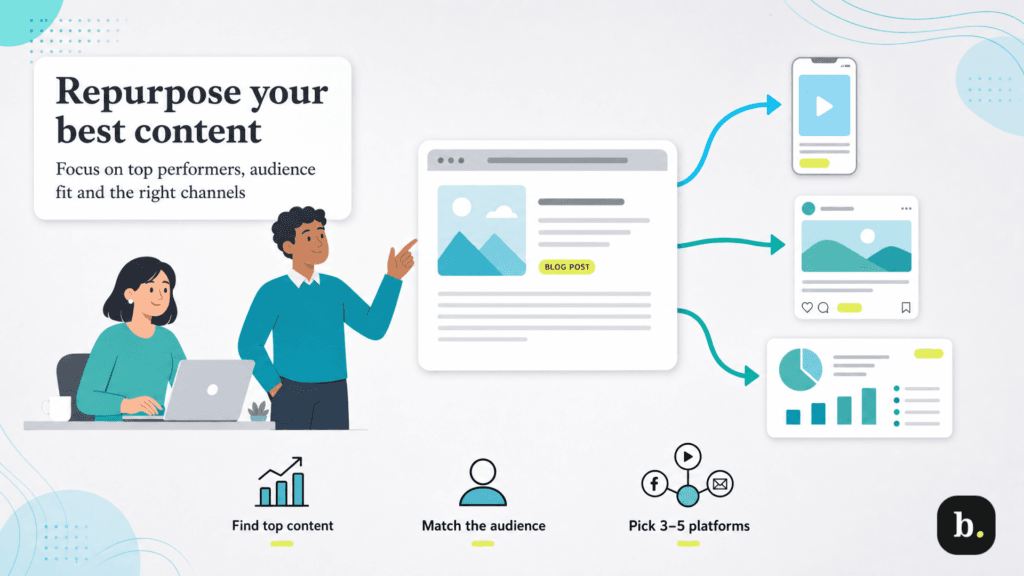
To get started, here are four steps for repurposing your content to boost marketing results.
Identify your top-performing content: Start by reviewing Google Analytics data and other metrics to see which content already connects with your audience. Adjust your analytics date range to identify successful blog posts, social updates, website pages, newsletters and other content over different periods. Look at metrics such as page views, social media shares and comments, then create an inventory of the content that’s worth revisiting.
Tie the content to your audience: Most brands have customers and prospects at different stages of the customer journey, with different needs, questions and pain points. Customer personas can help you identify those differences and decide who each piece of content should target. Match your top-performing content to a specific persona and think about what that audience needs from it. This will help you create repurposed content that’s more relevant and more likely to inspire action.
Choose the right platforms: Where does your target audience spend its time online? Go where your customers are instead of automatically posting repurposed content everywhere. For example, if you’re targeting younger adults, short-form videos on TikTok or Instagram may make sense. According to Pew Research Center, 80 percent of U.S. adults ages 18 to 29 use Instagram, while roughly half use TikTok at least once a day. Choose three to five channels that fit your audience and the type of content you’re creating.
Map out a plan: Refresh your existing content based on your audience and the platform you’re targeting. If you have a blog post, for example, consider turning it into an infographic, video, blog roundup, social media post, PPC ad, e-book, podcast or email marketing campaign. This is also a good time to update the original. Replace outdated statistics, add newer industry information and consider whether fresh visuals, research or expert insights would make it more useful.
Always tailor content to the platform’s expectations and user behavior; even great content won’t perform if it doesn’t engage your audience.
Did You Know?
You have many options when repurposing blog content. Consider expanding posts into two-parters, revisiting ideas from guest posts you've written (after checking the publisher's terms) or creating blog roundups.
Ways to repurpose old content
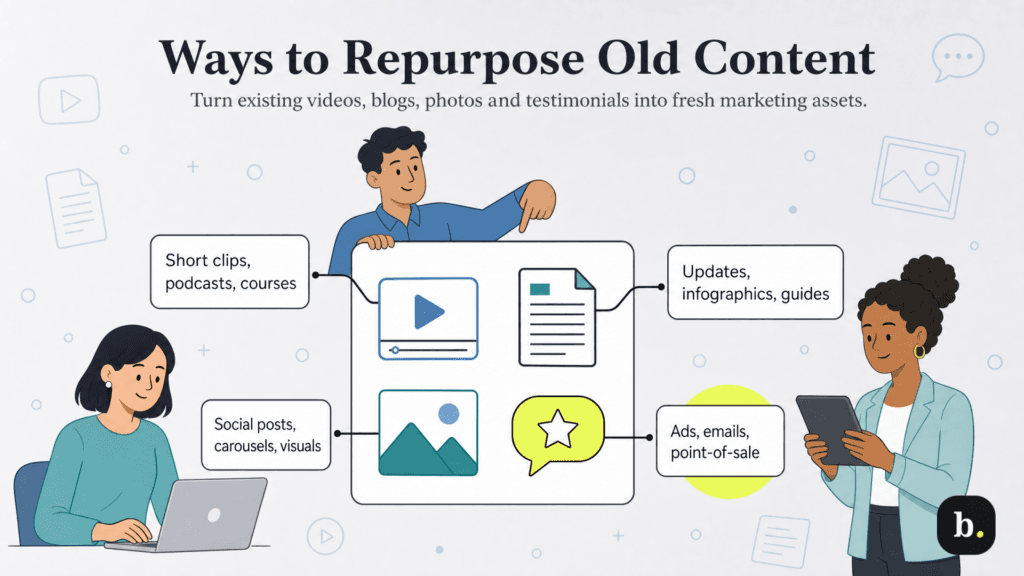
Here are some practical ways to give older content new life and get more value from work you’ve already done.
What to do with old YouTube content
If you have older YouTube videos that still contain useful information, don’t let that content go to waste. Depending on the subject and format, you can repurpose videos in several ways:
Create a short video series: Break longer videos into short, attention-grabbing clips for social media. Pull out useful tips, memorable moments or individual ideas that can stand on their own.
Produce podcast episodes: Extract the audio from an older video and polish it for a podcast episode, or use the original video as the basis for a new audio recording.
Write blog posts: Turn the information from a video into a blog post for your website. Tools like Otter.ai or Descript can speed up the transcription process, but you’ll still need to edit the copy so it reads naturally.
Make social media videos: To improve your social media presence, pull highlights from longer videos and share them on the platforms your audience uses. A memorable moment from a YouTube video, for example, could become an Instagram Reel or TikTok.
Develop courses and webinars: If your older videos teach customers how to do something, consider using them as the foundation for a video course or webinar. Update outdated information and reorganize the material as needed.
Create lead magnets: Turn useful information from your videos into e-books, white papers, user guides or other downloadable resources that visitors can access in exchange for their contact information.
What to do with old blog content
Your blog can be a gold mine for repurposing. A strong post can often be refreshed, reformatted or broken into smaller pieces for other marketing channels. Here are a few ideas:
Update and republish older posts: Refresh existing content with new data, industry developments and current examples. Once you’ve updated the post, promote it through email campaigns or social media marketing.
Create infographics: Pull useful statistics, data points or key takeaways from a blog post and turn them into an infographic for your website, emails, presentations or social media channels.
Make YouTube videos: Explainer and how-to posts often translate naturally into videos covering the same subject. Use the original post as a starting point for your script rather than simply reading it on camera.
Produce short-form videos: Pull an interesting statistic, surprising fact or useful tip from a longer post and build a short TikTok, Instagram Reel or YouTube Short around it.
Turn blog content into social media ads: Posts with a commercial angle, such as a product announcement, case study or customer success story, may contain ideas, statistics or visuals you can adapt for paid social campaigns.
Write guest posts: Revisit useful ideas from your existing content and approach them from a new angle for a guest post on another blog or publication. This can introduce your expertise to a different audience without simply duplicating the original article.
Create LinkedIn articles: Adapt a blog post for LinkedIn by tightening the copy, updating the examples and adding relevant visuals. This can give useful B2B content another opportunity to reach a professional audience.
Build downloadable guides: Expand your strongest blog content into an e-book, guide, checklist or other downloadable resource. You can offer it through a landing page in exchange for an email address and use it to grow your email marketing list.
What to do with old photos
Don’t overlook your existing photo library when repurposing content. Older company, product and employee photos can help tell your brand’s story and add a more personal touch to your marketing. Consider the following ideas:
Share company history on social media: Dig up photos from your company’s early days and share them on social media. Old offices, early products, company milestones and behind-the-scenes shots can give customers a glimpse into how your business has grown.
Create carousel posts: Combine related photos into a carousel for Instagram, Facebook or another visual platform. Add captions that explain the story or context behind the images.
Add photos to YouTube videos: Use existing brand, product or employee photos to illustrate a point, provide background or add visual variety to your videos.
Use original photos in blog posts: Look through your photo library for images that can add context or visual interest to blog content. When you have a relevant original image, it can also be a more distinctive choice than generic stock photography.
Tip
Before reusing photos of employees or former employees in advertising or other promotional content, make sure you have the appropriate permission to use their images.
What to do with old testimonials
Customer testimonials are valuable forms of user-generated content that can build trust and show prospective customers what others think about your business. If you have strong testimonials from past customers, consider repurposing them in these ways:
Add testimonials to your website and brochures: Feature customer quotes on relevant website pages or incorporate them into print and digital brochures. Place them where they’ll support the product, service or benefit the customer is describing.
Use testimonials in social media ads: A strong customer quote can add social proof to an ad and give prospective buyers another perspective on your product or service.
Highlight testimonials in webinars: Use a relevant customer story or quote to reinforce a point during a webinar or support your call to action at the end.
Feature testimonials in your physical location: If you operate a brick-and-mortar business, consider incorporating customer quotes into signs, displays or other promotional materials.
Include testimonials in email campaigns: Add a relevant testimonial to an email newsletter or promotional email when it supports the message or offer you’re sharing.
Before repurposing an older testimonial, make sure it still accurately reflects the customer's experience and your current product or service. You should also confirm that you have permission to use the customer's name, image or endorsement in the new format.
The benefits of repurposing content
You may hesitate to repurpose content because you’re worried about repeating yourself or creating duplicate material. But repurposing isn’t about publishing the same thing over and over. It’s about taking a useful idea and adapting it for a different format, audience or platform.
It’s also becoming a bigger part of marketers’ content strategies. According to HubSpot’s 2026 State of Marketing report, 35.08 percent of marketers identified repurposing content across channels as a priority marketing trend to explore.
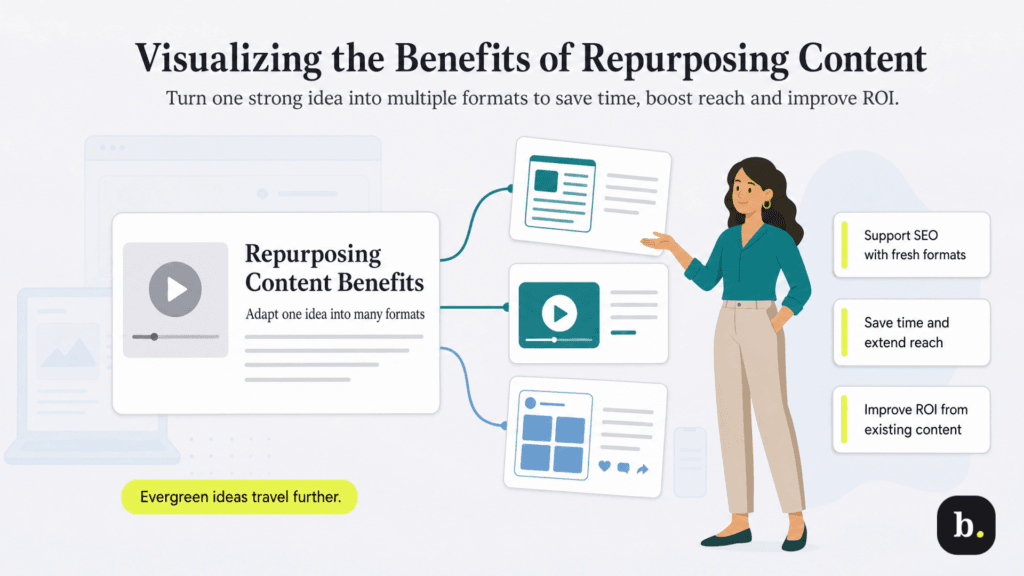
Done thoughtfully, repurposing can help you get considerably more value from content you’ve already created. Here are some of the biggest benefits:
Repurposing can support your SEO strategy: Updating a useful older page with current information can keep it relevant to readers and give you an opportunity to improve outdated links, examples and other elements. Repurposing content into genuinely useful new formats can also broaden its reach. Google doesn’t automatically penalize duplicate content, but creating multiple near-identical pages isn’t an effective SEO strategy.
Repurposing content saves time: Starting with research, interviews, images or ideas you’ve already developed can be much faster than creating every marketing asset from scratch. That leaves more time for other high-impact marketing work.
Repurposing content can increase your reach: Someone who never reads your blog may watch your videos or follow you on social media. Adapting content for different channels gives more people an opportunity to find it and can bring new prospects into your sales funnel.
Repurposing can improve your content ROI: You’ve already invested time and money in creating the original asset. With some additional work, you can extend its useful life, reach more people, generate sales leads and reduce the amount of entirely new material you need to produce.
Repurposing content can support new goals: Your marketing goals may change even when older content remains useful. For example, an early blog post introducing your company could provide material for an About page, brand story or company history.
Repurposing helps successful ideas travel further: If a piece of content consistently attracts attention or engagement, look for other ways to share its most useful information. A popular how-to post, for example, might work just as well as a video, infographic or email series.
Repurposing gets more value from evergreen content: Evergreen content is particularly well-suited to repurposing because the core information stays useful over time. Before reusing anything time-sensitive, check the facts and refresh outdated statistics, examples and links.
Did You Know?
Repurposing can work in both directions. You can break a long piece of content into smaller social posts, videos or graphics, or combine several shorter pieces into a more comprehensive guide, e-book or blog post.
Getting more out of your content investment
You put significant time and effort into creating quality content, so don’t let your best work fade into the background. Repurposing can extend the life and reach of that content without forcing you to start from scratch. An older article can find a new audience as a video, infographic or social post, while a quick update can make a useful evergreen piece relevant again.
AI can also make repurposing content less time-consuming, and marketers are already embracing the technology. According to the HubSpot report cited above, 86.4 percent of marketing teams use AI in at least a few areas of their marketing. That technology can be particularly useful when you’re giving existing content new life. An Adobe survey found that 56 percent of small business owners who use AI for content repurposing save one to five hours a week on the process.
Repurposing content isn’t about creating more for the sake of it. It’s about finding new ways to make the content you already have work harder for your business.
Jennifer Dublino is an experienced entrepreneur and astute marketing strategist. With over three decades of industry experience, she has been a guiding force for many businesses, offering invaluable expertise in market research, strategic planning, budget allocation, lead generation and beyond. Earlier in her career, Dublino established, nurtured and successfully sold her own marketing firm.
At business.com, Dublino covers customer retention and relationships, pricing strategies and business growth.
Dublino, who has a bachelor's degree in business administration and an MBA in marketing and finance, also served as the chief operating officer of the Scent Marketing Institute, showcasing her ability to navigate diverse sectors within the marketing landscape. Over the years, Dublino has amassed a comprehensive understanding of business operations across a wide array of areas, ranging from credit card processing to compensation management. Her insights and expertise have earned her recognition, with her contributions quoted in reputable publications such as Reuters, Adweek, AdAge and others.