Business.com aims to help business owners make informed decisions to support and grow their companies. We research and recommend products and services suitable for various business types, investing thousands of hours each year in this process.
As a business, we need to generate revenue to sustain our content. We have financial relationships with some companies we cover, earning commissions when readers purchase from our partners or share information about their needs. These relationships do not dictate our advice and recommendations. Our editorial team independently evaluates and recommends products and services based on their research and expertise. Learn more about our process and partners here.
To succeed in today's business climate, your company needs a strong, intentional online footprint.


While offering top-quality goods and services backed by a team of devoted specialists provides a strong foundation for any successful business, that alone is no longer enough. You must also create a clear, credible online presence to truly get noticed.
Read on to discover how smart, strategic marketing choices, such as improving your website and expanding your social and online visibility, can help you create an online presence that reflects your business at its best, reach your target audience more often and ultimately boost revenue.
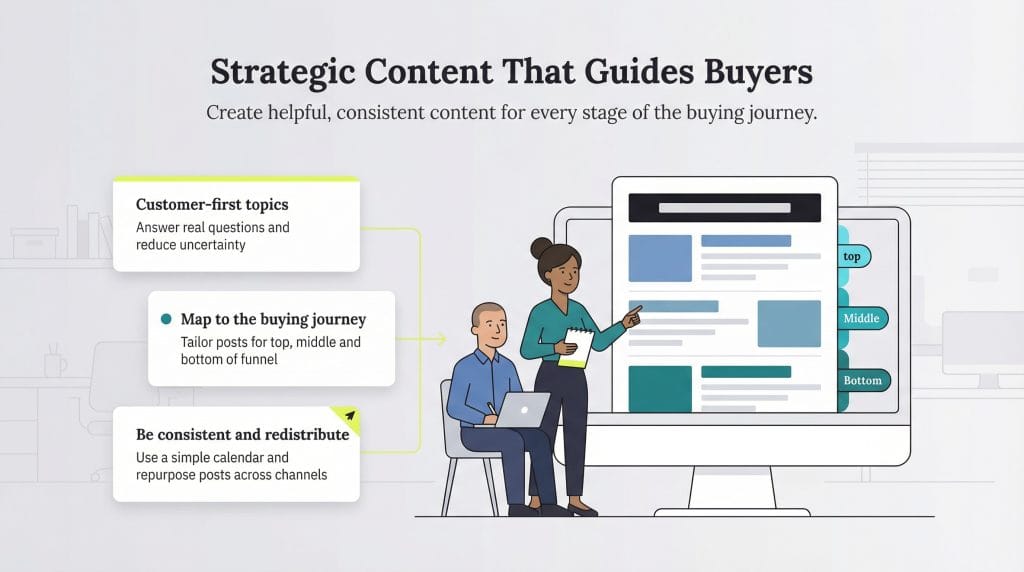
Creating an effective online presence doesn’t require doing everything at once, but it does require being intentional about how your business shows up online. The following 15 strategies focus on practical improvements that help customers find you, understand what you offer and engage with your business more easily.
When designing your website, look at it from the standpoint of a user. Here are a few key elements to focus on to create a great customer experience that’s smooth and intuitive:
Smartphones are now the primary way many people access the internet, and mobile usage cuts across every age group. According to Pew Research Center, 98 percent of U.S. adults ages 18 to 29 own a smartphone, along with 97 percent of those ages 30 to 49, 91 percent of those ages 50 to 64 and 79 percent of adults 65 and older. In other words, mobile access is no longer limited to younger audiences.
Those devices also play a central role in how people shop. As of 2025, Statista reports that smartphones account for 78 percent of global online retail traffic and 70 percent of online shopping orders. That means many customers first encounter your business (and decide whether to stick around) on a small screen. If your site is slow, cluttered or hard to navigate on mobile, you may lose their interest well before they’re ready to buy.
That’s why delivering product and service information in a mobile-optimized format is essential. Pages that load slowly, display poorly on smaller screens or require excessive zooming and scrolling can frustrate users and push them elsewhere. A mobile-friendly website makes it easier for visitors to browse, compare and take action, whether they’re learning about your business or ready to buy. As an added benefit, mobile-friendly content also supports stronger search rankings, helping more potential customers find you in the first place.
If your website allows customers to pay online or share personal information, security is not optional: It’s a core part of earning trust. Visitors need to feel confident that their data is protected before they’re willing to complete a purchase or submit sensitive details.
Here are a few essential ways to signal that your site takes security seriously:
A secure website helps build trust with e-commerce customers while protecting your business. When visitors trust your site, they’re more likely to complete transactions, return in the future and recommend your business to others.
Business social media tactics can help you connect with your target audience, but only if you focus on the platforms and strategies that make sense for your business. Here are some tips:
Email newsletters may feel a bit old school, but they’re still a great way to communicate directly with prospects and customers. Most people check their email regularly, so it makes sense to use this channel to share updates, nurture relationships and drive traffic back to your website.
Some businesses hesitate to invest in email marketing because they worry their messages will land in spam folders or annoy recipients. That risk drops significantly when emails are relevant, well-timed and clearly focused on helping readers solve a problem or make a decision, not just promoting an offer.
Here are a few ways to make your email marketing campaigns more effective:
Content gives your business a way to stay useful and visible long after someone leaves your website. A business blog, in particular, lets you answer common questions, explain how your products or services work and help potential customers solve problems before they’re ready to buy. This helpful content goes beyond driving traffic to help build credibility, position your business as knowledgeable and give customers a reason to come back.
Here are a few ways to approach content creation strategically:
Promoting your content through email and social media helps keep existing audiences engaged, but it does little to reach people who don’t know about you yet. Search engine optimization (SEO) fills that gap by helping your website appear when potential customers are actively looking for information, products or services like yours.
At its core, a great SEO strategy is about making your site easier for both users and search engines to understand. A thoughtful approach focuses less on chasing algorithms and more on creating a website that’s clear, useful and technically sound.
Here are a few foundational elements that support strong search visibility:
SEO is also an ongoing process, which is where measurement comes in. Tools like Google Analytics help you understand how visitors interact with your site by tracking metrics such as page views, time on page and conversions. That data can reveal which content resonates most and which pages may need refinement.
If your business serves specific cities or regions, local search is an excellent local marketing strategy. Local SEO works best when search engines can confidently connect your business to a physical location. That connection comes from consistent listings, accurate details and a strong local presence across trusted platforms.
Here are a few ways to strengthen your local visibility:
Positive customer reviews play an important role in how people discover and evaluate local businesses. A steady stream of recent, great feedback helps build credibility with potential customers and can also influence how your business appears in local search results.
Reviews on platforms such as Google Business Profile, Yelp and Trustpilot all contribute to your online reputation. Google, in particular, factors review activity into local rankings, which means customer feedback affects both visibility and trust. Here are some tips:
Managing customer reviews isn’t just about protecting your image. Done well, it helps you understand your customers better, improve their experience and build trust with future prospects.
Online forums and communities can support your online presence in two important ways:
Live AI chatbots give customers a way to get answers quickly, even outside business hours. When connected to your website or customer systems, a chatbot can handle common questions, share order details or guide visitors to the right information without requiring immediate staff involvement. That kind of responsiveness improves the customer experience and can also help capture leads early in the buying process.
A knowledge base supports the same goal by letting customers help themselves. Housing FAQs, troubleshooting steps and product guidance in one place reduces repeat support requests and saves time for your customer service team. It also adds useful, searchable content to your site, which can support long-term visibility in search results.
Digital PR helps expand your reach by putting your business in front of new audiences through credible third-party coverage. The key is to give journalists a story that’s genuinely relevant to their readers, not a generic promotional pitch. Local news outlets, trade publications and industry blogs are often good places to start when you have something timely or noteworthy to share.
Focus on building relationships with journalists whose audiences overlap with your own. When coverage does happen, track brand mentions using tools like Mention, then share those features through your blog and social media channels. Highlighting earned media reinforces credibility and helps extend the life of each placement.
Paid advertising can help your business gain visibility quickly by placing your content at the top of search results or directly into social media feeds. Platforms such as Google, Facebook, Instagram and LinkedIn allow you to reach specific audiences based on factors like search intent, demographics and interests.
Most paid campaigns operate on a pay-per-click (PPC) model, where you’re charged only when someone interacts with your ad. Costs and results can look very different depending on the platform, industry and targeting, which is why many businesses start with a modest test budget. Early performance data can help shape future campaigns before you invest more heavily.
Most visitors won’t convert the first time they land on your website. Retargeting campaigns help you reconnect with people who have already shown interest by visiting a product page, browsing your services or engaging with your content.
Ads from retargeting campaigns show up after someone has already interacted with your site, often on platforms like Google and Facebook. Because the audience has seen your business before, those ads tend to feel less intrusive and more familiar than first-touch advertising.
Retargeting is often most useful when it reflects what someone actually looked at, such as a specific product or service. Staying visible in this way can keep your business in mind while people continue comparing options, rather than depending on a single visit to do all the work.
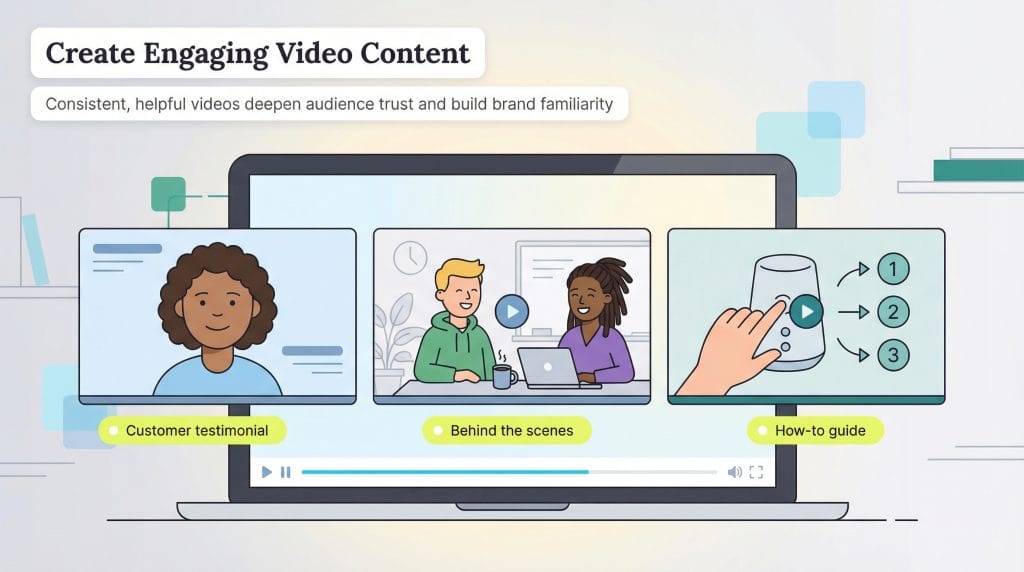
Video has become a regular part of how people discover and engage with brands online. According to Statista, U.S. social media users spend an average of 52 minutes a day watching video content, a figure that continues to climb. That level of attention makes video a practical — not optional — format for reaching and holding audience interest.
A video content marketing strategy works especially well because it combines visuals, storytelling and personality in ways text alone often can’t. Platforms such as YouTube, LinkedIn, Instagram and TikTok all offer opportunities to connect with customers in a more direct, human way.
Here are a few video formats that tend to resonate with audiences:
As with written content, consistency matters. Posting videos on a regular schedule helps keep your audience engaged and gives people a reason to return as they become familiar with your brand.
A strong online presence supports your business in four key ways, all of which work together to attract customers and support long-term growth.
Building a strong online presence takes time and consistency. By understanding how each channel works and refining your approach as you go, you can create an online image that reflects your brand and supports your business goals.
Sergey Grybniak and Jennifer Post contributed to this article.