Is your business struggling with negative online reviews? Has your company fallen victim to a data breach or phishing attack? Are social media users or former employees sharing negative experiences about your brand? Unfortunately, even a single damaging incident can severely impact your business. The situation can escalate quickly if you don’t deal with the fallout from a public customer dispute or a disgruntled employee’s actions.
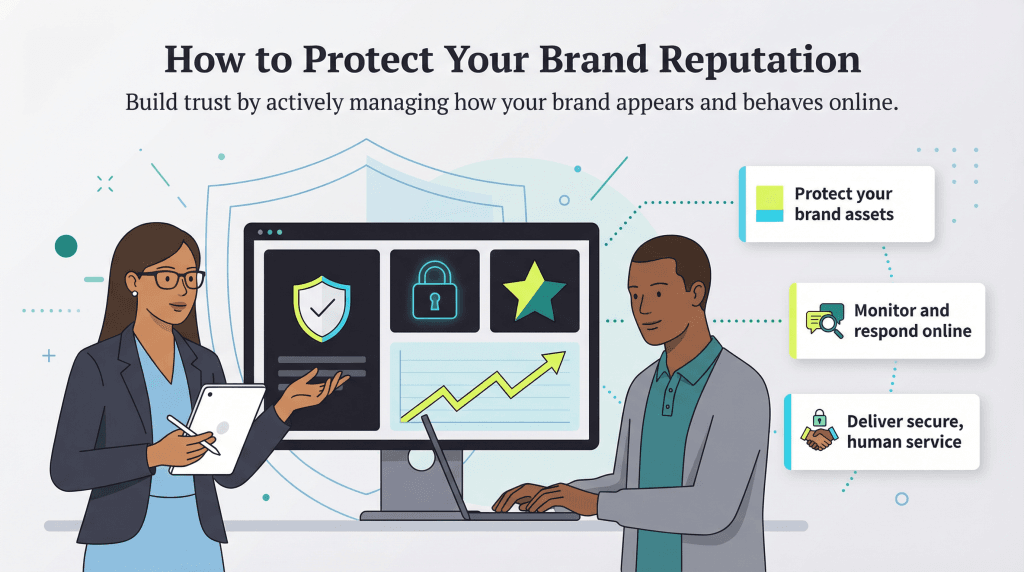
In the eyes of consumers, your brand is who you are. While it’s intangible, it’s also your biggest asset. If you don’t protect your reputation and brand image, your credibility, business growth, and ability to attract capital will suffer. We’ll explore ways to protect and strengthen your company’s reputation so it stands out from the competition.
How to protect your brand reputation
Most of us know that anything we say or do could end up online. There are numerous examples of hot mic mishaps, unfortunate holiday work parties captured on video, and attempts to sow discord for fun or payback.
Aside from never attending a public event or staying in your office at all times, practical measures can help control public perceptions of your brand. Here are 11 ways to manage your online reputation and protect your brand.
1. Trademark and protect your brand.
Protecting your brand includes trademarking your branding elements and claiming your business domain name. If you don’t, a competitor can appropriate your branding and related content and establish itself as the rightful owner. They could even theoretically sue you for infringing on their intellectual property rights. (Many businesses pursue intellectual property insurance for this reason.)
Consider the following factors involved in protecting your brand:
- Trademark your brand identity. Trademarking your brand provides the strongest legal protection against unauthorized use of your identity (e.g., your brand, logo, slogans) by other companies and counterfeiters. The initial trademark period lasts 10 years and can be renewed indefinitely every 10 years thereafter. Before trademarking your brand, check the S. Patent and Trademark Office (USPTO) database to ensure your logo and branding elements are unique. You can also apply for a trademark via the USPTO website.
- Protect your domain name. Protecting your brand online with the right digital real estate is also essential, so ensure you register your business domain name. As soon as you have your brand name, ensure it’s available as a domain name and that no one is using it as a social media handle. Even if you aren’t launching your business immediately, register the domain and claim the social media handles immediately.
- Invest in additional domains. Regarding your domain name, ensure you have the .com variation as a bare minimum. For further protection, you could also register .net, .org and other domains to stop someone else from doing so. If you plan to launch in other countries, invest in their top-level domains, such as .co, .uk and .de. This approach also means your visitors have a better chance of finding you even if they don’t type in your primary domain name correctly.
- Invest in automatic domain name renewal. With all your domain names, it’s a good idea to select the automatic renewal option. This ensures that at the end of the registration period, you maintain ownership and prevent others from claiming your domain names.
Consider
hiring a business lawyer to assist with the complicated process of applying for a trademark and protecting your brand.
2. Create and stick to your brand guidelines.
Legally, your brand includes your trademarks (name, logo and slogans) and your “trade dress” (the distinctive visual appeal of your products, packaging and overall presentation). It also includes your copyrights (designs, content, marketing materials and creative works).
However, in actuality, your brand is so much more. It:
Jesse Swash, branding expert and co-founder of Design by Structure, said that branding is all-encompassing. “Brand is what people say about you when you’re not in the room,” Swash explained. “Brand is you on your best day, every day. Brand can be your biggest advocate, your most persuasive tool, your greatest asset.”
Additionally, businesses must have a keen sense of identity to build a brand. “Brand is built on understanding who you are, what makes your offer compelling, and recognizing the pain points and challenges you solve for the audiences that matter,” Swash added.
Because branding is so complex and comprehensive, usage guidelines are essential to ensure brands remain unique and easily identifiable. Consider the following brand guideline best practices:
- Make your brand guidelines comprehensive. Your guidelines must encompass everything from how your logo is used to the color palettes on your printed and online material. Many brand guidelines even include a linguistic personality: how you address your audience with words.
- Share your brand guidelines with all appropriate parties. Ensure you share all brand guidelines with your employees, partners and vendors to ensure application conformity everywhere.
- Consider professional help when creating brand guidelines. Many design agencies can create brand guideline documentation for clients who are unsure how to do it themselves.
- Periodically review and update your brand guidelines. Companies should also regularly review their brand guidelines to ensure they remain relevant to their purpose and target audiences.
Whether you’re establishing a new brand image or rebranding a business, everyone involved must support the brand and what it stands for. When you do so, “you can create a powerful and persuasive weapon to help you achieve the success you seek,” Swash said. “One company, one brand, one aligned narrative. It works every time.”
Creating a
personal brand strategy is an effective way for entrepreneurs and company stakeholders to tell their stories, share their skills and establish themselves as experts.
3. Become a cyber-secure company.
Protecting your business from cybercrime is another way to safeguard your brand and business reputation. If you suffer a serious data breach involving customers’ sensitive information, it may be hard for them to trust you again. A data breach may also lead to the theft of valuable intellectual property, which can ruin any competitive edge your business has.
Incorporate cybersecurity tenets into your brand promise to sustain and improve your reputation. Here’s how:
- Share your security efforts with your customers. On your website, provide a link to information on how you protect your clients’ privacy and comply with all regulations.
- Conduct a cybersecurity risk assessment. Carry out a cybersecurity risk assessment to identify and fix areas of vulnerability. Include a response plan to enact if a cyber-incident occurs, and include guidelines for transparent customer communication.
- Shore up all cybersecurity measures. Create a cybersecurity plan that focuses on cybersecurity technology and employee training. Invest in the latest equipment to protect your system against current cybersecurity risks. Additionally, consider pursuing certificates like SOC 2 and ISO 27001 to demonstrate your commitment to protecting your business information.
Consider taking out
cyber insurance to cover your business in the event of a successful attack. It can help mitigate reputational damage by covering the costs of notifying clients, regulatory fines and any lawsuits brought against you.
4. Keep your employees and associates happy.
Disgruntled employees, vendors and even competitors who want to torpedo your reputation are significant sources of negative online content. Avoid animosity by conducting business honestly and with as much transparency and integrity as possible.
It also helps to ensure the happiness of your team and business associates. Keeping employees happy is part of branding and your overall business strategy.
To foster your team’s happiness, try the following suggestions:
- Initiate an employee satisfaction program to ensure employees feel appreciated.
- Create a feedback culture that helps staff feel involved and engaged in the company’s success.
- Develop a program for volunteerism or offer matching donations for causes important to team members.
- Select a charitable cause to support and get the whole team involved.
5. Insist on NDAs for staff and contractors.
Your brand’s business processes, marketing strategies, ongoing development programs and intellectual property give it a competitive advantage. You must protect these assets at all costs.
Employees and contractors are potential areas of vulnerability with intimate knowledge of your business’s inner workings. If competitors access your best people and trade secrets, they might beat you to market — even though your investments and efforts made it possible. Plus, if your trade secrets leak, customers may worry about the safety of their own data.
To protect your reputation and assets, consult a business lawyer to add nondisclosure agreements and noncompete agreements to your employment contracts. Ensure these documents define and outline confidential information, how it can be used, who it can be shared with, and what happens if the rules are broken.
6. Search the internet once a week for company mentions.
When was the last time you Googled your business or searched to see what people were saying about you on social media? Typing your company or professional name into a search bar once a week can uncover eye-opening information.
When you browse the internet through a customer’s eyes, you may find online reviews you didn’t know about. Or, worse yet, someone gossiping about your business on social media and other public commentaries that pop up whenever someone mentions you or your business by name.
If you can see negative information when you search for your business on Google or other search engines, so can potential customers. The good news is that you don’t have to let negative comments sit there and ruin your reputation. Make it a point to monitor and take control of your online mentions in an organized daily process that includes the following:
- Note the location and date of any bad or inaccurate information and delete whatever you can.
- If you can’t remove the information yourself, talk to the site owner about having it removed or posting a rebuttal.
- If you can’t remove inaccurate information, generate SEO-optimized, positive content to drop the negative comments to page two of the search results.
The only time you shouldn’t delete negative mentions is when they are legitimate reviews or complaints from actual customers. You should respond to all online reviews publicly, quickly and with the goal of a satisfactory outcome.
Realistic online reviews build trust with e-commerce customers and help them get a feel for actual customer experiences. Too many five-star reviews won’t ring true.
7. Monitor your digital footprint.
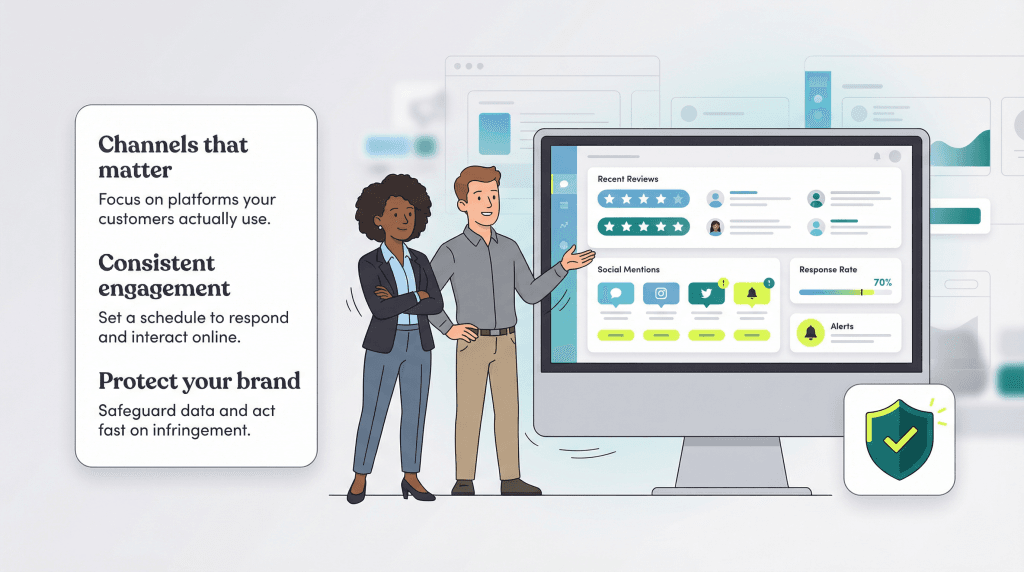
Track key metrics, including social media stats, for abrupt changes that could be tied to negative publicity. Your Google Analytics and admin web hosting dashboards show traffic spikes and can help you analyze upward or downward trends.
Since timeliness is essential, use tools such as Google Alerts, Brand24 and Semrush. They provide real-time alerts when people mention your business online, allowing you to respond quickly to both positive and negative feedback.
8. Generate your own good press.
Outside of customer reviews and comments, most of what is known about your brand online comes directly from you. Here are some tips on generating good press for your brand:
- Engage with customers online. Staying active in forums and engaging with customers online helps generate genuine positive comments and feelings about your company.
- Give behind-the-scenes glimpses of your company. Leverage your online presence by using your social media accounts to post behind-the-scenes glimpses of your team in action and feel-good photos of happy customers. Consider hosting a Facebook Live Q&A to answer customer questions and introduce team members.
- Create content about your brand. Generate evergreen content that ties your brand journey to the customer journey. Use your small business blog to create helpful content that inspires and adds value to your customers.
- Address negative reviews or complaints publicly. Respond to negative comments as soon as they are received. Consumers appreciate brands that show concern for customer satisfaction and a willingness to take responsibility for righting a wrong.
- Never pay for reviews. While it’s OK to actively solicit positive reviews or testimonials, never pay for positive reviews. Fake reviews can backfire and cause additional damage to your reputation.
Lauren Bayne, founder of Personal Brand Creative Director and former chief brand officer for Lodgewell, believes these tactics are essential for shaping the narrative around your brand.
“This approach allows you to showcase your authenticity and values directly to your audience,” Bayne explained. “By consistently engaging with customers, sharing behind-the-scenes content and addressing concerns publicly, you’re not just managing your reputation — you’re building a relationship with your audience based on transparency and trust.”
According to Bayne, controlling your brand story is critical in an increasingly digital world where consumers seek genuine connections with the brands they support.
9. Gather social proof.
Consumers are more likely to listen to recommendations or warnings about products and services from friends than from paid spokespeople or ads. Organic word-of-mouth advertising is called social proof; it’s crucial to build social proof for your brand or company to encourage trust.
The following actions are some of the ways you can provide social proof:
- Engage trusted and popular influencers to market your brand.
- Deliver the best customer service.
- Encourage social likes, comments and shares.
- Enable and encourage brand ambassadors who will spread the word about your brand.
- Seek out user-generated content, including online reviews, social media posts, testimonials, blog posts and video content about your brand.
10. Design your website with the user experience in mind.
Your website is often the first interaction you have with your audience. Ensure your business website design prioritizes security and the user experience.
An excellent user experience accomplishes the following:
- Draws more visitors to your page
- Keeps visitors on your website longer
- Makes it more likely visitors will return to your website
- Helps elevate your website ranking in search engine results
Your layout should be clean and easy to navigate; your website should contain useful, relevant content and links; and the checkout process should be secure, fast and hassle-free. Choose a reliable hosting service with a high uptime percentage, and use a content delivery network (CDN) to improve speed and performance.
11. Get personal with your prospects.
In the age of AI and automated customer service, human-to-human interaction has become a way you can distinguish your company. While advanced technology can streamline and automate core functions, it should free up your staff to focus on personalized service and addressing specific customer needs.
For example, you can write personal emails to customers offering special discounts, build customer loyalty programs, or send cards for holidays or customer birthday greetings.