Business.com aims to help business owners make informed decisions to support and grow their companies. We research and recommend products and services suitable for various business types, investing thousands of hours each year in this process.
As a business, we need to generate revenue to sustain our content. We have financial relationships with some companies we cover, earning commissions when readers purchase from our partners or share information about their needs. These relationships do not dictate our advice and recommendations. Our editorial team independently evaluates and recommends products and services based on their research and expertise. Learn more about our process and partners here.
Social media marketing is crucial to modern business. Here’s a step-by-step guide to creating a successful strategy.

Social media has provided multiple platforms where businesses can brand, advertise and ingratiate themselves with their audiences. A robust social media presence can strengthen your company’s reputation and visibility while offering a window into your competitors’ strategies and activities.
Today, social media marketing is a crucial element of any business’s marketing plan. This step-by-step guide will help businesses develop an effective social media marketing strategy, including common pitfalls to avoid and tips to ensure successful campaigns.
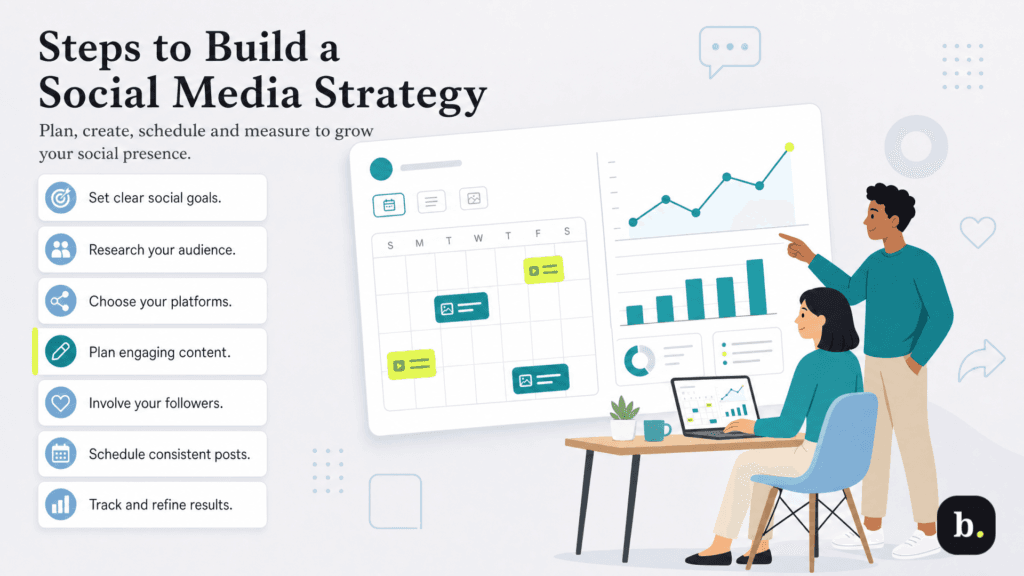
Seven steps are involved in creating a successful and effective social media marketing campaign. Although social media marketing is relatively straightforward, conducting research and ensuring your strategy suits your business and goals is crucial.
Follow these steps to set up your social media marketing strategy for success.
Examine your business and see what — if anything — you’re already doing with social media marketing. Next, determine your social media marketing goals. Setting business goals will inform your social campaign’s direction and help you stay on target.
A helpful way to organize your goals is the one-year, five-year and 10-year format, where you outline where you’d like to be with your social media in one, five and 10 years. You can adjust this method for shorter periods if you prefer.
Before connecting with your audience on social media, it’s crucial to understand who they are and what they need. Thoroughly research your target audience so you can formulate posts and content that address their needs.
Consider your existing audience — the people you’re trying to reach and how you would classify them according to market segments. Your research will guide your content and ensure a receptive, engaged audience.
Using multiple social media accounts is often crucial for reaching your audience. However, there are many social platforms; not all outlets will be right for your business’s culture and offerings.
Here are some of the social media platforms businesses use:
Each social media platform has a demographic that comprises most of its users. For example, professionals and B2B businesses tend to congregate on LinkedIn, while TikTok and Snapchat users tend to be Gen Z and young millennials. Unless you’re targeting everyone, you don’t need to establish a social media presence on all available platforms.
When selecting the right social media platforms for your business, consider the following strategies:
Before posting on social media, spend time lurking and sharing other posts to get a feel for the platform’s culture and how users interact. When you’re ready, use your audience research to inform your content and observe how your audience engages with various content types.
Your followers are your most critical social media marketing resource. They will decide your campaign’s success or failure by engaging and sharing your content — or ignoring it.
To include your followers and build engagement, encourage user-generated content. For example, ask followers to share pictures and videos of your products in use and post them on your accounts.
Here are a few other ideas for building engagement with followers:
Once your social media marketing gets going, you might have trouble remembering what posts are going on what platforms and when they’re appearing. To stay organized, consider hiring a social media manager or use intuitive social media management tools.
Social media management tools can help you write captions, prepare photos and videos, and schedule posts. Some even have centralized dashboards where you can view all your platform content and analytics. These tools also make it easier to repurpose your content for different platforms to save time and expand your reach. (We’ll share our social media management tool recommendations later in this article.)
If followers are your most important resource, analytics are a close second. Analytics data allows you to measure and improve your marketing ROI and see if your efforts are helping you meet your goals.
Track key social media metrics. Such stats include engagement, reach, followers, impressions, video views, profile visits, mentions, shares, tags and reposts. Use these metrics to tweak your social media marketing strategy or help you decide on new campaigns.
Many social sites have platform-specific analytics tools, including Facebook, X, Google and Instagram. Or, you can use your social media management tool’s analytics to track your entire social presence.
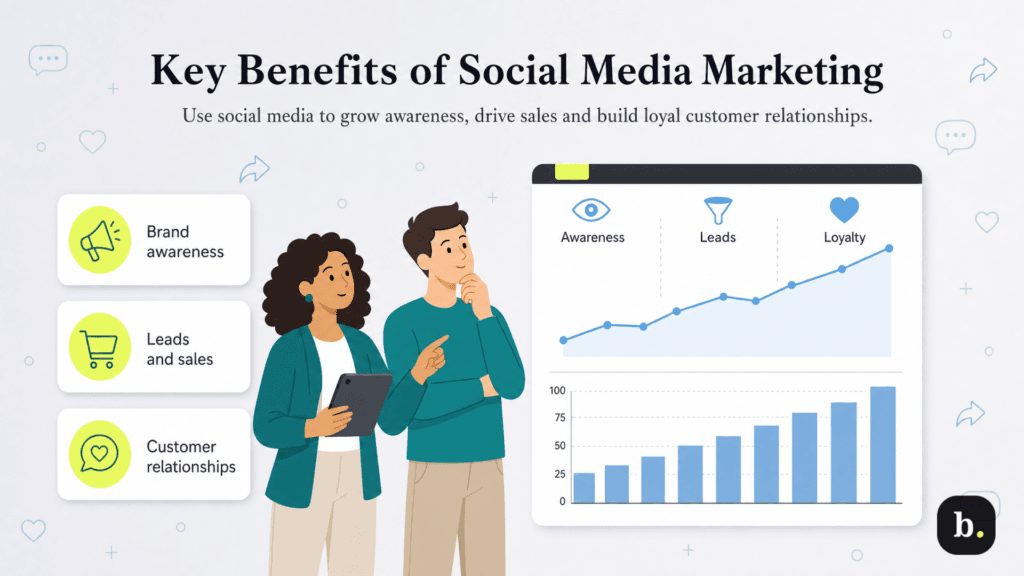
Social media marketing is no longer optional for businesses that want to stay competitive — it’s a core channel for reaching customers. Beyond visibility, social media marketing benefits include the following:
According to Statista, over 5.24 billion people were on social media in 2025. That means billions of opportunities to get your brand in front of new customers. Social media increases brand awareness through engagement. For example, if you create a business page for your company and engage with other social media posts, you’re increasing brand awareness. Social media can also increase your website’s traffic through posts, shares and comments.
Promoting and sharing content on social media is a great way to generate more sales leads and successful lead conversions. This is because you’re actively promoting content to people who have already indicated interest.
Platforms like Facebook, Instagram and TikTok have shopping features that allow users to purchase directly from a business without ever leaving the app. These tools help businesses close sales faster by reducing customer friction and making purchasing easy and convenient.
Customers’ desire for genuine interaction is a significant driver of social media marketing’s popularity. Before social media, customers felt distant and detached from brands. Social media lets brands and businesses connect directly with customers, giving them a more human touch. Companies can participate in social media trends, chat with customers and share their human side.
If you’re on social media, chances are your competitors are also there. Social media gives businesses a unique opportunity to see what competitors are doing and what’s working for them — and to learn from their mistakes.
Pay attention to competitors’ social media marketing campaigns, how they interact with customers, and how they promote their products or services. This will help ensure that your campaigns are unique to your brand.
“Starting with a competitive analysis may help you discover some holes in your competition’s strategy and show you channels they may be missing out on,” explained Jason Myers, senior vice president of public relations and social media marketing at The Content Factory.
Maintaining a consistent, active presence on social media shows credibility and positions your business as a trusted voice in your industry. When customers see that you regularly engage with comments, address concerns and share valuable content, it reinforces your commitment to them — and makes prospective buyers more confident about doing business with you.
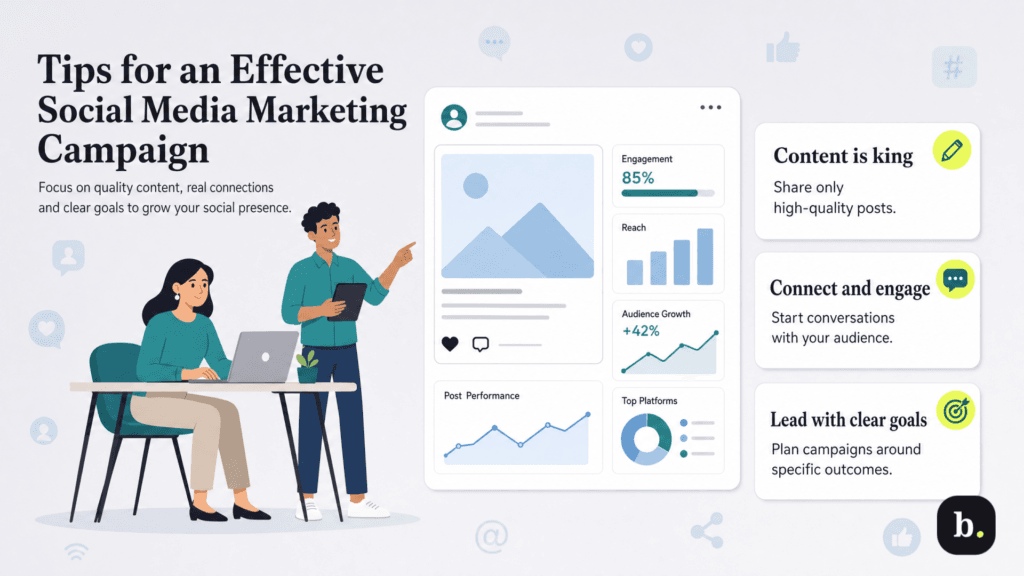
Once you’ve researched and outlined your steps, it’s time to ensure a successful campaign. Keep the following tips in mind: