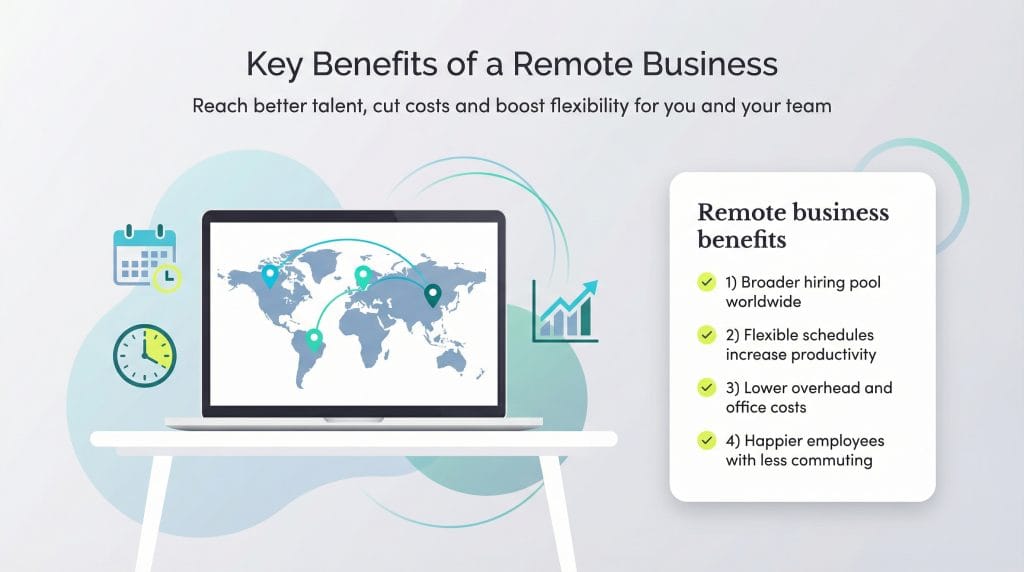
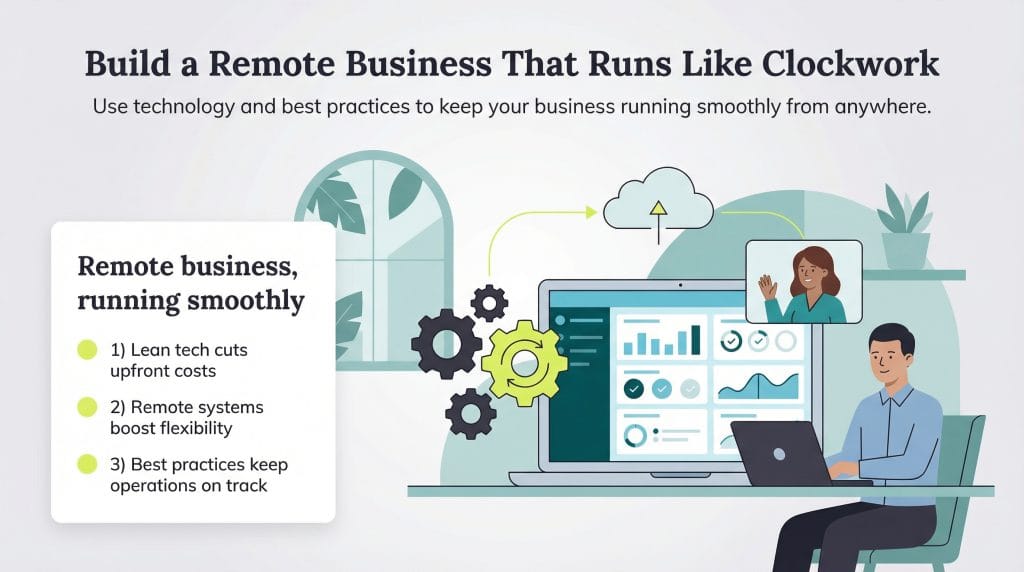
Remote companies are continuing to grow in popularity. Technology advances help business owners forgo the typical expensive brick-and-mortar office in exchange for a virtual office they manage from the comfort of their homes. The benefits of running a remote company are endless. You can save money on overhead costs like rent and utilities, avoid the dreaded daily commute, and recruit new employees from around the world, letting you choose the best talent for your business.
We’ll explore advice for building a remote company that runs seamlessly and creates a win-win for you and your team.
Tips for building a successful remote company
While remote work makes good business sense, it’s more complicated than turning on your computer, sending a few emails to remote hires, and expecting business to run smoothly. You must consider remote work best practices and essential elements when building a remote company that you wouldn’t have to address while running a traditional office.
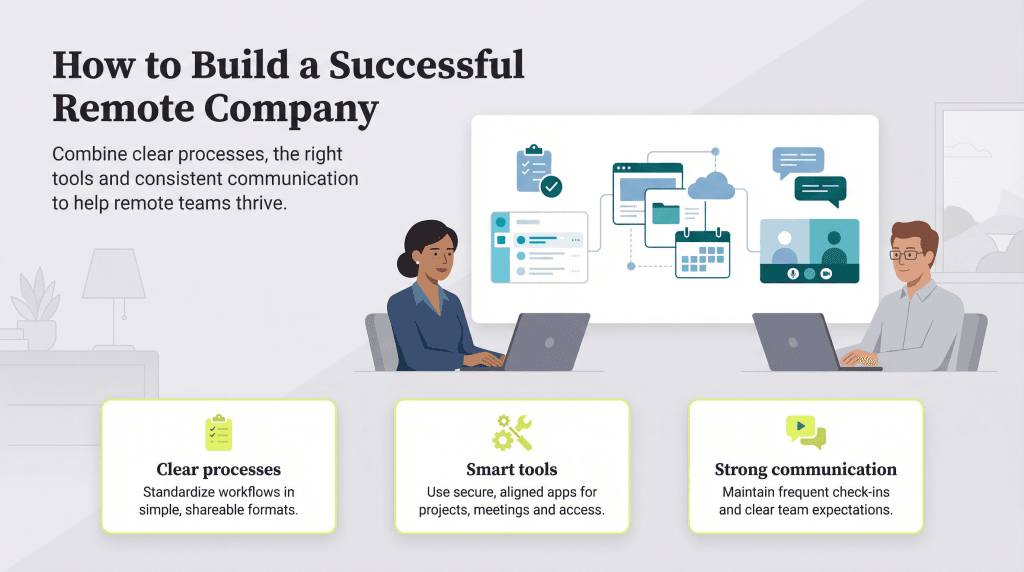
Deanna Baumgardner, owner and human resources consultant at Employers Advantage LLC, says building a successful remote company requires three primary elements. “There needs to be structured processes and procedures in a variety of mediums (videos, checklists, screenshots, etc.),” Baumgardner explained. “[You also need] tools and technology that align with the processes and procedures, and a focus on over-communicating.”
Here’s how to incorporate that advice and build a successful remote company step-by-step.
1. Use the right secure access tools for your remote company.
Your employees must be able to access the essential files they need to complete their tasks efficiently. In a remote setting, that means securely accessing those files from their laptops or home computers, which requires robust tools like the following:
- Remote conferencing software: You’ll need conferencing software to hold company meetings, perform webinars or conduct remote interviews. The best conference call services support audio and video conferencing calls and often include task management and other collaboration features.
- Project management software: Project management tools let you assign specific tasks with due dates for individual workers and create team workspaces for assigning group projects. Your remote workers must be able to see assignments in an organized setup.
- Password manager: A password manager encrypts and stores passwords online. If your company uses shared logins, it can generate secure passwords and automatically fill them when employees need access.
2. Determine your remote worker communication plan.
One of the biggest factors you’ll miss from a traditional office setting when managing a remote team is the ability to speak with other workers in person. When you can’t discuss issues face-to-face, it’s crucial to have a communication plan. Baumgardner notes that business leaders must prioritize creating a worker communication strategy. “It is the responsibility of the manager/leader/business owner to maintain communication with team members, to check in on them, create engagement virtually and be the driver of dissemination of information,” Baumgardner explained.
The communication avenues you use will differ by business. It can be inconvenient to video call someone to ask a simple question, and email may not generate a quick enough response. Messaging tools are an excellent solution for communicating with remote workers. These internal communication apps — including Slack, Basecamp and Zoom — offer a seamless way for your team members to stay organized and communicate wherever they are in the world.
3. Choose the right remote workers for your remote company.
Your remote workers will drive your venture’s success. As a remote company, you have a vast candidate pool. You can hire anyone regardless of location, but they must be a good fit for your business. Look for people with excellent remote work skills, such as time management, communication and collaboration.
Remote businesses can attract high-quality job candidates from various online recruitment websites. Once you have a pool of quality candidates, interview them using video conference software and ensure they’re self-motivated. Being self-motivated is one of the most crucial qualities in a remote employee because you can’t constantly manage them.
After
recruiting new employees, ensure your HR staff supports your remote team by keeping them informed, offering assistance and ensuring they have the necessary tools.
4. Find creative ways to connect with remote employees.
Creating a strong company culture with remote employees can be challenging without face-to-face interaction. To share your company vision, write it down and post it in a cloud collaboration service so remote workers can access it and be reminded of what binds them together.
Other ways to help your remote team feel connected include running polls, hosting fun interactive challenges — like a non-competitive fitness goal they can track in a shared document — or organizing virtual coffee breaks and team-building activities. If you have the means, bring everyone together once a year for a retreat to help strong bonds form among your team.
5. Set clear goals for remote employees.
Setting clear goals for each remote employee helps everyone stay on track. Determine your expectations for each role, decide when deadlines should be met, write up weekly to-do lists, and set employee performance goals.
Using goal-tracking software and analytics tools is an excellent way for your employees to quantify their goals and track performance. Goal-tracking can increase company productivity and reduce the chances of team members falling behind in meeting their personal, career and company objectives.
Be as detailed as possible with your expectations and goals, and post them where your team can easily access them. While there are bound to be some hiccups and disruptions along the way, setting clear expectations keeps everyone accountable.
6. Rethink cybersecurity for your remote company.
In an office, the IT department can protect your company’s systems and data with firewalls and on-site network controls. However, your data can be more vulnerable when everyone works from home or the local coffee shop. According to the FBI’s Internet Crime Complaint Center, businesses reported losses exceeding $16.6 billion due to cybercrime in 2024, and remote work environments present additional opportunities for attackers, like unsecured home Wi-Fi, shared devices and employees logging in from public networks.
To create a remote cybersecurity plan, standardize your company’s security measures and practices. You should also ensure your employees install and properly use security tools, including robust internet security and antivirus software.
7. Give your remote employees flexibility.
Ideally, remote work should allow employees to decide how and when to complete their tasks. While you may be tempted to track employees’ hours and hold them accountable to that metric, a more empowering and productive method is to hold them accountable for getting a specific amount of work done daily or weekly.
Depending on the type of work they do, employees may be more productive during nontraditional working hours, like late at night or early in the morning. Don’t penalize efficient workers who get work done ahead of schedule by piling on more work; this will lead to unproductive and unhappy employees.
8. Empower your remote employees to make decisions.
A lack of autonomy lowers employee morale and happiness. When employees work remotely, it’s not as easy to run things by the boss or get approvals. Ensure your employees are well-trained, and trust established remote employees to make decisions that previously would have needed a manager’s involvement. This respect and autonomy will contribute to employees’ happiness and help them feel like valued team members.