Business.com aims to help business owners make informed decisions to support and grow their companies. We research and recommend products and services suitable for various business types, investing thousands of hours each year in this process.
As a business, we need to generate revenue to sustain our content. We have financial relationships with some companies we cover, earning commissions when readers purchase from our partners or share information about their needs. These relationships do not dictate our advice and recommendations. Our editorial team independently evaluates and recommends products and services based on their research and expertise. Learn more about our process and partners here.


With robust point-of-sale (POS) software and hardware, Clover is an excellent option for growing businesses that need more than basic payment processing. Clover is a one-stop shop for businesses that need credit card processing, online ordering, virtual terminals, cash advances and fast deposits. It also supports curbside transactions, inventory management, gift and loyalty cards, customer tracking and custom reports. This wide range of capabilities makes Clover one of the best POS systems for retail businesses, as well as restaurants and other businesses that want to manage payments and daily operations from one platform.
Many POS systems process payments efficiently but require businesses to patch together separate tools for online ordering, inventory tracking, customer loyalty programs and employee management. Clover stood out because it handles all of those functions within one connected system while still giving businesses flexibility in how they take payments and run daily operations.
We especially liked Clover’s wide range of hardware options. Businesses can choose a setup that fits how they actually operate, whether that means using a mobile card reader at events, a full countertop terminal in a retail store or a self-service kiosk in a restaurant. Clover also supports in-person and online transactions from the same platform, making it easier to manage sales across multiple channels.
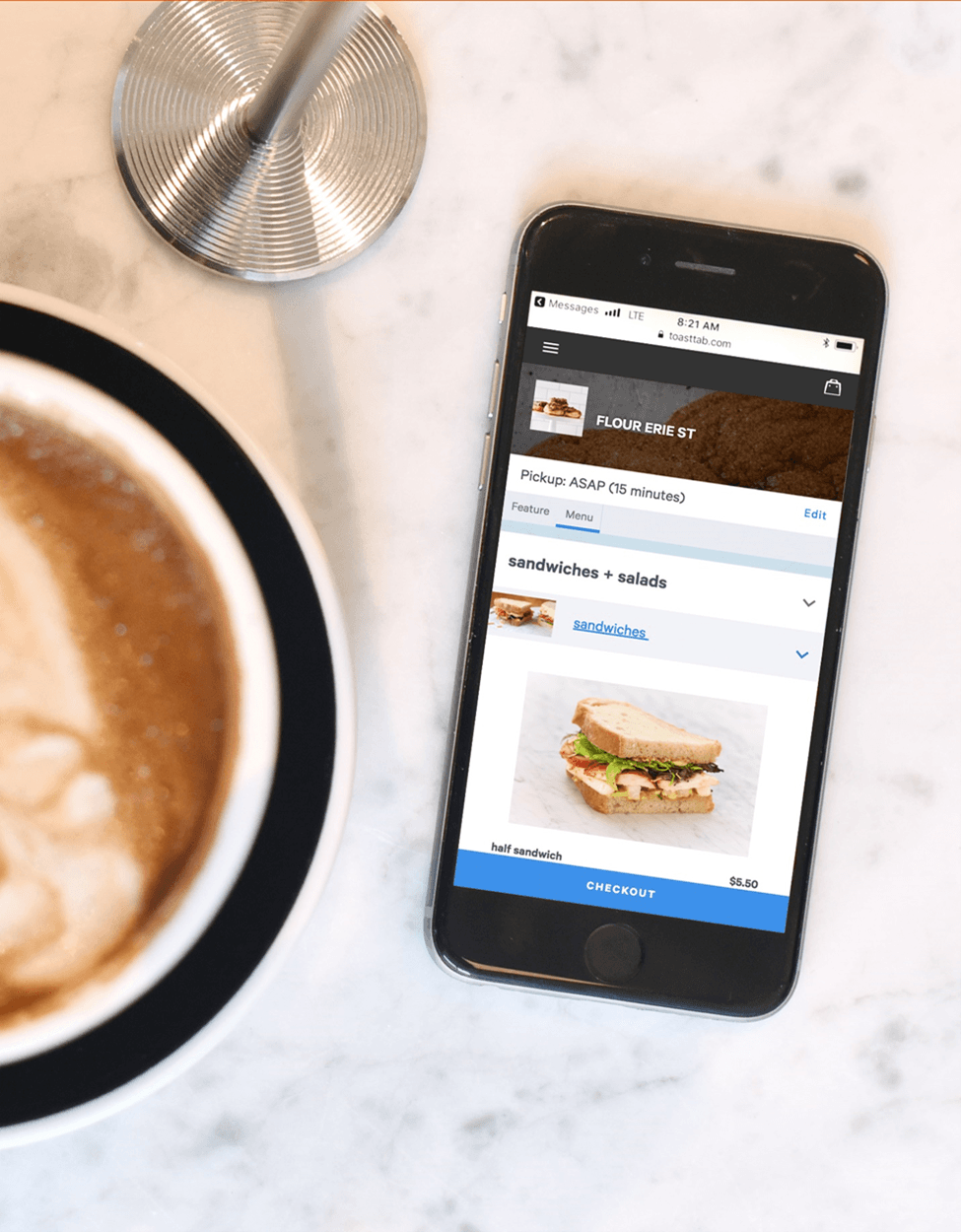
Another area where Clover impressed us was online ordering. Unlike some competitors, Clover doesn’t charge setup fees or commissions for online orders. Restaurants and retailers can quickly build branded ordering pages for pickup, delivery or curbside orders without relying on a separate ordering platform.
Beyond payment processing, Clover includes built-in tools for loyalty programs, reporting, inventory management and staff scheduling, so businesses can manage much more than customer checkout from one place. The company also offers Rapid Deposit and Clover Capital for businesses that need quicker access to funds.
Clover combines payment processing, ordering, customer management and operational tools in a way that feels genuinely connected instead of pieced together from separate services. That balance of flexibility and functionality is why we chose Clover as the best all-in-one POS system.

During testing, we found Clover’s POS software intuitive and easy to navigate. Setting up menus, item modifiers and employee permissions took little time, and the dashboard made it easy to organize products and customize what employees could access. We also liked that Clover offers numerous integrations and hardware configurations, allowing businesses to tailor the system to how they actually operate.
Clover supports a wide range of payment options, so businesses can accept credit cards and digital payment methods, including Apple Pay, Google Pay and Samsung Pay. During testing, the checkout process felt easy and straightforward for both employees and customers whether purchases happened in person or online.
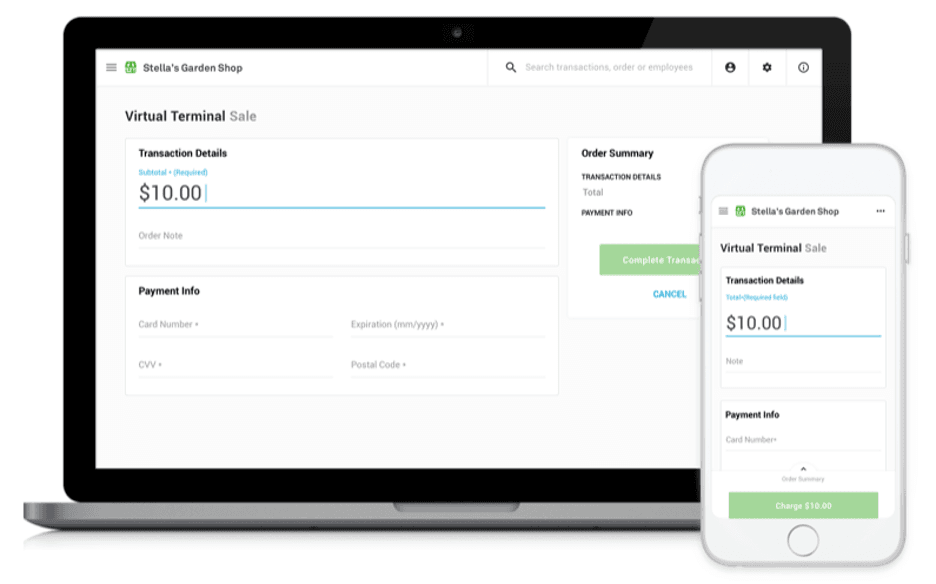
We especially liked Clover’s virtual terminal, which allows businesses to accept card payments directly from the web dashboard without additional hardware. Businesses can quickly process payments, send invoices and receipts, and set up recurring payments from the same system. In our view, this flexibility makes Clover especially useful for businesses that occasionally need to accept payments over the phone or remotely.
Clover also does a good job guiding new customers through setup. The company provides onboarding support during implementation, along with 24/7 customer support by phone and through the Clover Help app if issues come up later.
We were impressed with Clover’s wide range of POS system features, including payment processing, customer engagement and business management tools. These POS features make Clover especially useful for growing retail stores, restaurants and other businesses that want to manage more than customer checkout from one platform.
We especially liked Clover’s built-in customer engagement and loyalty tools, which are integrated directly into the POS system instead of requiring separate software. Clover combines customer feedback, promotions, rewards programs and customer profiles within the same platform businesses already use to process transactions and manage sales.
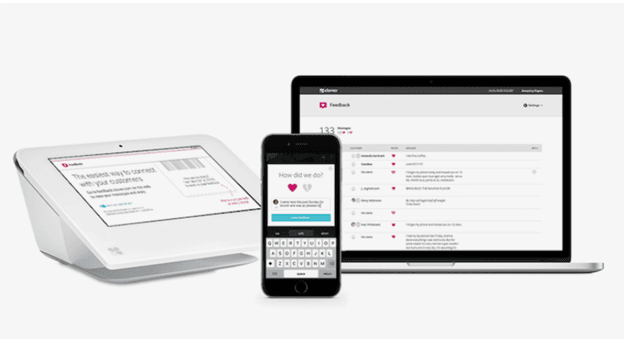
One feature we really liked was the Clover Feedback app. After a purchase, customers can leave private feedback through their digital receipts, so businesses have a chance to respond to their concerns directly before they turn into negative online reviews. Businesses can also follow up with customers individually instead of relying solely on public review platforms.
We also found it helpful that Clover automatically builds customer profiles using transaction data from credit card sales. Businesses can track purchase history, customer preferences and loyalty activity from the same dashboard while using the information to create targeted promotions through text, email and social media marketing campaigns. Clover also makes it easy to identify inactive customers and send promotions designed to encourage repeat visits.
Clover’s rewards and loyalty tools were also easy to manage during testing. Businesses can create customized rewards programs directly within the Clover system, while customers can track points, redeem rewards and place orders through the Clover app. We like that these loyalty and CRM tools are built into the Clover ecosystem rather than requiring a separate customer engagement platform.
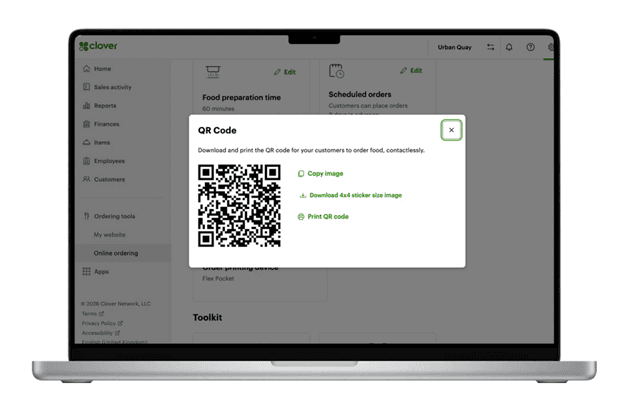
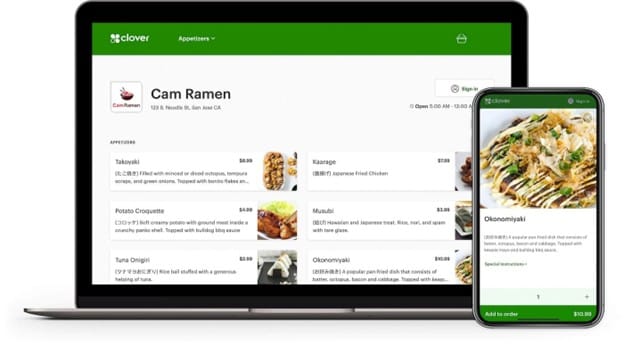
Clover’s online ordering tools are one reason it stands out among the best POS systems for restaurants. Instead of relying on a separate ordering platform, businesses can manage online orders directly through the Clover system while syncing menus, hours and ordering information automatically across channels.
During testing, we liked how easy it was to create and manage online menus. Businesses can quickly build custom ordering pages for takeout, curbside pickup, delivery and dine-in service, while customers can place orders ahead of time through a web page or the Clover app. Any menu or hours updates made in Clover automatically sync with the online ordering system.
Clover also does a good job simplifying order management behind the scenes. Online orders flow directly into the Clover POS system, and restaurants can route tickets to the kitchen while managing pickup and dine-in orders from the same platform. Clover also integrates with DoorDash for delivery services.
We were impressed that Clover doesn’t charge setup fees or commissions for takeout, curbside pickup or dine-in online ordering. In our view, this makes Clover’s online ordering tools more merchant-friendly than some competing POS platforms.
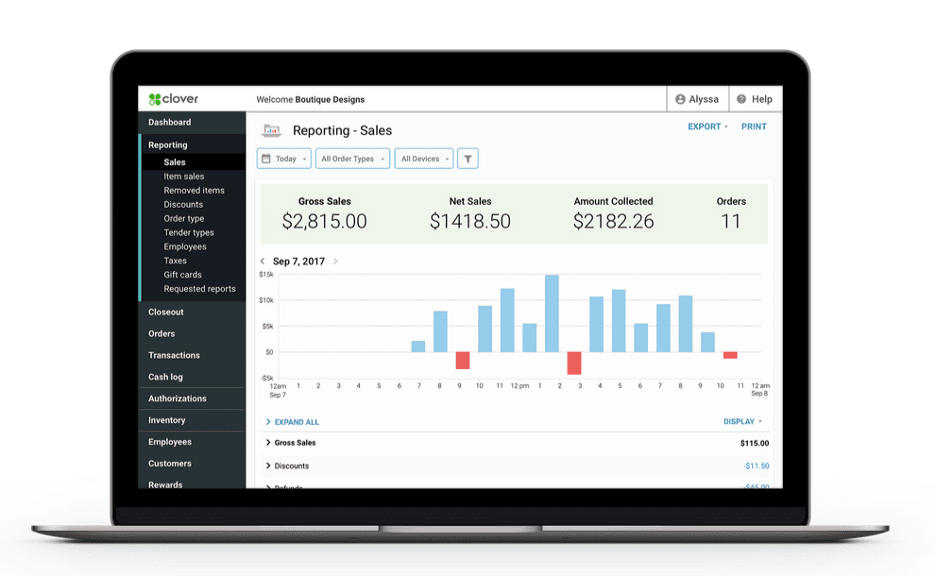
Clover’s reporting tools give businesses a detailed, real-time look at sales activity, revenue trends and overall performance. During testing, we liked how easy it was to pull up POS reports showing hourly sales, refunds, discounts, employee performance and transaction details from a single dashboard. Businesses can also create custom reports to track best-selling products, busiest hours and top-performing locations.
We also appreciated Clover’s flexibility around accessing and sharing data. Reports can be viewed remotely from a mobile device or laptop, exported for deeper analysis and synced with many of the best accounting software platforms, including QuickBooks Online and Xero. That makes it easier to stay on top of cash flow, monitor operations across multiple locations and simplify tax prep at the end of the year.
One thing we noticed during testing was how easy the reports were to actually use day to day. Instead of dumping data onto a dashboard, Clover’s POS system features help businesses spot sales trends, track busy periods, adjust staffing levels and keep a closer eye on inventory as things change throughout the day. That kind of visibility can be especially useful for restaurants and retail stores juggling rush periods, shifting demand and multiple employees at once.
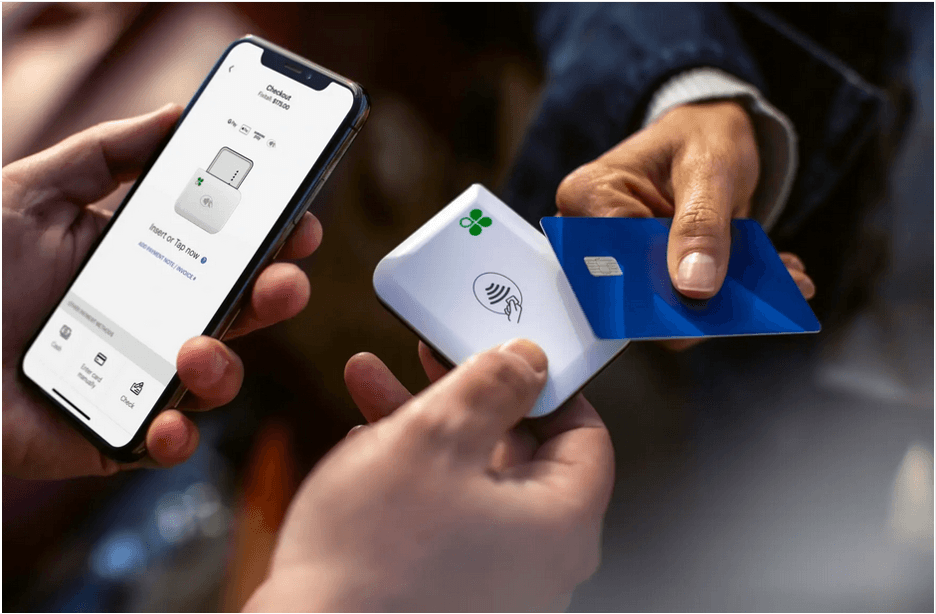
Clover offers multiple mobile apps that help businesses manage operations and connect with customers on the go. With the Clover Go app (paired with the Clover Go card reader), businesses can accept payments from a smartphone or tablet while also reviewing reports, checking inventory, managing employees and handling refunds remotely. Clover also offers a separate customer-facing Clover app that allows customers to track rewards, place orders and interact with participating businesses digitally.
We also like that Clover’s mobile tools extend beyond basic payment processing. Businesses can contact customer support directly through the app and manage many day-to-day operations without being tied to a stationary POS terminal.
Clover’s e-commerce tools let businesses build an online store and manage online and in-person sales from the same system. Businesses can create a branded Clover Online Store or connect Clover with an existing website. Customers can place orders, make payments and even schedule appointments online. We also like that businesses can accept orders directly through Google Search and Maps with Google’s “Order with Google” integration.
One thing that stood out to us during testing was how flexible Clover’s e-commerce setup feels. Businesses can sell through Clover’s online store, connect to existing sites or extend functionality through Clover’s app marketplace and developer tools. Clover supports integrations with platforms like Shopify, WooCommerce, Magento and BigCommerce, along with delivery and ordering apps such as DoorDash, Chowly and Uber Eats integrations through marketplace partners.
We also appreciated that Clover keeps online and in-person operations connected through the same dashboard. Businesses can manage inventory, payments, reporting and customer orders in one place instead of jumping between disconnected systems. That unified setup can make daily operations much easier for retail stores and restaurants handling both in-person and online sales.
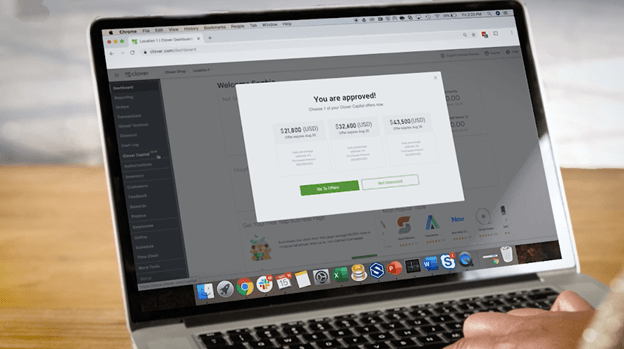
Clover also offers merchant cash advances through Clover Capital, something you won’t find with every POS provider. Eligible businesses can receive funding based on future credit and debit card sales, with repayments taken automatically as a percentage of daily sales.
We like that repayments rise and fall with sales volume instead of staying fixed each month, which can make slower periods easier to manage. Clover also says applying for Clover Capital won’t affect your personal or business credit score. That said, merchant cash advances can be expensive, so businesses should look closely at the fees and repayment terms before moving forward.
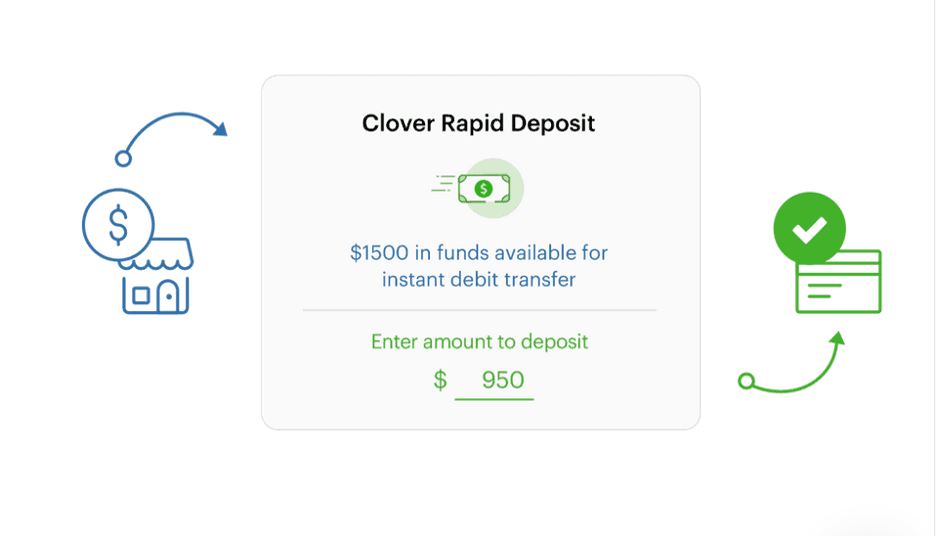
Clover Rapid Deposit gives businesses faster access to their card sales instead of waiting the standard one to three business days for funds to arrive. Eligible users can transfer money from daily card sales in minutes through the Clover Dashboard or Clover device.
Clover charges a flat 1.75 percent fee on the amount transferred. We like that businesses can choose when to move funds instead of waiting on a fixed deposit schedule, which could help with short-term cash flow needs like payroll, inventory purchases or unexpected expenses. However, the transfer fee can add up if businesses rely on the service regularly.
We appreciate that Clover is relatively transparent about its POS system costs and organizes its plans by industry instead of using a one-size-fits-all approach. Businesses can choose from packages designed for restaurants, retail stores and service-based companies, with hardware bundles tailored to different workflows and business sizes.
We also really like that even the lower-tier Clover plans come with built-in tools for things like payments, reporting and customer engagement, which helps the system feel more full-featured out of the box.
Here’s an at-a-glance look at Clover’s pricing across different industries, including hardware bundles, monthly software fees and financing options.
Plan | Pricing | Financing Option | Includes |
|---|---|---|---|
Starter | $1,799 + $89.95/month | $179/month for 36 months | Station Solo 14-inch merchant-facing POS display with POS software |
Standard | $2,548 + $109.90/month | $239/month for 36 months | Station Solo POS, handheld POS with built-in receipt printer, cash drawer and receipt printer |
Advanced | $4,447 + $129.85/month | $354/month for 36 months | Station Solo POS, handheld POS, Station Duo POS with 8-inch customer screen, cash drawer and receipt printer |
Plan | Pricing | Financing Option | Includes |
|---|---|---|---|
Starter | $849 + $89.95/month | $135/month for 36 months | Mini 8-inch touchscreen POS with built-in receipt printer |
Standard | $1,899 + $89.95/month | $185/month for 36 months | Station Duo POS, receipt printer and cash drawer |
Advanced | $2,648 + $109.90/month | $245/month for 36 months | Station Duo POS, Flex handheld POS, receipt printer and cash drawer |
Plan | Pricing | Financing Option | Includes |
|---|---|---|---|
Basic | $349 | $16/month for 36 months | Compact terminal system with 3.6-inch touchscreen and built-in receipt printer |
Standard | $1,899 + $84.95/month | $180/month for 36 months | Station Duo POS, receipt printer and cash drawer |
Advanced | $2,648 + $104.90/month | $240/month for 36 months | Station Duo POS, Flex handheld POS, receipt printer and cash drawer |
Plan | Monthly Price | Includes |
|---|---|---|
Starter | $0/month | Clover Dashboard and mobile app access using an existing computer, tablet or phone |
Essentials | $29.95/month | Everything in Starter, plus estimates, time tracking, bill pay and bookkeeping sync |
Services Growth | $84.95/month | Everything in Essentials, plus advanced scheduling, appointment management and online booking |
Plan | Pricing | Financing Option | Includes |
|---|---|---|---|
Basic | $349 | $16/month for 36 months | Compact terminal system with 3.6-inch touchscreen and built-in receipt printer |
Standard | $849 + $84.95/month | $130/month for 36 months | Mini 8-inch touchscreen POS with built-in receipt printer |
Advanced | $1,899 + $84.95/month | $180/month for 36 months | Station Duo POS, receipt printer and cash drawer |
Plan | Pricing | Financing Option | Includes |
|---|---|---|---|
Starter | $29.95/month | N/A | Clover Dashboard and mobile app access using an existing computer, tablet or phone |
Standard | $199 + $29.95/month | N/A | Clover Go mobile card reader paired with a phone, tablet or computer |
Advanced | $749 + $84.95/month | $125/month for 36 months | Flex handheld POS with built-in receipt printer |
In addition to monthly software fees, businesses also need to factor in Clover’s payment processing charges. Clover typically charges a flat percentage rate plus 10 cents per transaction, though rates vary depending on the package, payment type and reseller. Most plans advertise in-person transaction fees ranging from 2.3 percent to 2.6 percent plus 10 cents, while card-not-present transactions generally cost 3.5 percent plus 10 cents.
You’ll need to use Clover’s payment processing services if you buy a bundle directly from Clover. However, businesses that buy compatible hardware through certain authorized resellers may have more flexibility to switch processors later.
Clover’s hardware bundles vary quite a bit depending on the industry and plan you choose. Higher-tier packages typically include additional devices like handheld POS systems, customer-facing displays, cash drawers and receipt printers.
Businesses can also purchase extra hardware separately through Clover or authorized dealers. Device pricing ranges from about $199 for a Clover Go mobile card reader to roughly $1,899 for a Clover Station Duo system with a receipt printer. Clover also sells kiosks, kitchen display systems and other accessories for restaurants and retail businesses.
You’ll need to contact a sales representative to purchase a hardware and software bundle from Clover, and during testing, the initial sales call took about 30 minutes. We liked that the representative spent time understanding the business’s needs before recommending hardware and software options.
Businesses that purchase directly from Clover also need to apply for a merchant account through the company’s payment processing services. After approval, Clover ships the hardware and walks businesses through the setup process so they can start taking payments once everything is activated.
We also liked that Clover offers guided onboarding support for new customers. During setup, businesses can configure payment processing, connect hardware and customize system settings based on their workflow. Clover also provides setup guides, tutorials and customer support resources for businesses that need additional help during implementation.
We were impressed that Clover offers 24/7 customer support and multiple ways to get help when issues come up. Clover encourages users to log in to their Clover account and select Help to access support resources tailored to their device and setup. Users can also tap Help directly on Clover devices or access support options through the Clover mobile app.
If you’d rather speak with someone directly, Clover also provides phone support, including support numbers listed on merchant statements. We like that Clover gives businesses several different ways to reach support instead of forcing users into a single help channel, especially for merchants troubleshooting payment or hardware issues during business hours.
Clover is an excellent option for retailers, restaurants and service-based businesses, but there are some drawbacks to consider:
We researched and analyzed dozens of the best POS systems to identify the top industry solutions for growing businesses. We evaluated pricing, contracts, hardware, platform compatibility, features, reporting tools, payment processing, integrations, usability and customer support.
We watched product videos and demos and conducted hands-on testing when possible. When selecting the best all-in-one POS system, we paid close attention to each platform’s business tools, add-ons, ease of use, overall value, customer support and integration options.
We recommend Clover for …
We don’t recommend Clover for …